Legislative Activity
Track Hank's sponsored bills, co-sponsored legislation, and voting record
This Act establishes grant programs to fund community reentry centers and 24/7 assistance hotlines to support individuals after conviction or incarceration.
Sydney Kamlager-Dove
Representative
CA
Sydney Kamlager-Dove
Representative
CA
The One Stop Shop Community Reentry Program Act of 2026 establishes federal grant programs to fund community reentry centers and statewide assistance hotlines. These initiatives aim to provide comprehensive, trauma-informed services to individuals post-conviction or incarceration to reduce recidivism. The Act prioritizes hiring formerly incarcerated individuals and mandates rigorous evaluation and reporting on program outcomes.
This bill expresses support for U.S. library staff, recognizes their essential community services, advocates for adequate funding, and defends their rights to free access to information and union organization.
Pramila Jayapal
Representative
WA
Pramila Jayapal
Representative
WA
This resolution expresses strong support for library staff across the United States and recognizes the essential, expanding community services they provide. It advocates for commensurate funding, defends the right of all citizens to freely access information, and supports the civil rights and union voice of library workers. Furthermore, the bill condemns threats to library access and staff, such as book bans and funding cuts.
This Act establishes federal programs to address the impact of climate change risks, like extreme heat and pollution, on maternal and infant health through grants, education, research, and risk zone identification.
Lauren Underwood
Representative
IL
Lauren Underwood
Representative
IL
The Protecting Moms and Babies Against Climate Change Act directs the Department of Health and Human Services to address how climate change risks, like extreme heat and pollution, harm maternal and infant health. The bill establishes grant programs to support local efforts and education, and mandates research and strategies to identify high-risk zones for pregnant individuals and young children. Its goal is to reduce adverse outcomes such as preterm birth, low birth weight, and maternal mortality linked to climate change.
This bill expands eligibility for the Vaccines for Children program, mandates minimum payment rates for vaccine administration under Medicaid and CHIP, and increases the federal matching rate for states that conduct targeted vaccination outreach.
Kim Schrier
Representative
WA
Kim Schrier
Representative
WA
The Strengthening the Vaccines for Children Program Act of 2026 aims to expand access to childhood immunizations by broadening eligibility for the VFC program and setting minimum payment rates for vaccine administration under Medicaid and CHIP. The bill mandates that Medicaid and CHIP programs pay providers at least 100% of the Medicare Part B rate for vaccine administration and counseling services through 2028. Additionally, it increases the federal Medicaid matching rate contingent upon states implementing culturally competent vaccination outreach efforts.
This Act establishes state-level rights and provides federal grants for flexible cash assistance to crime survivors while funding state surveys to better understand their needs.
Lateefah Simon
Representative
CA
Lateefah Simon
Representative
CA
The Crime Survivor Support and Stability Act of 2026 encourages states to adopt comprehensive rights for crime survivors, ensuring access to trauma recovery, housing stability, and financial relief. The bill establishes a federal grant program to provide flexible, direct cash assistance to survivors through community-based organizations, minimizing bureaucratic hurdles. Additionally, it funds state-level surveys to better understand the unmet needs of survivors, particularly those who interact with the justice system.
This bill mandates a 15 percent increase in the annual base pay for all career Transportation Security Administration (TSA) employees.
Al Green
Representative
TX
Al Green
Representative
TX
This bill, officially titled the "Original Legislation to Give TSA Employees a Raise," mandates a 15 percent increase to the annual base pay for all TSA career employees and corresponding pay bands. This pay raise will take effect starting with the first pay period immediately following the law's enactment.
This resolution affirms housing as a fundamental human right and opposes policies that would force families with mixed immigration status to separate or lose federal housing assistance.
Delia Ramirez
Representative
IL
Delia Ramirez
Representative
IL
This resolution affirms that stable housing is a fundamental human right essential for all families, regardless of immigration status. It strongly condemns a proposed rule that would force families with mixed immigration status to separate or lose vital housing assistance. The bill calls for protecting families in federal housing programs and demands increased investment to address the national housing crisis.
This resolution directs the President to remove U.S. Armed Forces from hostilities with Iran, unless necessary for imminent self-defense.
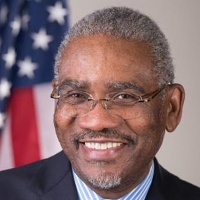
Gregory Meeks
Representative
NY
Gregory Meeks
Representative
NY
This resolution directs the President, under the War Powers Resolution, to remove U.S. Armed Forces from hostilities involving Iran. The order mandates withdrawal unless forces are necessary for imminent self-defense of the U.S. or its allies. Any continued defensive action must comply with existing War Powers reporting requirements.
This resolution censures President Trump and Special Envoy Witkoff for violating the Foreign Emoluments Clause by accepting undisclosed payments from the UAE and demands they divest from related foreign business interests.
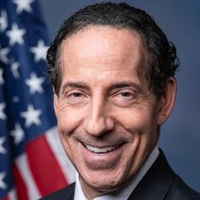
Jamie Raskin
Representative
MD
Jamie Raskin
Representative
MD
This resolution expresses the sense of the House that President Trump and Special Envoy Witkoff violated the Foreign Emoluments Clause by accepting undisclosed payments linked to a secret deal with an entity substantially funded by the UAE. It demands they immediately turn over all such payments to the Treasury and divest from any business interests connected to foreign governments. The bill cites specific financial transactions and subsequent U.S. policy actions favoring the UAE as evidence of a grave conflict of interest.
This bill establishes a competitive grant program to fund training, recruitment, and retention efforts aimed at addressing critical workforce shortages in the public transportation industry.
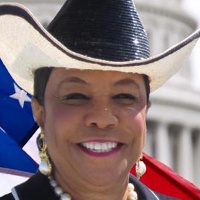
Frederica Wilson
Representative
FL
Frederica Wilson
Representative
FL
The Transit Workforce Development Act establishes a competitive grant program through the Department of Transportation to address critical workforce shortages in public transit maintenance. This funding supports training, recruitment, and retention efforts for essential transit workers like mechanics and technicians. The bill also expands existing funding flexibility, allowing transit agencies to use more federal bus and facility funds specifically for broader workforce development training.
This resolution expresses the House's view that the Department of Justice must refuse to administratively settle President Trump's personal legal claims against the U.S. government due to the Domestic Emoluments Clause.
Jamie Raskin
Representative
MD
Jamie Raskin
Representative
MD
This resolution expresses the sense of the House that the Department of Justice must comply with the Domestic Emoluments Clause. It specifically calls for the DOJ to refuse to administratively settle the billions of dollars in legal claims filed against the United States by President Donald Trump. The bill asserts that allowing the President to settle his own personal claims against the government constitutes an unconstitutional conflict of interest.
This Act establishes grants to help local educational agencies and partners transform schoolyards into ecological, educational, and community-accessible outdoor learning environments.
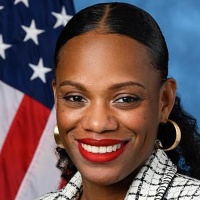
Summer Lee
Representative
PA
Summer Lee
Representative
PA
The Revitalizing America’s Schoolyards Act of 2026 establishes grants for local educational agencies and partners to transform school outdoor spaces into "revitalized schoolyards." These park-like environments must strengthen ecology, provide hands-on learning, and promote health, while remaining open for shared public use outside of school hours. The program prioritizes funding for schools serving high percentages of low-income students and directs the Department of Education to create a clearinghouse for best practices in outdoor learning spaces.
This bill mandates comprehensive safety upgrades for civilian and military aviation, focusing on collision avoidance technology, air traffic control training, and enhanced airspace transparency, particularly around high-traffic airports.
Sam Graves
Representative
MO
Sam Graves
Representative
MO
The Airspace Location and Enhanced Risk Transparency Act of 2026 mandates significant safety upgrades across both civilian and military aviation to prevent midair collisions. It requires the FAA to implement advanced collision avoidance systems and new air traffic controller training, while also compelling the Department of Defense to equip most military helicopters with transponders for increased visibility. The bill establishes new transparency measures, including public tracking of safety rule implementation and enhanced reporting on near-miss incidents, particularly around major airports like Reagan National.
This Act establishes a grant program to fund evidence-based and innovative strategies addressing the academic, social-emotional, and health needs of students, particularly those impacted by the COVID-19 pandemic.
Jahana Hayes
Representative
CT
Jahana Hayes
Representative
CT
The Educational Equity Challenge Grant Act of 2026 establishes a grant program to help eligible entities address students' academic, social-emotional, and health needs, particularly those exacerbated by the COVID-19 pandemic. Funds will be awarded for evidence-based strategies and innovative, educator-initiated proposals focused on high-need students. The bill prioritizes funding for rural and low-income areas while requiring robust reporting on outcomes and impact.
This bill establishes a commission of medical and former government experts to evaluate a President's physical or mental capacity to discharge the duties of the office when directed by Congress.
Jamie Raskin
Representative
MD
Jamie Raskin
Representative
MD
This bill establishes the Commission on Presidential Capacity to Discharge the Powers and Duties of the Office, a body tasked with evaluating the physical or mental fitness of the President. The Commission, composed of medical experts and former high-ranking officials, can be directed by Congress to examine the President. Its findings regarding the President's ability to execute their duties are then reported to Congress and the Vice President.
This bill increases the minimum financial responsibility insurance requirements for motor carriers transporting property from $750,000 to $5,000,000 and mandates periodic inflation adjustments based on medical care costs.
Jesús García
Representative
IL
Jesús García
Representative
IL
The Fair Compensation for Truck Crash Victims Act increases the minimum insurance requirement for motor carriers transporting property from $750,000 to $5,000,000. This legislation aims to modernize financial responsibility standards to better account for medical-cost inflation and ensure adequate protection for the public. Additionally, the bill mandates that these minimums be adjusted every five years to keep pace with rising healthcare costs.
This resolution acknowledges the historical and systemic injustices in women’s health care while affirming a federal commitment to bodily autonomy, equitable treatment, and patient-centered medical research.
Yassamin Ansari
Representative
AZ
Yassamin Ansari
Representative
AZ
This resolution acknowledges the historical and systemic injustices, bias, and lack of bodily autonomy that have long marginalized women in the U.S. healthcare system. It affirms the Federal Government’s commitment to dismantling these barriers by prioritizing patient-centered care, increasing research investment, and protecting reproductive rights. Ultimately, the bill seeks to ensure that all women receive dignified, equitable, and informed medical treatment.
This bill mandates a comprehensive study by the Department of Health and Human Services to identify and address barriers to accessing effective pain management during gynecologic procedures.
Yassamin Ansari
Representative
AZ
Yassamin Ansari
Representative
AZ
The Gynecologic Pain Management Study Act directs the Secretary of Health and Human Services to conduct a comprehensive study on the barriers patients and providers face regarding pain management during gynecologic procedures. By consulting with diverse stakeholders, the study aims to identify these challenges and provide actionable recommendations to Congress. The final report will help inform future legislative and administrative efforts to improve patient care and accessibility.
This legislation authorizes federal funding to expand research, improve public awareness, and enhance professional training regarding the diagnosis and treatment of Premenstrual Dysphoric Disorder (PMDD).
Yassamin Ansari
Representative
AZ
Yassamin Ansari
Representative
AZ
The Premenstrual Dysphoric Disorder (PMDD) Awareness and Research Act of 2026 aims to improve the lives of those affected by PMDD by expanding federal research, data collection, and public awareness initiatives. The bill authorizes funding to enhance healthcare provider training and education, ensuring more accurate diagnosis and effective treatment for this often under-recognized condition.
The Reproductive Healthcare Leave Act establishes a national requirement for employers to provide employees with paid leave for medical care, procedures, and recovery related to reproductive health.
Yassamin Ansari
Representative
AZ
Yassamin Ansari
Representative
AZ
The Reproductive Healthcare Leave Act establishes a national requirement for employers to provide employees with paid leave for medical needs related to reproductive health, including fertility treatments, miscarriage management, and contraception. The bill mandates that eligible employees receive up to 96 hours of paid leave annually while protecting them from retaliation or interference when exercising these rights. The Department of Labor is tasked with enforcing these provisions, ensuring that employees can access necessary healthcare without jeopardizing their job security or benefits.