Legislative Activity
Track Pat's sponsored bills, co-sponsored legislation, and voting record
This bill mandates the VA to share a veteran's opioid prescription history with their Community Care health care providers.
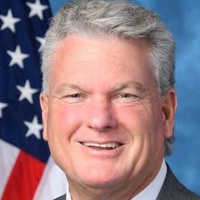
Mike Collins
Representative
GA
Mike Collins
Representative
GA
This bill mandates that the Department of Veterans Affairs (VA) share a veteran's history of opioid prescriptions with their non-VA healthcare providers participating in the Community Care program. This information sharing will occur through a designated Third Party Administrator. The goal is to ensure community providers have critical prescription history for safer veteran care.
The FORGE Act establishes the Foundational Infrastructure for Responsible Use of Small Modular Reactor Technology (FIRST) program within the Department of State to promote the responsible international deployment of U.S. civil nuclear energy technology.
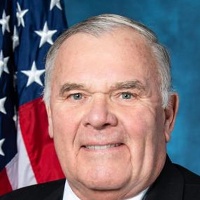
James Baird
Representative
IN
James Baird
Representative
IN
The FORGE Act establishes the Foundational Infrastructure for Responsible Use of Small Modular Reactor Technology (FIRST) program within the Department of State. This program aims to promote the responsible international deployment of U.S. civil nuclear energy, particularly Small Modular Reactors. It focuses on advocating for U.S. technology abroad while ensuring partner countries adhere to high safety and nonproliferation standards.
This bill mandates that the Department of Justice only procure ballistic body armor manufactured using domestically sourced ballistic fibers and requires public disclosure of all manufacturing origins for compliant armor.
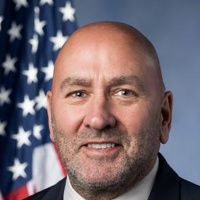
Clay Higgins
Representative
LA
Clay Higgins
Representative
LA
The Ballistic Armor Made in America Act of 2026 establishes new sourcing and labeling rules for ballistic-resistant body armor procured by the Department of Justice. This legislation mandates that manufacturers disclose the origin of their armor and ballistic fibers, restricting the use of "Made in America" labeling for foreign-sourced components. Ultimately, the bill prohibits the DOJ from purchasing body armor made from or containing ballistic fibers sourced outside the United States, with limited exceptions.
Logan's Law establishes a publicly accessible Violent Criminal Offender Database and mandates federal efforts to improve criminal record sharing between states.
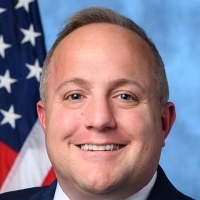
Russell Fry
Representative
SC
Russell Fry
Representative
SC
Logan's Law establishes a publicly accessible **Violent Criminal Offender Database** containing federal and state records of qualifying convictions. It mandates that states receiving Byrne JAG grants must submit this conviction data or risk losing funding. Additionally, the bill requires the Attorney General to report on and recommend improvements for criminal record sharing between states and federal entities.
This bill reauthorizes and significantly expands the National Quantum Initiative to advance quantum science, engineering, and technology across federal agencies, focusing on workforce development, supply chain security, and commercialization.
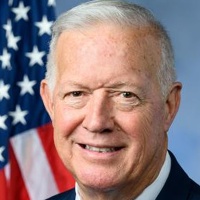
Randy Weber
Representative
TX
Randy Weber
Representative
TX
The National Quantum Initiative Reauthorization Act aims to significantly expand and update the U.S. national strategy for quantum information science, engineering, and technology. This bill focuses on strengthening research, developing a robust domestic workforce, securing the supply chain, and enhancing international cooperation in quantum technologies. It achieves this by updating program definitions, expanding agency responsibilities across the federal government, and establishing new centers and coordination hubs.
This act revises federal building energy efficiency standards by prohibiting the denial of green building certifications based on fossil fuel use and repealing outdated regulations.
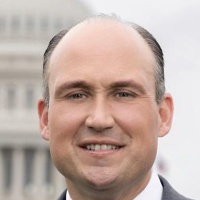
Nicholas Langworthy
Representative
NY
Nicholas Langworthy
Representative
NY
The Reliable Federal Infrastructure Act revises federal energy efficiency standards for government buildings. This bill ensures that the use of fossil fuels will not automatically disqualify a federal building from receiving a green building certification. It also repeals outdated energy efficiency regulations and sets a deadline for the Secretary of Energy to issue updated rules.
The MATCH Act mandates stricter export controls on semiconductor manufacturing equipment to countries of concern and requires the U.S. to coordinate with allied nations to prevent the transfer of critical technology to adversarial entities.
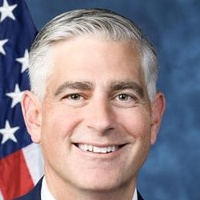
Michael Baumgartner
Representative
WA
Michael Baumgartner
Representative
WA
The Multilateral Alignment of Technology Controls on Hardware (MATCH) Act aims to protect U.S. national security by restricting adversary access to advanced semiconductor manufacturing equipment. The bill mandates diplomatic efforts to align export controls with allied nations and establishes a framework to impose strict U.S. regulations if those partners fail to implement sufficient safeguards. By targeting specific entities and facilities in countries of concern, the legislation seeks to close gaps in the current export control regime and maintain America’s technological advantage.
This bill establishes a license requirement for exporting digital sequences of synthetic DNA or RNA to foreign entities of concern to protect U.S. intellectual property from adversaries like China.
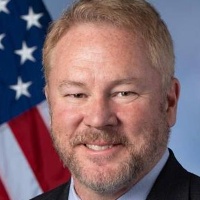
Warren Davidson
Representative
OH
Warren Davidson
Representative
OH
The Biological Intellectual Property Protection Act of 2025 aims to safeguard sensitive U.S. biotechnology by controlling the export of synthetic DNA and RNA sequences. This bill establishes a license requirement for transferring these digital sequences to foreign entities of concern, particularly those linked to adversaries like the People's Republic of China. Congress finds this action necessary to prevent intellectual property theft that supports foreign military modernization and strategic technology development.
This Act establishes penalties and restrictions to deter foreign adversaries from stealing proprietary, closed-source artificial intelligence models owned by U.S. entities through model extraction attacks.
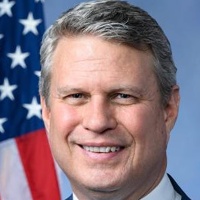
Bill Huizenga
Representative
MI
Bill Huizenga
Representative
MI
The Deterring American AI Model Theft Act of 2026 aims to protect proprietary, closed-source Artificial Intelligence models owned by U.S. entities from theft by foreign adversaries. It establishes new legal restrictions and penalties targeting "model extraction attacks" used by designated "entities of concern" to replicate advanced AI capabilities. The bill mandates government assessments, public reporting, and grants the President authority to impose sanctions against those found violating these provisions.
This Act mandates a comprehensive report to Congress detailing emerging military, cyber, and political threats to the Baltic states and recommending strategies to enhance their security and U.S. partnership.
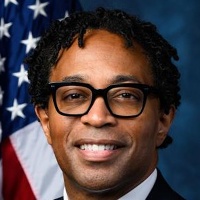
Wesley Bell
Representative
MO
Wesley Bell
Representative
MO
The Baltic Security Assessment Act of 2025 affirms the critical importance of Estonia, Latvia, and Lithuania to U.S. national security amidst Russian aggression. This bill mandates that the Secretary of State and Secretary of Defense deliver a comprehensive report to Congress detailing emerging military, cyber, and political threats to the Baltic states. The report must also recommend specific actions to enhance U.S. and NATO defense cooperation and bolster Baltic resilience.
The CLEAN Act establishes new requirements for legislative transparency and ethics by permanently enacting and modifying House Resolution 895 concerning the Office of Congressional Ethics.
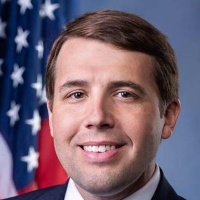
Chris Pappas
Representative
NH
Chris Pappas
Representative
NH
The CLEAN Act establishes new requirements for legislative transparency and ethical conduct by making key provisions of House Resolution 895 permanent law. This legislation modifies the operation of the Office of Congressional Ethics, including setting term limits for board members and ensuring timely vacancy appointments. Furthermore, it guarantees constitutional protections and the right to counsel for individuals undergoing ethics reviews.
This Act repeals the federal beneficial ownership information reporting requirements for domestic persons and entities, limiting them only to foreign individuals and foreign-connected companies, and mandates the deletion of existing domestic data.
Warren Davidson
Representative
OH
Warren Davidson
Representative
OH
The Repealing Big Brother Overreach Act significantly narrows the federal beneficial ownership information reporting requirements. This legislation limits reporting obligations exclusively to foreign individuals and foreign-connected companies. Furthermore, it mandates the deletion of all previously collected data pertaining to domestic persons and entities.
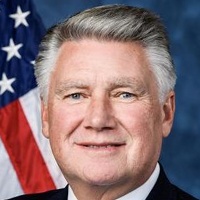
This bill removes references to "socially disadvantaged farmers and ranchers" across federal agriculture laws and prohibits the USDA from giving preference based on race or gender in its programs.
Mark Harris
Representative
NC
Mark Harris
Representative
NC
The Equal Treatment for Farmers Act amends federal agriculture laws to remove "socially disadvantaged farmers and ranchers" as a distinct category for program eligibility, set-asides, and definitions across various USDA programs. This legislation also explicitly prohibits the Department of Agriculture from giving any preference or priority based on race or gender in its programs. The bill aims to standardize eligibility criteria across farm loans, crop insurance, and conservation efforts.
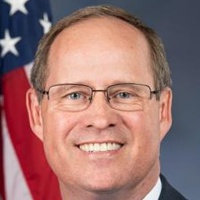
This act mandates that out-of-pocket drug spending counts toward a patient's health plan deductible and maximum, regardless of whether insurance benefits were used for the purchase.
Gregory Murphy
Representative
NC
Gregory Murphy
Representative
NC
The Every Dollar Counts Act of 2026 ensures that money spent out-of-pocket for prescription drugs counts toward an individual's health plan deductible and out-of-pocket maximum, even if insurance benefits are not used for the purchase. This aims to provide financial relief and transparency for consumers. The bill also makes corresponding adjustments to how drug prices are calculated for Medicaid purposes.
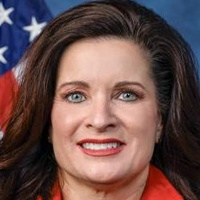
This bill clarifies that, under Title VII of the Civil Rights Act of 1964, discrimination based on sex does not include discrimination based on gender identity.
Sheri Biggs
Representative
SC
Sheri Biggs
Representative
SC
The Defending Women in the Workplace Act clarifies the interpretation of Title VII of the Civil Rights Act of 1964. It establishes that, for the purposes of federal anti-discrimination law, the terms "because of sex" or "on the basis of sex" do not include gender identity.
This bill mandates the designation of the Council on American-Islamic Relations (CAIR) as a Specially Designated Global Terrorist, requiring the freezing of its assets and the revocation of its tax-exempt status.

Chip Roy
Representative
TX
Chip Roy
Representative
TX
The Designating Hamas Affiliates in America Act of 2026 mandates the designation of the Council on American-Islamic Relations (CAIR) as a Specially Designated Global Terrorist under Executive Order 13224. This legislation requires the freezing of all CAIR assets, prohibits transactions with the organization, and revokes its tax-exempt status. Additionally, it directs the Secretary of State and the Secretary of the Treasury to submit a formal report to Congress regarding CAIR’s eligibility for this designation.
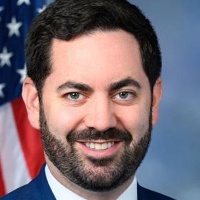
This Act establishes a federal program to secure critical undersea infrastructure, specifically prioritizing the protection of Taiwan’s telecommunications and energy networks against sabotage through enhanced monitoring, international cooperation, and the imposition of sanctions.
Michael Lawler
Representative
NY
Michael Lawler
Representative
NY
The Critical Undersea Infrastructure Resilience Initiative Act establishes a comprehensive federal program to protect vital subsea energy and telecommunications networks from sabotage and foreign threats. The bill specifically creates a dedicated initiative to bolster the security of undersea infrastructure near Taiwan through enhanced monitoring, rapid response protocols, and international cooperation. Additionally, it mandates sanctions against those responsible for infrastructure sabotage and requires the development of interagency contingency plans to address potential crises in the Taiwan Strait.
This bill restricts IRS staff from participating in Independent Office of Appeals conferences unless the taxpayer provides explicit consent.
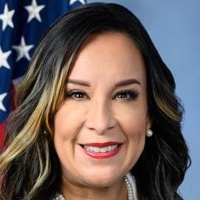
Mónica De La Cruz
Representative
TX
Mónica De La Cruz
Representative
TX
The Strengthen Taxpayer Rights Act of 2026 protects taxpayer privacy and independence during the appeals process by restricting IRS staff participation. Under this act, non-appeals IRS employees are prohibited from attending Independent Office of Appeals conferences unless the taxpayer explicitly consents to their presence.
The SHARE Act excludes certain proceeds from shared appreciation mortgages from federal income tax for qualifying low-to-moderate-income homeowners.
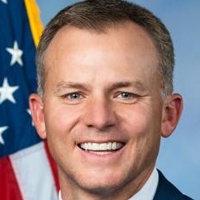
Blake Moore
Representative
UT
Blake Moore
Representative
UT
The SHARE Act proposes to amend the Internal Revenue Code to exclude certain proceeds from shared appreciation mortgages from federal gross income for eligible borrowers. This means borrowers would not pay federal income tax on the shared appreciation portion of these specific second mortgages. The bill aims to provide tax relief for homeowners utilizing these unique financing arrangements.
This Act mandates the implementation of security mechanisms on advanced integrated circuit products before export to protect U.S. technology and enhance national security.
Bill Huizenga
Representative
MI
Bill Huizenga
Representative
MI
The Chip Security Act mandates the installation of security mechanisms on advanced integrated circuit products before they are exported from the United States. These requirements aim to verify chip location, prevent diversion, and protect U.S. technological leadership. The Secretary of Commerce must also study and implement additional security features to enhance export control enforcement and national security.