Legislative Activity
Track Pat's sponsored bills, co-sponsored legislation, and voting record
The SAVE Moms and Babies Act of 2025 prohibits the FDA from approving new abortion drugs and imposes strict federal restrictions on the distribution, usage, and reporting requirements for existing abortion medications.
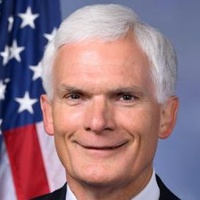
Robert Latta
Representative
OH
Robert Latta
Representative
OH
The SAVE Moms and Babies Act of 2025 prohibits the FDA from approving new abortion drugs and restricts the use of existing ones. The bill mandates strict safety protocols, including in-person administration requirements, expanded adverse event reporting, and limitations on gestational age for drug use.
The Families’ Rights and Responsibilities Act establishes the fundamental right of parents to direct the upbringing, education, and healthcare of their children, requiring the government to meet the highest standard of judicial scrutiny before interfering with those rights.

Virginia Foxx
Representative
NC
Virginia Foxx
Representative
NC
The Families’ Rights and Responsibilities Act establishes the fundamental right of parents to direct the upbringing, education, and health care of their children. It mandates that the government cannot substantially burden these rights without a compelling interest and requires the use of the "strict scrutiny" legal standard in such cases. Additionally, the bill provides parents with the legal standing to challenge government interference in court and allows for the recovery of attorney's fees if they prevail.
The Main Street Tax Certainty Act makes the 20% pass-through business income deduction permanent by removing its scheduled expiration after 2025.
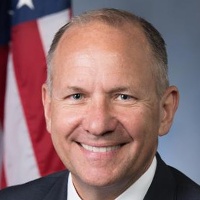
Lloyd Smucker
Representative
PA
Lloyd Smucker
Representative
PA
The Main Street Tax Certainty Act makes the 20% pass-through business income deduction permanent. By removing the current 2025 expiration date, this legislation ensures long-term tax relief for owners of qualified pass-through entities.
This bill proposes a constitutional amendment to permanently set the number of Supreme Court justices at nine, requiring ratification by three-fourths of the states within seven years.

Dusty Johnson
Representative
SD
Dusty Johnson
Representative
SD
This bill proposes a constitutional amendment to fix the number of Supreme Court justices at nine. For this amendment to be valid, three-fourths of the state legislatures must ratify it within seven years of its submission.
This bill prohibits federal funding for abortions and for health insurance plans that cover abortions, clarifies these prohibitions under the Affordable Care Act, and requires health plans to disclose the extent of their abortion coverage and any related surcharges.
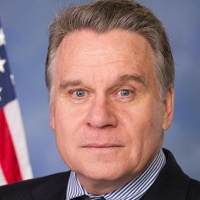
Christopher Smith
Representative
NJ
Christopher Smith
Representative
NJ
The "No Taxpayer Funding for Abortion and Abortion Insurance Full Disclosure Act of 2025" seeks to prohibit the use of federal funds for abortions and for health plans that cover abortions, while allowing individuals and entities to purchase separate abortion coverage with non-federal funds. It clarifies that premium tax credits and cost-sharing reductions under the Affordable Care Act (ACA) cannot be used for health plans that include abortion coverage. The Act also revises notice requirements for health plans, mandating clear disclosure of abortion coverage and any associated premium surcharges to enrollees. Exceptions to the funding restrictions are included for cases of rape, incest, or when the mother's life is in danger.
The MACH Act authorizes NASA to establish a program providing testing opportunities for commercial hypersonic aircraft and related technologies while implementing strict research security protocols.
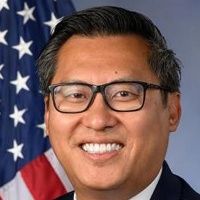
Vince Fong
Representative
CA
Vince Fong
Representative
CA
The Making Advancements in Commercial Hypersonics (MACH) Act authorizes NASA to establish a program providing testing opportunities for high-speed aircraft and related technologies. While the program supports the evaluation of these technologies, it is strictly prohibited from funding their development. The Act also mandates the creation of a strategic plan, interagency coordination with the Department of Defense and the FAA, and rigorous reporting requirements to ensure research security.
The Veterans Member Business Loan Act amends the Federal Credit Union Act to include loans made to veterans within the definition of "member business loans."
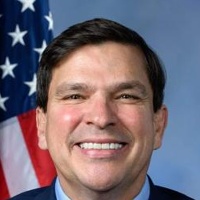
Vicente Gonzalez
Representative
TX
Vicente Gonzalez
Representative
TX
The Veterans Member Business Loan Act amends the Federal Credit Union Act to include loans made to veterans within the definition of "member business loans." This change aims to expand access to capital for veteran-owned businesses by facilitating easier lending through credit unions.
This bill reclassifies silencers under federal tax law, removes federal registration requirements for legally transferred silencers, preempts state taxation and registration of silencers in commerce, and mandates the destruction of existing federal silencer registration records.

Ben Cline
Representative
VA
Ben Cline
Representative
VA
The Hearing Protection Act aims to remove silencers from the purview of the National Firearms Act (NFA) by treating them similarly to standard firearms under federal tax law. This legislation preempts certain state and local taxes and registration requirements related to silencers involved in interstate commerce. Furthermore, the bill mandates the destruction of existing federal silencer registration records and updates federal marking requirements for manufacturers.
The REMAIN in Mexico Act of 2025 mandates the implementation of the Migrant Protection Protocols, requiring asylum seekers to wait in Mexico while their claims are processed.

Brandon Gill
Representative
TX
Brandon Gill
Representative
TX
The REMAIN in Mexico Act of 2025 mandates that the Secretary of Homeland Security reinstate the Migrant Protection Protocols (MPP). This legislation requires that asylum seekers be returned to Mexico to await their U.S. immigration proceedings, effectively codifying the 2019 policy guidance into law.
The Preserving Safe Communities by Ending Swatting Act of 2025 strengthens federal criminal penalties and establishes civil liability for individuals who knowingly convey false information to trigger emergency responses.
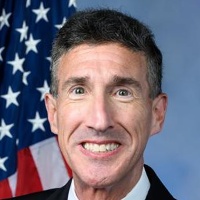
David Kustoff
Representative
TN
David Kustoff
Representative
TN
The Preserving Safe Communities by Ending Swatting Act of 2025 strengthens federal law to combat "swatting" by increasing criminal penalties for those who knowingly report false information to trigger emergency responses. The bill also establishes civil liability, requiring perpetrators to reimburse public safety agencies and organizations for the costs incurred during these emergency deployments.
The Federal Employee Return to Work Act prohibits federal teleworkers from receiving annual pay adjustments and mandates that their basic pay be set to the "Rest of U.S." locality rate.

Dan Newhouse
Representative
WA
Dan Newhouse
Representative
WA
The Federal Employee Return to Work Act mandates that federal employees who telework at least one day per week are ineligible for annual pay adjustments. Additionally, the bill requires that these employees be compensated based on the "Rest of U.S." locality pay scale, regardless of their actual work location. Certain groups, including employees with disabilities and law enforcement officers, are exempt from these provisions.
This bill proposes a constitutional amendment to limit members of the House of Representatives to three terms and Senators to two terms, with specific provisions for partial terms. Terms served before the amendment's ratification would not be counted towards these limits, and the amendment must be ratified within seven years to be valid.
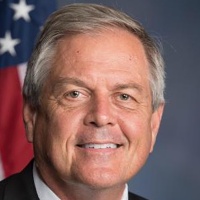
Ralph Norman
Representative
SC
Ralph Norman
Representative
SC
This bill proposes a constitutional amendment to limit the number of terms a member of Congress can serve. Representatives would be limited to 3 terms and Senators to 2 terms, with specific rules for partial terms. Terms served before the amendment's ratification would not be counted. The amendment must be ratified by three-fourths of the states within seven years to be valid.
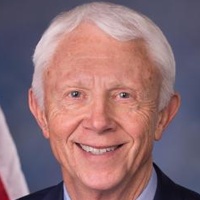
The FIND Act prohibits federal agencies from contracting with entities that discriminate against the firearm and ammunition industry, ensuring fair access to government contracts for these businesses. Contractors must certify they do not discriminate against firearm entities, with violations leading to contract termination.
Jack Bergman
Representative
MI
Jack Bergman
Representative
MI
The FIND Act prohibits federal agencies from contracting with entities that discriminate against the firearm and ammunition industry. It requires federal contractors to certify they do not discriminate against firearm entities and prohibits them from awarding subcontracts to entities that do not provide a similar certification. Violations of these clauses will result in contract termination. The act defines "discriminate" as making judgments or refusing/limiting services based on biased criteria, rather than case-by-case evaluations, empirical data, financial risk, or legal non-compliance.
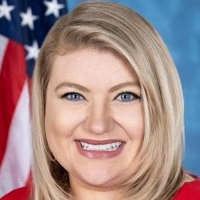
The Regulations from the Executive in Need of Scrutiny (REINS) Act of 2025 increases congressional accountability by requiring federal agencies to obtain legislative approval for all "major" rules before they can take effect.
Katherine Cammack
Representative
FL
Katherine Cammack
Representative
FL
The Regulations from the Executive in Need of Scrutiny (REINS) Act of 2025 aims to increase federal regulatory accountability by requiring Congress to approve any "major" rule before it can take effect. Under this legislation, rules with a significant economic impact require a joint resolution of approval from both chambers of Congress to become law. By shifting this authority back to the legislative branch, the Act seeks to ensure greater transparency and oversight of the federal rulemaking process.
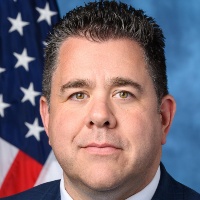
The "No Bailout for Sanctuary Cities Act" would deny certain federal funds to sanctuary jurisdictions that obstruct information sharing or detainment requests from Homeland Security regarding individuals' immigration status, while requiring an annual report on non-compliant jurisdictions.
Nicolas LaLota
Representative
NY
Nicolas LaLota
Representative
NY
The "No Bailout for Sanctuary Cities Act" aims to withhold certain federal funds from state and local governments deemed "sanctuary jurisdictions" that obstruct the sharing of immigration status information or compliance with detainment requests from Homeland Security. These jurisdictions would be ineligible for federal funds intended to benefit individuals in the U.S. without legal immigration status. The Department of Homeland Security is required to report annually to the House and Senate Judiciary Committees on non-compliant states and local governments.