This act mandates a Treasury Department report on the barriers preventing Somaliland’s access to the U.S. financial system and provides recommendations to improve financial cooperation, transparency, and regional economic stability.
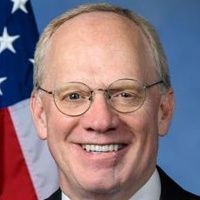
John Rose
Representative
TN-6
The Somaliland Economic Access and Opportunity Act aims to strengthen regional stability and economic ties by addressing the barriers Somaliland faces in accessing the U.S. and international financial systems. The bill mandates that the Secretary of the Treasury conduct a comprehensive report identifying these regulatory and institutional challenges. Furthermore, it provides recommendations to help Somaliland align with international financial standards, ultimately fostering greater transparency and integration into the global economy.
Somaliland Economic Access and Opportunity Act: U.S. Treasury to Map Out 180-Day Plan for Financial Integration
The Somaliland Economic Access and Opportunity Act directs the U.S. Secretary of the Treasury to deliver a comprehensive report within 180 days that identifies every legal and regulatory hurdle blocking Somaliland from the U.S. financial system. This isn't just a paperwork exercise; it specifically targets the 'pipes' of global finance—like the SWIFT messaging system—and looks at how to fix the broken links in remittances and international trade. By focusing on Know Your Customer (KYC) and anti-money laundering (AML) standards, the bill aims to move Somaliland’s economy out of the shadows and into the formal global market.
Mapping the Money Trail
Under Section 3, the Treasury must pinpoint why it is currently so difficult for money to flow between the U.S. and Somaliland. For a tech professional in the U.S. trying to send money back to family, or a small business owner in Hargeisa trying to import equipment, the current system is often slow, expensive, or entirely blocked due to 'de-risking' by major banks. The bill requires the U.S. to evaluate if international heavyweights like the World Bank and IMF are actually allocating resources that match the region's population and development needs, rather than just sticking to old bureaucratic formulas.
Security Meets Stability
A major chunk of this legislation is dedicated to making sure this new access doesn't become a playground for illicit activity. The Treasury is tasked with recommending specific technologies and monitoring tools to prevent terrorism financing and money laundering. Think of it as upgrading an old, dirt road into a secure, paved highway; the goal is to make it easier for legitimate traffic to move while making it much harder for 'bad actors' to hide in the dust. This involves direct consultation with Somaliland’s Central Bank and Ministry of Finance to ensure they are ready to meet high-level international standards (FATF).
The Global Ripple Effect
If this plan works, the long-term implications are significant for regional stability. By integrating Somaliland into the formal financial fold, the U.S. is betting that economic transparency will lead to better security in the Horn of Africa. For the average person, this could mean lower fees on remittances and more reliable trade routes. While the bill doesn't hand out cash directly, it sets the stage for Somaliland to prove it can play by the same rules as the rest of the world, potentially opening the door for more U.S. investment and a more predictable economic environment for everyone involved.