Legislative Activity
Track Harriet's sponsored bills, co-sponsored legislation, and voting record
This act streamlines the oversight of State Veterans Homes by allowing VA-certified facilities to automatically meet Medicare and Medicaid participation requirements while ensuring consistent public reporting of quality and safety data.
Jack Bergman
Representative
MI
Jack Bergman
Representative
MI
The State Veterans Homes Inspection Simplification Act streamlines the regulatory process by allowing State Veterans Homes certified by the Department of Veterans Affairs (VA) to be automatically deemed compliant with Medicare and Medicaid participation requirements. The bill ensures continued oversight and accountability by mandating that VA inspection standards align with federal protocols and requiring that all quality and compliance data be publicly reported. Additionally, it tasks the Government Accountability Office with reviewing the effectiveness and impact of this new authority within three years.
This bill prohibits state and local law enforcement agencies from hiring or retaining non-citizen or non-lawful permanent resident individuals and amends federal firearm restrictions for government entities.
Mary Miller
Representative
IL
Mary Miller
Representative
IL
This bill, the "Stop Illegal Alien Cops Act," prohibits state and local law enforcement agencies from hiring or retaining individuals who are not U.S. citizens or lawful permanent residents. It also amends federal law regarding which firearm restrictions apply to government entities, updating specific exemptions related to firearm sales and possession.
This bill prohibits federal agencies from providing funding or support for the creation or maintenance of state-level firearm ownership databases, with exceptions for records of lost or stolen weapons.

Paul Gosar
Representative
AZ
Paul Gosar
Representative
AZ
The Gun Owner Registration Information Protection Act prohibits federal agencies from providing funding or support for the creation and maintenance of state-level firearm ownership databases. This legislation ensures that federal resources cannot be used to track lawful gun owners, with a specific exception for databases tracking lost or stolen firearms.
This bill expresses support for the National FFA Organization by designating February 21-28, 2026, as National FFA Week and celebrating the 50th anniversary of the Alaska State FFA Association.
Tracey Mann
Representative
KS
Tracey Mann
Representative
KS
This resolution expresses support for the National FFA Organization and designates February 21–28, 2026, as National FFA Week. It recognizes the FFA's vital role in developing future leaders through agricultural education. The bill also celebrates the 50th anniversary of the chartering of the Alaska State FFA Association.
This bill exempts specific less-than-lethal projectile devices from federal firearm restrictions, excise taxes, and National Firearms Act regulations to promote de-escalation innovation in law enforcement.
Scott Fitzgerald
Representative
WI
Scott Fitzgerald
Representative
WI
The Law-Enforcement Innovate to De-Escalate Act aims to promote de-escalation by exempting specific, clearly defined less-than-lethal projectile devices from federal firearm restrictions and excise taxes. This legislation provides a formal process for determining which devices qualify for these exemptions under both federal law and the National Firearms Act. The bill also modernizes tax regulations by exempting qualifying less-than-lethal devices and their ammunition from federal excise taxes.
This Act mandates automatic spending reductions for Department of Defense components that fail to achieve a clean financial audit opinion after fiscal year 2025.
Mark Pocan
Representative
WI
Mark Pocan
Representative
WI
The Audit the Pentagon Act of 2026 addresses the Department of Defense's repeated failure to pass a financial audit. This bill establishes automatic spending reductions for any DoD component that fails to receive a clean audit opinion after fiscal year 2025. It also outlines Congressional priorities regarding protecting wounded warrior accounts and maintaining financial controls for classified programs.
This bill mandates federal agencies to coordinate efforts to prevent, control, and eradicate the New World screwworm parasite on public lands.
Ronny Jackson
Representative
TX
Ronny Jackson
Representative
TX
The SAFE CATTLE Act mandates federal agencies to formally cooperate on preventing, controlling, and eradicating the New World screwworm parasite on federal lands. This requires the Departments of Agriculture and the Interior to establish joint surveillance, response, and eradication protocols. The agencies must also report annually to Congress on their coordination efforts and progress until the parasite is contained outside the U.S.
This bill establishes eligibility requirements for amateur athletic organizations based on biological sex, prohibiting individuals whose sex is male from competing in female-designated amateur athletic competitions.
W. Steube
Representative
FL
W. Steube
Representative
FL
This Act establishes specific definitions for "female," "male," and "sex" based on biological reproductive systems for amateur athletics. It mandates that organizations recognized by the U.S. Olympic & Paralympic Committee must prohibit individuals identified as male from competing in competitions designated for females. This aims to protect competitive opportunities specifically for biological females in amateur sports.
This bill mandates proof of U.S. citizenship for federal voter registration and requires photo identification showing citizenship status for voting in federal elections.

Chip Roy
Representative
TX
Chip Roy
Representative
TX
The Safeguard American Voter Eligibility Act (SAVE America Act) mandates that individuals must provide documentary proof of U.S. citizenship to register to vote in federal elections. It also establishes a federal requirement for voters to present a photo ID indicating U.S. citizenship when casting a ballot in federal elections. The bill outlines specific acceptable forms of proof and requires states to implement verification programs to ensure only citizens are registered and voting.
This Act mandates that federal agencies use specific sex-based terms like "female" or "mother" instead of "birthing person" in official communications.
Sheri Biggs
Representative
SC
Sheri Biggs
Representative
SC
The Protecting Motherhood Act mandates that federal agencies use specific, sex-based terminology such as "mother," "woman," or "female" instead of the term "birthing person" in all official documents. This legislation defines the required terms to ensure consistency in federal communications regarding pregnancy and parenthood.
This bill removes the Mexican wolf from the endangered species list, nullifies previous related regulations, and mandates that future recovery decisions focus solely on the U.S. wolf population.
Paul Gosar
Representative
AZ
Paul Gosar
Representative
AZ
The Enhancing Safety for Animals Act of 2025 officially delists the Mexican wolf from the list of threatened and endangered species. This legislation voids previous management rules and mandates that future recovery plans for the species in the U.S. must exclude consideration of the wolf population in Mexico. The bill also addresses concerns regarding compensation standards for ranchers suffering livestock losses due to wolf predation.
This bill establishes a grant program to fund improvements in emergency 911 communications and interoperability within National Park Service units.
Russ Fulcher
Representative
ID
Russ Fulcher
Representative
ID
This Act establishes the Making National Parks Safer Act to improve emergency communications within the National Park System. It creates a competitive grant program to help fund the planning, modernization, and implementation of Next Generation 911 services in parks. The bill also mandates an assessment and subsequent plan to ensure all park units have reliable and interoperable emergency communication capabilities.
The SAFE KIDS Act voids surrogacy agreements between U.S. surrogates and prospective parents from designated foreign entities of concern, while penalizing brokers who facilitate such arrangements.
Blake Moore
Representative
UT
Blake Moore
Representative
UT
The SAFE KIDS Act addresses national security concerns by invalidating surrogacy agreements between U.S. surrogates and prospective parents from designated "foreign entities of concern." This legislation voids such contracts and imposes penalties on surrogacy brokers who facilitate these arrangements. The bill ensures that custody decisions for children born under these void agreements are based solely on the child's best interests under state law.
This act removes the gray wolf from the endangered and threatened wildlife list and prohibits judicial review of that decision.
Lauren Boebert
Representative
CO
Lauren Boebert
Representative
CO
The Pet and Livestock Protection Act officially removes the gray wolf from the federal list of endangered and threatened wildlife. This legislation mandates the reissuance of the November 3, 2020, final rule concerning the gray wolf's delisting within 60 days of enactment. Furthermore, the reissuance of this rule is explicitly barred from judicial review.
The SPEED Act reforms the National Environmental Policy Act (NEPA) by streamlining environmental reviews, limiting the scope of analysis, establishing strict timelines, and imposing new limitations on judicial review to expedite federal project development.
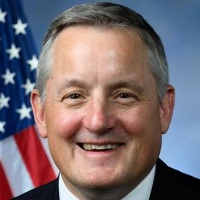
Bruce Westerman
Representative
AR
Bruce Westerman
Representative
AR
The SPEED Act aims to streamline and expedite federal project reviews by reforming the National Environmental Policy Act (NEPA). It clarifies NEPA as a procedural statute, narrows the scope of environmental effects agencies must consider, and establishes strict timelines for agency decisions. Furthermore, the bill imposes significant limitations on judicial review, requiring courts to defer to agency judgment and limiting remedies to remanding the action for correction rather than vacating permits.
This Act establishes federal criminal penalties for performing genital or bodily mutilation or chemical castration on minors, with specific medical exceptions.
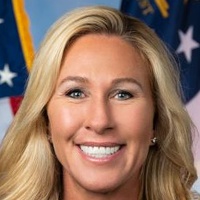
Marjorie Greene
Representative
GA
Marjorie Greene
Representative
GA
The Protect Children’s Innocence Act establishes federal criminal penalties for performing genital or bodily mutilation or chemical castration on individuals under 18 years old. This law applies when the act involves interstate commerce or occurs in U.S. territories. It explicitly prohibits procedures intended to change a minor's body to correspond with a different sex, with narrow exceptions for specific medical necessities.
The ESA Amendments Act of 2025 seeks to modernize the Endangered Species Act by prioritizing resource allocation, incentivizing private land conservation, increasing state involvement, and streamlining federal permitting and regulatory processes.
Bruce Westerman
Representative
AR
Bruce Westerman
Representative
AR
The ESA Amendments Act of 2025 proposes comprehensive reforms to the Endangered Species Act, aiming to shift the focus toward state-led conservation, voluntary private land agreements, and streamlined federal permitting. The bill introduces a prioritized, schedule-based approach for listing species while increasing transparency regarding agency data, litigation, and economic impacts. By narrowing the scope of federal regulatory authority and environmental reviews, the legislation seeks to balance species protection with infrastructure development and economic interests.
The CLEAR Act of 2025 prohibits the U.S. Forest Service from enforcing the rule published in the Federal Register (89 Fed. Reg. 92808) concerning Law Enforcement and Criminal Prohibitions.
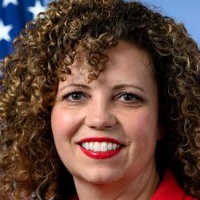
Celeste Maloy
Representative
UT
Celeste Maloy
Representative
UT
The CLEAR Act of 2025 aims to prevent the U.S. Forest Service from enforcing a specific recent rule concerning "Law Enforcement; Criminal Prohibitions." This legislation effectively nullifies that particular regulation, removing its force and effect.
This bill authorizes Congress to award Congressional Gold Medals to the 1980 U.S. Men's Olympic Ice Hockey team for their historic "Miracle on Ice" victory.
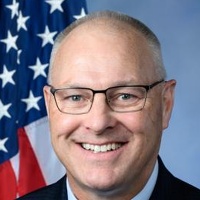
Pete Stauber
Representative
MN
Pete Stauber
Representative
MN
This bill, the Miracle on Ice Congressional Gold Medal Act, officially authorizes Congress to award Congressional Gold Medals to the 1980 U.S. Men's Olympic Ice Hockey Team for their historic "Miracle on Ice" victory. The medals will be struck by the Treasury and permanently displayed at specific national sports museums. The Act also permits the sale of duplicate bronze medals to cover production costs.
The DISPOSAL Act mandates the sale or lease of six specific federal buildings in Washington, D.C., exempting these transactions from certain federal regulations while prohibiting foreign ownership.
W. Steube
Representative
FL
W. Steube
Representative
FL
The DISPOSAL Act mandates the sale or long-term lease of six specific, underutilized federal buildings in Washington, D.C., granting the Administrator of General Services broad discretion over the transactions. This process is largely exempt from standard environmental and historic preservation reviews, with a strict prohibition on foreign ownership. Net proceeds from these disposals will fund relocation costs before being deposited into the Treasury to reduce the deficit.