
Legislative Activity
Track Maggie's sponsored bills, co-sponsored legislation, and voting record
This bill amends the Tariff Act of 1930 to expand the scope and types of information U.S. Customs and Border Protection can share with stakeholders regarding suspected intellectual property rights violations.

Charles Grassley
Senator
IA
Charles Grassley
Senator
IA
This bill amends the Tariff Act of 1930 to broaden the scope of information U.S. Customs and Border Protection (CBP) can share with rights holders and other interested parties regarding suspected intellectual property violations. It expands the types of evidence that can be disclosed—including packaging images and nonpublic data from third-party logistics and marketplace entities—to better combat the importation of counterfeit goods. Additionally, the legislation establishes new notification requirements for the disclosure of nonpublic information to ensure regulatory transparency.
This resolution designates September 2026 as "National Child Awareness Month" to honor and support the vital work of organizations dedicated to the well-being and future success of children and youth across the United States.

James Lankford
Senator
OK
James Lankford
Senator
OK
This resolution designates September 2026 as "National Child Awareness Month" to highlight the vital role of youth-serving organizations and charities across the United States. It recognizes the essential contributions these groups make toward the health, education, and well-being of children, particularly those facing significant challenges. By promoting this month-long focus, the bill encourages nationwide support for initiatives that foster a brighter future for America’s youth.
The HCBS Access Act mandates home and community-based services as a core Medicaid benefit while providing significant federal funding to expand access, strengthen the direct care workforce, and support family caregivers.

Ben Luján
Senator
NM
Ben Luján
Senator
NM
The HCBS Access Act transforms home and community-based services into a mandatory Medicaid benefit, ensuring older adults and people with disabilities can receive long-term care in their own homes rather than institutions. The legislation provides significant federal funding to eliminate waiting lists, strengthen the direct care workforce, and offer critical support to unpaid family caregivers. Additionally, it establishes new national standards for workforce data, career development, and program evaluation to ensure high-quality, accessible care nationwide.
This resolution designates August 22–30, 2026, as "National Park Week" to celebrate the history, economic impact, and preservation of the National Park System.

Steve Daines
Senator
MT
Steve Daines
Senator
MT
This resolution designates August 22 through August 30, 2026, as "National Park Week" to honor the National Park Service’s history and ongoing contributions. It recognizes the vital role these parks play in recreation, education, and the economy while encouraging the public to celebrate and support the preservation of our national treasures.
The Kay Hagan Tick Reauthorization Act extends funding and updates federal initiatives for vector-borne disease research and public health support through 2030.

Susan Collins
Senator
ME
Susan Collins
Senator
ME
The Kay Hagan Tick Reauthorization Act extends critical funding and support for national vector-borne disease initiatives through 2030. This legislation updates program administration to improve efficiency and ensures the continued operation of regional centers of excellence dedicated to combating tick-borne illnesses.
The Bring Our Heroes Home Act establishes a process, overseen by a Review Board, to transfer and publicly disclose federal government records concerning U.S. military and civilian personnel missing in action since December 7, 1941, to the National Archives.

Michael Crapo
Senator
ID
Michael Crapo
Senator
ID
The Bring Our Heroes Home Act mandates the collection and prompt public disclosure of all U.S. government records concerning Armed Forces and civilian personnel missing since December 7, 1941. It establishes an independent Review Board to oversee the transfer of these records to the National Archives and to rule on any proposed postponements of disclosure. The Act aims to provide the fullest possible accounting to the American public and the families of the missing, with only narrow, clearly defined exceptions to release.
The Campus Lifeline Act expands federal grant support and awareness strategies to improve student access to mental health, substance use, and suicide prevention resources on college campuses.
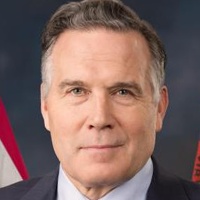
Dave McCormick
Senator
PA
Dave McCormick
Senator
PA
The Campus Lifeline Act expands federal grant support for student-led mental health and substance use disorder initiatives on college campuses. The bill enhances peer-to-peer education, improves outreach for remote and underserved students, and mandates technical assistance for institutions. Additionally, it promotes youth awareness of the National Suicide Prevention Lifeline by integrating hotline information into student ID cards and campus-wide digital campaigns.
This Act requires the Government Accountability Office (GAO) to assess reported bills for potential duplication with existing government programs and share those findings with the Congressional Budget Office (CBO) and relevant committees.

Rand Paul
Senator
KY
Rand Paul
Senator
KY
The Duplication Scoring Act of 2025 requires the Government Accountability Office (GAO) to review bills reported by Congressional committees for potential duplication with existing government programs. If a risk of overlap is found, the GAO must notify the CBO and the reporting committee, and publish the findings online. The CBO Director may then supplement the bill's cost estimate with the GAO's duplication assessment.
This bill establishes a federal duty of care and safety requirements for online platforms regarding minors, mandates algorithmic transparency and user choice regarding content personalization, and sets enforcement mechanisms.

Marsha Blackburn
Senator
TN
Marsha Blackburn
Senator
TN
The Kids Online Safety Act establishes a comprehensive "duty of care" requiring online platforms to design features that mitigate specific harms to minors, such as those related to mental health and exploitation. It mandates that platforms provide minors with default, restrictive safety settings and robust parental controls over data sharing and recommendations. Furthermore, the legislation demands significant transparency regarding algorithmic ranking systems and grants the FTC enforcement authority.
This legislation reauthorizes and strengthens federal programs dedicated to accelerating research and expanding patient access to promising treatments for amyotrophic lateral sclerosis (ALS) through 2031.

Lisa Murkowski
Senator
AK
Lisa Murkowski
Senator
AK
The Accelerating Access to Critical Therapies for ALS Reauthorization Act of 2026 extends vital funding and support for ALS research and treatment access through 2031. This legislation strengthens grant application requirements, enhances FDA reporting on rare neurodegenerative disease action plans, and mandates new assessments to improve the effectiveness of ongoing programs. These updates ensure continued momentum in the development of life-saving therapies for patients living with ALS.
The National Plan for Epilepsy Act directs the Secretary of Health and Human Services to review and improve federal epilepsy research, prevention, and care programs to enhance health outcomes for those affected by the condition.
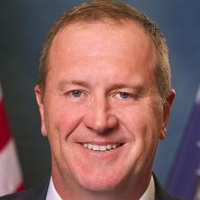
Eric Schmitt
Senator
MO
Eric Schmitt
Senator
MO
The National Plan for Epilepsy Act directs the Secretary of Health and Human Services to conduct a comprehensive review of federal epilepsy programs, research, and care strategies. By collaborating with stakeholders and identifying knowledge gaps, the Act aims to improve health outcomes, enhance treatment, and better support individuals living with epilepsy. The resulting report will provide Congress with actionable recommendations to strengthen federal efforts and coordination in epilepsy prevention and care.
The Health Information Privacy Reform Act establishes comprehensive privacy, security, and breach notification standards for health data held by entities currently outside the scope of HIPAA.

Bill Cassidy
Senator
LA
Bill Cassidy
Senator
LA
The Health Information Privacy Reform Act establishes comprehensive privacy, security, and breach notification standards for health data held by entities not currently covered by HIPAA. The bill mandates clear disclosures when health information leaves protected environments, sets new requirements for data de-identification, and directs the development of guidance for the use of health data in artificial intelligence. Additionally, it commissions a study on the ethics of compensating patients for the use of their identifiable health data in research.
The College Transparency Act establishes a secure, privacy-protected federal data system to provide students and families with transparent information on college costs, enrollment, and post-graduation outcomes.
Bill Cassidy
Senator
LA
Bill Cassidy
Senator
LA
The College Transparency Act establishes a secure, privacy-protected federal data system to track postsecondary student outcomes, including enrollment, completion, and post-college earnings. By repealing the existing ban on a national student-level database, the bill aims to provide students and families with transparent, customizable information to help them make informed educational decisions. The system is designed to streamline institutional reporting requirements while strictly prohibiting the use of personal data for law enforcement, immigration, or federal ranking purposes.
This bill prohibits the transfer of specific Department of Education offices and functions to other federal agencies while mandating quarterly public reporting on the costs of all interagency agreements.

Timothy Kaine
Senator
VA
Timothy Kaine
Senator
VA
This bill prohibits the Secretary of Education from transferring the functions or responsibilities of four key offices—including those overseeing special, postsecondary, Indian, and elementary/secondary education—to other federal agencies. It also mandates rigorous quarterly reporting on the costs of any interagency agreements and restricts the Secretary’s travel funding if these reporting requirements are not met.
The READ Act aims to improve national literacy rates by providing federal grants to states for evidence-based, science-of-reading instruction, teacher training, and early intervention for students at risk of reading difficulties.
Bill Cassidy
Senator
LA
Bill Cassidy
Senator
LA
The READ Act aims to address the national literacy crisis by supporting states and schools in implementing evidence-based, science-of-reading instructional practices. The legislation provides grants for teacher training, early literacy screenings, and targeted student interventions to improve proficiency and close opportunity gaps. Additionally, it mandates that schools notify parents when students are identified as at risk for reading difficulties, ensuring families are informed and involved in their child's progress.
The RISE Act streamlines the disability documentation process for college students, increases transparency in accommodation policies, and mandates institutional reporting on student disability services.
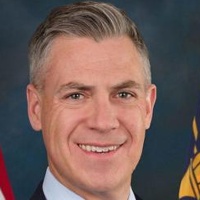
Jim Banks
Senator
IN
Jim Banks
Senator
IN
The Respond, Innovate, Succeed, and Empower (RISE) Act aims to improve college accessibility for students with disabilities by streamlining the documentation process for accommodations. The bill also mandates that colleges report data on students with disabilities and authorizes $10 million in funding for a national technical support center. These measures ensure greater transparency and support for students navigating the transition to postsecondary education.
The Right to IVF Act of 2026 establishes a federal right to fertility treatments, mandates comprehensive insurance coverage for ART and IUI, and expands access to these services for veterans and federal employees.

Tammy Duckworth
Senator
IL
Tammy Duckworth
Senator
IL
The Right to IVF Act of 2026 establishes a federal right to access assisted reproductive technology (ART) and intrauterine insemination (IUI) by overriding restrictive state laws. The bill further expands family-building support by mandating comprehensive fertility coverage for military service members, veterans, federal employees, and those enrolled in private insurance, Medicare, or Medicaid. These measures aim to ensure equitable, affordable access to fertility treatments nationwide.
This bill prohibits foreign-influenced, -controlled, or -owned domestic corporations from contributing to U.S. federal, state, and local elections and mandates strict certification requirements to ensure political funds are free from foreign influence.

Sheldon Whitehouse
Senator
RI
Sheldon Whitehouse
Senator
RI
The "Get Foreign Money Out of U.S. Elections Act" strengthens existing bans on foreign influence by prohibiting domestic business entities with significant foreign ownership or control from contributing to federal elections. The bill also mandates strict certification requirements for corporations and PACs to ensure that decision-making processes remain free from foreign interference. Additionally, it expands these protections to cover state and local ballot initiatives and Super PACs.
This bill prohibits the sale or importation of connected vehicles, software, and hardware originating from or controlled by North Korea, China, Russia, or Iran due to national security risks.
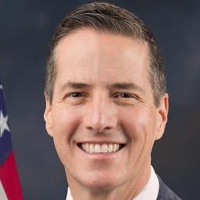
Bernie Moreno
Senator
OH
Bernie Moreno
Senator
OH
The Connected Vehicle Security Act of 2026 prohibits the sale or importation of connected vehicles, their parts, and related software originating from or controlled by covered adversarial countries (North Korea, China, Russia, or Iran). Enforced by the Secretary of Commerce, this law aims to mitigate national security risks associated with foreign adversary access to sensitive vehicle data and control systems. The Act establishes phased bans starting in 2027 for vehicles and software, and 2030 for hardware, while setting up processes for compliance, authorization, and enforcement.
The Expedited Access to Biosimilars Act streamlines the biosimilar licensure process by clarifying clinical study requirements and mandating written justification for additional testing requirements by the Secretary of Health and Human Services.
Rand Paul
Senator
KY
Rand Paul
Senator
KY
The Expedited Access to Biosimilars Act streamlines the approval process for biosimilar products by refining clinical study requirements. It grants the Secretary of Health and Human Services the authority to mandate specific assessments—such as immunogenicity or efficacy—only when accompanied by a formal written justification. These changes aim to balance rigorous safety standards with a more efficient pathway for bringing biosimilars to market.