Legislative Activity
Track Jared's sponsored bills, co-sponsored legislation, and voting record
This bill mandates a comprehensive economic study to quantify the financial costs of extreme heat across health, property, labor, and infrastructure sectors.

Yassamin Ansari
Representative
AZ
Yassamin Ansari
Representative
AZ
The Extreme Heat Economic Study Act of 2025 mandates a comprehensive study, led by NOAA, to quantify the full financial costs of extreme heat events in the United States. This study must analyze impacts across health, property damage, labor productivity, and critical infrastructure like energy and agriculture. The final report will recommend a national system for tracking and publicly reporting these economic losses within four years of enactment.
This Act establishes a coordinated federal response to extreme heat by creating an interagency committee and a National Integrated Heat Health Information System within NOAA to reduce heat-related health risks.
Yassamin Ansari
Representative
AZ
Yassamin Ansari
Representative
AZ
The Coordinated Federal Response to Extreme Heat Act of 2025 establishes a unified federal approach to mitigating the health and safety risks posed by extreme heat. It creates an Interagency Committee within NOAA to coordinate efforts across numerous federal departments and mandates the development of a National Integrated Heat Health Information System (NIHHIS). This new system will provide open access to data, forecasts, and science-backed tools to improve national preparedness and response to dangerous heat events. The Act authorizes $5 million annually through fiscal year 2029 to support these initiatives.
The Forage Fish Conservation Act of 2025 establishes a formal definition for forage fish, mandates scientific advice and management plan updates to protect their role in the marine food web, and specifically addresses the management and monitoring of river herring and shad.

Debbie Dingell
Representative
MI
Debbie Dingell
Representative
MI
The Forage Fish Conservation Act of 2025 aims to strengthen the management of small, schooling fish that form the base of the marine food web. This bill mandates the official definition of "forage fish" and requires fishery councils to prioritize their conservation in management plans. Furthermore, it establishes new rules for setting catch limits based on the dietary needs of dependent predators and enhances monitoring for certain Atlantic fisheries. Ultimately, the Act seeks to ensure the sustainability of the entire ocean ecosystem by protecting these critical prey species.
This resolution urgently calls for the immediate delivery of humanitarian aid to address the severe hunger crisis in Gaza and demands the administration use all diplomatic means to secure hostage release and end the fighting.

Pramila Jayapal
Representative
WA
Pramila Jayapal
Representative
WA
This resolution formally expresses the House of Representatives' grave concern over the severe humanitarian crisis and widespread suffering of civilians in Gaza, alongside the plight of hostages. It urgently calls on the Administration to use all diplomatic tools to secure the release of all hostages. Furthermore, the bill demands the immediate delivery and secure distribution of essential humanitarian aid to address the catastrophic hunger crisis in Gaza.
The Save America’s Rural Hospitals Act stabilizes rural healthcare by enhancing Medicare payments, reducing beneficiary costs, easing regulatory burdens, and funding new transformation grants for essential providers.
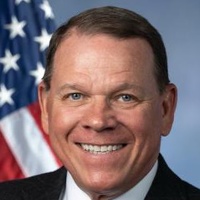
Sam Graves
Representative
MO
Sam Graves
Representative
MO
The Save America’s Rural Hospitals Act is a comprehensive bill designed to stabilize and strengthen rural healthcare infrastructure across the nation. It achieves this by permanently enhancing Medicare payment structures for rural hospitals, reducing regulatory burdens, and establishing new grant programs to foster innovative care delivery models. Ultimately, the legislation seeks to ensure the financial viability of these essential providers and improve access to care for rural beneficiaries.
This resolution condemns the illegal and damaging international practice of using "flags of convenience" for undermining U.S. security, economic rules, and labor standards while supporting the American maritime industry.
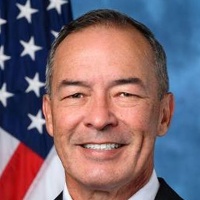
James (Jim) Moylan
Representative
GU
James (Jim) Moylan
Representative
GU
This resolution condemns the international practice of using "flags of convenience," where ships are registered in countries with lax regulations to avoid U.S. laws and standards. Congress asserts that this practice undermines national security by weakening the U.S. merchant marine fleet and enables illegal activities like illicit trafficking and environmental harm. The bill strongly supports the U.S. maritime industry while calling on international bodies to enforce higher global labor and safety standards for shipping.
The TERRA Act establishes a framework for federally recognized Indian Tribes to consolidate multiple federal environmental resiliency funds into a single, flexible plan, streamlining administration and increasing self-determination.

Emily Randall
Representative
WA
Emily Randall
Representative
WA
The TERRA Act establishes a framework allowing federally recognized Indian Tribes to consolidate funding from multiple eligible federal programs into a single, flexible plan for environmental resiliency and community needs. This grants Tribes significant self-determination by streamlining bureaucratic requirements, simplifying reporting, and providing strong authority to waive federal regulations that impede their plans. The legislation mandates federal agencies to coordinate their reviews and accelerate the transfer of funds to participating Tribes. Ultimately, the Act aims to increase efficiency and local control over federal resources while protecting sensitive Traditional Ecological Knowledge.
The Magnus White Cyclist Safety Act of 2025 mandates the Department of Transportation to establish performance standards for automatic emergency braking systems in new passenger vehicles that effectively detect vulnerable road users, including cyclists, in all light conditions.
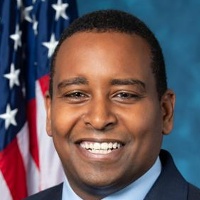
Joe Neguse
Representative
CO
Joe Neguse
Representative
CO
The Magnus White Cyclist Safety Act of 2025 mandates the Department of Transportation to establish performance standards for automatic emergency braking systems in new passenger vehicles. These standards must ensure the systems can detect vulnerable road users, including cyclists, in various lighting conditions. The final rule must be issued within three years, with compliance required within two model years following the rule's issuance.
This Act mandates the National Park Service to establish a program to reduce and eliminate the sale and distribution of disposable plastic products, like single-use water bottles and utensils, across all national park units.

Mike Quigley
Representative
IL
Mike Quigley
Representative
IL
The Reducing Waste in National Parks Act mandates the National Park Service (NPS) to establish a program to significantly reduce or eliminate the sale and distribution of disposable plastic products, including single-use water bottles, across all park units. Regional directors must implement these changes while considering operational costs, visitor safety regarding water access, and vendor contracts. The law also requires proactive visitor education and biennial reviews to assess the program's effectiveness and public impact.
This bill officially revokes the twenty Medals of Honor awarded for actions during the Wounded Knee Massacre of 1890 while allowing recipients to keep the physical medals and associated benefits.

Jill Tokuda
Representative
HI
Jill Tokuda
Representative
HI
The Remove the Stain Act officially rescinds the 20 Medals of Honor awarded to U.S. soldiers for actions during the Wounded Knee Massacre of 1890. This legislation aims to preserve the integrity of the nation's highest military honor by voiding awards given for the killing of predominantly unarmed Native Americans. While the recognition is revoked and names will be removed from the official rolls, recipients will not be required to return the physical medal or forfeit any associated benefits.
The MARSHALS Act restructures the U.S. Marshals Service, moving its organization and leadership entirely under the judicial branch, overseen by the Chief Justice and a new Board.
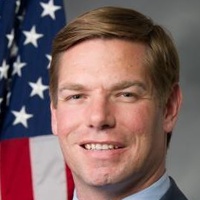
Eric Swalwell
Representative
CA
Eric Swalwell
Representative
CA
The MARSHALS Act fundamentally restructures the United States Marshals Service (USMS), moving its organization entirely into the judicial branch. This bill establishes that the Director and all U.S. Marshals will be appointed by the Chief Justice, subject to oversight from a new Board. The legislation also clarifies the USMS's authority to protect federal judicial personnel and outlines specific conditions under which the Service can assist the Department of Justice.
The Protect our Parks Act of 2025 mandates the immediate full staffing of the National Park Service, the rehiring of recently terminated employees, and the continuation of all authorized park improvement projects.
Joe Neguse
Representative
CO
Joe Neguse
Representative
CO
The Protect our Parks Act of 2025 mandates the Secretary of the Interior to immediately ensure the National Park Service is fully staffed to protect resources and enhance visitor safety. This legislation requires filling all maintenance positions and reinstating any NPS employees terminated since January 20, 2025. Furthermore, the Act ensures the continuation of all previously authorized and funded National Park Service projects.
This bill restricts the transfer of specific offensive military articles and defense services to Israel until Congress authorizes their use for specified purposes and Israel provides written assurances of compliance with international law.

Delia Ramirez
Representative
IL
Delia Ramirez
Representative
IL
This bill imposes significant restrictions on the transfer of specific defense articles and services to Israel. Transfers of listed military equipment, such as certain bombs and ammunition, are prohibited unless Congress first passes a law detailing their specific authorized use. Furthermore, Israel must provide satisfactory written assurances that the items will only be used for those stated purposes and in compliance with international law.
The Save Our Forests Act of 2025 mandates increased staffing and reinstatement of former employees within the Forest Service while ensuring the continuation of all authorized Forest Service projects.
Joe Neguse
Representative
CO
Joe Neguse
Representative
CO
The Save Our Forests Act of 2025 aims to strengthen the management and health of the National Forest System. This legislation mandates the immediate hiring of additional Forest Service personnel and the reinstatement of recently departed employees. Furthermore, it ensures the continuation of all previously authorized and funded Forest Service projects under various existing laws.
This act establishes fixed, non-renewable 18-year terms for future Supreme Court Justices and outlines a staggered appointment schedule, while also creating a temporary mechanism for filling vacancies below the nine-justice quorum.

Henry Johnson
Representative
GA
Henry Johnson
Representative
GA
The Supreme Court Tenure Establishment and Retirement Modernization Act of 2025 establishes fixed, non-renewable 18-year terms for all future Supreme Court Justices, with appointments staggered every two years. This legislation also outlines a process for phasing out current Justices upon the confirmation of new appointees. Finally, it grants the Chief Justice the authority to temporarily fill sudden vacancies below the standard nine-justice level using a randomly selected retired Justice.
This Act establishes a grant program for installing suicide deterrents on public structures and clarifies funding eligibility for bridge safety barriers.
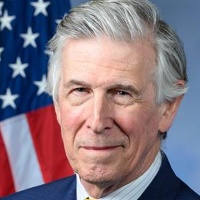
Donald Beyer
Representative
VA
Donald Beyer
Representative
VA
The Barriers to Suicide Act of 2025 establishes a new grant program through the Department of Transportation to fund the installation of suicide deterrents like nets and barriers at high-risk locations such as bridges and rail stations. The bill also amends existing law to explicitly allow National Highway System funds to be used for these safety barriers on bridges. Finally, it mandates a study on the effectiveness of suicide prevention measures for structures other than bridges.
This Act amends budget control laws to reinforce Congress's exclusive power of the purse, clarify when funds can be withheld, and establish legal remedies, including private lawsuits, for improper impoundments.
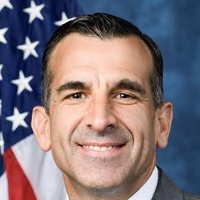
Sam Liccardo
Representative
CA
Sam Liccardo
Representative
CA
The Protecting Our Constitution and Communities Act aims to reassert Congress's exclusive constitutional authority over federal spending by clarifying that the President cannot unilaterally withhold appropriated funds. It strengthens the Comptroller General's oversight role and establishes new legal avenues for private citizens and governments to sue for damages if funds are improperly impounded. Furthermore, the bill tightens the definition of budgetary "contingencies" and ensures that judicial review of these spending disputes remains robust.
This Act establishes a new federal grant program to provide operating support for high-quality public transit that prioritizes service improvements in underserved communities, while also increasing the federal share for rural transit operating costs.
Henry Johnson
Representative
GA
Henry Johnson
Representative
GA
The Stronger Communities through Better Transit Act establishes a new federal grant program to provide operating support for high-quality public transit services. This funding is specifically targeted to improve mobility and environmental outcomes, with a requirement that the majority of funds benefit underserved communities or areas of persistent poverty. The Act also increases the federal share for rural transit operating assistance up to 80%.
This resolution commemorates the National Science Foundation's 75th anniversary by recognizing its vital contributions to U.S. science, engineering, and education while reaffirming Congress's commitment to its future support.
Donald Beyer
Representative
VA
Donald Beyer
Representative
VA
This resolution commemorates the 75th anniversary of the National Science Foundation (NSF), recognizing its vital role in advancing U.S. science, engineering, and education since 1950. Congress acknowledges the NSF's foundational support for groundbreaking innovations, including the internet and advancements in medical technology. The bill reaffirms Congress's commitment to ensuring the NSF continues to lead in scientific discovery for decades to come.
This bill establishes mandatory minimum registered nurse-to-patient staffing ratios in hospitals to enhance patient safety, enforces these standards across federal healthcare programs, and funds initiatives to support the nursing workforce.

Janice Schakowsky
Representative
IL
Janice Schakowsky
Representative
IL
The Nurse Staffing Standards for Hospital Patient Safety and Quality Care Act of 2025 establishes mandatory minimum registered nurse-to-patient ratios across various hospital units to enhance patient safety and care quality. This legislation requires hospitals to implement detailed staffing plans, ensures enforcement through federal programs like Medicare and Medicaid, and supports the nursing workforce through expanded financial aid and retention initiatives. Furthermore, the bill protects nurses who refuse unsafe assignments and establishes clear mechanisms for reporting violations.