Legislative Activity
Track Jared's sponsored bills, co-sponsored legislation, and voting record
This Act mandates clear "Do Not Flush" labeling on disposable wipes containing petrochemical fibers to prevent plumbing pollution, enforced by the FTC.

Lisa McClain
Representative
MI
Lisa McClain
Representative
MI
The Wastewater Infrastructure Pollution Prevention and Environmental Safety Act (WIPPES Act) mandates clear "Do Not Flush" labeling on disposable wipes that cause plumbing issues. This federal standard, enforced by the FTC, requires specific placement and high contrast for the required symbols and text on all packaging. The Act preempts differing state or local labeling laws and gives manufacturers one year to comply.
This bill establishes a strict, last-resort framework requiring explicit Congressional approval for the President to deploy U.S. Armed Forces domestically to suppress insurrection or quell severe domestic violence.
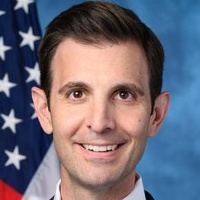
Chris Deluzio
Representative
PA
Chris Deluzio
Representative
PA
The Insurrection Act of 2025 completely rewrites the rules governing when the President can deploy the U.S. Armed Forces domestically to suppress insurrection or quell severe domestic violence. This deployment is strictly limited to being a last resort, requiring specific triggers such as overwhelming local failure or the denial of constitutional rights. Before acting, the President must issue a proclamation and provide a detailed report to Congress, whose approval is required to extend military authority beyond seven days. The Act also establishes expedited congressional procedures for reviewing and approving the deployment and allows for judicial review of the President's legal basis for action.
This Act reauthorizes and updates U.S. tsunami warning, research, and mitigation efforts by improving data management, expanding geographic coverage, enhancing interagency cooperation, and prioritizing timely public alerts.
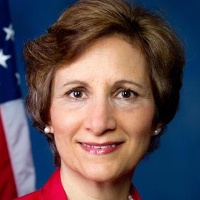
Suzanne Bonamici
Representative
OR
Suzanne Bonamici
Representative
OR
The Tsunami Warning, Research, and Education Act of 2025 reauthorizes and updates the nation's tsunami warning system to enhance the timeliness and accuracy of alerts. This legislation mandates improvements in data management, expands the geographic scope of coverage, and integrates social and behavioral science into mitigation efforts. It also authorizes specific funding levels through fiscal year 2030 to support these critical upgrades across warning, research, and education programs.
The MONARCH Act of 2025 establishes a dedicated fund and grant program to urgently restore habitat and implement conservation plans for the critically declining Western Monarch Butterfly population.
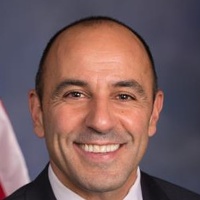
Jimmy Panetta
Representative
CA
Jimmy Panetta
Representative
CA
The MONARCH Act of 2025 addresses the critical decline of the western monarch butterfly population, which has dropped by over 99% in recent decades due to habitat loss and climate change. This bill establishes the Western Monarch Butterfly Rescue Fund to provide grants for habitat restoration projects led by local and Tribal entities. Furthermore, it mandates the implementation of the existing Western Monarch Butterfly Conservation Plan through a partnership with the National Fish and Wildlife Foundation. Finally, the Secretary of the Interior must submit an annual report to Congress detailing the status of the butterflies and the effectiveness of funded conservation efforts.
This bill authorizes a grant program to provide federal funding and technical assistance for remote, island, and Tribal communities to build resilient, local renewable energy systems.
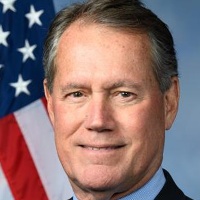
Ed Case
Representative
HI
Ed Case
Representative
HI
The Energy Transitions Initiative Authorization Act of 2025 establishes a new grant program to help remote, island, and Tribal communities build more resilient and reliable local energy systems. This initiative will provide federal funding, up to 90% of project costs, for eligible entities to deploy renewable energy infrastructure like solar, wind, and microgrids. The program emphasizes local partnership and will undergo annual oversight and auditing by the Government Accountability Office (GAO).
This bill updates federal ocean acidification research and monitoring to enhance collaboration with coastal communities, including mandated coordination and representation for Indian Tribes and Native Hawaiian organizations.

Chellie Pingree
Representative
ME
Chellie Pingree
Representative
ME
The Coastal Communities Ocean Acidification Act of 2025 amends existing federal law to significantly enhance collaboration on ocean acidification research and monitoring. This bill mandates increased input from diverse stakeholders, including industry, coastal networks, and Indigenous groups, in guiding federal research priorities. Furthermore, it restructures the Advisory Board to ensure stronger representation from Tribal entities and requires the development of specific coordination policies with affected Tribes. The legislation also directs NOAA to prioritize collaboration with State, local, and Tribal governments when conducting vulnerability assessments.
This act exempts qualifying small businesses from special import duties or fees imposed by the President during a declared national emergency.
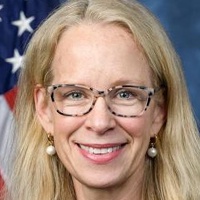
Kelly Morrison
Representative
MN
Kelly Morrison
Representative
MN
The Small Business Liberation Act exempts qualifying small businesses from special duties or fees imposed by the President following a national emergency declaration. This provision ensures that small businesses are not burdened by extra import costs triggered during times of national crisis.
This Act mandates that U.S. Immigration and Customs Enforcement (ICE) agents operating within the United States must clearly display their name and agency affiliation and cannot wear facial coverings, with limited exceptions subject to supervisory review.
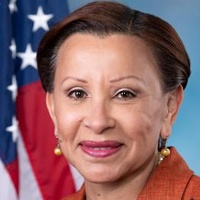
Nydia Velázquez
Representative
NY
Nydia Velázquez
Representative
NY
The No Anonymity in Immigration Enforcement Act of 2025 mandates that U.S. Immigration and Customs Enforcement (ICE) agents conducting domestic enforcement operations must clearly display their name and agency affiliation, and cannot wear facial coverings. Exceptions to this identification rule are permitted only in cases of immediate danger or necessary safety gear, subject to supervisory review within 48 hours. The bill also establishes disciplinary procedures for non-compliance and requires annual reporting to Congress on enforcement and complaints.
This bill establishes a comprehensive "Domestic Workers Bill of Rights" to extend federal labor protections, including overtime, paid sick leave, and anti-discrimination coverage, to domestic employees while creating a standards board to advise on future working conditions.

Pramila Jayapal
Representative
WA
Pramila Jayapal
Representative
WA
The Domestic Workers Bill of Rights Act seeks to significantly expand labor protections for domestic employees by bringing them under standard federal laws, including eligibility for overtime pay and mandated paid sick leave. The bill establishes written employment agreements, sets clear privacy boundaries for workers in private homes, and creates a Standards Board to recommend ongoing improvements to wages and benefits. Furthermore, it establishes enforcement mechanisms and temporarily increases federal Medicaid funding for in-home care services to help offset compliance costs.
This Act allows disaster victims to elect to use their higher earned income and Social Security tax payments from the preceding year when calculating certain federal tax credits.
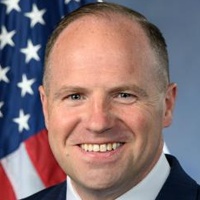
Timothy Kennedy
Representative
NY
Timothy Kennedy
Representative
NY
The Tax Fairness for Disaster Victims Act allows individuals affected by a federally declared disaster to elect to use their prior year's earned income or Social Security tax payments when calculating certain tax credits, such as the Earned Income Tax Credit. This "lookback rule" applies if their income or tax payments were lower during the disaster year. The provision aims to provide financial relief by ensuring disaster victims are not penalized when determining eligibility for these credits.
The FIGHT Act of 2025 strengthens federal prohibitions against animal fighting, enhances enforcement mechanisms, and allows citizens to sue violators of animal fighting provisions.
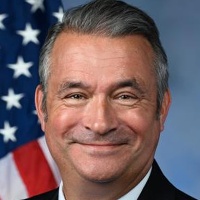
Don Bacon
Representative
NE
Don Bacon
Representative
NE
The FIGHT Act of 2025 significantly strengthens federal prohibitions against animal fighting ventures, specifically targeting the sponsorship, exhibition, and gambling associated with these events. This legislation clarifies the definition of a rooster for legal purposes and bans the interstate transport of roosters for fighting. Furthermore, it empowers private citizens to file lawsuits against violators, allowing for civil penalties and the potential seizure of property used to facilitate illegal animal fighting.
The My Body, My Data Act of 2025 establishes strict limits on the collection, use, and sharing of personal reproductive and sexual health information, while granting individuals robust rights to access, correct, and delete their sensitive data.
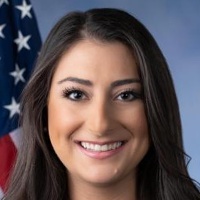
Sara Jacobs
Representative
CA
Sara Jacobs
Representative
CA
The My Body, My Data Act of 2025 establishes strict federal protections for personal reproductive and sexual health information held by regulated entities. This law limits data collection and sharing to only what is strictly necessary for providing requested services. It grants individuals the rights to access, correct, and delete this sensitive data, and requires clear public privacy policies detailing data handling practices. Finally, the Act prohibits retaliation against individuals who exercise these new privacy rights and grants enforcement authority to the FTC while allowing individuals to sue violators.
This Act temporarily suspends certain duties on imported bicycle parts for ten years to encourage domestic bicycle assembly and manufacturing.

Vern Buchanan
Representative
FL
Vern Buchanan
Representative
FL
This Act temporarily suspends certain duties on imported bicycle parts for a 10-year period to encourage domestic assembly and manufacturing. Importers must declare their intent to use the parts for building complete bicycles in the U.S. to qualify for this duty exclusion. The law also mandates a report to Congress evaluating progress toward specific annual domestic production targets.
This Act permanently protects inventoried roadless areas within the National Forest System from new road construction and logging, upholding existing federal "Roadless Rule" prohibitions.
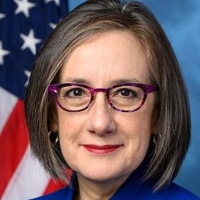
Andrea Salinas
Representative
OR
Andrea Salinas
Representative
OR
The Roadless Area Conservation Act of 2025 aims to provide lasting protection for inventoried roadless areas within the National Forest System. This legislation codifies existing federal regulations, known as the "Roadless Rule," which generally prohibits the construction of new roads or the cutting of timber in these sensitive zones. The purpose is to safeguard critical ecological benefits, clean water sources, and wildlife habitats while maintaining the Forest Service's multiple-use management mission.
The Choose Medicare Act establishes new Medicare Part E Public Health Plans, caps out-of-pocket spending for traditional Medicare, enhances marketplace premium subsidies, and mandates employer referrals for coverage when insurance is inadequate.
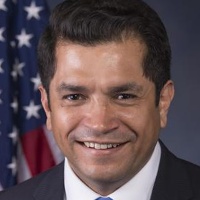
Jimmy Gomez
Representative
CA
Jimmy Gomez
Representative
CA
The Choose Medicare Act establishes a new "Medicare Part E Public Health Plan" offering comprehensive coverage, including reproductive services, available on and off the ACA exchanges. It also caps annual out-of-pocket spending for traditional Medicare Part A and B services starting in 2027. Furthermore, the bill enhances marketplace subsidies by benchmarking them against Gold plans and makes enhanced cost-sharing reductions permanent. Finally, it requires employers who do not offer adequate coverage to refer employees to health insurance navigators.
This Act mandates that most private firearm transfers must go through a licensed dealer to ensure background checks are performed on all purchasers.
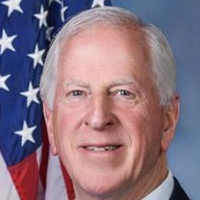
Mike Thompson
Representative
CA
Mike Thompson
Representative
CA
The Bipartisan Background Checks Act of 2025 aims to strengthen existing federal background check systems to prevent prohibited persons from acquiring firearms. This bill primarily mandates that most private firearm transfers must be facilitated through a licensed dealer who will conduct a background check. The legislation includes specific exceptions for family gifts, law enforcement, and temporary transfers under emergency circumstances.
The Puerto Rico BEACHES Act mandates a Government Accountability Office study on the economic impact of coastal erosion in Puerto Rico and requires recommendations for mitigation.
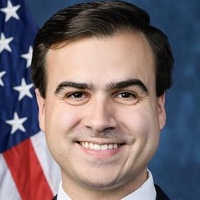
Pablo José Hernández Rivera
Representative
PR
Pablo José Hernández Rivera
Representative
PR
The Puerto Rico BEACHES Act mandates a comprehensive study led by the Government Accountability Office (GAO) to assess the impact of coastal erosion on Puerto Rico's economy, including tourism and fishing. The GAO must coordinate with local Puerto Rican agencies to analyze these effects across coastal zones. The final report must provide Congress with specific recommendations for mitigating environmental damage and addressing industry-specific challenges caused by erosion.
This bill prohibits immigration officers from wearing any uniform or apparel bearing the word "police" while performing their duties.
Nydia Velázquez
Representative
NY
Nydia Velázquez
Representative
NY
The Combating Deceptive Immigration Enforcement Practices Act of 2025 prohibits immigration officers from the Department of Homeland Security, including ICE and CBP, from wearing any item bearing the word "police" while performing their duties. This measure aims to prevent confusion and deceptive practices related to immigration enforcement.
The Pride In Mental Health Act of 2025 establishes grants and federal initiatives to improve mental health services and research specifically for LGBTQ+ youth while explicitly prohibiting the use of funds for conversion therapy.
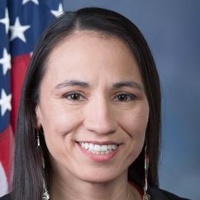
Sharice Davids
Representative
KS
Sharice Davids
Representative
KS
The Pride In Mental Health Act of 2025 establishes a new grant program to improve mental health and substance abuse outcomes for LGBTQ+ youth through culturally competent care and resource development. These grants strictly prohibit funding for conversion therapy practices. The bill also mandates federal data collection on LGBTQ+ youth mental health and requires a report on the needs of those in foster care.
The Excess Urban Heat Mitigation Act of 2025 establishes a grant program to fund projects, prioritizing low-income areas, that reduce extreme heat in urban environments through measures like tree planting and installing cooling infrastructure.
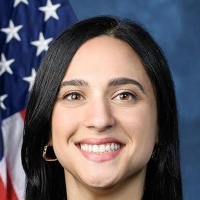
Yassamin Ansari
Representative
AZ
Yassamin Ansari
Representative
AZ
The Excess Urban Heat Mitigation Act of 2025 establishes a new grant program to combat dangerous urban heat islands, which disproportionately affect low-income and minority communities. This program will fund eligible entities for projects like tree planting, installing cool pavements, and establishing cooling centers. At least 75% of the annual funding must target designated low-income census tracts, ensuring resources are directed to the most vulnerable areas. The Act authorizes $30 million annually through fiscal year 2033 to support these essential mitigation efforts.