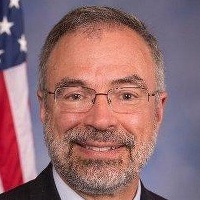
Legislative Activity
Track Andy's sponsored bills, co-sponsored legislation, and voting record
This resolution censures Delegate Stacey Plaskett and removes her from the House Intelligence Committee for allegedly colluding with convicted sex offender Jeffrey Epstein during a congressional hearing.
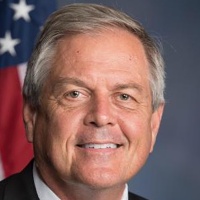
Ralph Norman
Representative
SC
Ralph Norman
Representative
SC
This resolution censures and condemns Delegate Stacey Plaskett for allegedly colluding with convicted sex offender Jeffrey Epstein during a 2019 congressional hearing. It cites evidence suggesting Plaskett coordinated her line of questioning with Epstein in real-time via text message. Consequently, the bill removes Delegate Plaskett from the House Permanent Select Committee on Intelligence and directs an ethics investigation into her conduct.
This bill authorizes the posthumous award of a Congressional Gold Medal to Major Thomas D. Howie for his extraordinary heroism during the Battle of Normandy.
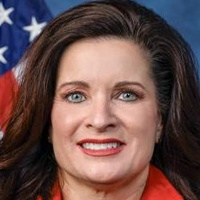
Sheri Biggs
Representative
SC
Sheri Biggs
Representative
SC
This bill authorizes the posthumous award of a Congressional Gold Medal to Major Thomas D. Howie for his extraordinary bravery and leadership during the Battle of Normandy. The medal will be presented to his next of kin before being permanently displayed at The Citadel Museum. The Treasury Secretary is also authorized to strike and sell bronze duplicates of the medal.
The LABEL Act mandates that abortion-inducing drugs must be labeled with the dispenser's name and address and the prescriber's name, preempting less strict state or local requirements.
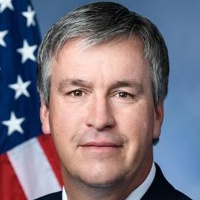
Barry Moore
Representative
AL
Barry Moore
Representative
AL
The LABEL Act proposes new federal labeling requirements for abortion-inducing drugs, mandating that the label include the dispenser's name and address, as well as the prescriber's name. This legislation also prohibits states or localities from enforcing labeling requirements for these drugs that are less strict than the new federal standard. The bill specifically defines which drugs fall under this labeling requirement, excluding those used for ectopic pregnancies or to remove a deceased fetus.
This resolution condemns the persecution of Christians in Nigeria and supports decisive U.S. action to end the existential threat they face.
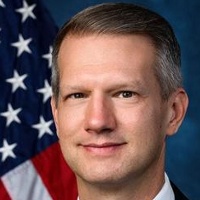
Riley Moore
Representative
WV
Riley Moore
Representative
WV
This resolution condemns the severe, ongoing persecution and mass killing of Christians in Nigeria by terrorist groups and militants. It criticizes the Nigerian government for failing to protect its Christian citizens and for enforcing blasphemy laws. Finally, Congress stands ready to support decisive action, including sanctions, to end this existential threat and calls for direct humanitarian aid to victims.
This resolution commends President Trump for redesignating Nigeria as a Country of Particular Concern due to severe religious freedom violations and calls for specific U.S. policy actions, including aid conditioning and targeted sanctions.
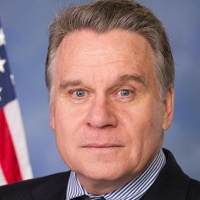
Christopher Smith
Representative
NJ
Christopher Smith
Representative
NJ
This resolution commends President Trump for redesignating Nigeria as a Country of Particular Concern due to severe and ongoing religious freedom violations. It details extensive violence against religious minorities, primarily Christians, by extremist groups and highlights the Nigerian government's failure to act. The bill calls for specific U.S. foreign policy actions, including conditioning aid and imposing targeted sanctions on responsible individuals and groups.
This bill ensures that essential firearm-related government operations, such as background checks and export license processing, continue during a government shutdown.
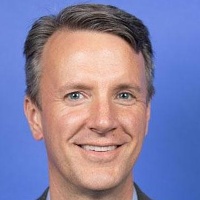
Ben Cline
Representative
VA
Ben Cline
Representative
VA
The Firearm Access During Shutdowns Act ensures that essential firearm-related government operations continue without interruption during a federal shutdown. This legislation specifically mandates the continuation of the FBI's NICS background check system and related processing at the ATF, Department of Commerce, and Department of State. By deeming these functions essential for protecting life and property, the bill prevents delays in firearm transfers and export licensing during lapses in appropriations.
This act prohibits any individual holding foreign citizenship or nationality from being elected to the U.S. House of Representatives or the Senate.
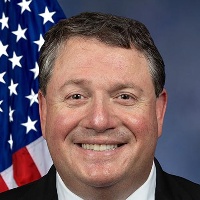
Randall Fine
Representative
FL
Randall Fine
Representative
FL
The Disqualifying Dual Loyalty Act of 2025 prohibits any individual holding citizenship or nationality in a foreign country from being elected to the U.S. House of Representatives or the Senate. This measure establishes a strict requirement that candidates for Congress must exclusively hold United States citizenship. Essentially, dual citizenship disqualifies a person from serving in Congress under this Act.
This Act adjusts the Federal Medical Assistance Percentage (FMAP) for the District of Columbia's Medicaid program, setting a temporary phase-down schedule until 2030 before reverting to the standard calculation.
Michael Cloud
Representative
TX
Michael Cloud
Representative
TX
The District of Columbia Medicaid Fairness Act adjusts the Federal Medical Assistance Percentage (FMAP) used for calculating D.C.'s Medicaid funding. The bill establishes a temporary, declining federal matching rate for D.C. between 70% and 55% through fiscal year 2029. After 2029, D.C.'s FMAP will revert to the standard calculation method.
This resolution urges the FDA Director to reevaluate the safety of chemical abortion drugs based on recent independent studies and to publicly release a comprehensive safety review.
John Rose
Representative
TN
John Rose
Representative
TN
This resolution urges the Director of the Food and Drug Administration (FDA) to immediately reevaluate the safety of all chemical abortion drugs based on recent independent studies. It highlights concerns that expanded access, including mail distribution, may increase risks of abuse and serious complications. The measure specifically calls for the FDA to publicly release a comprehensive safety review incorporating real-world complication data.
This Act suspends 2025 federal farm payment limitations and allows producers to receive an advance partial payment for their 2025 covered commodities.
Eric Crawford
Representative
AR
Eric Crawford
Representative
AR
The Bridge the Gap for Rural Communities Act temporarily suspends federal payment limitations for the 2025 crop year. It also establishes an option for eligible producers to receive an advance partial payment of up to 50% of their projected 2025 covered commodity payments by the end of that year. This measure aims to provide immediate financial support to rural agricultural producers.
This resolution expresses support for designating October 5 through October 11, 2025, as "National 4-H Week" to recognize the organization's impact on youth development.
Glenn Thompson
Representative
PA
Glenn Thompson
Representative
PA
This resolution expresses the support of Congress for designating October 5 through October 11, 2025, as "National 4-H Week." It recognizes 4-H as a vital youth development organization that empowers nearly six million young people through hands-on learning in areas like science, health, and civic engagement. The bill celebrates 4-H's role in fostering confident, compassionate leaders across the nation.
This bill mandates the reinstatement of the 2011 safety protocols for mifepristone, bans its importation, and creates a federal cause of action for harm resulting from illegally distributed abortion drugs.
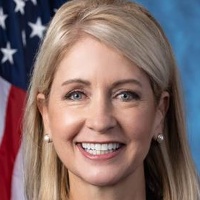
Mary Miller
Representative
IL
Mary Miller
Representative
IL
The Restoring Safeguards for Dangerous Abortion Drugs Act mandates that the FDA immediately revert the safety requirements for mifepristone to the 2011 Risk Evaluation and Mitigation Strategy (REMS). This legislation also establishes a new federal cause of action allowing individuals harmed by illegally imported abortion drugs to sue the responsible entities. Finally, the Act explicitly bans the importation of mifepristone into the United States.
This act establishes a structured, multi-phase apprenticeship program allowing drivers under 21 to operate commercial motor vehicles in interstate commerce under strict supervision and specific vehicle requirements.
Eric Crawford
Representative
AR
Eric Crawford
Representative
AR
The Developing Responsible Individuals for a Vibrant Economy Act (DRIVE-SAFE Act) establishes a structured apprenticeship program allowing drivers under 21 to operate commercial motor vehicles in interstate commerce. This program requires apprentices to complete 400 hours of supervised training, divided into two probationary phases focusing on foundational and advanced driving skills. Participation mandates specific vehicle technology, such as automatic transmissions and collision mitigation systems, and continuous supervision by an experienced driver.
This resolution honors the life and legacy of Charles "Charlie" James Kirk, condemns his assassination as political violence, and calls for a renewed commitment to civil discourse and American founding principles.

Mike Johnson
Representative
LA
Mike Johnson
Representative
LA
This resolution honors the life and legacy of Charles "Charlie" James Kirk, founder of Turning Point USA. It strongly condemns his assassination as an act of political violence. The bill calls for a renewed national commitment to civil discourse and the founding principles of the United States.
The Safe Step Act mandates that group health plans using medication step therapy establish clear, timely exception processes for patients and doctors when required drugs are medically inappropriate or ineffective.
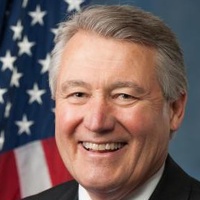
Rick Allen
Representative
GA
Rick Allen
Representative
GA
The Safe Step Act establishes mandatory, transparent exception processes for health plans that use "step therapy" protocols for prescription drugs. This ensures patients or their doctors can quickly request coverage for a prescribed medication when specific clinical criteria are met, such as previous treatment failure or risk of harm. Plans must decide on standard requests within 72 hours and urgent requests within 24 hours, and approved exceptions must last for at least one year. Furthermore, insurers must report detailed data annually on exception requests, approvals, and denials to the Secretary of Health and Human Services.
This Act prohibits U.S. courts and arbitrators from enforcing any foreign law, including Sharia law, if doing so would violate fundamental rights guaranteed by the U.S. or State Constitutions.
Randall Fine
Representative
FL
Randall Fine
Representative
FL
The No Shari’a Act ensures that U.S. courts rely exclusively on Federal and State laws when making decisions. This legislation prohibits courts and arbitrators from enforcing any foreign law, including Sharia law, if doing so would violate fundamental constitutional rights. The Act is designed to prevent foreign legal codes from undermining the established constitutional protections guaranteed to all Americans.
This resolution officially recognizes the 250th anniversary of the United States Navy, celebrating its history, global strength, and vital contributions to national security and diplomacy.
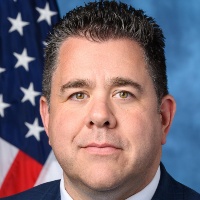
Nicolas LaLota
Representative
NY
Nicolas LaLota
Representative
NY
This resolution officially recognizes the 250th birthday of the United States Navy, celebrating its long history since the Continental Navy was established in 1775. Congress expresses deep gratitude for the bravery and dedication of all past and present Sailors who have defended the nation. The bill reaffirms the Navy's vital role in global security, humanitarian efforts, and maintaining American strength worldwide.
This bill establishes the new H-2C nonimmigrant visa category to allow registered employers in low-unemployment areas to temporarily hire foreign workers for specific, registered positions.
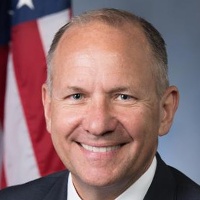
Lloyd Smucker
Representative
PA
Lloyd Smucker
Representative
PA
The Essential Workers for Economic Advancement Act establishes a new temporary visa category, H-2C, designed to allow registered employers in areas with low unemployment to hire foreign workers for specific, registered positions. This bill creates a comprehensive framework defining eligibility, setting numerical caps, and outlining strict requirements for both employers and workers to address labor shortages. It also includes provisions for worker protections, portability, and a mandatory study on the program's economic and social impact.
The Chloe Cole Act prohibits healthcare professionals from performing chemical or surgical mutilation on minors by linking the prohibition to interstate commerce and establishes a private right of action for victims to sue.
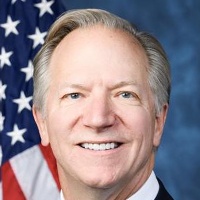
Robert Onder
Representative
MO
Robert Onder
Representative
MO
The Chloe Cole Act prohibits healthcare professionals from engaging in chemical or surgical mutilation of minors, defined as specific medical interventions intended to alter appearance or biological function related to sex. This prohibition is enforced through federal jurisdiction when interstate commerce is involved in the procedure. The bill also establishes a private right of action, allowing individuals subjected to these procedures as minors to sue participating providers, and sets strict liability standards for future violations.
This Act mandates that new passenger motor vehicles sold in the U.S. must include standard equipment capable of receiving AM broadcast radio signals.

Gus Bilirakis
Representative
FL
Gus Bilirakis
Representative
FL
The AM Radio for Every Vehicle Act of 2025 mandates that the Secretary of Transportation establish a rule requiring AM broadcast radio receivers to be installed as standard equipment in new passenger motor vehicles. This requirement aims to ensure public access to AM radio signals, which are often used for emergency alerts. The bill also directs a GAO study on the effectiveness of AM radio within the national emergency alert system compared to other technologies. Finally, the Act preempts state and local laws on this matter and includes a sunset provision eight years after enactment.