Legislative Activity
Track Jim's sponsored bills, co-sponsored legislation, and voting record
This bill reauthorizes the Accelerating Access to Critical Therapies for ALS Act through 2031 while enhancing grant oversight, safety reporting requirements, and FDA strategic planning for rare neurodegenerative diseases.

Mike Quigley
Representative
IL
Mike Quigley
Representative
IL
The Accelerating Access to Critical Therapies for ALS Reauthorization Act of 2026 extends vital funding for ALS research and clinical trial programs through 2031. This legislation strengthens oversight by enhancing grant review processes, improving safety reporting requirements, and mandating a comprehensive five-year FDA action plan to accelerate the development of treatments for rare neurodegenerative diseases.
This bill authorizes a seven-year grant program for the National Law Enforcement Officers Memorial Fund to support the National Law Enforcement Museum’s educational, community outreach, and officer wellness initiatives.
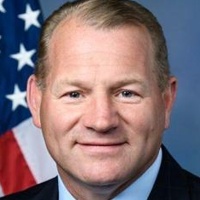
Troy Nehls
Representative
TX
Troy Nehls
Representative
TX
The National Law Enforcement Officers Remembrance, Support, and Community Outreach Act authorizes $6 million in annual grants over seven years to the National Law Enforcement Officers Memorial Fund. These funds will support the National Law Enforcement Museum’s public education, community outreach, and officer safety and wellness programs. As a condition of the grant, the museum must provide free admission to law enforcement officers and their families, as well as dedicated free hours for the general public.
The AADAPT Act expands grant eligibility and funding to integrate dementia care services into health centers through 2031.
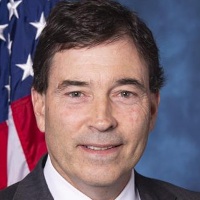
Troy Balderson
Representative
OH
Troy Balderson
Representative
OH
The AADAPT Act expands access to specialized dementia care by authorizing grants for public and nonprofit health centers to integrate these services into their programs. Additionally, the bill extends federal funding authorization through 2031 to ensure the continued growth and sustainability of these critical health outcomes.
This bill reauthorizes and updates federal vector-borne disease initiatives and grant programs through 2030 to improve the prevention, identification, and response to tick-borne illnesses.
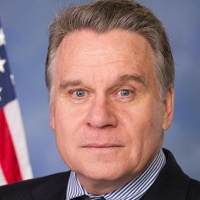
Christopher Smith
Representative
NJ
Christopher Smith
Representative
NJ
The Kay Hagan Tick Act reauthorization extends federal funding and support for vector-borne disease initiatives through 2030. This legislation updates national strategy requirements and enhances the capacity of regional centers and health departments to identify, prevent, and respond to tick-borne and other vector-borne illnesses.
This bill mandates electronic prior authorization, increases transparency through required data reporting, and establishes faster decision timelines for Medicare Advantage plans to improve timely access to care for seniors.
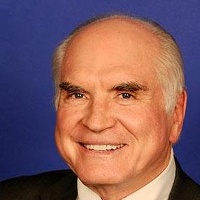
Mike Kelly
Representative
PA
Mike Kelly
Representative
PA
The Improving Seniors’ Timely Access to Care Act of 2025 aims to streamline and modernize the prior authorization process within Medicare Advantage plans. This bill mandates the adoption of electronic prior authorization systems and significantly increases transparency regarding approval rates and decision times starting in 2027. Furthermore, it establishes new enrollee protections and grants the Secretary authority to enforce faster decision timeframes for medical services.
The SAFE Banking Act of 2026 provides federal protections and safe harbor for financial institutions serving state-sanctioned marijuana and hemp-related businesses, while also addressing mortgage income treatment and reporting requirements.
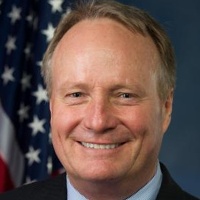
David Joyce
Representative
OH
David Joyce
Representative
OH
The SAFE Banking Act of 2026 aims to provide federal protections for financial institutions serving state-sanctioned marijuana and hemp-related businesses. It prohibits federal regulators from penalizing banks solely for providing financial services to these state-compliant operations. Furthermore, the bill clarifies that proceeds from these state-legal businesses are not automatically considered unlawful proceeds under federal money laundering statutes. It also addresses mortgage underwriting and requires studies on diversity and inclusion within these sectors.
This bill renames and revises the Great American Outdoors Act's maintenance fund, increases dedicated funding through new, higher fees for foreign visitors, and sets spending priorities for deferred maintenance across public lands agencies.
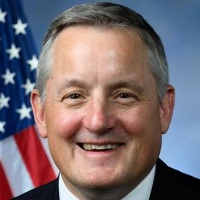
Bruce Westerman
Representative
AR
Bruce Westerman
Representative
AR
This bill, the Great American Outdoors Act 250, significantly reforms and renames the existing public lands restoration fund to the America’s Legacy Restoration Fund. It secures dedicated funding streams, primarily from energy revenues and new fees on foreign visitors, to address critical deferred maintenance across the National Park Service, Forest Service, and other public land agencies. The legislation establishes strict spending priorities for infrastructure repair while also creating pilot programs for enhancing outdoor recreation and sportsmen's access. Finally, it mandates increased transparency and accountability through standardized metrics and public reporting on all funded projects.
This bill directs the President to remove U.S. Armed Forces from hostilities with Iran, unless necessary for self-defense or authorized by Congress.
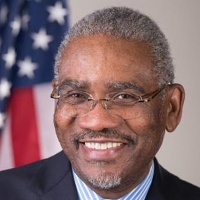
Gregory Meeks
Representative
NY
Gregory Meeks
Representative
NY
This bill directs the President to withdraw U.S. Armed Forces from hostilities involving Iran, utilizing the authority provided by the War Powers Resolution. The President may only keep forces deployed if they are necessary to defend the U.S. or its allies from an imminent attack. This directive does not apply if Congress has already provided a formal authorization for military action against Iran.
The Jewish American Security Act aims to combat rising antisemitism through enhanced security grants, new protections for Jewish students in education, and increased transparency requirements for online platforms regarding hate speech.

Dan Goldman
Representative
NY
Dan Goldman
Representative
NY
The Jewish American Security Act addresses the rising threat of antisemitism across the nation. This bill mandates new protections for Jewish students in educational settings and significantly increases funding and administrative support for securing Jewish community institutions. Furthermore, it requires increased transparency from large online platforms regarding their moderation of antisemitic content and mandates federal assessments of domestic and transnational antisemitic threats.
This bill expands Medicare Part B coverage to reimburse for specific pharmacist services related to testing and treatment for certain public health threats, effective January 1, 2026.
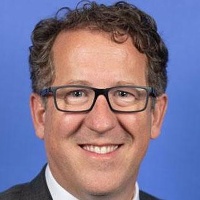
Adrian Smith
Representative
NE
Adrian Smith
Representative
NE
The Ensuring Community Access to Pharmacist Services Act expands Medicare Part B coverage to include services provided by pharmacists starting January 1, 2026. This coverage is specifically for testing or treatment related to COVID-19, the flu, RSV, strep throat, or during a declared public health emergency. The bill outlines payment structures, generally covering 80% of the cost, and prohibits pharmacists from balance billing Medicare patients for these covered services.
This bill disapproves the Department of Education's final rule on federal student loan programs, preventing its implementation.
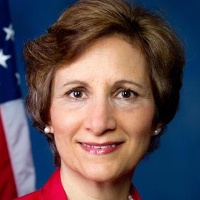
Suzanne Bonamici
Representative
OR
Suzanne Bonamici
Representative
OR
This bill seeks to disapprove the Department of Education's final rule regarding the "Reimagining and Improving Student Education-Federal Student Loan Program." By utilizing the Congressional Review Act, this legislation prevents the new regulations from taking legal effect. Consequently, the Department of Education cannot implement the changes outlined in that specific rule.
This bill authorizes the minting and sale of commemorative gold and silver coins to honor the 25th anniversary of the September 11, 2001, terrorist attacks, with surcharges supporting the National September 11 Memorial and Museum.
Dan Goldman
Representative
NY
Dan Goldman
Representative
NY
This bill authorizes the Secretary of the Treasury to mint and issue commemorative gold and silver coins marking the 25th anniversary of the September 11, 2001, terrorist attacks. The coins will honor the victims, first responders, and survivors, with designs selected in consultation with the National September 11 Memorial and Museum. All surcharges from the sale of these coins will be paid directly to the Memorial and Museum to support its operations and maintenance.
This act prohibits the imposition of the death penalty for any federal crime and mandates resentencing for those previously sentenced to death.
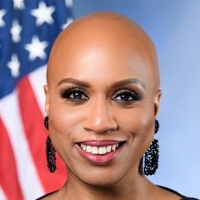
Ayanna Pressley
Representative
MA
Ayanna Pressley
Representative
MA
This Act, the Federal Death Penalty Prohibition Act, immediately bans the imposition of the death penalty for all federal crimes upon enactment. It also mandates that individuals previously sentenced to death for federal offenses must be resentenced.
This bill directs key federal agencies to report annually on strategies to defend U.S. interests against financial crimes facilitated by adversarial actors using artificial intelligence.
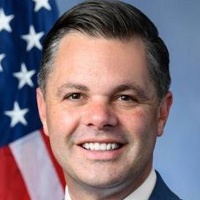
Zachary (Zach) Nunn
Representative
IA
Zachary (Zach) Nunn
Representative
IA
The AI PLAN Act directs key federal agencies to develop a strategy to counter the national and economic security risks posed by adversarial actors using artificial intelligence for financial crimes. This involves submitting annual reports detailing current and needed resources, interagency coordination, and public-private partnerships. The bill also mandates follow-up recommendations for legislative action and best practices to mitigate these evolving AI-driven threats.
This bill revises federal funding restrictions to allow the use of Highway Trust Fund and surface transportation block grant funds for constructing eligible Type II highway noise barriers, while also permitting these barriers to incorporate multipurpose uses and requiring consideration of aesthetics.
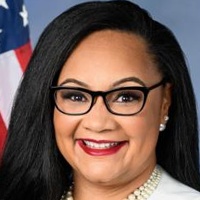
Nikema Williams
Representative
GA
Nikema Williams
Representative
GA
The Negating Neighborhood Noise Act of 2026 modifies federal rules to allow the use of Highway Trust Fund and surface transportation block grant funds for constructing specific types of Type II highway noise barriers. The bill also permits these barriers to incorporate secondary beneficial uses, such as hosting renewable energy or broadband infrastructure. Finally, it mandates that project sponsors consider the aesthetics of new or preserved noise barriers.
This act prohibits the use of federal funds for military action in or against Iran through 2026 unless Congress formally declares war or authorizes such force.
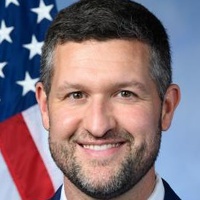
Patrick Ryan
Representative
NY
Patrick Ryan
Representative
NY
The No Funds for Iran War Act prohibits the use of federal funds for military action in or against Iran through the end of 2026. This ban remains in effect unless Congress formally declares war or passes a specific authorization for military force. Exceptions are made only for actions consistent with the War Powers Resolution or necessary self-defense against an imminent attack.
This resolution expresses strong Congressional support for maintaining the current level of United States military personnel serving in the Kosovo Force (KFOR) to ensure regional stability.
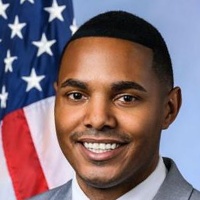
Ritchie Torres
Representative
NY
Ritchie Torres
Representative
NY
This resolution expresses strong Congressional support for maintaining the current level of approximately 600 United States military personnel in the Kosovo Force (KFOR). It asserts that this presence is vital for regional stability, peace between Kosovo and Serbia, and that U.S. funding should not be used to reduce forces below this level. The bill recognizes KFOR's crucial role in deterring conflict and maintaining security in the region.
This bill welcomes King Charles III to the United States while reaffirming the enduring special relationship between the U.S. and the U.K. based on shared history, values, and mutual commitment to security and prosperity.
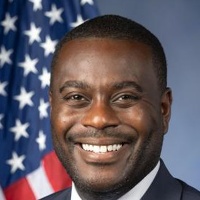
Gabe Amo
Representative
RI
Gabe Amo
Representative
RI
This resolution celebrates the enduring special relationship between the United States and the United Kingdom, highlighting shared history, democratic values, and mutual security commitments. It specifically welcomes the upcoming 2026 visit of King Charles III to the United States. The bill reaffirms the commitment to strengthening diplomatic, economic, and defense ties between the two nations.
This resolution directs the President to remove U.S. Armed Forces from hostilities with Iran, unless necessary for imminent self-defense.
Gregory Meeks
Representative
NY
Gregory Meeks
Representative
NY
This resolution directs the President, under the War Powers Resolution, to remove U.S. Armed Forces from hostilities involving Iran. The order mandates withdrawal unless forces are necessary for imminent self-defense of the U.S. or its allies. Any continued defensive action must comply with existing War Powers reporting requirements.
The Interstate Ferry Fairness Act expands federal funding eligibility under the Ferry Boat Program to include qualifying privately owned ferry boats and terminal facilities that serve interstate routes.
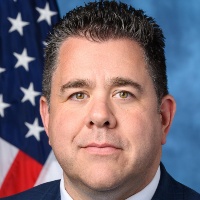
Nicolas LaLota
Representative
NY
Nicolas LaLota
Representative
NY
The Interstate Ferry Fairness Act expands the federal Ferry Boat Program to include privately owned ferry boats and terminal facilities that provide substantial public benefits. This legislation allows private operators on qualifying interstate routes to access federal construction and maintenance funding, provided they adhere to regulated fare structures. The bill aims to improve surface transportation connectivity by integrating private ferry services into the national infrastructure framework.