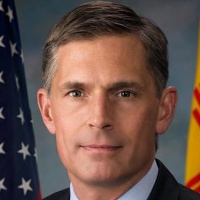
Legislative Activity
Track Martin's sponsored bills, co-sponsored legislation, and voting record
The Choice in Affordable Housing Act of 2025 incentivizes landlords to accept Housing Choice Vouchers, particularly in high-opportunity areas, by offering financial bonuses, covering security deposits, and improving program oversight.
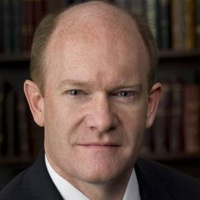
Christopher Coons
Senator
DE
Christopher Coons
Senator
DE
The Choice in Affordable Housing Act of 2025 aims to increase the participation of private landlords in the Housing Choice Voucher (Section 8) program, particularly in high-opportunity neighborhoods. It establishes new incentives, such as one-time payments and security deposit assistance, funded by the Herschel Lashkowitz Housing Partnership Fund. The Act also modernizes inspection standards, requires the use of specific Small Area Fair Market Rents, and mandates annual reporting on the program's effectiveness.
The Mining Waste, Fraud, and Abuse Prevention Act of 2025 updates regulations for mining on federal lands by setting fees, royalties, and environmental standards, and establishing a fund for reclaiming abandoned mines.
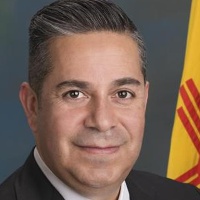
Ben Luján
Senator
NM
Ben Luján
Senator
NM
This bill aims to reform mining practices on federal lands by setting royalties on mineral extraction, introducing stricter permitting and environmental regulations, and establishing a fund for reclaiming abandoned mines. It requires mining operators to pay annual fees and royalties, obtain permits for mineral activities, and provide financial assurances for land reclamation. The bill also prioritizes the protection of sensitive lands and mandates tribal consultation before mineral activities begin. These changes are intended to balance resource extraction with environmental protection and ensure fair compensation for the use of public lands.
This resolution affirms the rule of law, the legitimacy of judicial review, and the duty of the executive branch to comply with Federal court rulings.
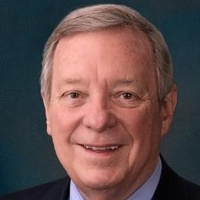
Richard Durbin
Senator
IL
Richard Durbin
Senator
IL
This resolution affirms the rule of law and the legitimacy of judicial review, emphasizing the Supreme Court's duty to interpret the law. It supports the established precedent that the executive branch must comply with Federal court rulings. The resolution expresses concern over statements suggesting the executive branch may disregard the authority of the Federal Judiciary.
The HELP Copays Act mandates that financial assistance provided by third parties for prescription drug costs must count toward a patient's deductible, copayments, and out-of-pocket limits.

Roger Marshall
Senator
KS
Roger Marshall
Senator
KS
The HELP Copays Act mandates that financial assistance provided by third parties, such as non-profits or drug manufacturers, must count toward a patient's deductible, copayment, and out-of-pocket maximums. This change ensures that patient cost-sharing requirements are met even when external aid is used to cover prescription drug costs. The new rules generally apply to plan years beginning on or after January 1, 2026.
The Richard L. Trumka Protecting the Right to Organize Act of 2025 significantly strengthens worker rights by overhauling the NLRA to impose stricter penalties on employers, redefine joint employment, protect striking workers, and mandate binding arbitration for first contracts.
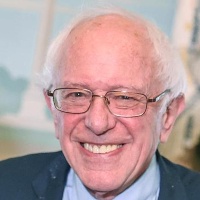
Bernard Sanders
Senator
VT
Bernard Sanders
Senator
VT
The Richard L. Trumka Protecting the Right to Organize Act of 2025 significantly strengthens the National Labor Relations Act to bolster worker organizing rights and impose stricter penalties on employers who violate labor laws. It redefines joint employment, makes it harder to classify workers as independent contractors, and bans class action waivers. The bill also establishes mandatory arbitration for first contracts and allows employees to sue employers directly for serious unfair labor practices.
The Navajo-Gallup Water Supply Project Amendments Act of 2025 expands the project's service area, increases authorized funding, establishes new trust funds for water development and maintenance, and provides for the long-term management of water infrastructure and rights.
Ben Luján
Senator
NM
Ben Luján
Senator
NM
The Navajo-Gallup Water Supply Project Amendments Act of 2025 updates and expands the Northwestern New Mexico Rural Water Projects Act to improve water delivery for the Navajo Nation, the Jicarilla Apache Nation, and the City of Gallup. The bill increases authorized project funding to $2.175 billion, expands service areas, and establishes new trust funds to support long-term operation, maintenance, and infrastructure development. Additionally, it provides a framework for managing deferred construction and clarifies tax and land-trust regulations to ensure the project's continued progress.
This bill establishes a federal Truth and Healing Commission to investigate the history and impact of U.S. Indian Boarding School policies, mandates public testimony, and strengthens repatriation laws for associated cultural items.

Lisa Murkowski
Senator
AK
Lisa Murkowski
Senator
AK
This bill establishes the Truth and Healing Commission on Indian Boarding School Policies to investigate the history and impact of these federal policies on Native American communities over a six-year period. The Commission is empowered to gather testimony, review federal records, and work with specialized subcommittees to address the resulting social, cultural, and physical harm. Furthermore, the legislation strengthens NAGPRA to ensure the return and respectful reburial of associated cultural items.
This resolution condemns the mass termination of Department of Veterans Affairs employees and calls for their immediate reinstatement due to the lack of justification and the resulting negative impact on veteran services.
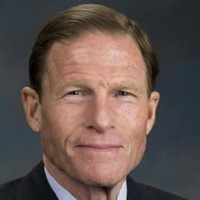
Richard Blumenthal
Senator
CT
Richard Blumenthal
Senator
CT
This resolution formally condemns the recent mass termination of 2,400 Department of Veterans Affairs employees, which was carried out without justification or analysis of the impact on veteran services. It highlights the resulting disruption to critical healthcare and support programs and calls for the immediate reinstatement of all affected personnel.
This Act repeals four specific Executive Orders issued on January 20, 2025, concerning energy, environmental agreements, and offshore wind leasing, while preserving existing Presidential authority.
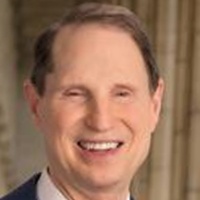
Ron Wyden
Senator
OR
Ron Wyden
Senator
OR
The Defending American Jobs and Affordable Energy Act of 2025 immediately repeals four specific Executive Orders issued on January 20, 2025, concerning energy policy and international agreements. This action prevents federal funds from being used to enforce those canceled directives. The bill also includes a savings provision to ensure it does not limit any existing authority of the President.
This resolution expresses Congressional opposition to imposing new performance fees on local radio stations, citing the mutually beneficial relationship between broadcasters and the music industry.
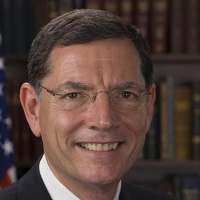
John Barrasso
Senator
WY
John Barrasso
Senator
WY
The Local Radio Freedom Act expresses Congressional opposition to imposing new performance fees on local radio stations for playing music. This resolution maintains that the current system provides essential promotional value to artists while supporting local community services. Consequently, it advocates against any new taxes or royalties that would place an undue financial burden on broadcasters and local businesses.
The HOPE for Homeownership Act imposes new excise taxes on large investment entities that own excess single-family residences and disallows mortgage interest and depreciation deductions for those properties.
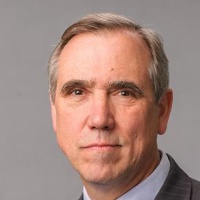
Jeff Merkley
Senator
OR
Jeff Merkley
Senator
OR
The HOPE for Homeownership Act imposes new federal excise taxes on large investment entities, such as hedge funds, that own excess single-family residences. These taxes apply both at the time of purchase and annually based on the number of homes owned above a set limit. Furthermore, taxpayers subject to these new taxes are disallowed from claiming mortgage interest deductions or depreciation on those residential properties. The goal is to discourage large-scale corporate ownership of single-family homes.
This bill mandates increased transparency and accountability for the enforcement of Hatch Act violations, particularly concerning noncareer federal employees, through new reporting requirements to Congress and public data disclosure.
Ben Luján
Senator
NM
Ben Luján
Senator
NM
This bill, the Hatch Act Enforcement Transparency and Accountability Act, aims to increase public and Congressional oversight of how political activity complaints against federal employees are handled. It mandates new reporting requirements for the Special Counsel regarding decisions not to investigate certain employees and requires the public posting of detailed enforcement statistics, including demographic data. The legislation also requires written explanations for decisions not to prosecute certain non-career employees who allegedly violated the Hatch Act.
This Act bans the sale and possession of ammunition feeding devices holding more than 10 rounds, with exceptions for current and retired law enforcement and grandfathered owners, while allowing federal funds for buy-back programs.

Mazie Hirono
Senator
HI
Mazie Hirono
Senator
HI
The Keep Americans Safe Act generally bans the sale, transfer, and possession of ammunition feeding devices capable of holding more than 10 rounds, with exceptions for current and retired law enforcement, government use, and existing lawful possession. The bill mandates serial numbers and manufacturing dates on newly produced devices. Furthermore, it permits states to use federal Byrne grant funds for buy-back programs targeting these large-capacity magazines.
The SAFE Lending Act of 2025 aims to protect consumers from abusive lending practices by increasing transparency, empowering consumer control over bank accounts, and restricting lead generation in small-dollar lending.
Jeff Merkley
Senator
OR
Jeff Merkley
Senator
OR
The SAFE Lending Act of 2025 aims to protect consumers from abusive practices in electronic and small-dollar lending. It requires small-dollar lenders to register with the Bureau of Consumer Financial Protection, ensures state laws apply to online and national bank loans, and restricts the distribution of sensitive financial information. The Act also expands consumer control over bank accounts by limiting remotely created checks and overdraft fees on prepaid accounts. Finally, the Act mandates a study on the impact of small-dollar lending on economic opportunity for Native American tribes.
Streamlines Medicaid and CHIP enrollment for out-of-state providers serving children, reducing administrative burdens and enhancing access to care.
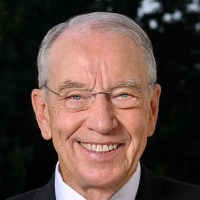
Charles Grassley
Senator
IA
Charles Grassley
Senator
IA
The "Accelerating Kids’ Access to Care Act" streamlines the Medicaid and CHIP enrollment process for out-of-state providers, allowing them to furnish services to individuals under 21 more efficiently. By reducing excessive screening and enrollment requirements, the bill aims to improve access to care for children. Enrolled providers will have a 5-year enrollment period, and the changes will take effect three years after enactment.
This resolution condemns the U.S. delegation's February 24, 2025, vote against a UN resolution supporting Ukraine and reaffirms the Senate's commitment to Ukrainian sovereignty and territorial integrity.
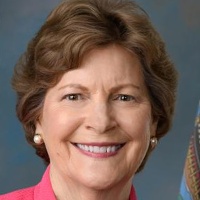
Jeanne Shaheen
Senator
NH
Jeanne Shaheen
Senator
NH
This resolution formally condemns the United States delegation’s February 24, 2025, vote against a United Nations resolution supporting peace in Ukraine. It criticizes the delegation for failing to identify Russia as the aggressor and calls for a return to bipartisan policy that reaffirms support for Ukraine’s sovereignty and territorial integrity.
This joint resolution terminates the national emergency regarding energy declared by the President on January 20, 2025.
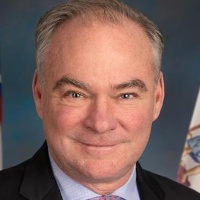
Timothy Kaine
Senator
VA
Timothy Kaine
Senator
VA
This joint resolution terminates the national emergency regarding energy that was declared by the President on January 20, 2025, via Executive Order 14156. It effectively ends the emergency authorities granted under the National Emergencies Act in relation to this specific order.
This resolution celebrates Black History Month by honoring the profound contributions of African Americans to the nation’s history and encouraging continued reflection on the journey toward equality and justice.
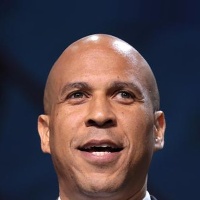
Cory Booker
Senator
NJ
Cory Booker
Senator
NJ
This resolution celebrates Black History Month by honoring the profound contributions and resilience of African Americans throughout United States history. It acknowledges both the struggles of the past and the significant achievements of individuals who have shaped the nation’s progress. By recognizing this history, the resolution encourages all Americans to reflect on our shared past and continue working toward a future of unity and justice.
The "CATCH Fentanyl Act" mandates pilot programs to evaluate advanced technologies at land ports of entry for detecting fentanyl and other contraband, without additional funding.
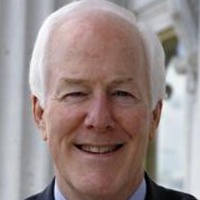
John Cornyn
Senator
TX
John Cornyn
Senator
TX
The "CATCH Fentanyl Act" mandates pilot projects to evaluate advanced technologies, including AI, for detecting contraband, illegal drugs, weapons, and human smuggling at U.S. land ports of entry. These projects aim to enhance inspection efficiency, reduce wait times, and improve existing detection equipment. The Act requires reports to Congress on the effectiveness, impacts on privacy and civil liberties, and recommendations for implementing new technologies, while forbidding new funding appropriations.
This resolution affirms the Senate's commitment to ensuring the National Institutes of Health remains fully funded and operational to protect vital medical research and support its essential workforce.
Richard Durbin
Senator
IL
Richard Durbin
Senator
IL
This resolution affirms the Senate's commitment to ensuring the National Institutes of Health (NIH) remains fully funded and operational without interruption. It recognizes the NIH workforce as essential to medical progress and emphasizes that protecting these operations is vital to national health, economic stability, and security.