
Legislative Activity
Track Mazie's sponsored bills, co-sponsored legislation, and voting record
Condemns pardons for individuals found guilty of assaulting Capitol Police officers.
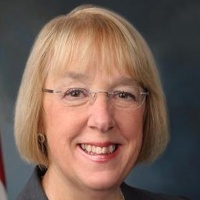
Patty Murray
Senator
WA
Patty Murray
Senator
WA
This resolution expresses disapproval of any pardons granted to individuals convicted of assaulting Capitol Police officers. It serves as a formal condemnation of such pardons.
The Global Health, Empowerment and Rights Act protects foreign nongovernmental organizations from losing U.S. aid eligibility based on the legal health services or advocacy activities they perform using their own non-U.S. funds.
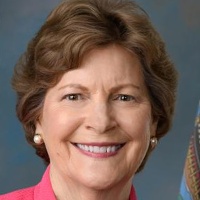
Jeanne Shaheen
Senator
NH
Jeanne Shaheen
Senator
NH
The Global Health, Empowerment and Rights (Global HER) Act ensures that foreign nongovernmental organizations (NGOs) remain eligible for U.S. foreign assistance regardless of the legal health services or advocacy they provide using their own non-U.S. funds. By overriding restrictive policies, the bill protects the autonomy of these organizations to deliver comprehensive care and engage in advocacy, provided their activities comply with local laws and would be legal if performed in the United States.
This legislation establishes a framework to reduce double taxation for U.S. and Taiwanese residents through reciprocal tax relief and authorizes the President to negotiate a formal tax agreement between the two jurisdictions.

Michael Crapo
Senator
ID
Michael Crapo
Senator
ID
The United States-Taiwan Expedited Double-Tax Relief Act aims to reduce double taxation for residents of Taiwan and the U.S. by lowering withholding rates on cross-border income and establishing clear tax residency rules. Additionally, the bill authorizes the President to negotiate a formal tax agreement with Taiwan, ensuring congressional oversight and public transparency throughout the process. This legislation seeks to boost bilateral trade and investment while ensuring reciprocal tax benefits for both nations.
The Preventing Algorithmic Collusion Act of 2025 mandates transparency, reporting, and strict antitrust prohibitions for businesses using AI-driven pricing algorithms to ensure fair competition and prevent price fixing.

Amy Klobuchar
Senator
MN
Amy Klobuchar
Senator
MN
The Preventing Algorithmic Collusion Act of 2025 aims to curb anti-competitive behavior by prohibiting the use of pricing algorithms that rely on nonpublic competitor data. The bill mandates transparency by requiring businesses to disclose the use of such algorithms to customers and workers, while granting the FTC and the Attorney General authority to audit and penalize non-compliant entities. Additionally, it establishes a legal presumption of price-fixing when multiple parties use the same algorithm to set prices in the same market.
This bill establishes a pilot program to provide manufactured and modular housing for disaster survivors and offers financial assistance for closing costs to those purchasing homes through federal mortgage programs.

Bill Cassidy
Senator
LA
Bill Cassidy
Senator
LA
The Disaster Housing Reform for American Families Act establishes a five-year pilot program to expedite the construction of manufactured and modular homes as temporary housing for disaster survivors. This legislation also authorizes financial assistance to help disaster-affected families cover closing costs when purchasing homes through federal mortgage programs. Additionally, the bill provides a framework for transitioning these temporary structures into permanent affordable housing once the disaster recovery period concludes.
The Competition and Antitrust Law Enforcement Reform Act of 2025 strengthens federal antitrust enforcement by tightening merger standards, increasing penalties for anticompetitive conduct, and expanding the resources and investigative powers of the DOJ and FTC.
Amy Klobuchar
Senator
MN
Amy Klobuchar
Senator
MN
The Competition and Antitrust Law Enforcement Reform Act of 2025 aims to strengthen U.S. antitrust enforcement by making it easier for regulators to challenge anticompetitive mergers and exclusionary conduct. The bill enhances the legal tools and financial resources available to the Department of Justice and the Federal Trade Commission, while establishing new protections for whistleblowers and increasing penalties for antitrust violations. Ultimately, the legislation seeks to curb excessive market power, promote innovation, and protect consumers, workers, and small businesses from anticompetitive practices.
The FAIR Act mandates a 3.3% base pay increase and a 1% locality pay adjustment for federal civilian employees in 2026.
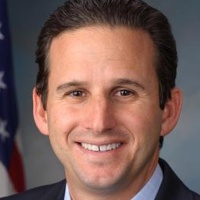
Brian Schatz
Senator
HI
Brian Schatz
Senator
HI
The FAIR Act proposes a 3.3% pay increase for federal civilian and wage-grade employees for the 2026 calendar year. Additionally, the bill mandates a 1% increase in locality pay adjustments for federal civilian employees.
This bill amends the Federal Credit Union Act to include loans made to veterans within the definition of member business loans.
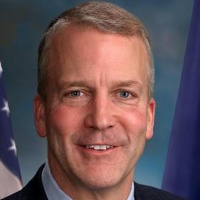
Dan Sullivan
Senator
AK
Dan Sullivan
Senator
AK
The Veterans Member Business Loan Act amends the Federal Credit Union Act to include loans made to veterans within the definition of "member business loans." This change allows credit unions to better support veteran-owned businesses by facilitating easier access to capital.
This act expands federal programs, research, and support services to improve the prevention, identification, and care for individuals and families impacted by Fetal Alcohol Spectrum Disorders (FASD).

Lisa Murkowski
Senator
AK
Lisa Murkowski
Senator
AK
The Advancing FASD Research, Services and Prevention Act (or "FASD Respect Act") updates federal programs to provide a more comprehensive approach to fetal alcohol spectrum disorders. This legislation expands research, improves diagnostic and support services, and establishes Centers of Excellence to build capacity for prevention and care at the state and tribal levels.
The Lumbee Fairness Act extends federal recognition to the Lumbee Tribe of North Carolina, granting the tribe and its members eligibility for federal programs, services, and land-into-trust benefits.
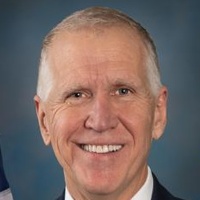
Thom Tillis
Senator
NC
Thom Tillis
Senator
NC
The Lumbee Fairness Act grants federal recognition to the Lumbee Tribe of North Carolina, making the tribe and its members eligible for all federal Indian programs and services. The bill authorizes the Secretary of the Interior to verify the tribal roll and take land into trust for the tribe's benefit. Additionally, it clarifies jurisdictional arrangements between the state and the tribe while ensuring the tribe receives the same federal support as other recognized tribes.
The Saving the Civil Service Act establishes strict limitations on moving federal positions out of the competitive service to protect merit-based hiring and prevent the politicization of the civil service.
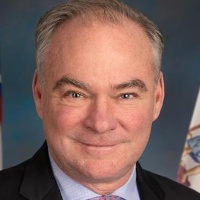
Timothy Kaine
Senator
VA
Timothy Kaine
Senator
VA
The Saving the Civil Service Act protects the merit-based federal hiring system by placing strict limits on the ability of agencies to move civil service positions into the excepted service. It requires employee consent for job transfers, caps the number of positions that can be reclassified during a presidential term, and mandates annual reporting to Congress. These measures ensure that federal employment remains grounded in professional standards rather than political appointments.
This resolution supports the recognition of Korean American Day on January 13th, celebrating the contributions and achievements of Korean Americans to the United States. It encourages all U.S. residents to acknowledge the impact of Korean Americans across various sectors and commemorate the anniversary of the first Korean immigrants' arrival.

Andy Kim
Senator
NJ
Andy Kim
Senator
NJ
This resolution supports the recognition of Korean American Day on January 13th of each year. It acknowledges the wide-ranging positive impact of Korean Americans on the United States. The resolution also commemorates the anniversary of the arrival of the first large wave of Korean immigrants to the U.S.
The Washington, D.C. Admission Act provides for the admission of the State of Washington, Douglass Commonwealth, while maintaining a smaller federal district as the seat of the U.S. government.

Chris Van Hollen
Senator
MD
Chris Van Hollen
Senator
MD
The Washington, D.C. Admission Act provides for the admission of the State of Washington, Douglass Commonwealth, while maintaining a smaller federal district to serve as the seat of the U.S. government. This legislation establishes the framework for the transition, including the transfer of property, the restructuring of local and federal authorities, and the granting of full congressional representation to the new state's residents. It also creates a transition commission to ensure the orderly shift of legal, financial, and administrative responsibilities.
The Health Care Affordability Act of 2025 expands eligibility for premium tax credits and adjusts contribution requirements to lower health insurance costs for more households.
Jeanne Shaheen
Senator
NH
Jeanne Shaheen
Senator
NH
The Health Care Affordability Act of 2025 expands access to premium tax credits by removing the current income eligibility cap, allowing more households to qualify for financial assistance. The bill also introduces a new sliding scale for premium contributions to ensure health insurance costs remain more manageable for families. These changes are set to take effect for taxable years beginning after December 31, 2025.
This bill establishes a commission to study the history of slavery and systemic discrimination in the United States and to develop formal proposals for reparations for African Americans.
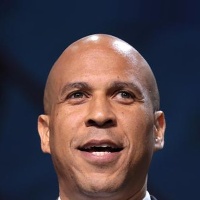
Cory Booker
Senator
NJ
Cory Booker
Senator
NJ
The Commission to Study and Develop Reparation Proposals for African Americans Act establishes a 13-member commission tasked with investigating the legacy of slavery and systemic discrimination in the United States. The commission is charged with documenting these historical injustices and their ongoing impact on living African Americans to develop formal proposals for reparatory justice. Ultimately, the body will submit its findings and recommendations for remedies, including potential compensation and educational initiatives, to Congress.