
Legislative Activity
Track Maggie's sponsored bills, co-sponsored legislation, and voting record
This resolution designates the week of May 4 through May 8, 2026, as Teacher Appreciation Week while recognizing the critical role and priorities of the nation's public school teachers.

Jahana Hayes
Representative
CT
Jahana Hayes
Representative
CT
This resolution officially designates the week of May 4 through May 8, 2026, as Teacher Appreciation Week. It recognizes the vital role of public school teachers and highlights their key priorities, including support for existing federal protections and funding. Furthermore, the bill encourages leaders to engage directly with teachers to ensure their expertise informs education policy.
This bill prohibits House members, officers, and employees from participating in certain prediction markets involving excluded commodities, while also encouraging the executive and judicial branches to adopt similar restrictions.

Dina Titus
Representative
NV
Dina Titus
Representative
NV
This bill amends the House of Representatives' rules to prohibit Members, officers, and employees from participating in certain prediction markets involving excluded commodities. The legislation aims to prevent conflicts of interest by banning trades tied to the outcome of specific events. It also expresses the sense of the House that the executive and judicial branches should adopt similar restrictions.
This bill mandates stricter federal and state regulation of utility rate-setting by establishing lower return-on-equity ranges and banning numerous non-operational costs from being passed on to consumers.

Gregorio Casar
Representative
TX
Gregorio Casar
Representative
TX
The Lowering Utility Bills Act aims to reduce consumer energy costs by establishing stricter federal and state guidelines for how electric transmission providers and investor-owned utilities calculate their allowed rate of return. The bill mandates using the lowest reasonable return on equity based on market data and explicitly bans passing numerous lobbying, administrative, and political expenses onto customers. Furthermore, it requires utilities to prioritize lower-cost, grid-enhancing technologies when planning new capital expenditures.
This bill directs the President to remove U.S. Armed Forces from hostilities with Iran, except for self-defense or defense of an ally against imminent attack.
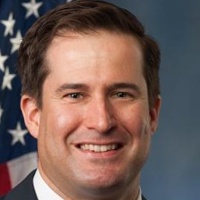
Seth Moulton
Representative
MA
Seth Moulton
Representative
MA
This bill directs the President to withdraw U.S. Armed Forces from hostilities involving Iran, unless those forces are necessary for imminent self-defense or the defense of an ally. The removal must comply with the War Powers Resolution reporting requirements. This directive ceases if Congress issues a formal declaration of war or specific authorization for military force against Iran.
This bill strengthens Certified Community Behavioral Health Clinics by expanding Medicaid and Medicare coverage, establishing grant funding, and providing liability protection for their clinicians.

Doris Matsui
Representative
CA
Doris Matsui
Representative
CA
The Ensuring Excellence in Mental Health Act aims to significantly improve access to and quality of mental health and substance use care nationwide. It strengthens Certified Community Behavioral Health Clinics (CCBHCs) by establishing stable Medicaid and Medicare payment systems, providing substantial grant funding for expansion, and extending federal liability protection to their clinicians. Overall, the bill seeks to ensure comprehensive, affordable, and sustainable behavioral health services for patients across all major federal health programs.
The MATCH Act mandates stricter export controls on semiconductor manufacturing equipment to countries of concern and requires the U.S. to coordinate with allied nations to prevent the transfer of critical technology to adversarial entities.
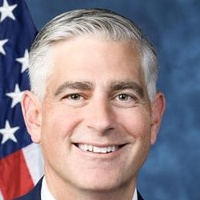
Michael Baumgartner
Representative
WA
Michael Baumgartner
Representative
WA
The Multilateral Alignment of Technology Controls on Hardware (MATCH) Act aims to protect U.S. national security by restricting adversary access to advanced semiconductor manufacturing equipment. The bill mandates diplomatic efforts to align export controls with allied nations and establishes a framework to impose strict U.S. regulations if those partners fail to implement sufficient safeguards. By targeting specific entities and facilities in countries of concern, the legislation seeks to close gaps in the current export control regime and maintain America’s technological advantage.
This Act mandates a comprehensive report to Congress detailing emerging military, cyber, and political threats to the Baltic states and recommending strategies to enhance their security and U.S. partnership.

Wesley Bell
Representative
MO
Wesley Bell
Representative
MO
The Baltic Security Assessment Act of 2025 affirms the critical importance of Estonia, Latvia, and Lithuania to U.S. national security amidst Russian aggression. This bill mandates that the Secretary of State and Secretary of Defense deliver a comprehensive report to Congress detailing emerging military, cyber, and political threats to the Baltic states. The report must also recommend specific actions to enhance U.S. and NATO defense cooperation and bolster Baltic resilience.
The CLEAN Act establishes new requirements for legislative transparency and ethics by permanently enacting and modifying House Resolution 895 concerning the Office of Congressional Ethics.

Chris Pappas
Representative
NH
Chris Pappas
Representative
NH
The CLEAN Act establishes new requirements for legislative transparency and ethical conduct by making key provisions of House Resolution 895 permanent law. This legislation modifies the operation of the Office of Congressional Ethics, including setting term limits for board members and ensuring timely vacancy appointments. Furthermore, it guarantees constitutional protections and the right to counsel for individuals undergoing ethics reviews.
The Medicare Advantage Improvement Act of 2026 mandates faster authorization decisions, stricter oversight, and aligns coverage criteria with traditional Medicare to improve timely care and accountability for Medicare Advantage plans.
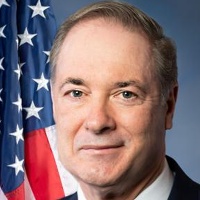
John Joyce
Representative
PA
John Joyce
Representative
PA
The Medicare Advantage Improvement Act of 2026 aims to enhance timely access to care and improve oversight for Medicare Advantage (MA) enrollees. The bill mandates faster decision-making for prior authorization requests, establishes strict compliance scoring with financial penalties for non-compliant plans, and requires MA plans to use the same medical necessity criteria as traditional Medicare. Furthermore, it protects providers by limiting retroactive denials for pre-approved services and ensuring prompt payment for those services.
This resolution directs the President to remove U.S. Armed Forces from hostilities with Iran, unless necessary for imminent self-defense.

Gregory Meeks
Representative
NY
Gregory Meeks
Representative
NY
This resolution directs the President, under the War Powers Resolution, to remove U.S. Armed Forces from hostilities involving Iran. The order mandates withdrawal unless forces are necessary for imminent self-defense of the U.S. or its allies. Any continued defensive action must comply with existing War Powers reporting requirements.
This bill amends federal law to guarantee states a minimum of 0.5 percent of total highway apportionment funds.
Chris Pappas
Representative
NH
Chris Pappas
Representative
NH
This bill amends federal highway law to establish a guaranteed minimum set-aside amount for state highway apportionments. Specifically, it requires that at least 0.5 percent of the total apportionment be reserved for these guaranteed amounts. This ensures a baseline level of funding for states under the existing highway apportionment formula.
The BLOCK PUTIN Act mandates U.S. sanctions against senior Hungarian officials who obstruct aid to Ukraine or facilitate the continued import of Russian energy.

Marcy Kaptur
Representative
OH
Marcy Kaptur
Representative
OH
The BLOCK PUTIN Act mandates U.S. sanctions against senior Hungarian government officials who obstruct financial or security aid to Ukraine or facilitate the import of Russian energy. The legislation aims to hold Hungary accountable for undermining national security interests and requires the government to diversify its energy sources away from Russia. Additionally, the bill mandates a formal report on any U.S. government actions that have previously facilitated Hungarian purchases of Russian oil and gas.
This bill authorizes the establishment of a monument at Arlington National Cemetery to honor Army Security Agency veterans who served between 1945 and 1976.
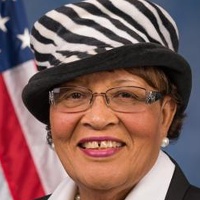
Alma Adams
Representative
NC
Alma Adams
Representative
NC
The Army Security Agency Monument Act authorizes the placement of a monument at Arlington National Cemetery to honor veterans who served in the Army Security Agency between 1945 and 1976. The legislation requires the National Army Security Agency Association to fund all costs associated with the design, installation, and maintenance of the memorial.
This bill mandates gender-neutral occupational standards across the U.S. Armed Forces and establishes new reporting requirements for military assignments and performance criteria.
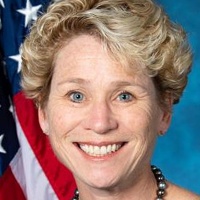
Chrissy Houlahan
Representative
PA
Chrissy Houlahan
Representative
PA
This bill mandates gender-neutral assignment standards across all branches of the U.S. Armed Forces, effective September 30, 2026. It requires that all occupational performance standards be based on scientifically rigorous, job-specific criteria rather than gender. Additionally, the legislation establishes new annual reporting requirements for Congress and mandates a formal review of ground combat unit effectiveness.
This resolution commemorates the 205th anniversary of Greek Independence Day while reaffirming the enduring democratic partnership and strategic alliance between the United States and Greece.

Gus Bilirakis
Representative
FL
Gus Bilirakis
Representative
FL
This resolution commemorates the 205th anniversary of Greek Independence Day, celebrating the enduring democratic values and historical ties shared between the United States and Greece. It reaffirms the strong strategic, security, and economic partnership between the two nations while honoring the contributions of the Greek-American community.
This resolution formally recognizes the persistence of the gender wage gap in the United States and reaffirms a commitment to achieving equal pay for equal work.
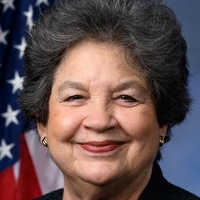
Lois Frankel
Representative
FL
Lois Frankel
Representative
FL
This resolution formally recognizes the persistent gender wage gap in the United States and its significant negative impact on women, families, and the national economy. It highlights the systemic factors contributing to pay disparities across various demographics and occupations. Ultimately, the resolution reaffirms Congress's commitment to achieving equal pay for equal work.
The Mental Health Access and Provider Support Act of 2026 increases Medicare reimbursement rates for mental health services to 85 percent of the physician fee schedule to improve patient access to care.

Brian Fitzpatrick
Representative
PA
Brian Fitzpatrick
Representative
PA
The Mental Health Access and Provider Support Act of 2026 aims to improve patient access to care by increasing Medicare reimbursement rates for specific mental health services. Starting January 1, 2027, the payment rate for these services will rise from 75 percent to 85 percent of the physician fee schedule.
The Supporting VA Families Act provides Department of Veterans Affairs employees with four additional weeks of unpaid parental leave following the birth, adoption, or foster placement of a child.

Janelle Bynum
Representative
OR
Janelle Bynum
Representative
OR
The Supporting VA Families Act establishes a supplemental parental leave program for Department of Veterans Affairs employees. This legislation provides eligible staff with four additional administrative weeks of unpaid leave following the birth, adoption, or foster care placement of a child. This benefit is designed to supplement, rather than replace, existing family and medical leave entitlements.
The Momnibus Act is a comprehensive legislative package designed to improve maternal health outcomes and reduce racial disparities by addressing social determinants, expanding nutritional and mental health support, diversifying the perinatal workforce, and investing in data-driven, community-based care.

Lauren Underwood
Representative
IL
Lauren Underwood
Representative
IL
The Momnibus Act is a comprehensive legislative package designed to end preventable maternal mortality and close racial and ethnic disparities in maternal health outcomes. By addressing social determinants of health, expanding nutritional and mental health support, and investing in a diverse, culturally competent workforce, the bill provides a holistic framework for improving care. Through targeted federal grants, enhanced data collection, and innovative technology, the Act aims to ensure that all pregnant and postpartum individuals receive the equitable, high-quality care they deserve.
This bill mandates the reduction or escrow of Congressional Member pay for days when a government shutdown is in effect.
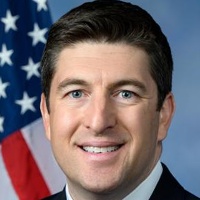
Bryan Steil
Representative
WI
Bryan Steil
Representative
WI
This bill, the Withhold Member Pay During Shutdowns Act, mandates that Members of Congress will not receive pay for any day a government shutdown is in effect. For shutdowns occurring before November 2026, the pay will be withheld and held in escrow, to be released after the pay reduction requirement takes effect. This ensures that congressional salaries are directly impacted by lapses in government appropriations.