Legislative Activity
Track Maggie's sponsored bills, co-sponsored legislation, and voting record
The "Ski Hill Resources for Economic Development Act" allows the Forest Service to retain and reinvest fees collected from ski area permits to improve visitor services, reduce wildfire risk, and support ski area program administration.
Joe Neguse
Representative
CO
Joe Neguse
Representative
CO
The "Ski Hill Resources for Economic Development Act" establishes a "Ski Area Fee Retention Account" within the Treasury, directing ski area permit fees collected by the Secretary of Agriculture into this account. These funds will be used to support the administration, maintenance, and improvement of ski areas and related visitor services within the National Forest System. A majority of the fees collected at a specific unit will be reinvested into that unit, with a smaller portion available for use across other National Forest System units. The funds cannot be used for wildfire suppression or land acquisition.
The WARN Act directs the Comptroller General to study and report on the effectiveness of weather alert systems to improve community emergency response plans and public safety.
Nicholas Langworthy
Representative
NY
Nicholas Langworthy
Representative
NY
The WARN Act aims to improve community safety during weather emergencies by directing the Comptroller General to study the effectiveness of local, state, territory, and federal emergency alert systems. The study will assess alert dissemination methods, evaluate the clarity and actionability of alert content, and explore improvements to public alerting systems. A report on the study's findings will be submitted to Congress within 18 months, with the goal of enhancing emergency response plans and public safety.
Permanently extends the New Markets Tax Credit, provides inflation adjustments, and includes it for alternative minimum tax relief.
Claudia Tenney
Representative
NY
Claudia Tenney
Representative
NY
The New Markets Tax Credit Extension Act of 2025 permanently extends the New Markets Tax Credit, which incentivizes investment in low-income communities. It removes the credit's expiration date and adjusts the credit amount for inflation after 2025. The act also provides alternative minimum tax relief for qualified equity investments made after December 31, 2024.
The Protect Our Letter Carriers Act of 2025 authorizes $7 billion to upgrade postal security infrastructure while mandating dedicated federal prosecutors for postal crimes and increasing sentencing guidelines for assaults against postal employees.
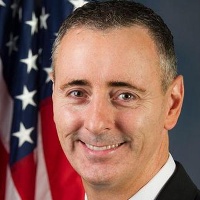
Brian Fitzpatrick
Representative
PA
Brian Fitzpatrick
Representative
PA
The Protect Our Letter Carriers Act of 2025 aims to enhance the safety of postal workers by funding high-security infrastructure upgrades, including electronic mailbox keys. The bill also mandates the appointment of dedicated federal prosecutors for postal crimes in every judicial district and requires stricter sentencing guidelines for those who assault or rob postal employees.
This bill directs the Department of Education to consider the International Holocaust Remembrance Alliance's definition of antisemitism when evaluating discrimination complaints under Title VI of the Civil Rights Act of 1964, while also protecting First Amendment rights.
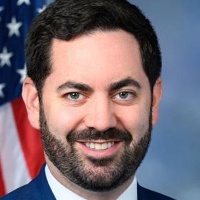
Michael Lawler
Representative
NY
Michael Lawler
Representative
NY
The Antisemitism Awareness Act of 2025 requires the Department of Education to consider the International Holocaust Remembrance Alliance's definition of antisemitism when evaluating discrimination complaints under Title VI of the Civil Rights Act of 1964, concerning race, color, and national origin. This aims to address rising antisemitism in educational settings. The Act clarifies that it does not expand the Department of Education's authority, change existing discrimination standards, reduce existing rights, or infringe upon First Amendment rights.
This resolution expresses the House of Representatives' formal disapproval of granting pardons to individuals convicted of assaulting Capitol Police officers.
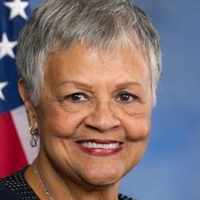
Bonnie Watson Coleman
Representative
NJ
Bonnie Watson Coleman
Representative
NJ
This resolution expresses the formal disapproval of the House of Representatives regarding the granting of pardons to individuals convicted of assaulting Capitol Police officers. It serves as a clear statement of opposition toward clemency for those who committed violent acts against law enforcement during the attack on the U.S. Capitol.
The Right to Contraception Act establishes a federal right to obtain and use contraception and prohibits government interference with access to contraceptive services and information.

Lizzie Fletcher
Representative
TX
Lizzie Fletcher
Representative
TX
The Right to Contraception Act establishes a federal right for individuals to access and use contraception without government interference. It prohibits federal and state governments from enacting laws that restrict access to contraceptives or the provision of related services. The Act provides clear enforcement mechanisms, allowing individuals and the Attorney General to sue to strike down any rule that violates these protections.
The Love Lives On Act of 2025 ensures that surviving spouses of veterans and service members retain their earned dependency compensation, survivor benefits, and TRICARE eligibility regardless of remarriage.
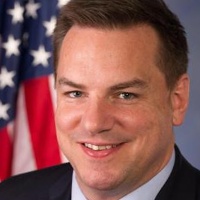
Richard Hudson
Representative
NC
Richard Hudson
Representative
NC
The Love Lives On Act of 2025 ensures that surviving spouses of veterans and service members retain their earned benefits, including dependency and indemnity compensation, educational assistance, and Survivor Benefit Plan annuities, regardless of remarriage. Additionally, the bill expands TRICARE eligibility to include widows and widowers whose subsequent marriages have ended. This legislation protects the financial security and healthcare access of surviving families by removing penalties associated with remarriage.
This bill provides a 6.62 percent Medicare payment increase for physicians and practitioners from April through December 2025 to help stabilize medical practices.
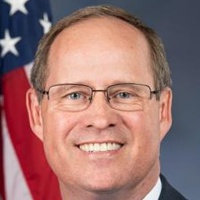
Gregory Murphy
Representative
NC
Gregory Murphy
Representative
NC
The Medicare Patient Access and Practice Stabilization Act of 2025 aims to support healthcare providers by extending Medicare payment adjustments through the end of 2025. Specifically, the bill provides a 6.62 percent payment increase for services rendered between April 1, 2025, and December 31, 2025, to help practitioners adjust to evolving Medicare payment policies.
This bill expresses the House of Representatives' desire to keep the United States Postal Service (USPS) as an independent entity within the Federal Government, protecting it from privatization. It emphasizes the USPS's importance to the mailing industry, its role in connecting communities, and the potential negative impacts of privatization on prices, services, and infrastructure.
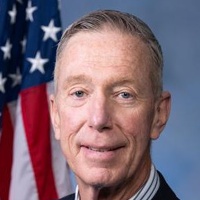
Stephen Lynch
Representative
MA
Stephen Lynch
Representative
MA
This bill expresses the House of Representatives' view that Congress should act to maintain the United States Postal Service (USPS) as an independent entity within the Federal Government. It emphasizes the USPS's role as a self-sustaining service vital to the economy and national connectivity. The resolution discourages privatization, citing concerns about increased costs, reduced services, and damage to critical infrastructure.
The Federal Firefighters Families First Act aims to improve pay equity, cap the regular workweek at 60 hours, and include scheduled overtime in retirement benefit calculations for federal firefighters.

Gerald Connolly
Representative
VA
Gerald Connolly
Representative
VA
The Federal Firefighters Families First Act aims to improve pay equity, recruitment, and retention for federal firefighters by modernizing pay computation and establishing a maximum 60-hour regular workweek. Additionally, the bill ensures that regularly scheduled overtime is included in the calculation of federal retirement annuities. These measures seek to align federal firefighter compensation more closely with municipal standards and provide greater financial security for their families.
The Public Lands in Public Hands Act prohibits the transfer of accessible federal lands to non-federal entities to ensure these areas remain available for public use.
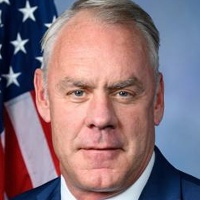
Ryan Zinke
Representative
MT
Ryan Zinke
Representative
MT
The Public Lands in Public Hands Act prohibits the federal government from transferring ownership of publicly accessible federal lands to non-federal entities. This legislation ensures that lands currently reachable by the public remain under federal protection, with specific exceptions for authorized land exchanges and existing federal programs. It also explicitly prohibits the subdivision of land to bypass these new transfer restrictions.
The 911 SAVES Act mandates the reclassification of public safety telecommunicators as "Protective Service Occupations" within the federal Standard Occupational Classification system to accurately reflect their critical role in emergency response.
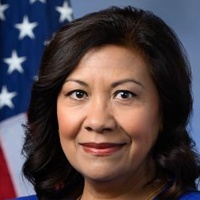
Norma Torres
Representative
CA
Norma Torres
Representative
CA
The 911 SAVES Act mandates that the Office of Management and Budget reclassify public safety telecommunicators as "Protective Service Occupations" within the federal Standard Occupational Classification system. This legislation recognizes the critical, high-stress, and lifesaving nature of 911 dispatchers, correcting their current misclassification to better reflect their essential role in emergency response.
The FARM Act strengthens national security by bringing U.S. agricultural systems under the review of the Committee on Foreign Investment in the United States (CFIUS) and mandating regular reporting on foreign influence in the agricultural sector.
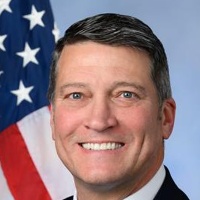
Ronny Jackson
Representative
TX
Ronny Jackson
Representative
TX
The Foreign Adversary Risk Management (FARM) Act strengthens national security by bringing U.S. agriculture and its supply chains under the oversight of the Committee on Foreign Investment in the United States (CFIUS). By adding the Secretary of Agriculture to the committee and classifying agricultural systems as critical infrastructure, the bill ensures foreign investments in the sector undergo rigorous security reviews. Additionally, the Act mandates annual reporting to Congress to monitor foreign influence, espionage, and potential threats to the U.S. agricultural industry.
The Saving the Civil Service Act protects the merit-based federal workforce by restricting the ability of agencies to reclassify competitive service positions into the excepted service.
Gerald Connolly
Representative
VA
Gerald Connolly
Representative
VA
The Saving the Civil Service Act protects the merit-based federal workforce by restricting the ability of agencies to reclassify competitive service positions into the excepted service. The bill establishes strict oversight, limits the number of positions that can be transferred, and mandates employee consent for such reclassifications. These measures ensure that federal staffing remains professional and protected from arbitrary political interference.
The Veterans Member Business Loan Act amends the Federal Credit Union Act to include loans made to veterans within the definition of "member business loans."
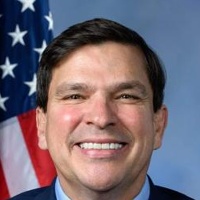
Vicente Gonzalez
Representative
TX
Vicente Gonzalez
Representative
TX
The Veterans Member Business Loan Act amends the Federal Credit Union Act to include loans made to veterans within the definition of "member business loans." This change aims to expand access to capital for veteran-owned businesses by facilitating easier lending through credit unions.
Goldie’s Act strengthens the Animal Welfare Act by mandating more frequent USDA inspections, requiring the prompt confiscation of suffering animals, and increasing financial penalties for violators.
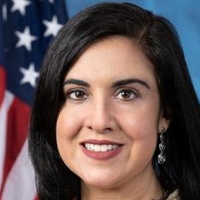
Nicole Malliotakis
Representative
NY
Nicole Malliotakis
Representative
NY
Goldie’s Act strengthens the Animal Welfare Act by mandating more rigorous USDA inspections and requiring the prompt confiscation of animals suffering from neglect. The bill increases financial penalties for violators, ensures the immediate sharing of violation records with local law enforcement, and establishes stricter oversight to prevent future animal abuse.
The Health Care Affordability Act of 2025 expands access to premium tax credits by removing income eligibility caps and implementing a new sliding-scale contribution formula.
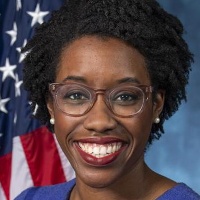
Lauren Underwood
Representative
IL
Lauren Underwood
Representative
IL
The Health Care Affordability Act of 2025 expands access to health insurance by removing the 400% federal poverty level income cap for premium tax credits. It also introduces a new sliding-scale contribution formula to ensure that insurance costs remain affordable for households across all income levels. These changes are set to take effect for taxable years beginning after December 31, 2025.
The "Dental Care for Veterans Act" expands dental care benefits for veterans, phasing in eligibility over four years to mirror the provision of other medical services within the Department of Veterans Affairs.
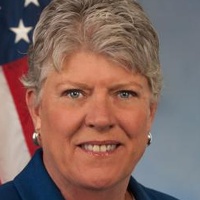
Julia Brownley
Representative
CA
Julia Brownley
Representative
CA
The Dental Care for Veterans Act aims to improve veterans' access to dental care by integrating it more closely with other medical services provided by the Department of Veterans Affairs. This bill removes specific limitations and updates existing code to allow the Secretary to provide comprehensive dental care, including dentures and appliances. The implementation of these expanded benefits will be phased in over four years, prioritizing veterans based on existing eligibility criteria. Additionally, the bill makes necessary clerical updates to reflect these changes in the U.S. Code.
The "Lowering Costs for Caregivers Act of 2025" expands the use of health savings accounts, flexible spending arrangements, health reimbursement arrangements, and Archer MSAs to include medical expenses of parents, allowing more flexible use of these funds for elder care. These changes aim to provide tax relief and greater financial flexibility for families supporting their parents' healthcare needs.

Vern Buchanan
Representative
FL
Vern Buchanan
Representative
FL
The "Lowering Costs for Caregivers Act of 2025" expands the use of tax-advantaged health accounts, including HSAs, FSAs, HRAs and Archer MSAs, to cover medical expenses of parents. This allows individuals to use these funds for their parents' or their spouse's parents' medical care. These changes aim to provide financial relief to caregivers by allowing pre-tax dollars to be used for elder care. The provisions apply to expenses and contributions made after December 31, 2024.