Legislative Activity
Track Brandon's sponsored bills, co-sponsored legislation, and voting record
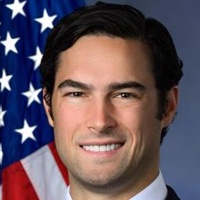
The TRANS MICE Act prohibits federal funding for research on non-human vertebrates that involves interventions designed to alter the animal's body to not match its biological sex.

Nancy Mace
Representative
SC
Nancy Mace
Representative
SC
The TRANS MICE Act prohibits the use of federal funds for animal research that involves interventions like drugs or surgery intended to alter a non-human vertebrate animal's body to change its biological sex characteristics. This ban specifically targets research that disrupts natural development or physical appearance, while exempting animals that naturally change sex or possess both reproductive organs.
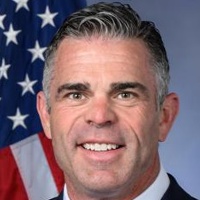
The FIRE Act prohibits federal, state, and local governments from enacting or enforcing any law that restricts firearm magazines based on their ammunition capacity.
Tony Wied
Representative
WI
Tony Wied
Representative
WI
The Freedom from Improper Regulation and Enforcement (FIRE) Act prohibits the federal government from creating or enforcing any rule that restricts firearm magazines based on their ammunition capacity. Furthermore, this Act voids any existing or future state or local laws that attempt to impose such capacity limits or penalties. In essence, the bill prevents regulation of firearm magazines based solely on how many rounds they can hold.
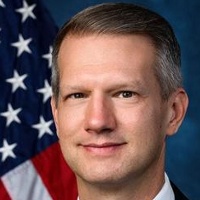
This resolution formally condemns the severe, ongoing persecution of Christians in Muslim-majority countries and urges the President to prioritize their protection in U.S. foreign policy.
Riley Moore
Representative
WV
Riley Moore
Representative
WV
This resolution formally condemns the severe, ongoing persecution of Christians in Muslim-majority countries worldwide. It documents specific instances of violence, discrimination, and legal restrictions faced by Christian communities across numerous nations. The bill urges the President to prioritize the protection of these religious minorities in all U.S. foreign policy and diplomatic engagement.
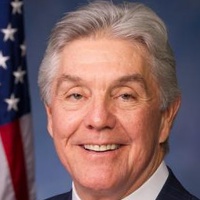
The Equal Shot Act of 2025 prohibits the Small Business Administration from denying financial assistance to qualified applicants solely based on their involvement in the firearms industry.
Roger Williams
Representative
TX
Roger Williams
Representative
TX
The Equal Shot Act of 2025 prohibits the Small Business Administration (SBA) from denying financial assistance to otherwise qualified applicants solely based on their involvement in the firearms industry. This legislation ensures that businesses defined as "firearm entities," their affiliates, or trade associations are not unfairly rejected for SBA loans or guarantees. The Act clearly defines these terms to prevent discrimination against businesses involved in manufacturing, selling, or servicing firearms and related accessories.
This resolution formally condemns the violent attack on the U.S. Border Patrol facility in McAllen, Texas, on July 7, 2025, while expressing support for law enforcement personnel.
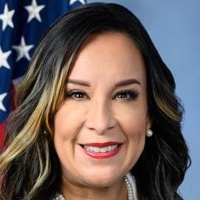
Mónica De La Cruz
Representative
TX
Mónica De La Cruz
Representative
TX
This resolution formally condemns the violent attack on the U.S. Border Patrol facility in McAllen, Texas, on July 7, 2025. It expresses support for the injured agents and reaffirms Congress's strong backing for the dedicated men and women of the Border Patrol. The bill emphasizes that such violence against law enforcement is unacceptable and undermines national security efforts.
This bill mandates that elementary, secondary, and higher education institutions must certify compliance with biological fairness requirements in women's sports to receive federal funding, with penalties for non-compliance.
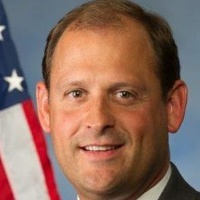
Garland Barr
Representative
KY
Garland Barr
Representative
KY
The Defend Girls Athletics Act mandates that elementary, secondary, and higher education institutions must certify compliance with Executive Order 14201 regarding biological fairness in women's sports to receive federal funding. This certification must be renewed annually for K-12 districts and by July 1st for colleges and universities. Failure to comply or report results in the immediate requirement to return unobligated federal funds and ineligibility for future federal financial assistance until compliance is restored.
This resolution solemnly marks the one-year anniversary of the attempted assassination of President Trump, condemns ongoing political violence, and honors the victims and first responders.
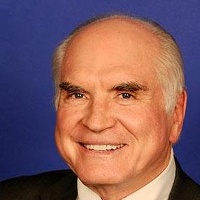
Mike Kelly
Representative
PA
Mike Kelly
Representative
PA
This resolution solemnly marks the one-year anniversary of the attempted assassination of President Donald J. Trump, condemning the multiple violent attempts against the President's life. It honors the victims of the shooting, including the late Corey D. Comperatore, and recognizes the bravery of first responders. Furthermore, the resolution condemns all incitement of violence against elected officials and calls for national unity against political violence.
The ICE Act establishes criminal penalties for knowingly interfering with or obstructing U.S. Immigration and Customs Enforcement officers during immigration enforcement duties.
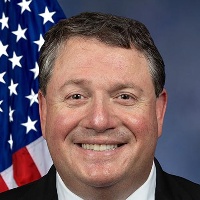
Randall Fine
Representative
FL
Randall Fine
Representative
FL
The Initiating Criminal Enforcement Act (ICE Act) establishes new federal penalties for individuals who knowingly interfere with or obstruct U.S. Immigration and Customs Enforcement (ICE) officers during the execution of their duties. This includes actively blocking enforcement actions or intentionally damaging government property used by ICE personnel. Violators of this law could face fines and up to five years in prison.
This bill requires the Comptroller General to obtain prior congressional approval before initiating a civil action under the Impoundment Control Act of 1974.
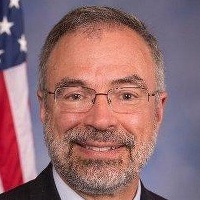
Andy Harris
Representative
MD
Andy Harris
Representative
MD
This bill amends the Impoundment Control Act of 1974 to require the Comptroller General to obtain prior approval from Congress before initiating a civil action against the executive branch for withholding appropriated funds. Specifically, the Comptroller General must receive authorization via a concurrent resolution from Congress to file such a lawsuit. This measure shifts the authority to sue over impoundments from the Comptroller General's discretion to one requiring explicit Congressional consent.
This Act amends immigration law to make non-citizens inadmissible or deportable for convictions related to driving while intoxicated or impaired (DWI/DUI).
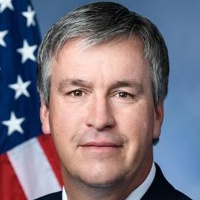
Barry Moore
Representative
AL
Barry Moore
Representative
AL
The Jeremy and Angel Seay and Sergeant Brandon Mendoza Protect Our Communities from DUIs Act of 2025 amends immigration law to address driving while intoxicated or impaired (DWI/DUI) offenses. This legislation establishes that a conviction for, or admission to the underlying acts of, a DWI/DUI offense makes a non-citizen inadmissible to the United States or deportable if already present. This applies regardless of whether the offense is classified as a misdemeanor or felony under local law.
The TPS Reform Act of 2025 transfers the authority to designate, extend, or terminate Temporary Protected Status from the executive branch to Congress through new legislative acts.

Chip Roy
Representative
TX
Chip Roy
Representative
TX
The TPS Reform Act of 2025 fundamentally shifts the authority for designating and extending Temporary Protected Status (TPS) from the executive branch to Congress. Under this Act, Congress must pass specific legislation to grant initial TPS or approve any extensions based on ongoing conflict or disaster conditions. The Secretary of Homeland Security assumes the administrative responsibilities previously held by the Attorney General regarding TPS.
The End DED Act prohibits the use of federal funds for the Deferred Enforced Departure program, asserting that immigration benefits are the purview of Congress, not the Executive Branch.
Chip Roy
Representative
TX
Chip Roy
Representative
TX
The End DED Act seeks to eliminate the use of Deferred Enforced Departure (DED) by the executive branch, asserting that this authority belongs to Congress. The bill prohibits the use of any federal funds or resources for the DED program. This action aims to formalize immigration relief through the existing Temporary Protected Status (TPS) framework established by Congress.
This Act grants limited liability protection to manufacturers of critical infrastructure equipment against lawsuits related to wildfire losses unless willful misconduct in design or production is proven.
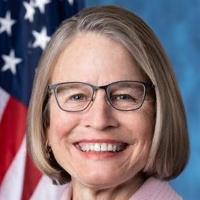
Mariannette Miller-Meeks
Representative
IA
Mariannette Miller-Meeks
Representative
IA
This bill grants limited legal immunity to manufacturers of essential critical infrastructure equipment against lawsuits stemming from wildfire-related losses. This protection applies unless a plaintiff can prove the manufacturer engaged in willful misconduct during the design or production of the equipment. The legislation aims to bolster the security and resilience of vital national systems by supporting their manufacturers.
The ARMS Act mandates the TSA to implement rigorous, risk-informed covert testing programs, establish formal procedures for promptly fixing identified security vulnerabilities, and report annually to Congress and the public on testing results.
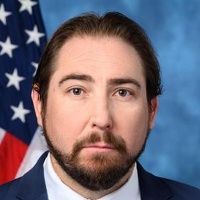
Eli Crane
Representative
AZ
Eli Crane
Representative
AZ
The Aviation Risk Mitigation and Security (ARMS) Act mandates significant changes to how the TSA tests and improves aviation security. It requires the TSA to establish formal, risk-informed covert testing programs to identify vulnerabilities in screening operations. Furthermore, the bill establishes strict timelines for analyzing, fixing, and retesting any identified security weaknesses. Finally, the TSA must provide annual reports to Congress and the public detailing testing results and progress on security enhancements.
The Protect RAIL Act makes non-citizens inadmissible to the U.S. and deportable if they commit or conspire to commit crimes involving theft or tampering with goods shipped across state or international lines.

Paul Gosar
Representative
AZ
Paul Gosar
Representative
AZ
The Protect RAIL Act amends immigration law to prevent non-citizens convicted of or admitting to crimes involving the theft or tampering of goods shipped across state or international lines from entering the United States. Furthermore, this bill makes non-citizens already in the U.S. deportable if they have committed such offenses related to interstate or foreign shipments.
This Act repeals all federal and state motor vehicle emission and fuel economy standards, prohibiting any government entity from establishing future pollution limits.
Roger Williams
Representative
TX
Roger Williams
Representative
TX
The Fuel Emissions Freedom Act aims to eliminate all federal and state regulations concerning vehicle fuel emissions and fuel economy standards. Proponents argue this will reduce consumer costs and regulatory uncertainty for manufacturers. The bill explicitly repeals key sections of the Clean Air Act and U.S. Code related to these standards. Consequently, it prohibits both federal and state governments from establishing or enforcing future emission limits for motor vehicles.
This bill mandates a formal review by the Secretary of State, Attorney General, and Secretary of the Treasury to determine if the Council on American-Islamic Relations (CAIR) meets the criteria for designation as a foreign terrorist organization.
Randall Fine
Representative
FL
Randall Fine
Representative
FL
This bill, the Designate CAIR as a Terrorist Organization Act, directs the Secretary of State, Attorney General, and Secretary of the Treasury to formally review the Council on American-Islamic Relations (CAIR) to determine if it meets the criteria for designation as a foreign terrorist organization. The legislation cites numerous findings regarding CAIR's alleged historical and ongoing ties to designated terrorist entities like Hamas. Congress requires a report detailing whether CAIR is officially designated following this mandated review.
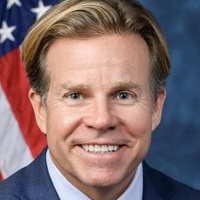
The LEDGER Act mandates the establishment of a comprehensive, government-wide system to track and record the exact destination and availability period of every federal expenditure.
Mike Haridopolos
Representative
FL
Mike Haridopolos
Representative
FL
The LEDGER Act mandates the creation of a comprehensive, centralized system managed by the Secretary of the Treasury to track every expenditure made by all branches of the U.S. Government. This new system must detail exactly where federal funds are spent and how long those funds were available for obligation. The goal is to significantly enhance the traceability and transparency of government spending.
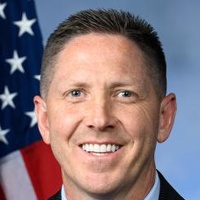
This act prohibits federal agencies from using funds to promote LGBTQI+ Pride Month and bans the display of sexual orientation or gender identity flags on federal property.
Josh Brecheen
Representative
OK
Josh Brecheen
Representative
OK
The Patriotism Not Pride Act prohibits federal agencies from using taxpayer funds to promote or officially recognize Lesbian, Gay, Bisexual, Transgender, Queer, and Intersex (LGBTQI+) Pride Month activities. Furthermore, the bill bans the flying of any flag representing sexual orientation or gender identity on federal property. This legislation aims to restrict federal endorsement and celebration of these specific recognitions.
This bill repeals specific Affordable Care Act provisions that limited Medicare exceptions to the prohibition on certain physician referrals to hospitals.

Beth Van Duyne
Representative
TX
Beth Van Duyne
Representative
TX
The Patient Access to Higher Quality Health Care Act of 2025 aims to repeal specific provisions within the Affordable Care Act and related legislation that limited exceptions to the prohibition on certain physician referrals to hospitals under Medicare. This action effectively restores pre-ACA rules regarding physician referrals for hospital services. The bill focuses on modifying existing Medicare regulations concerning physician-hospital relationships.