Legislative Activity
Track Brandon's sponsored bills, co-sponsored legislation, and voting record
The Kayleigh’s Law Act of 2026 mandates lifetime no-contact injunctions for defendants convicted of federal violent or sexual crimes to ensure the ongoing protection of victims.
Abraham Hamadeh
Representative
AZ
Abraham Hamadeh
Representative
AZ
The Kayleigh’s Law Act of 2026 mandates that federal courts issue lifetime no-contact orders for defendants convicted of specific violent or sexual offenses. These permanent protections ensure victims are shielded from further harassment without incurring any legal fees. The legislation provides a clear framework for these orders to remain in effect unless a conviction is overturned or specific legal conditions for termination are met.
This resolution honors the life and historic congressional legacy of the Honorable Kay Granger, recognizing her trailblazing service as a Representative from Texas and her dedicated contributions to national defense and the city of Fort Worth.
Craig Goldman
Representative
TX
Craig Goldman
Representative
TX
This resolution honors the life and legacy of the Honorable Kay Granger, celebrating her nearly 28 years of service in the U.S. House of Representatives. It recognizes her historic achievements as a trailblazer for women in public office, her dedicated advocacy for national defense, and her lasting contributions to the city of Fort Worth, Texas.
This Act mandates that schools must obtain prior written consent from parents or eligible students before collecting specific survey or evaluation data.
Mary Miller
Representative
IL
Mary Miller
Representative
IL
The Parents Opt-in Protection Act requires schools to obtain prior written consent before collecting specific survey or evaluation data from students. This legislation amends existing law to ensure that participation in certain student surveys is voluntary and requires explicit parental or student permission.
This bill clarifies that a franchisor is only considered a joint employer of a franchisee's workers if it exercises substantial, direct, and immediate control over essential terms of employment.
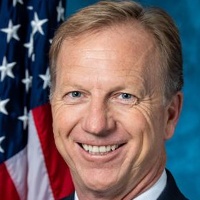
Kevin Hern
Representative
OK
Kevin Hern
Representative
OK
The American Franchise Act aims to protect the traditional franchise business model by clarifying the definition of a "joint employer." This legislation establishes that a franchisor is only considered a joint employer if it exercises "substantial direct and immediate control" over the essential terms of employment for a franchisee's workers. This change specifically targets liability risks associated with maintaining brand standards, ensuring franchisors are not automatically held responsible for local labor practices. The new standard applies prospectively to future legal proceedings.
This bill prohibits the Department of Labor from finalizing, implementing, or enforcing the proposed rule regarding heat injury and illness prevention in outdoor and indoor work settings.
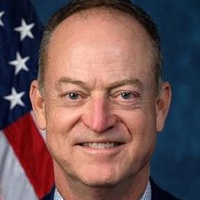
Mark Messmer
Representative
IN
Mark Messmer
Representative
IN
This act, the Heat Workforce Standards Act of 2025, prohibits the Secretary of Labor from finalizing, implementing, or enforcing the proposed rule regarding heat injury and illness prevention published in August 2024. This restriction extends to any future standard substantially similar to the one proposed.
This bill amends the federal charter of the Daughters of the American Revolution to restrict membership eligibility to individuals who meet the organization's genealogical requirements and are defined as adult human females.

Ben Cline
Representative
VA
Ben Cline
Representative
VA
The Daughters of the American Revolution Membership Integrity Act amends the organization’s federal charter to formally define membership eligibility. The bill restricts membership to adult human females, establishing a biological definition for the term "female" based on reproductive system development.
This resolution honors the public service of the late Senator Lindsey Graham, condemns Omar Suleiman for celebrating his death, and supports efforts to address the incompatibility of Sharia Law with American constitutional principles.
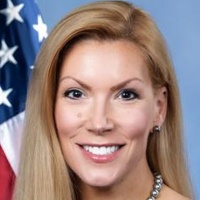
Beth Van Duyne
Representative
TX
Beth Van Duyne
Representative
TX
This resolution honors the life and public service of the late Senator Lindsey Graham while formally condemning Omar Suleiman for his public remarks celebrating the Senator's death. Additionally, the bill acknowledges Suleiman’s 2019 invitation to serve as a Guest Chaplain in the U.S. House and reaffirms support for efforts to address the perceived dangers of Sharia Law to American constitutional principles.
The Chloe Cole Act of 2026 establishes a private right of action allowing individuals to sue healthcare providers for damages resulting from gender-transition medical interventions performed on them as minors.
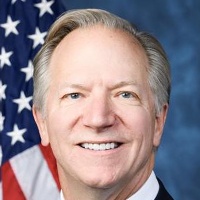
Robert Onder
Representative
MO
Robert Onder
Representative
MO
The Chloe Cole Act of 2026 establishes a federal private right of action allowing individuals to sue healthcare professionals and institutions for damages related to gender-transition medical interventions performed on them as minors. The bill permits lawsuits regardless of when the intervention occurred and sets a statute of limitations extending 25 years past the individual's 18th birthday. Additionally, it mandates strict liability for such interventions performed after the Act's enactment.
This Act prohibits payment card networks and processors from assigning specific merchant category codes to identify firearms retailers, protecting the privacy of firearm and ammunition purchases.
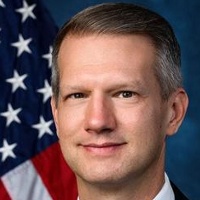
Riley Moore
Representative
WV
Riley Moore
Representative
WV
The Protecting Privacy in Purchases Act prohibits payment card networks and processors from assigning specific merchant category codes to firearms retailers. This legislation aims to protect consumer privacy by preventing the tracking of firearm and ammunition purchases through specialized financial classification. The Attorney General is tasked with enforcing these provisions and reporting annually on compliance.
The SHARE Act of 2025 establishes federal requirements for the FBI to share criminal history record information with states participating in interstate professional licensing compacts, while strictly limiting how those states can use and further disseminate that data.
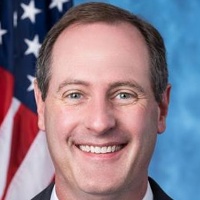
Tracey Mann
Representative
KS
Tracey Mann
Representative
KS
The SHARE Act of 2025 establishes new federal requirements for the FBI to share criminal history record information with states participating in professional licensing interstate compacts. This information sharing is strictly for the purpose of conducting background checks on applicants seeking to practice a profession in another compact state. States receiving this data are severely restricted on how they can use or further disseminate the detailed criminal history, generally only being permitted to report a binary "satisfactory" or "unsatisfactory" determination back to the compact's Commission.
This bill mandates the automatic revocation of citizenship for naturalized individuals convicted of providing material support to terrorists or designated foreign terrorist organizations.
Beth Van Duyne
Representative
TX
Beth Van Duyne
Representative
TX
The Getting Terrorist Fanatics Out Act of 2026 mandates the automatic revocation of citizenship for naturalized individuals convicted of providing material support to terrorists or designated foreign terrorist organizations. This action will be carried out by the court that handled the conviction. The bill aims to swiftly strip citizenship from those found guilty of serious terrorism-related offenses.
This bill significantly expands federal immunity for firearm manufacturers and sellers by immediately dismissing existing lawsuits and establishing strict limitations and procedural hurdles for future civil liability claims.
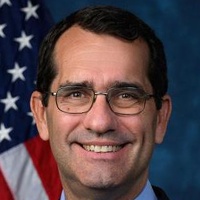
Derek Schmidt
Representative
KS
Derek Schmidt
Representative
KS
The Stopping Harmful and Outrageous Torts Act significantly expands legal immunity for firearm manufacturers, sellers, and trade associations by redefining terms within existing federal law. It mandates the immediate dismissal of pending lawsuits against these entities and establishes strict new standards for any exceptions that might apply. Furthermore, the bill preempts state and local laws that attempt to impose liability based on the criminal misuse of qualified products.
This bill bars entry to and mandates the deportation of close family members of designated terrorists, officials from adversarial nations, and sanctioned kleptocrats.
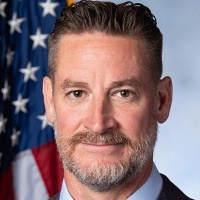
W. Steube
Representative
FL
W. Steube
Representative
FL
The "No Safe Haven for Terrorist Families Act" amends immigration law to bar entry to and mandate the deportation of specified close family members of foreign threat actors, including designated terrorists and senior officials from adversarial nations. This measure expands inadmissibility grounds to address national security risks posed by relatives of individuals involved in terrorism, state sponsorship of terrorism, or significant corruption. The Act requires mandatory visa revocation and prioritizes the removal of these inadmissible individuals, eliminating most forms of discretionary relief.
This Act prohibits civil lawsuits against manufacturers and sellers of stone slab products for injuries caused by silica dust exposure during the fabrication process performed by third parties.
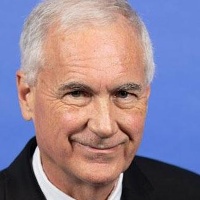
Tom McClintock
Representative
CA
Tom McClintock
Representative
CA
The Protection of Lawful Commerce in Stone Slab Products Act aims to shield manufacturers and sellers of stone slab products from civil lawsuits related to silica dust exposure. This bill prohibits filing new lawsuits, and mandates the dismissal of existing ones, when injuries allegedly result from unsafe cutting or installation practices by third-party fabricators. The intent is to protect commerce by preventing liability for actions outside the manufacturer's control where safety standards already exist for installers.
This resolution supports designating June as Family Month to recognize the traditional nuclear family as the foundation of a healthy society and to rededicate the nation to its importance, while also opposing the observance of Pride Month.
Mary Miller
Representative
IL
Mary Miller
Representative
IL
This resolution supports designating June as Family Month to recognize the traditional nuclear family as the foundation of a healthy society. It calls for a national rededication to the importance of marriage and family, asserting that children thrive best in a home with a married mother and father. The bill also explicitly states that the House of Representatives no longer recognizes Pride Month.
This act establishes the Medal of Sacrifice to honor law enforcement officers and first responders killed in the line of duty, creating a Commission to oversee its design and eligibility determinations.
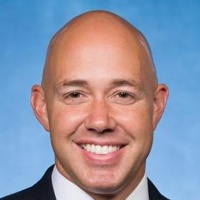
Brian Mast
Representative
FL
Brian Mast
Representative
FL
The Medal of Sacrifice Act establishes a new national medal to honor law enforcement officers and first responders killed in the line of duty. This legislation creates a Commission to advise on the medal's design, presentation, and final eligibility decisions, particularly when there are findings of wrongdoing. The medal itself will feature specific symbolic elements and will be awarded to eligible fallen heroes.
This bill prohibits the VA from reporting veterans to the NICS background check system solely because a fiduciary has been appointed to manage their benefits, unless a judicial authority deems them a danger to themselves or others.
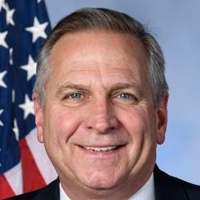
Mike Bost
Representative
IL
Mike Bost
Representative
IL
The Veterans 2nd Amendment Protection Act prohibits the VA from reporting veterans to the NICS background check system solely because a fiduciary was appointed to manage their benefits. This legislation ensures that a VA finding of mental incompetence or the appointment of a fiduciary alone is not used to treat a veteran as a "mental defective" for gun control purposes. Furthermore, the VA must notify the Attorney General about past transmissions of this information that lacked a proper legal basis.
This Act mandates that jurisdictions receiving federal grants report data on their use of cashless bail systems and identifies those that allow pre-trial release without cash bail for certain offenses.
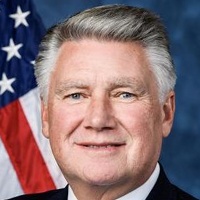
Mark Harris
Representative
NC
Mark Harris
Representative
NC
The Cashless Bail Reporting Act mandates that states and local governments receiving specific federal grants must report annual data on their use of cashless bail systems. This data includes the number of individuals released, subsequent failures to appear, and new arrests while on pretrial release. Furthermore, the Act requires the Attorney General to annually publish a list of jurisdictions that permit pretrial release without cash bail for certain offenses threatening public safety.
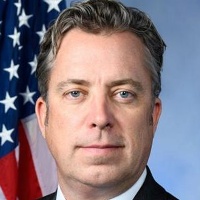
This bill fundamentally overhauls U.S. immigration by replacing family-based and diversity systems with a strict merit-based structure, severely limiting family reunification, tightening naturalization requirements, and mandating E-Verify for all employment.
Andrew Ogles
Representative
TN
Andrew Ogles
Representative
TN
The American System for Sustainable Immigration and Mass Immigration Limitations Achieved Through Imposing Oversight Nationally Act fundamentally restructures U.S. immigration by replacing family-based and diversity visa systems with a strict merit-based approach focused on national interest. This bill tightens standards for citizenship, drastically limits family reunification, raises the bar for asylum, and mandates universal E-Verify for employment. Overall, the legislation aims to prioritize economic self-sufficiency, cultural cohesion, and national security while significantly reducing overall immigration levels and executive discretion.
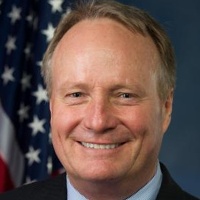
This bill establishes the Combating Organized Retail Crime Act of 2025 to enhance federal prosecution tools against organized retail and supply chain crime and create a DHS-led coordination center to align law enforcement efforts.
David Joyce
Representative
OH
David Joyce
Representative
OH
The Combating Organized Retail Crime Act of 2025 aims to combat sophisticated, cross-jurisdictional organized retail and supply chain theft. It achieves this by strengthening federal laws regarding money laundering and stolen property offenses, including lowering monetary thresholds for prosecution. Furthermore, the bill establishes a dedicated Center within the Department of Homeland Security to coordinate federal, state, and local enforcement efforts against these criminal organizations.