
Legislative Activity
Track Jared's sponsored bills, co-sponsored legislation, and voting record
The Paycheck Fairness Act strengthens equal pay enforcement by tightening defenses against pay discrimination, expanding protections against retaliation, increasing penalties for violations, and requiring comprehensive data collection and training initiatives.

Rosa DeLauro
Representative
CT
Rosa DeLauro
Representative
CT
The Paycheck Fairness Act significantly strengthens federal equal pay protections by broadening definitions of sex discrimination, tightening employer defenses against pay disparities, and increasing penalties for violations. It also prohibits employers from using salary history in hiring decisions and mandates new data collection by the EEOC to better enforce anti-discrimination laws. Furthermore, the bill establishes new training and outreach programs to combat systemic wage bias.
This bill establishes national reciprocity for concealed carry permits, allowing individuals legally permitted to carry in their home state to carry a handgun in any other state that allows concealed carry.
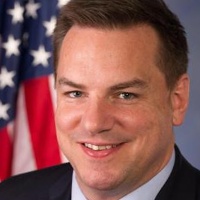
Richard Hudson
Representative
NC
Richard Hudson
Representative
NC
The Constitutional Concealed Carry Reciprocity Act of 2025 establishes a national standard for carrying concealed handguns across state lines. This act allows individuals legally permitted to carry in their home state to carry concealed in any other state that allows its residents to carry concealed firearms. The law does not override private property restrictions or prohibitions on government property, but it provides protections and legal recourse for those traveling in compliance with the new federal standard.
This bill officially ratifies the Equal Rights Amendment, validating its inclusion in the Constitution regardless of any prior ratification deadlines.

Ayanna Pressley
Representative
MA
Ayanna Pressley
Representative
MA
This bill officially ratifies the Equal Rights Amendment, declaring it a valid part of the U.S. Constitution. It specifically removes any previously imposed deadlines for state ratification. If three-fourths of the states have approved the amendment, this law confirms its official status regardless of past time constraints.
The GARD Act updates federal rules for reporting, restricting, and publicly disclosing gifts and decorations received by government employees and candidates from foreign sources.

Byron Donalds
Representative
FL
Byron Donalds
Representative
FL
The GARD Act updates federal rules regarding the receipt and reporting of gifts and decorations from foreign governments. It expands who must report these gifts, tightens restrictions by prohibiting gifts from designated "countries of concern," and changes reporting deadlines and required details. Furthermore, the bill mandates public online access to these foreign gift listings within 120 days of enactment.
The Foreign Investment Guardrails to Help Thwart (FIGHT) China Act imposes sanctions, prohibits U.S. investments in sensitive Chinese national security technologies, and establishes divestment requirements for companies linked to China's military-industrial complex.
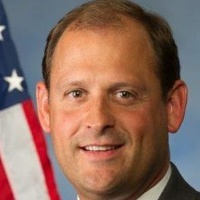
Garland Barr
Representative
KY
Garland Barr
Representative
KY
The Foreign Investment Guardrails to Help Thwart (FIGHT) China Act aims to protect U.S. national security by imposing sanctions on certain foreign persons and restricting U.S. investments in sensitive technologies within China. The bill establishes new prohibitions and mandatory reporting requirements for U.S. persons engaging in covered national security transactions involving specific prohibited technologies. Furthermore, it mandates the creation of a "Non-SDN Chinese Military-Industrial Complex Companies List" and requires divestment from securities in companies placed on that list.
The Air America Act of 2025 authorizes one-time monetary awards to former Air America employees or their survivors for service supporting the CIA between 1950 and 1976.
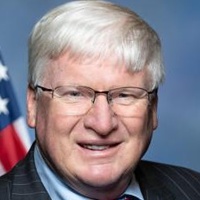
Glenn Grothman
Representative
WI
Glenn Grothman
Representative
WI
The Air America Act of 2025 recognizes the sacrifices of former Air America employees who served the U.S. Government between 1950 and 1976. This Act authorizes a one-time monetary award, up to $40,000 plus potential additional amounts, for qualifying service members or their survivors. The CIA Director is responsible for administering these payments, which are capped at a total of $60 million, and establishing the application procedures. Decisions made by the Director regarding these awards are final and not subject to judicial review.
This bill extends the Medicare ground ambulance payment pilot program through 2028 to ensure continued patient access to these essential medical services.

Claudia Tenney
Representative
NY
Claudia Tenney
Representative
NY
The Protecting Access to Ground Ambulance Medical Services Act of 2025 extends the current Medicare payment structure for ground ambulance services. This change ensures continuity in how these vital services are reimbursed under existing rules. Specifically, the temporary payment pilot program is extended through 2028, preventing an immediate change in payment policy.
The PARA-EMT Act of 2025 establishes pilot grant programs to combat the national shortage of EMTs and paramedics by funding recruitment, training, and veteran credentialing, alongside mandating a comprehensive study of the workforce crisis.

Marie Gluesenkamp Perez
Representative
WA
Marie Gluesenkamp Perez
Representative
WA
The PARA-EMT Act of 2025 addresses the critical national shortage of EMTs and paramedics by establishing a pilot grant program to help agencies hire, train, and support their emergency medical workforce. It also creates a federal grant program to assist states in streamlining the transition of veterans with military medical training into civilian EMS roles. Finally, the bill mandates a comprehensive study to quantify the current and projected workforce shortage and recommend solutions, including potential visa considerations.
The Innovative FEED Act of 2025 establishes a new regulatory pathway under the FDA for substances added to animal food intended to modify digestive byproducts, reduce foodborne pathogens, or alter gut function without providing nutrition.
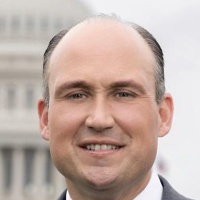
Nicholas Langworthy
Representative
NY
Nicholas Langworthy
Representative
NY
The Innovative FEED Act of 2025 establishes a new regulatory category for "zootechnical animal food substances" intended to modify animal digestive byproducts or reduce foodborne pathogens without treating disease. This bill mandates that these new substances must undergo the standard food additive approval process with the FDA, requiring petitioners to provide extensive data on their intended effects. Approval is contingent upon proving the substance achieves its claimed function under proposed use conditions, and all resulting animal food must carry a specific disclaimer stating it is not for disease treatment.
The Safe Routes Act of 2025 exempts certain logging trucks hauling raw forest products from federal vehicle weight limits within a 150-air-mile radius, provided they adhere to existing state weight tolerances.
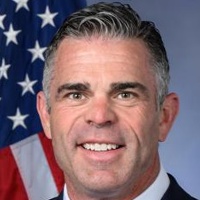
Tony Wied
Representative
WI
Tony Wied
Representative
WI
The Safe Routes Act of 2025 grants the Secretary the authority to waive federal vehicle weight limits for covered logging vehicles transporting raw forest products. This exemption applies only when these trucks operate within 150 air miles on the Interstate system and adhere to existing state-level weight tolerances for such materials. Essentially, the bill allows logging trucks to operate under established state rules rather than stricter federal limits for short hauls.
This Act establishes stricter public review periods, community protections, and regulatory oversight before the Postal Service can close post offices or consolidate mail processing facilities.

Nicole (Nikki) Budzinski
Representative
IL
Nicole (Nikki) Budzinski
Representative
IL
The Protect Postal Performance Act establishes stricter public review periods and new protections before the Postal Service can close or consolidate local post offices. It also imposes significant limitations on the USPS's ability to change mail processing centers and transportation schedules. These changes require advisory opinions from the Postal Regulatory Commission (PRC) and prohibit facility closures in areas with poor recent on-time delivery performance.
The Major Richard Star Act ensures that military retirees with combat-related disabilities can concurrently receive their full military retirement pay and VA disability compensation without reduction.

Gus Bilirakis
Representative
FL
Gus Bilirakis
Representative
FL
The Major Richard Star Act ensures that military retirees with combat-related disabilities can receive both their military retirement pay and VA disability compensation concurrently without reduction. This law removes previous restrictions that caused military retirement pay to be offset by VA disability payments for these specific cases. The changes take effect on the first day of the month following the Act's enactment.
This act limits the government's ability to recover Social Security and SSI overpayments that were discovered ten or more years after the overpayment occurred.
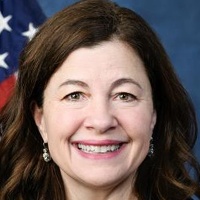
Kristen McDonald Rivet
Representative
MI
Kristen McDonald Rivet
Representative
MI
The Social Security Overpayment Relief Act establishes a 10-year statute of limitations for the government to recover Social Security and SSI overpayments. This means the government cannot attempt to collect or offset future benefits for overpayments that occurred ten or more years before the mistake was officially discovered. This provides relief by limiting the recovery period for old benefit errors.
This act officially designates Postal Service police officers as federal agents with authority over Postal Service property and establishes penalties for violating property rules set by the Postmaster General.
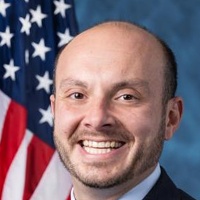
Andrew Garbarino
Representative
NY
Andrew Garbarino
Representative
NY
The Postal Police Reform Act of 2025 officially designates Postal Service police officers as federal law enforcement agents under Title 18 of the U.S. Code. This legislation grants the Postmaster General the authority to establish and enforce rules for protecting Postal Service property. Violations of these new rules may result in federal fines or imprisonment up to 30 days.
This Act eliminates the waiting periods for Social Security disability benefits and Medicare coverage for individuals diagnosed with metastatic breast cancer.
Andrew Garbarino
Representative
NY
Andrew Garbarino
Representative
NY
The Metastatic Breast Cancer Access to Care Act aims to improve support for individuals diagnosed with metastatic breast cancer. This bill eliminates the standard waiting period for receiving Social Security disability insurance benefits and waives the 24-month waiting period for Medicare coverage. These changes ensure immediate access to crucial financial and healthcare support upon diagnosis.
This Act converts Transportation Security Administration (TSA) personnel to standard federal employment rules under Title 5, establishes transition protections, mandates workforce reviews, and addresses labor relations and employee safety.
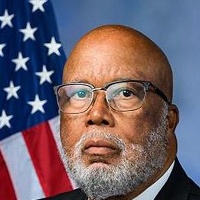
Bennie Thompson
Representative
MS
Bennie Thompson
Representative
MS
The Rights for the Transportation Security Administration Workforce Act transitions TSA personnel to standard federal employment rules under Title 5 of the U.S. Code by a set date no later than December 31, 2025. This mandates the freezing of current personnel policies during the transition while protecting current employee pay and benefits. The bill also requires extensive reviews by the Comptroller General on hiring, diversity, and workplace safety, and mandates consultation with employee representatives regarding labor relations. Finally, it ensures that screening agents retain collective bargaining rights and addresses specific concerns for Federal Air Marshals.
This act allows State homes caring for veterans to choose between direct reimbursement or direct furnishing of high-cost medications.
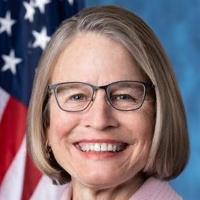
Mariannette Miller-Meeks
Representative
IA
Mariannette Miller-Meeks
Representative
IA
The Providing Veterans Essential Medications Act allows State homes caring for veterans to choose how they receive reimbursement for very high-cost medications. State homes can opt to be reimbursed directly for the medication's cost or have the Secretary of the VA furnish the drug directly. This provision applies only when the cost of a specific medication exceeds a defined threshold relative to the standard monthly payment for that veteran's care.
The BAH Restoration Act ensures that uniformed service members receive a basic housing allowance that covers the full cost of adequate housing based on location, pay grade, and dependency status.

Marilyn Strickland
Representative
WA
Marilyn Strickland
Representative
WA
The BAH Restoration Act aims to restore the Basic Allowance for Housing (BAH) to cover 100% of service members' housing costs. This will be done by amending title 37 of the United States Code, ensuring that the monthly BAH is equivalent to the determined monthly cost of adequate housing based on pay grade, dependency status, and location. The Secretary of Defense will determine the specific housing costs in each area.
The John R. Lewis Voting Rights Advancement Act of 2025 aims to strengthen and update the Voting Rights Act of 1965 by addressing vote dilution and denial, establishing updated criteria for federal oversight of states and political subdivisions with a history of voting rights violations, and promoting transparency in election-related changes.
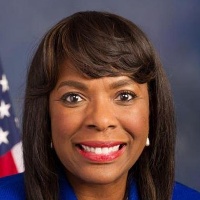
Terri Sewell
Representative
AL
Terri Sewell
Representative
AL
The John R. Lewis Voting Rights Advancement Act of 2025 amends the Voting Rights Act of 1965 to address vote dilution, denial, and abridgment claims, and to update which states and political subdivisions are subject to federal oversight based on a history of voting rights violations. It broadens the types of violations that allow a court to retain jurisdiction over a case, clarifies the Attorney General's authority to assign observers, and ensures transparency in voting-related changes. The Act also authorizes the Attorney General to demand documents and information to enforce voting rights and provides grants to small jurisdictions to assist with notification requirements.
This Act simplifies regulations to allow child care providers to easily serve fresh, minimally prepared fruits and vegetables to children.
Marie Gluesenkamp Perez
Representative
WA
Marie Gluesenkamp Perez
Representative
WA
The Cutting Red Tape on Child Care Providers Act of 2025 aims to improve child nutrition by simplifying regulations that hinder the serving of fresh foods. This bill prohibits states from creating barriers that prevent licensed and exempt child care facilities from performing simple food preparation, such as washing and cutting fruits and vegetables. By streamlining these rules, the Act seeks to support providers and encourage healthier eating habits for children.