Legislative Activity
Track Chuy's sponsored bills, co-sponsored legislation, and voting record
The **Protecting Our Democracy Act** imposes sweeping restrictions on presidential power, enhances congressional oversight, strengthens ethics and anti-corruption laws, and bolsters accountability for federal officials.
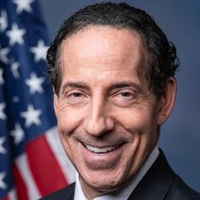
Jamie Raskin
Representative
MD
Jamie Raskin
Representative
MD
The **Protecting Our Democracy Act** imposes sweeping reforms across the executive branch to strengthen accountability and restore checks and balances. It restricts presidential pardon power, closes loopholes to ensure no President is above the law, and enforces constitutional emoluments clauses to prevent self-enrichment. Furthermore, the Act enhances congressional oversight by strengthening subpoena enforcement, increasing transparency around White House visitors and tax returns, and protecting federal whistleblowers from retaliation.
This Act funds data collection, research, public communication, and task force recommendations to improve maternal health outcomes during public health emergencies.
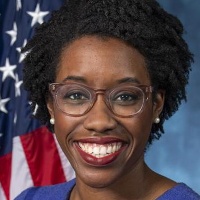
Lauren Underwood
Representative
IL
Lauren Underwood
Representative
IL
The Maternal Health Pandemic Response Act aims to improve maternal and infant health outcomes during public health emergencies. It authorizes significant funding for enhanced data collection, surveillance, and research across various CDC programs. Furthermore, the bill mandates public data disclosure, requires public health communication campaigns, and establishes a task force to develop federal recommendations for ensuring safe, respectful, and equitable maternity care during crises.
This act establishes universal free breakfast and lunch programs in schools, eliminates meal debt, and updates poverty metrics across various federal education and nutrition programs.
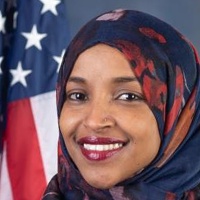
Ilhan Omar
Representative
MN
Ilhan Omar
Representative
MN
The Universal School Meals Program Act of 2026 establishes permanent, universal free breakfast and lunch programs for all enrolled students at participating schools, eliminating income tests and meal debt collection. The bill significantly updates federal funding mechanisms by replacing reliance on free and reduced-price lunch data with new measures for identifying economically disadvantaged students across various education and social programs. Furthermore, it expands access to summer and afterschool meals while making technical amendments across several federal education and nutrition laws.
This bill mandates the Access Board to establish and finalize accessibility standards for electric vehicle charging stations, adopting existing proposed guidelines if the deadline is missed.
Lauren Underwood
Representative
IL
Lauren Underwood
Representative
IL
The EV Charging Accessibility Act mandates the Access Board to finalize accessibility standards for electric vehicle (EV) charging stations based on existing proposed guidelines within 18 months. If the deadline is missed, the proposed rule automatically becomes law. Following finalization, relevant agencies must adopt these accessibility guidelines into their regulations.
This resolution recognizes National Postpartum Awareness Week for Communities of Color to highlight and address the disproportionate maternal health crisis and disparities faced by women of color during the postpartum period.
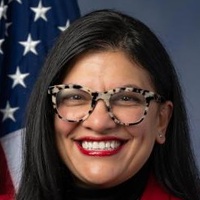
Rashida Tlaib
Representative
MI
Rashida Tlaib
Representative
MI
This resolution officially recognizes the week of May 3-9, 2026, as "National Postpartum Awareness Week for Communities of Color." It highlights the disproportionate maternal health crisis faced by communities of color and the critical need for respectful, culturally competent postpartum care. The bill supports efforts to eliminate racial disparities in maternal health outcomes by improving access to necessary resources and mental health services.
This bill establishes comprehensive standards for the care, housing, and treatment of pregnant women in federal custody, including mandated data collection, prohibitions on restrictive housing and restraints, and requirements for family unity services.
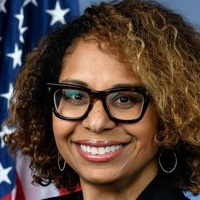
Sydney Kamlager-Dove
Representative
CA
Sydney Kamlager-Dove
Representative
CA
The Pregnant Women in Custody Act aims to establish comprehensive standards for the care, health services, and housing of pregnant individuals in federal custody, including those held by the Bureau of Prisons, CBP, ICE, and ORR. The bill mandates extensive data collection on the health needs of incarcerated pregnant women and strictly prohibits the use of restraints and restrictive housing during pregnancy, labor, and postpartum recovery, with very limited exceptions. Furthermore, it requires federal agencies to provide essential services like family unity programs, specialized medical care, and comprehensive education for pregnant and postpartum individuals.
This act prohibits the use of federal funds for military action in or against Iran through 2026 unless Congress formally declares war or authorizes such force.
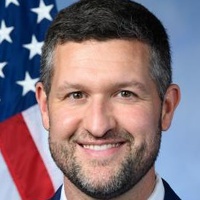
Patrick Ryan
Representative
NY
Patrick Ryan
Representative
NY
The No Funds for Iran War Act prohibits the use of federal funds for military action in or against Iran through the end of 2026. This ban remains in effect unless Congress formally declares war or passes a specific authorization for military force. Exceptions are made only for actions consistent with the War Powers Resolution or necessary self-defense against an imminent attack.
This resolution recognizes the historical and cultural significance of Cinco de Mayo, commemorating the Mexican victory at the Battle of Puebla and encouraging its observance in the United States.
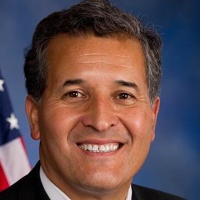
Juan Vargas
Representative
CA
Juan Vargas
Representative
CA
This resolution officially recognizes the cultural and historical significance of Cinco de Mayo, commemorating the 1862 Mexican victory at the Battle of Puebla. It highlights the holiday as a symbol of self-determination, unity, and the strong ties between the U.S. and Mexico. The bill encourages the American public to observe this important day with appropriate activities.
This bill officially designates May 2026 as Asian American, Native Hawaiian, and Pacific Islander Heritage Month to celebrate their significant contributions to U.S. history and culture.
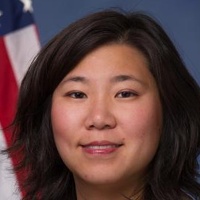
Grace Meng
Representative
NY
Grace Meng
Representative
NY
This bill officially designates May 2026 as Asian American, Native Hawaiian, and Pacific Islander Heritage Month. It calls for nationwide recognition and celebration of the significant contributions, achievements, and history of these communities to the United States. The measure emphasizes that these communities enhance the nation's diversity and strength.
The CHARTER Act prohibits federally funded charter schools from contracting with for-profit entities to operate, oversee, or manage the school's core administration, ensuring public funds serve educational needs rather than generate private profit.
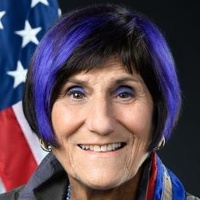
Rosa DeLauro
Representative
CT
Rosa DeLauro
Representative
CT
The CHARTER Act ensures that federally funded charter schools adhere to nonprofit requirements by prohibiting them from contracting with for-profit entities to operate or manage the school's core operations. This legislation aims to prevent public education funds from being diverted as profit for private entities. It clarifies that while core management must remain nonprofit, charters can still contract for specific support services like food or transportation.
This resolution opposes any rollback of the EPA's Greenhouse Gas Reporting Program, emphasizing its critical role in tracking emissions, protecting public health, and supporting scientific integrity and economic growth.
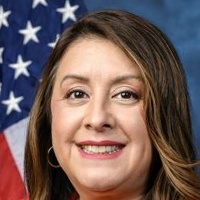
Luz Rivas
Representative
CA
Luz Rivas
Representative
CA
This resolution strongly opposes any rollback of the EPA's Greenhouse Gas Reporting Program, emphasizing its critical role in tracking U.S. emissions. The program provides essential, transparent data vital for protecting public health, advancing environmental justice, and supporting federal, state, and business climate initiatives. Undermining this system would erode scientific integrity and hinder efforts to address climate change and pollution impacts.
The No WAR Act establishes a point of order preventing the use of budget reconciliation to fund unauthorized military hostilities against Iran.
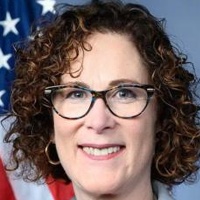
Valerie Hoyle
Representative
OR
Valerie Hoyle
Representative
OR
The No WAR Act establishes a procedural barrier, a "point of order," in Congress to prevent funding for unauthorized military action against Iran through the budget reconciliation process. This means that any reconciliation bill providing budget authority for hostilities against Iran will be out of order unless Congress has first formally authorized that military force. The Act ensures that funding for military conflict against Iran requires explicit prior congressional approval.
This bill nullifies three specific Department of State rules regarding foreign assistance, effectively voiding their implementation and preventing enforcement of similar future policies.
Grace Meng
Representative
NY
Grace Meng
Representative
NY
This Act nullifies three specific Department of State rules concerning foreign assistance, effectively treating them as if they never existed. It prohibits any federal agency from implementing or enforcing these rules, or any substantially similar future policies. The legislation aims to prevent the enforcement of rules related to "Protecting Life," "Discriminatory Equity Ideology," and "Gender Ideology" in foreign aid.
This bill mandates stricter federal and state regulation of utility rate-setting by establishing lower return-on-equity ranges and banning numerous non-operational costs from being passed on to consumers.
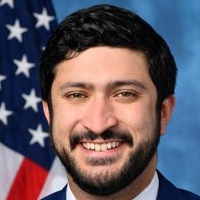
Gregorio Casar
Representative
TX
Gregorio Casar
Representative
TX
The Lowering Utility Bills Act aims to reduce consumer energy costs by establishing stricter federal and state guidelines for how electric transmission providers and investor-owned utilities calculate their allowed rate of return. The bill mandates using the lowest reasonable return on equity based on market data and explicitly bans passing numerous lobbying, administrative, and political expenses onto customers. Furthermore, it requires utilities to prioritize lower-cost, grid-enhancing technologies when planning new capital expenditures.
The HCBS Access Act mandates comprehensive, federally funded home- and community-based services under Medicaid, establishes a distinct classification for direct support professionals, and invests in workforce training and national program evaluation.
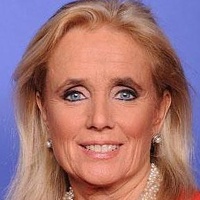
Debbie Dingell
Representative
MI
Debbie Dingell
Representative
MI
The HCBS Access Act aims to fundamentally transform long-term care by mandating that all states provide home- and community-based services (HCBS) as a required Medicaid benefit, backed by 100% federal funding. This sweeping legislation seeks to eliminate waiting lists, end institutional bias, and ensure older adults and people with disabilities can receive care in their own homes. Additionally, the bill includes provisions to strengthen the direct care workforce through better classification, training, and grant funding, while also requiring comprehensive national evaluation of the changes.
The Long-Term Care Workforce Support Act aims to significantly improve the pay, training, working conditions, and stability of the direct care workforce through federal funding, new labor protections, and national compensation strategies.
Debbie Dingell
Representative
MI
Debbie Dingell
Representative
MI
The Long-Term Care Workforce Support Act aims to significantly improve the lives of direct care professionals by increasing their pay, benefits, and training opportunities through federal funding and grants. The bill establishes new labor protections, including fair scheduling, paid sick leave, and workplace violence prevention plans. Ultimately, this legislation seeks to stabilize the essential long-term care workforce to ensure better quality care for older adults and people with disabilities.
This Act establishes a phased-in increase of the federal minimum wage, ultimately tying it to two-thirds of the national median hourly wage while also reforming wages for tipped workers, youth workers, and incarcerated workers, and phasing out subminimum wages for workers with disabilities.
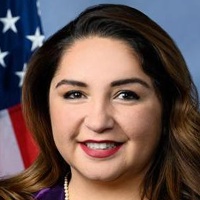
Delia Ramirez
Representative
IL
Delia Ramirez
Representative
IL
The Living Wage For All Act establishes a phased increase of the federal minimum wage, ultimately aiming to tie it to two-thirds of the national median hourly wage. It creates differentiated wage schedules, requiring large corporations to reach higher minimums sooner than other employers. Furthermore, the bill phases out subminimum wages for tipped workers and workers with disabilities, and extends federal wage protections to incarcerated workers.
This bill prohibits the Department of Homeland Security from establishing or operating any new immigration detention models, such as converting warehouses or using tent systems.
Rashida Tlaib
Representative
MI
Rashida Tlaib
Representative
MI
This bill prohibits the Department of Homeland Security (DHS) from establishing or operating any new models of immigration detention facilities, such as converting warehouses or using temporary structures. It specifically bans entering into new contracts for these alternative detention setups. Furthermore, any funds already allocated for these new models must be transferred to support services like affordable housing and healthcare.
This Act establishes federal programs to address the impact of climate change risks, like extreme heat and pollution, on maternal and infant health through grants, education, research, and risk zone identification.
Lauren Underwood
Representative
IL
Lauren Underwood
Representative
IL
The Protecting Moms and Babies Against Climate Change Act directs the Department of Health and Human Services to address how climate change risks, like extreme heat and pollution, harm maternal and infant health. The bill establishes grant programs to support local efforts and education, and mandates research and strategies to identify high-risk zones for pregnant individuals and young children. Its goal is to reduce adverse outcomes such as preterm birth, low birth weight, and maternal mortality linked to climate change.
This act extends eligibility for various Department of Veterans Affairs benefits to former service members discharged solely due to their sexual orientation or gender identity.
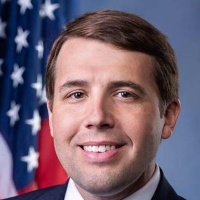
Chris Pappas
Representative
NH
Chris Pappas
Representative
NH
The Securing the Rights our Veterans Earned Act (SERVE Act) extends eligibility for key Department of Veterans Affairs (VA) benefits to former service members who were discharged based on their sexual orientation or gender identity. This includes access to hospital care, mental health services, national cemetery burial, Post-9/11 GI Bill education assistance, and housing loans. The bill also mandates the VA Secretary to conduct outreach regarding these newly available benefits.