Legislative Activity
Track Chuy's sponsored bills, co-sponsored legislation, and voting record
This bill authorizes the Federal Government to reimburse states for using their own funds to maintain WIC program operations during a lapse in federal appropriations.
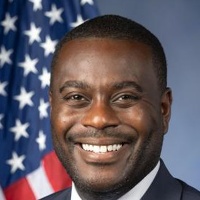
Gabe Amo
Representative
RI
Gabe Amo
Representative
RI
This bill ensures that states are reimbursed by the Federal Government for any state funds they use to maintain essential operations of the Special Supplemental Nutrition Program for Women, Infants, and Children (WIC) during a lapse in federal appropriations. It provides a mechanism for the Federal Government to pay back states that cover WIC costs during a government shutdown. This protects state budgets while keeping vital nutrition assistance running.
This resolution expresses deep concern over the surge in book banning and threats to free expression, urging the immediate restoration of removed materials in federal schools and the repeal of restrictive directives.
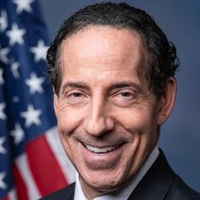
Jamie Raskin
Representative
MD
Jamie Raskin
Representative
MD
This resolution expresses deep concern over the growing trend of book banning and threats to freedom of expression in U.S. schools and libraries. It asserts that such censorship undermines democratic values and harms students by restricting access to diverse ideas and histories. The bill urges local entities to follow best practices for book challenges and calls for the immediate reinstatement of books removed from Department of Defense schools. Ultimately, it reaffirms the nation's commitment to First Amendment rights and the freedom to read.
This resolution officially designates October 8, 2025, as Latina Equal Pay Day to recognize and address the significant wage disparity faced by Latina women compared to White, non-Hispanic men.
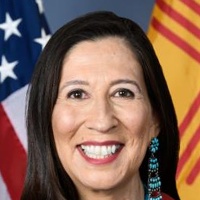
Teresa Leger Fernandez
Representative
NM
Teresa Leger Fernandez
Representative
NM
This resolution officially designates October 8, 2025, as Latina Equal Pay Day to highlight the significant wage disparity faced by Latina workers. It recognizes that Latinas currently earn only about 58 cents for every dollar earned by White, non-Hispanic men, resulting in substantial lifetime earnings loss. The bill calls attention to systemic factors like workplace policies and harassment that contribute to this ongoing economic injustice. Ultimately, Congress reaffirms its commitment to achieving pay equity for all women.
This Act provides appropriations and mandates contract price adjustments to compensate federal contractor employees for losses incurred due to funding lapses or government shutdowns.
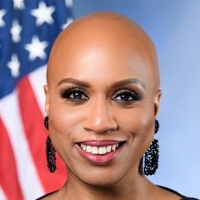
Ayanna Pressley
Representative
MA
Ayanna Pressley
Representative
MA
The Fair Pay for Federal Contractors Act of 2025 ensures that employees of federal contractors are compensated for losses incurred due to government funding lapses or shutdowns. It requires federal agencies to adjust existing contracts to cover reasonable costs associated with furloughs, pay cuts, or mandatory leave taken by contractor employees. The bill appropriates necessary funds to cover these contract price adjustments and mandates public reporting on the compensation provided.
The Child Care for Every Community Act establishes a national framework to guarantee universal access to high-quality, regulated early learning programs with mandated national standards and comparable pay for staff.
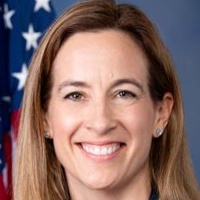
Mikie Sherrill
Representative
NJ
Mikie Sherrill
Representative
NJ
The Child Care for Every Community Act establishes a national framework to guarantee universal access to high-quality, regulated child care and early learning programs for every young child. It mandates federal standards for quality, ensures child care staff receive pay comparable to K-12 employees, and requires local coordination with school systems. Furthermore, the bill protects existing state funding levels and caps family fees based on income.
This bill prohibits the removal of Federal employees during a lapse in discretionary appropriations, ensuring job security for civil servants during government shutdowns.
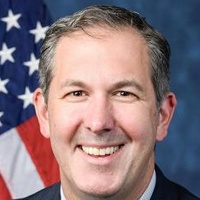
Johnny Olszewski
Representative
MD
Johnny Olszewski
Representative
MD
This bill prohibits federal agencies from removing civil service employees during any lapse in discretionary appropriations, commonly known as a government shutdown. If an employee is terminated in violation of this rule during a shutdown, they will have the option to be reinstated with full back pay once funding resumes. This measure aims to protect federal workers from job loss caused by budget impasses.
This bill mandates that certain new medical devices must be designed to be fully usable by individuals who are blind or have low vision.
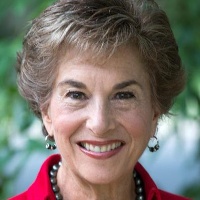
Janice Schakowsky
Representative
IL
Janice Schakowsky
Representative
IL
The Medical Device Nonvisual Accessibility Act of 2025 mandates that certain new medical devices must be designed to be fully usable by individuals who are blind or have low vision. This ensures that users can access information and operate life-saving equipment independently and privately, similar to sighted users. The FDA is tasked with establishing specific nonvisual accessibility standards for these covered devices within a set timeline. Devices failing to meet these standards after the effective date will be deemed adulterated.
This bill directs the President to immediately remove U.S. Armed Forces from hostilities against Venezuela and certain criminal organizations unless Congress specifically authorizes the use of force.

Ilhan Omar
Representative
MN
Ilhan Omar
Representative
MN
This bill directs the President to immediately remove United States Armed Forces from hostilities against the Bolivarian Republic of Venezuela and certain designated criminal groups. Congress asserts that these military actions lack the necessary constitutional authorization or a declaration of war. The resolution mandates withdrawal unless Congress subsequently passes specific authorization or the U.S. is subject to an armed attack.
This resolution expresses support for designating September 22, 2025, as "National Hispanic Nurses Day" to recognize the vital contributions of Hispanic nurses and the advocacy work of the National Association of Hispanic Nurses (NAHN).
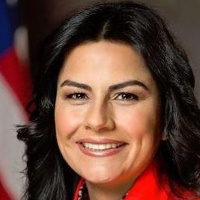
Nanette Barragán
Representative
CA
Nanette Barragán
Representative
CA
This resolution expresses support for designating September 22, 2025, as "National Hispanic Nurses Day" to recognize the vital contributions of Hispanic nurses to the U.S. healthcare system. It specifically honors the National Association of Hispanic Nurses (NAHN) as the leading organization advocating for this essential group. The designation aims to raise awareness about the role Hispanic nurses play in providing culturally sensitive care and addressing health disparities in diverse communities.
**Katie Meyer's Law mandates that colleges receiving federal funding must offer students accused of misconduct the option of having a trained adviser present during disciplinary proceedings.**
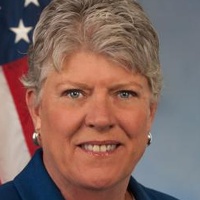
Julia Brownley
Representative
CA
Julia Brownley
Representative
CA
Katie Meyer's Law mandates that colleges and universities receiving federal funding must provide students accused of code of conduct violations the option to have a trained adviser assist them through the disciplinary process. Students can choose their own adviser or request an independent one provided by the institution. Additionally, the bill updates campus security reporting requirements to include incidents of suicide.
The HEADACHE Act establishes a National Headache Disorders Initiative, an advisory council, and mandates annual reporting to Congress to improve research, care, and data collection for headache disorders.
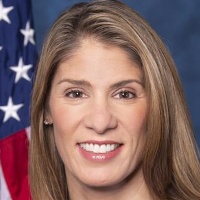
Lori Trahan
Representative
MA
Lori Trahan
Representative
MA
The HEADACHE Act establishes a comprehensive National Headache Disorders Initiative to improve research, workforce development, and care coordination for all headache disorders. It mandates the creation of an Advisory Council to guide federal efforts and requires the Secretary of Health and Human Services to submit annual reports to Congress detailing progress and recommending actions. This legislation aims to address disparities and reduce the societal and financial burden of these conditions before the Act automatically expires five years after enactment.
The POJA Act of 2025 explicitly extends age discrimination protections under the ADEA to job applicants and mandates an EEOC study on related claims.
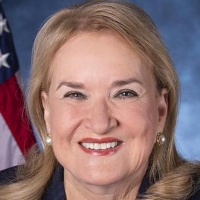
Sylvia Garcia
Representative
TX
Sylvia Garcia
Representative
TX
The Protect Older Job Applicants Act of 2025 (POJA Act) explicitly extends the protections of the Age Discrimination in Employment Act (ADEA) to job applicants, prohibiting employers from limiting or classifying applicants based on age during the hiring process. Additionally, the bill mandates that the EEOC conduct a study on age discrimination claims filed under the ADEA since 2015. The EEOC must then report these findings, along with recommendations for combating hiring bias, to Congress and the public.
This bill establishes federal oversight, led by the FTC, requiring large entities to conduct impact assessments and report on high-stakes "covered algorithms" to ensure fairness and mitigate consumer harm.
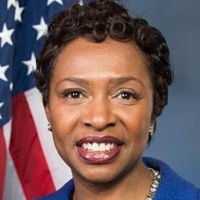
Yvette Clarke
Representative
NY
Yvette Clarke
Representative
NY
The Algorithmic Accountability Act of 2025 establishes federal oversight for large entities using complex automated systems, or "covered algorithms," that impact critical consumer decisions like employment or housing. It mandates that these entities conduct rigorous, ongoing impact assessments to test for bias, privacy risks, and performance issues. The Federal Trade Commission (FTC) is tasked with creating detailed regulations and enforcing compliance, including requiring covered entities to submit annual summary reports detailing their assessment findings. This Act ensures that significant algorithmic decisions are scrutinized for fairness and transparency without overriding stricter state or local regulations.
This Act mandates that most health insurance plans, Medicare Part D, Medicaid, and CHIP must cover specific, currently recommended vaccines without out-of-pocket costs for a limited time.
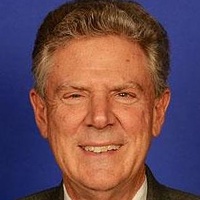
Frank Pallone
Representative
NJ
Frank Pallone
Representative
NJ
The Protecting Free Vaccines Act mandates that most private health insurance plans must cover specific vaccines recommended by the CDC's Advisory Committee on Immunization Practices (ACIP) without any out-of-pocket costs until January 1, 2030. This requirement also updates coverage rules for Medicare Part D, Medicaid, and CHIP to ensure continuity of coverage for these recommended immunizations. The bill locks in coverage based on the ACIP recommendations in place as of October 25, 2024, across various federal health programs.
The Preparing And Retaining All (PARA) Educators Act establishes a federal grant program to help states fund local efforts aimed at recruiting, retaining, and credentialing school paraprofessionals, prioritizing high-need and low-income districts.
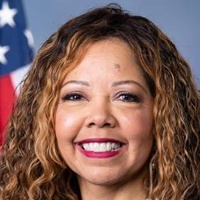
Lucy McBath
Representative
GA
Lucy McBath
Representative
GA
The Preparing And Retaining All (PARA) Educators Act establishes a new federal grant program to help states recruit and retain school paraprofessionals. Funds will be distributed to states based on their existing Title I allocations to support local districts. States must use these competitive subgrants to improve paraprofessional wages, offer professional development, and support credentialing, prioritizing high-need and rural schools. The law requires annual reporting on compensation improvements and retention efforts.
This bill mandates that federally funded higher education institutions update their harassment policies to explicitly cover technology-facilitated harassment and establishes a competitive grant program to fund anti-harassment initiatives.
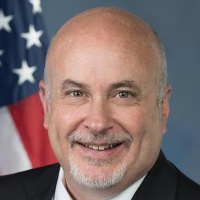
Mark Pocan
Representative
WI
Mark Pocan
Representative
WI
The Tyler Clementi Higher Education Anti-Harassment Act of 2025 mandates that colleges receiving federal funds update their policies to explicitly prohibit and detail procedures for addressing harassment based on protected characteristics, including technology-facilitated abuse. The bill also establishes a competitive grant program, funded up to $50 million annually, to support campus efforts in harassment prevention, training, and support services. This legislation adds new requirements without superseding existing civil rights protections.
This bill establishes a mechanism to ensure the Federal Aviation Administration remains funded and operational during a lapse in appropriations.
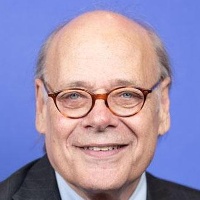
Steve Cohen
Representative
TN
Steve Cohen
Representative
TN
The Aviation Funding Stability Act of 2025 establishes an automatic mechanism to ensure the Federal Aviation Administration (FAA) remains funded during a lapse in appropriations. This allows the FAA to continue essential operations using existing funds from the Airport and Airway Trust Fund until a new budget or continuing resolution is enacted. Funding will cease after 30 days if no new appropriations are passed. This ensures continuity for core FAA programs, including operations, infrastructure, and grants.
This bill officially designates the historic alignment of US Highway 66 as the Route 66 National Historic Trail, managed by the National Park Service without the use of eminent domain.
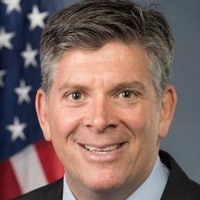
Darin LaHood
Representative
IL
Darin LaHood
Representative
IL
This bill officially designates the historic path of US Highway 66, stretching from Chicago to Santa Monica, as the Route 66 National Historic Trail. The National Park Service will manage the trail while preserving its unique character and consulting with affected Indian Tribes. Crucially, the designation prohibits the use of eminent domain for land acquisition and ensures it does not interfere with existing or future energy projects.
This Act mandates that new passenger motor vehicles sold in the U.S. must include standard equipment capable of receiving AM broadcast radio signals.

Gus Bilirakis
Representative
FL
Gus Bilirakis
Representative
FL
The AM Radio for Every Vehicle Act of 2025 mandates that the Secretary of Transportation establish a rule requiring AM broadcast radio receivers to be installed as standard equipment in new passenger motor vehicles. This requirement aims to ensure public access to AM radio signals, which are often used for emergency alerts. The bill also directs a GAO study on the effectiveness of AM radio within the national emergency alert system compared to other technologies. Finally, the Act preempts state and local laws on this matter and includes a sunset provision eight years after enactment.
This bill mandates dedicated, funded resources for specialized 988 Suicide Prevention Lifeline services for LGBTQ+ youth.
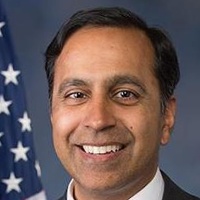
Raja Krishnamoorthi
Representative
IL
Raja Krishnamoorthi
Representative
IL
The **988 LGBTQ+ Youth Access Act of 2025** addresses the high rates of suicide risk among LGBTQ youth by strengthening specialized support through the national crisis hotline. This bill mandates that dedicated resources and services, such as a specific dialing option, must be maintained for LGBTQ individuals contacting 988. Furthermore, it requires that at least 9 percent of appropriated funds for the hotline be specifically reserved to ensure these specialized services for LGBTQ youth remain fully operational.