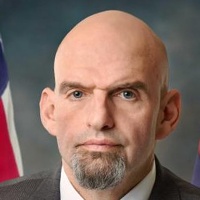
Legislative Activity
Track John's sponsored bills, co-sponsored legislation, and voting record
This resolution expresses support for designating November 16, 2025, as "National Warrior Call Day" to encourage vital peer-to-peer connection and support for members of the Armed Forces and veterans.
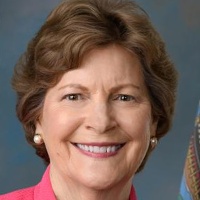
Jeanne Shaheen
Senator
NH
Jeanne Shaheen
Senator
NH
This resolution expresses support for designating November 16, 2025, as "National Warrior Call Day" to combat isolation and suicide among service members and veterans. It encourages all Americans to reach out and connect with those who have served to strengthen vital support structures. The day aims to foster peer-to-peer connection as a critical step in addressing the mental health challenges faced by our military community.
The FAMILY Act establishes a federal paid family and medical leave insurance program administered by the Social Security Administration to provide wage replacement benefits for qualified caregiving.

Kirsten Gillibrand
Senator
NY
Kirsten Gillibrand
Senator
NY
The FAMILY Act establishes the Family and Medical Insurance Leave program, creating a new office within the Social Security Administration to manage paid benefits for qualified caregiving and serious health conditions. This law outlines eligibility requirements, a tiered formula for calculating monthly benefit payments, and protections against employer retaliation for taking leave. The Act also provides funding mechanisms for states that already have similar paid leave programs in place.
The Equal Employment for All Act of 2025 generally prohibits employers from using credit checks when making most hiring or firing decisions, with narrow exceptions for national security or legally mandated roles.
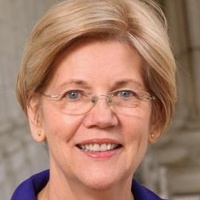
Elizabeth Warren
Senator
MA
Elizabeth Warren
Senator
MA
The Equal Employment for All Act of 2025 significantly amends the Fair Credit Reporting Act to prohibit employers from using credit checks when making most hiring or firing decisions, even with applicant consent. This new restriction only allows credit checks for jobs requiring national security clearance or when specifically mandated by another law. The Act ensures that applicants cannot be penalized simply for refusing to authorize a credit check unless one of these narrow exceptions applies.
This bill exempts qualified strike benefits received from a labor organization from federal income tax and ensures these benefits do not disqualify workers from the Earned Income Tax Credit.

Ruben Gallego
Senator
AZ
Ruben Gallego
Senator
AZ
The Tax Cut for Striking Workers Act of 2025 makes strike benefits received from a labor union tax-free for striking workers. This legislation ensures that these payments are excluded from gross income and will not negatively affect a worker's eligibility for the Earned Income Tax Credit (EITC). These provisions apply to compensation received after December 31, 2025.
This Act updates food assistance benefit calculations using a new "low-cost food plan," modifies medical expense deductions for the elderly and disabled, and eliminates a time limit for certain program participants.
Kirsten Gillibrand
Senator
NY
Kirsten Gillibrand
Senator
NY
The Closing the Meal Gap Act of 2025 overhauls food assistance by basing benefit calculations on a new "low-cost food plan" instead of the previous "thrifty food plan." It also introduces new standard medical expense deductions for elderly or disabled households and eliminates a previous time limit restriction for certain program participants. Finally, the bill removes the cap on deductions for excess shelter expenses.
This Act posthumously awards a Congressional Gold Medal to honor the life and groundbreaking civil rights achievements of Constance Baker Motley.
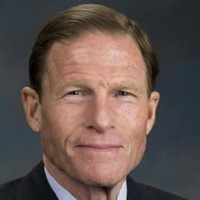
Richard Blumenthal
Senator
CT
Richard Blumenthal
Senator
CT
This Act officially establishes the Congressional Tribute to Constance Baker Motley Act of 2025 to honor the life and groundbreaking civil rights achievements of the late legal pioneer. The bill authorizes the posthumous presentation of a Congressional Gold Medal to her family in recognition of her service, including her role in *Brown v. Board of Education*. Furthermore, it permits the Treasury to strike and sell bronze duplicates of the medal to cover production costs.
This bill prohibits the EPA from reallocating renewable fuel obligations from small refineries operating under an exemption extension and requires their produced volumes to be counted in total production calculations.
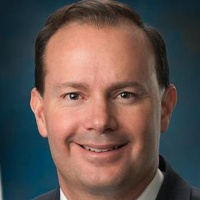
Mike Lee
Senator
UT
Mike Lee
Senator
UT
The Protect Consumers from Reallocation Costs Act of 2025 prohibits the EPA from reassigning the renewable fuel obligations of small refineries that have received an exemption extension. This ensures that the obligated volume remains with the exempt refinery rather than being shifted to other obligated parties. Furthermore, the fuel produced by these exempt small refineries must still be counted when calculating a company's total production for compliance purposes.
This act repeals the federal allowance for state right-to-work laws to override the National Labor Relations Act.
Elizabeth Warren
Senator
MA
Elizabeth Warren
Senator
MA
The Nationwide Right To Unionize Act seeks to strengthen union organizing rights across the country. It achieves this by repealing the section of federal law that currently allows state "right-to-work" laws to override federal labor protections. This change effectively removes the federal permission for states to enforce laws prohibiting mandatory union membership or fee payment as a condition of employment.
This Act extends key clean energy tax credits for homeowners and producers while adjusting the phase-out timeline for electricity production credits based on emissions targets.
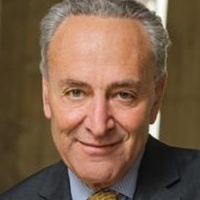
Charles Schumer
Senator
NY
Charles Schumer
Senator
NY
The Lowering Electric Bills Act extends crucial tax credits for residential clean energy installations until 2034. It also modifies the phase-out schedule for the Clean Electricity Production and Investment Credits, tying their continuation to achieving specific emissions reduction targets or the year 2032. These changes aim to provide long-term stability for clean energy investments.
This concurrent resolution recognizes the 50th anniversary of the Helsinki Final Act and reaffirms the United States' enduring commitment to its foundational principles of security, cooperation, and human rights.

Roger Wicker
Senator
MS
Roger Wicker
Senator
MS
This concurrent resolution commemorates the 50th anniversary of the Helsinki Final Act, a landmark 1975 agreement establishing principles for security, economic cooperation, and human rights among signatory nations. Congress reaffirms the United States' enduring commitment to these foundational principles, especially in light of current violations by some states. The resolution urges all signatories to uphold their commitments and calls for public observance of this diplomatic milestone.
This resolution solemnly marks the anniversary of the attempted assassination of President Trump, condemns political violence, and honors the victims and first responders involved.
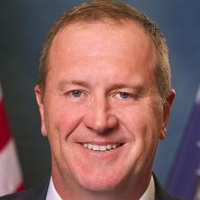
Eric Schmitt
Senator
MO
Eric Schmitt
Senator
MO
This resolution solemnly marks the one-year anniversary of the attempted assassination of former President Donald J. Trump. It condemns the multiple attempts against his life and other political officials, while honoring the victims and first responders involved in the July 2024 shooting. The measure further calls for an end to the incitement of political violence that threatens the democratic process.
The Warehouse Worker Protection Act establishes new federal standards for warehouse worker quotas, safety, and break requirements, while strengthening protections against retaliation for organizing.
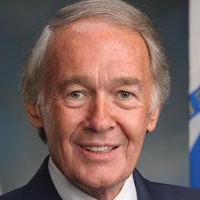
Edward Markey
Senator
MA
Edward Markey
Senator
MA
The Warehouse Worker Protection Act establishes new federal standards to safeguard warehouse employees from excessive performance quotas and unsafe working conditions. It creates a dedicated office within the Department of Labor to enforce transparency requirements regarding quotas and mandates new OSHA standards to prevent musculoskeletal injuries. Furthermore, the bill strengthens labor protections by clarifying when performance targets unlawfully interfere with workers' rights to organize.
This resolution designates the week of August 3 through August 9, 2025, as "National Farmers Market Week" to recognize their vital role in local economies, community health, and food access.

Alejandro Padilla
Senator
CA
Alejandro Padilla
Senator
CA
This resolution officially designates the week of August 3 through August 9, 2025, as "National Farmers Market Week." It aims to celebrate the vital role farmers markets play in strengthening local economies and supporting farmers across the nation. Furthermore, the resolution recognizes how these markets improve community health by increasing access to fresh food and promoting sustainable agriculture.
This bill mandates an independent study comparing the quality of mental health and addiction therapy care delivered by VA providers versus non-VA providers for veterans.

John Cornyn
Senator
TX
John Cornyn
Senator
TX
This bill mandates an independent study comparing the quality of mental health and addiction therapy care provided by the Department of Veterans Affairs (VA) versus non-VA providers. The study will examine differences across various treatment settings and report on key outcomes like patient improvement, use of evidence-based practices, and coordination of care. The findings will be submitted to Congress and made publicly available.
This Act repeals previous health subtitle changes and permanently extends enhanced, uncapped premium tax credits to lower the cost of health insurance.
Charles Schumer
Senator
NY
Charles Schumer
Senator
NY
The Protecting Health Care and Lowering Costs Act primarily repeals previous health subtitle changes and permanently extends enhanced premium tax credits for marketplace health insurance. This extension removes the income cap for receiving enhanced credits and updates the calculation method for determining an individual's required premium contribution. The bill aims to simplify the tax code related to health insurance affordability.
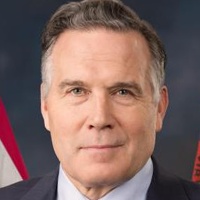
This Act prohibits broker-dealers and investment advisers controlled by or significantly reliant on the People's Republic of China from operating in U.S. financial markets for five years.
Dave McCormick
Senator
PA
Dave McCormick
Senator
PA
This Act establishes a five-year moratorium on new broker-dealers and investment advisers that are controlled by, or rely on essential services from, entities or residents of the People's Republic of China (PRC). The legislation prohibits these PRC-connected firms from registering or joining national securities associations in the U.S. Financial regulators are granted examination authority over these entities to ensure compliance with the new restrictions.
The Servicemembers and Veterans Empowerment and Support Act of 2025 aims to improve VA reporting on technology-facilitated military sexual trauma, streamline disability compensation claims by strengthening evidence standards and communication, and expand healthcare access for all eligible MST survivors.
Richard Blumenthal
Senator
CT
Richard Blumenthal
Senator
CT
The Servicemembers and Veterans Empowerment and Support Act of 2025 aims to significantly improve support for veterans who have experienced military sexual trauma (MST). It mandates a VA report on technology-facilitated MST and overhauls the disability claims process to be more sensitive and evidence-flexible for survivors. Furthermore, the bill expands access to necessary healthcare and support services for a broader range of former service members affected by MST.
This act authorizes \$50 million annually for the CDC to conduct research on firearms safety and gun violence prevention from fiscal years 2026 through 2031.
Edward Markey
Senator
MA
Edward Markey
Senator
MA
The Gun Violence Prevention Research Act of 2025 authorizes $50 million annually for fiscal years 2026 through 2031 to be appropriated to the Centers for Disease Control and Prevention (CDC). This funding is specifically designated for conducting or supporting research on firearms safety and gun violence prevention. This appropriation is in addition to any existing funds allocated for this purpose.
The DAIRY PRIDE Act ensures that food products sold across state lines using standardized dairy names like "milk" or "cheese" actually meet the official FDA standards for those dairy products.

Tammy Baldwin
Senator
WI
Tammy Baldwin
Senator
WI
The DAIRY PRIDE Act aims to ensure food products labeled as "milk," "cheese," or other standardized dairy terms actually meet established definitions. This legislation prevents companies from selling non-dairy items across state lines using official dairy names unless they meet strict ingredient and sourcing standards. The FDA is required to quickly issue new guidance on enforcing these labeling requirements.
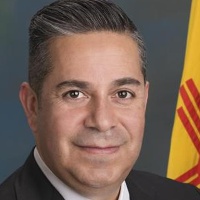
This act immediately enacts the Pipeline and Hazardous Materials Safety Administration's final rule for gas pipeline leak detection and repair, while preserving the authority to issue stricter future standards.
Ben Luján
Senator
NM
Ben Luján
Senator
NM
The Gas Pipeline Leak Detection and Repair Act of 2025 immediately enacts the final rule from PHMSA regarding gas pipeline leak detection and repair standards upon the bill's signing. This ensures stricter safety measures for finding and fixing leaks take effect without delay. Furthermore, the Act preserves the Secretary of Transportation's authority to issue stronger, more protective regulations in the future.