Legislative Activity
Track John's sponsored bills, co-sponsored legislation, and voting record
This concurrent resolution officially recognizes Black Women's Equal Pay Day to highlight the significant and persistent wage disparity Black women face compared to White, non-Hispanic men.

Lisa Blunt Rochester
Senator
DE
Lisa Blunt Rochester
Senator
DE
This concurrent resolution officially recognizes the significance of equal pay and highlights the persistent wage disparity faced by Black women compared to White, non-Hispanic men. It designates July 10, 2025, as Black Women's Equal Pay Day to draw attention to the economic losses caused by this gap. The resolution underscores that closing this disparity is vital for the economic stability and wealth-building of Black women and their families.
This bill codifies the FTC's existing "negative option" rule into permanent federal law, strengthening consumer protection against automatic subscription charges.

Ruben Gallego
Senator
AZ
Ruben Gallego
Senator
AZ
The Click to Cancel Consumer Protection Act of 2025 codifies the Federal Trade Commission's existing "negative option" rule into permanent federal law. This action locks in current regulations governing automatic subscription renewals and recurring charges. The bill ensures that consumers have legally established protections against unwanted automatic billing practices.
This resolution officially recognizes June 2025 as LGBTQ Pride Month to honor the community's history, acknowledge ongoing struggles, and celebrate their contributions to the nation.

Tina Smith
Senator
MN
Tina Smith
Senator
MN
This resolution officially recognizes June 2025 as LGBTQ Pride Month to honor the history, struggles, and significant contributions of the LGBTQ community in the United States. It acknowledges past and ongoing discrimination while celebrating key legal milestones toward equality. The Senate encourages the nation to use this month to learn about inequality and celebrate the community's achievements both domestically and globally.
This resolution expresses Congressional support for LGBTQI+ equality and designates June 26th as "LGBTQI+ Equality Day" to commemorate key Supreme Court victories and highlight the need for further legislative protections.

Tammy Baldwin
Senator
WI
Tammy Baldwin
Senator
WI
This resolution expresses the Senate's support for the rights and freedoms of LGBTQI+ individuals across the United States. It recognizes key Supreme Court victories that advanced equality while acknowledging the ongoing need for federal legislation to combat discrimination. The bill specifically supports designating June 26th as "LGBTQI+ Equality Day" to commemorate these legal milestones.
This Act extends the deadline for certain legally married couples to amend past tax filings to claim joint filing benefits based on Revenue Ruling 2013-17.
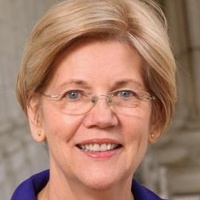
Elizabeth Warren
Senator
MA
Elizabeth Warren
Senator
MA
The Refund Equality Act of 2025 extends the deadline for certain legally married couples to amend past tax returns filed separately before September 16, 2013, based on Revenue Ruling 2013-17. This allows these couples to now file jointly for those years, extending the statute of limitations for filing the joint return and claiming related refunds or credits. These extensions are strictly limited to changes resulting from recognizing their marital status for federal tax purposes.
The Equal Dignity for Married Taxpayers Act of 2025 systematically updates the Internal Revenue Code to use gender-neutral language when referring to married couples and spouses, without altering existing tax rules.

Ron Wyden
Senator
OR
Ron Wyden
Senator
OR
The Equal Dignity for Married Taxpayers Act of 2025 is a legislative update designed to modernize the Internal Revenue Code by ensuring gender-neutral language is used when referencing married taxpayers and their spouses. This bill systematically replaces outdated gendered terms like "husband and wife" or "his" with inclusive terms such as "married couple" and "spouse." The changes are purely linguistic, ensuring consistency across tax rules without altering any existing tax liabilities or deductions.
The Women’s Health Protection Act of 2025 establishes a federal right to access abortion services without medically unnecessary state restrictions and protects the right to travel for care.
Tammy Baldwin
Senator
WI
Tammy Baldwin
Senator
WI
The Women’s Health Protection Act of 2025 establishes a federal right to access abortion services without facing state-imposed restrictions that are not medically necessary for comparable procedures. This Act prohibits states from enacting targeted regulations that create hurdles for abortion access, protects the right to travel out of state for care, and allows individuals and the Attorney General to sue to enforce these protections. Ultimately, the bill aims to ensure equitable access to reproductive healthcare decisions based on a provider's good-faith medical judgment.
This resolution formally condemns the recent surge in antisemitic attacks across the United States, citing specific tragedies and statistics to reaffirm the Senate's commitment to fighting hate.

James Lankford
Senator
OK
James Lankford
Senator
OK
This resolution formally condemns the recent surge in antisemitic attacks across the United States, citing specific tragedies in Washington, D.C., and Boulder, Colorado. It acknowledges the widespread celebration of this violence online and highlights alarming statistics showing the dramatic increase in religiously motivated hate crimes against Jewish Americans. Ultimately, the Senate reaffirms its commitment to fighting antisemitism as a threat to American democracy.
This resolution reaffirms the U.S. commitment to promoting the safety, health, and well-being of refugees globally while criticizing recent policy actions that restrict asylum and refugee admissions.
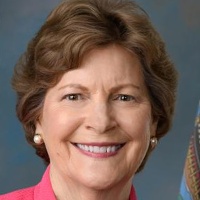
Jeanne Shaheen
Senator
NH
Jeanne Shaheen
Senator
NH
This resolution reaffirms the United States' commitment to the safety and well-being of refugees and displaced persons globally, recognizing the severity of the current worldwide displacement crisis. It strongly advocates for upholding U.S. legal and moral obligations by restoring and strengthening the U.S. Refugee Admissions Program and full asylum protections. The measure specifically calls on federal leaders to reverse recent restrictive policies that have suspended refugee admissions and limited access to protection. Ultimately, this statement urges the U.S. to resume its leadership role in humanitarian aid and international refugee resettlement efforts.
This bill reauthorizes the Healthy Food Financing Initiative by establishing specific annual funding levels through fiscal year 2029, sourced from the Commodity Credit Corporation.

Kirsten Gillibrand
Senator
NY
Kirsten Gillibrand
Senator
NY
The Healthy Food Financing Initiative Reauthorization Act of 2025 secures dedicated funding for the Healthy Food Financing Initiative through fiscal year 2029 and beyond. This bill authorizes the Secretary to allocate increasing amounts, starting at \$25 million in 2025 and stabilizing at \$50 million annually from 2029 onward. The funding will be sourced from the Commodity Credit Corporation.
This concurrent resolution expresses Congress's strong support for America's law enforcement professionals, recognizing their risks, advocating for better safety measures, and calling for increased government resources.

Bill Cassidy
Senator
LA
Bill Cassidy
Senator
LA
This concurrent resolution expresses Congress's strong support and deep appreciation for America's law enforcement professionals. It recognizes the increasing dangers, high trauma exposure, and current staffing shortages facing officers nationwide. The resolution calls for enhanced safety measures, better resources, increased penalties for assaulting officers, and improved mental health support for law enforcement personnel. Ultimately, it urges all levels of government to provide the necessary support for officers to effectively protect their communities.
This act establishes a gradually increasing federal tax on most financial securities transactions occurring in the U.S. or involving U.S. persons, starting in 2026.
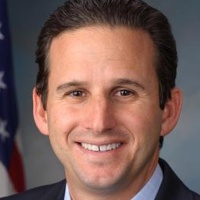
Brian Schatz
Senator
HI
Brian Schatz
Senator
HI
The Wall Street Tax Act of 2025 establishes a new federal tax on covered financial trading transactions involving securities and derivatives. This transaction tax rate will gradually increase from 0.02 percent in 2026 to 0.1 percent by 2030. The responsibility for paying the tax falls on exchanges, brokers, or the involved parties, depending on how the trade is executed. The bill also includes specific rules for foreign corporations and provides detailed definitions and exceptions for what constitutes a taxable security or derivative.
This Act enhances mental health support and resources within the military's Transition Assistance Program and the VA's Solid Start Program to better support servicemembers transitioning to veteran status and reduce suicide risk.

Sheldon Whitehouse
Senator
RI
Sheldon Whitehouse
Senator
RI
This Act, named in honor of Daniel J. Harvey, Jr. and Adam Lambert, aims to reduce veteran suicide by strengthening mental health resources during the transition from military service to civilian life. It mandates updated mental health and suicide risk briefings within the Department of Defense's Transition Assistance Program (TAP). Furthermore, the bill enhances the VA's Solid Start Program by requiring specific outreach regarding healthcare enrollment and mental health services.
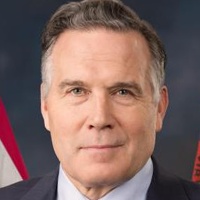
This bill mandates the relocation of the Office of Fossil Energy and Carbon Management from Washington, D.C., to Pittsburgh, Pennsylvania, by the end of 2026 and requires a subsequent report to Congress on the move's impact on staffing and employee negotiations.
Dave McCormick
Senator
PA
Dave McCormick
Senator
PA
This Act mandates the relocation of the Department of Energy's Office of Fossil Energy and Carbon Management from Washington, D.C., to Pittsburgh, Pennsylvania, by the end of 2026. The Secretary of Energy must complete this move despite any conflicting federal regulations regarding office locations. Furthermore, the Secretary is required to report to Congress one year after the move detailing employee attrition related to the relocation and its impact on labor negotiations.
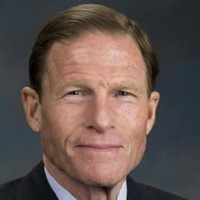
The Disaster Relief Medicaid Act establishes a temporary, simplified Medicaid pathway with 100% federal funding for survivors of major disasters, while also providing federal support for state response efforts.
Richard Blumenthal
Senator
CT
Richard Blumenthal
Senator
CT
The Disaster Relief Medicaid Act establishes a temporary, simplified Medicaid pathway for survivors of federally declared disasters, effective January 1, 2027. This pathway provides two years of coverage with relaxed income verification rules, ensuring immediate access to necessary healthcare. The bill also mandates 100% federal funding for these services and supports state efforts to rapidly deploy medical assistance and home care teams following a disaster. Finally, it adjusts Medicare enrollment rules to prevent penalties for survivors delayed by the disaster period.
The STOP CSAM Act of 2025 overhauls federal court protections for child victims, mandates stricter reporting of online child exploitation to NCMEC, and expands civil remedies for victims against perpetrators and online platforms.

Joshua Hawley
Senator
MO
Joshua Hawley
Senator
MO
The STOP CSAM Act of 2025 significantly overhauls federal protections for child victims and witnesses in court proceedings by expanding definitions of abuse and strengthening rules around protecting personal information. It mandates stricter reporting requirements for online service providers regarding child sexual exploitation material and imposes substantial penalties for non-compliance. Furthermore, the Act expands civil remedies, allowing victims to sue online platforms directly for damages related to hosting or promoting such content. Finally, it facilitates the payment of restitution to vulnerable victims by allowing for the appointment of trustees to manage those funds.
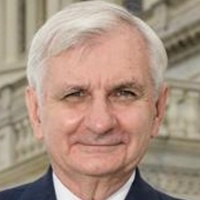
This Act restricts consumer reporting agencies from sharing mortgage loan applicant reports with third parties unless the request is tied to a firm offer of credit or the recipient is directly involved in the applicant's existing mortgage or has explicit authorization.
John Reed
Senator
RI
John Reed
Senator
RI
The Homebuyers Privacy Protection Act restricts how consumer reporting agencies can share your credit report when you are seeking a residential mortgage loan. Specifically, it limits the sharing of these reports unless they are connected to a firm offer of credit or are being sent to parties directly involved in your current mortgage, such as the originator or servicer. This ensures that your sensitive financial information is only accessed by relevant parties during the home loan process.
This bill directs Medicare to test eliminating cost-sharing for opioid treatments, mandates comprehensive, no-cost coverage for opioid treatments under private insurance, and enhances federal matching funds for Medicaid opioid treatment and recovery support services.
Richard Blumenthal
Senator
CT
Richard Blumenthal
Senator
CT
The Maximizing Opioid Recovery Emergency Savings (MORE Savings) Act aims to increase access to evidence-based opioid treatments by testing the elimination of Medicare cost-sharing for these services in select states. It also mandates that private health plans eliminate cost-sharing for essential opioid medications, behavioral health services, and recovery support. Finally, the bill enhances federal Medicaid matching funds for medication-assisted treatment and allows states to cover related recovery support services.
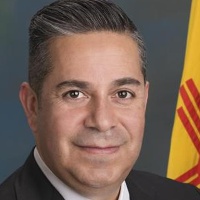
The HCBS Relief Act of 2025 provides a temporary 10-percentage-point boost to the federal share of Medicaid funding for states that commit to improving their Home and Community-Based Services programs, primarily by increasing provider pay and expanding access.
Ben Luján
Senator
NM
Ben Luján
Senator
NM
The HCBS Relief Act of 2025 significantly increases federal Medicaid funding for states that commit to improving their Home and Community-Based Services (HCBS) programs. This temporary boost requires states to use the extra funds to raise provider reimbursement rates, increase worker compensation, and expand access to services for eligible individuals. States must ensure this new federal money supplements, rather than replaces, existing state spending on HCBS.
This Act adds comprehensive dental, vision, and hearing benefits to Medicare and increases the federal matching rate for states covering these services under Medicaid for adults.

Angela Alsobrooks
Senator
MD
Angela Alsobrooks
Senator
MD
The Medicare and Medicaid Dental, Vision, and Hearing Benefit Act of 2025 expands essential healthcare coverage under both programs. This bill mandates that Medicare begin covering routine dental, vision, and hearing services, including hearing aids, through a phased-in payment schedule reaching 80% coverage by the eighth year. Additionally, it increases the federal matching rate to 90% for states covering these specific dental, vision, and hearing services for certain adults under Medicaid. These comprehensive changes aim to integrate crucial preventative and restorative care into federal health programs.