Legislative Activity
Track Scott's sponsored bills, co-sponsored legislation, and voting record
This bill phases out the enhanced federal funding match for Medicaid coverage provided to low-income adults between 2027 and 2034, while establishing new rules for states that have not yet expanded Medicaid.

Chip Roy
Representative
TX
Chip Roy
Representative
TX
The Ending Medicaid Discrimination Against the Most Vulnerable Act modifies the enhanced federal funding structure for Medicaid coverage provided to low-income adults. This bill establishes a gradual phase-out of the enhanced Federal Medical Assistance Percentage (FMAP) between 2027 and 2034, with the extra funding ending entirely in 2035. Furthermore, the legislation alters the incentives for states that have not yet expanded Medicaid coverage, potentially limiting future enhanced funding for those states if they expand after 2024.
This bill establishes Pregnancy.gov as a centralized, federally managed website to connect pregnant women with verified, non-abortion-affiliated resources and supports, funded through state grants and existing appropriations.

Diana Harshbarger
Representative
TN
Diana Harshbarger
Representative
TN
The Pregnancy.Gov Act establishes a new national public website, Pregnancy.gov, to serve as a centralized hub connecting pregnant women with local resources. This site must offer tailored resource matching based on location and ensure listed providers have a consistent three-year service history. Crucially, the Act prohibits any organization that performs, refers for, or counsels in favor of abortion from being listed or receiving associated state grants.
This Act mandates that health plans cover medically necessary treatment for congenital anomalies or birth defects affecting the eyes, ears, teeth, mouth, or jaw to restore normal function and appearance.
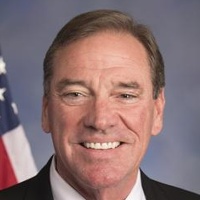
Neal Dunn
Representative
FL
Neal Dunn
Representative
FL
The Ensuring Lasting Smiles Act mandates that group health plans and insurance policies provide comprehensive coverage for medically necessary treatment related to congenital anomalies or birth defects affecting the eyes, ears, teeth, mouth, or jaw. This coverage must include services needed to restore normal function and appearance, including necessary dental and orthodontic support. Plans must apply cost-sharing rules no more restrictive than those for other medical benefits, excluding purely cosmetic procedures.
This Act promotes private employee ownership by extending tax deferrals for S corporation ESOP sales, ensuring ESOP-owned businesses retain small business status, and establishing new Treasury and Labor offices to provide assistance and advocacy.
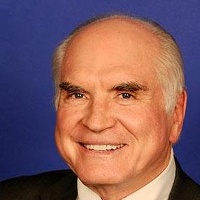
Mike Kelly
Representative
PA
Mike Kelly
Representative
PA
The Promotion and Expansion of Private Employee Ownership Act of 2025 aims to significantly boost employee ownership in S corporations through Employee Stock Ownership Plans (ESOPs). The bill extends key tax deferral benefits for stock sales to ESOPs and removes a major restriction on this tax treatment. Furthermore, it establishes new government offices and an Advocate for Employee Ownership to provide technical assistance and resolve disputes, while ensuring ESOP-owned businesses retain small business status for federal programs.
This Act repeals the federal ban on mailing concealable firearms and prohibits the U.S. Postal Service from creating rules that restrict the mailing of firearms or require the disclosure of customer records as a condition of mailing.
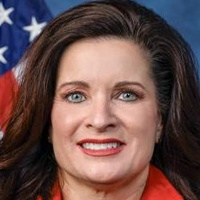
Sheri Biggs
Representative
SC
Sheri Biggs
Representative
SC
The Protecting the Mailing of Firearms Act repeals the federal ban on mailing certain concealable firearms. This legislation also prohibits the U.S. Postal Service from enacting rules that would block or unduly restrict the mailing of firearms, ammunition, or their components. Furthermore, the USPS cannot require sellers to disclose customer records or firearm serial numbers as a condition for mailing these items.
The Historic Tax Credit Growth and Opportunity Act of 2025 modifies rehabilitation tax credits by increasing rates for small projects, eliminating basis adjustments, and changing eligibility rules for various building improvements.
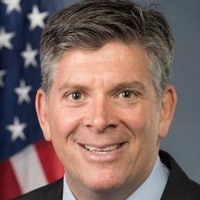
Darin LaHood
Representative
IL
Darin LaHood
Representative
IL
The Historic Tax Credit Growth and Opportunity Act of 2025 significantly enhances historic rehabilitation tax incentives. It establishes a permanent 20% credit rate for qualified expenditures and introduces an optional 30% credit for smaller projects, which includes the ability to transfer the credit. Furthermore, the bill simplifies calculations by eliminating the requirement to reduce the property's basis when claiming the credit.
This bill expresses Congress's disapproval and nullification of the Office of the Comptroller of the Currency's recently submitted rule regarding the review of applications under the Bank Merger Act.
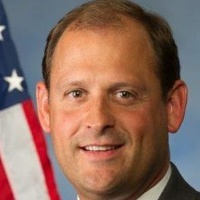
Garland Barr
Representative
KY
Garland Barr
Representative
KY
This bill expresses the disapproval of Congress regarding a recently submitted rule by the Office of the Comptroller of the Currency (OCC) concerning the review of applications under the Bank Merger Act. Through this joint resolution, Congress is formally voiding the OCC's proposed changes to bank merger review procedures. Consequently, the rule published on December 29, 2023, will have no legal effect.
This act permanently raises the income limits for the mortgage insurance premium tax deduction for middle-class homeowners.
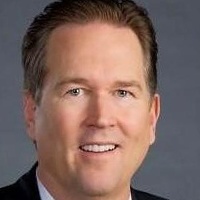
Vern Buchanan
Representative
FL
Vern Buchanan
Representative
FL
The Middle Class Mortgage Insurance Premium Act of 2025 permanently extends the deduction for mortgage insurance premiums and significantly raises the income limits for eligibility. This change allows more middle-class taxpayers to deduct these costs on their federal income taxes. These provisions will apply to tax years beginning after December 31, 2025.
This bill mandates an independent assessment of VA notices to claimants to improve clarity and efficiency, and it extends the expiration date for certain pension payment limits.
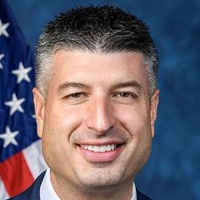
Tom Barrett
Representative
MI
Tom Barrett
Representative
MI
The Clear Communication for Veterans Claims Act mandates an independent assessment of all notices sent by the Department of Veterans Affairs (VA) to ensure they are clearer, more concise, and easier for claimants to understand. The VA Secretary must implement the resulting recommendations within one year of receiving the assessment. Additionally, this bill slightly extends the expiration date for certain existing limits on veterans' pension payments.
This bill repeals the requirement for financial institutions to collect and report specific data on small business loans to reduce compliance costs and improve small business access to credit.
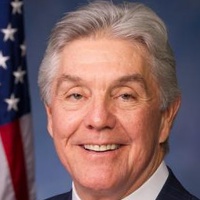
Roger Williams
Representative
TX
Roger Williams
Representative
TX
The 1071 Repeal to Protect Small Business Lending Act aims to eliminate the mandatory data collection and reporting requirements for small business loans previously established under Section 704B of the Equal Credit Opportunity Act. Proponents argue that these regulations impose unnecessary compliance costs on lenders, potentially hindering small business access to credit. This bill repeals those specific reporting mandates to reduce regulatory burdens on financial institutions.
This Act promotes new bank formation by phasing in capital standards, adjusting business plan review timelines, offering temporary leverage ratio relief for rural institutions, expanding agricultural lending authority, and mandating a study on barriers to new bank creation.
Garland Barr
Representative
KY
Garland Barr
Representative
KY
The Promoting New Bank Formation Act aims to encourage the creation of new banks by providing regulatory relief for newly insured institutions. This includes a three-year phase-in period for new capital standards and streamlined processes for adjusting initial business plans. The Act also establishes temporary, favorable capital requirements for new rural depository institutions and expands lending authority for Federal savings associations to include agricultural loans. Finally, it mandates a study on barriers to new bank formation, especially in underserved areas.
This act establishes new, stringent requirements, including high voter turnout and a majority vote, for a union to become the exclusive representative for a group of workers.
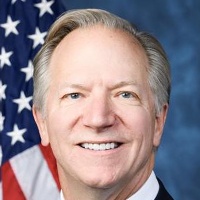
Robert Onder
Representative
MO
Robert Onder
Representative
MO
The Worker Enfranchisement Act establishes stricter requirements for a union to become the exclusive representative for a group of employees. Under the new rules, a union must win a secret ballot election where more than half of the votes cast favor the union, and at least two-thirds of all eligible employees must participate in the vote. These new turnout and majority standards will apply to elections held six months after the Act's enactment.
The Secure Family Futures Act of 2025 modifies tax code provisions for applicable insurance companies by excluding certain debt from being treated as a capital asset and extending the capital loss carryover period to ten years for specific losses incurred after 2025.
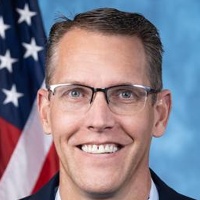
Randy Feenstra
Representative
IA
Randy Feenstra
Representative
IA
The Secure Family Futures Act of 2025 modifies tax treatment for certain debt holdings of applicable insurance companies, excluding specific debt instruments from being treated as capital assets for tax purposes. Additionally, this Act extends the capital loss carryover period to 10 years for specified losses incurred by these insurance companies. These changes apply only to transactions occurring after December 31, 2025.
This bill drastically tightens and expands U.S. sanctions against Iran across its leadership, military, and economy while severely restricting the President's authority to lift these restrictions.
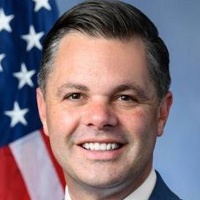
Zachary (Zach) Nunn
Representative
IA
Zachary (Zach) Nunn
Representative
IA
The Maximum Pressure Act dramatically tightens and expands U.S. sanctions against Iran across its military, missile, and economic sectors, codifying existing restrictions and severely limiting the President's authority to grant sanctions relief. It mandates immediate sanctions on top Iranian officials and increases penalties for international parties aiding Iran's weapons programs. Furthermore, the bill enhances oversight by requiring numerous detailed reports to Congress regarding Iran's terrorism financing, nuclear timeline, and economic influence, while also redirecting certain frozen Iranian funds to victims of state-sponsored terrorism.
This Act permits 501(c)(3) organizations to make political campaign statements within the ordinary course of their tax-exempt activities, provided the cost is de minimis.
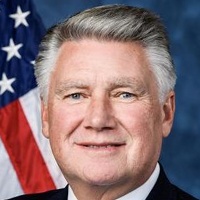
Mark Harris
Representative
NC
Mark Harris
Representative
NC
The Free Speech Fairness Act amends tax law to allow 501(c)(3) organizations to make political campaign statements without jeopardizing their tax-exempt status. This protection applies only if the statement is made as part of the organization's ordinary course of activities and incurs only a de minimis (trivial) cost. This ensures non-profits can speak on political matters related to their mission without penalty, provided spending remains minimal.
The Hot Foods Act of 2025 lifts the general ban on purchasing ready-to-eat hot foods with SNAP benefits while imposing a sales cap on retailers that primarily sell such items.

Grace Meng
Representative
NY
Grace Meng
Representative
NY
The Hot Foods Act of 2025 removes the general federal ban on using Supplemental Nutrition Assistance Program (SNAP) benefits to purchase hot, ready-to-eat foods. This legislation clarifies that hot foods are now eligible for purchase with SNAP benefits, while also setting a new rule that limits SNAP-participating retailers to deriving no more than 50% of their gross sales from these ready-to-eat hot items. The act updates existing statutes to reflect this expanded purchasing power for recipients.
This bill amends the Internal Revenue Code to allow distributions from Health Savings Accounts (HSAs) for the account beneficiary's funeral expenses, up to a $\$5,000$ limit, to be treated as qualified distributions.
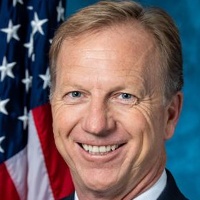
Kevin Hern
Representative
OK
Kevin Hern
Representative
OK
This bill amends the Internal Revenue Code to allow distributions from a Health Savings Account (HSA) for the funeral expenses of the account beneficiary to be treated as qualified, tax-free distributions. These expenses, which include burial, cremation, and related services, are capped at a total of \$5,000 per beneficiary. The legislation also clarifies that funeral expenses incurred within 90 days after the account holder's death can be treated as if they occurred before death for tax purposes.
This bill permanently extends the exemption allowing school bus drivers to skip the engine compartment portion of the pre-trip vehicle inspection skills test for their CDL.

John Carter
Representative
TX
John Carter
Representative
TX
This bill permanently extends the existing exemption allowing qualified school bus drivers to skip the engine compartment portion of the commercial driver's license (CDL) skills test. It mandates the Secretary of Transportation to maintain this specific "under-the-hood" inspection waiver indefinitely. States utilizing this permanent exemption must still submit annual reports on the number of drivers licensed under it for the next six years.
The PHIT Act of 2025 allows taxpayers to deduct up to \$1,000 annually for qualified expenses related to physical fitness, gym memberships, and exercise instruction to promote healthier lifestyles.
Mike Kelly
Representative
PA
Mike Kelly
Representative
PA
The Personal Health Investment Today Act of 2025 (PHIT Act) aims to improve public health by incentivizing healthier lifestyles, particularly to combat obesity. This bill allows taxpayers to treat certain qualified sports and fitness expenses, such as gym memberships and instruction fees, as deductible medical expenses. Deductions are capped annually at \$1,000 per individual or \$2,000 for joint filers.
This bill establishes national reciprocity for concealed carry permits, allowing individuals legally permitted to carry in their home state to carry a handgun in any other state that allows concealed carry.
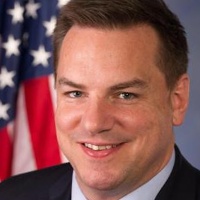
Richard Hudson
Representative
NC
Richard Hudson
Representative
NC
The Constitutional Concealed Carry Reciprocity Act of 2025 establishes a national standard for carrying concealed handguns across state lines. This act allows individuals legally permitted to carry in their home state to carry concealed in any other state that allows its residents to carry concealed firearms. The law does not override private property restrictions or prohibitions on government property, but it provides protections and legal recourse for those traveling in compliance with the new federal standard.