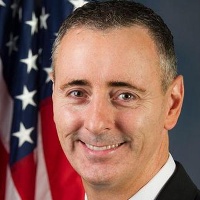
Legislative Activity
Track Brian's sponsored bills, co-sponsored legislation, and voting record
The Preparing And Retaining All (PARA) Educators Act establishes a federal grant program to help states fund local efforts aimed at recruiting, retaining, and credentialing school paraprofessionals, prioritizing high-need and low-income districts.
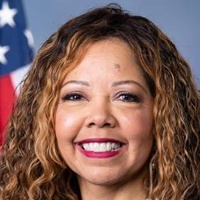
Lucy McBath
Representative
GA
Lucy McBath
Representative
GA
The Preparing And Retaining All (PARA) Educators Act establishes a new federal grant program to help states recruit and retain school paraprofessionals. Funds will be distributed to states based on their existing Title I allocations to support local districts. States must use these competitive subgrants to improve paraprofessional wages, offer professional development, and support credentialing, prioritizing high-need and rural schools. The law requires annual reporting on compensation improvements and retention efforts.
This act eliminates federal income tax on overtime compensation earned by all workers.
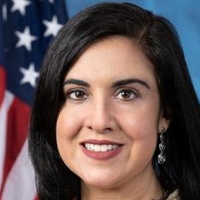
Nicole Malliotakis
Representative
NY
Nicole Malliotakis
Representative
NY
The No Tax on Overtime for All Workers Act amends the tax code to clarify and expand the definition of "qualified overtime compensation." This change ensures that overtime pay earned above a standard rate, whether mandated by the Fair Labor Standards Act or agreed upon beforehand with an employer, is treated favorably for tax purposes. The goal is to incentivize and reward workers for putting in extra hours.
This bill reauthorizes and specifies annual funding of \$145 million through fiscal year 2030 for the Healthy Start Initiative to improve maternal and child health outcomes.
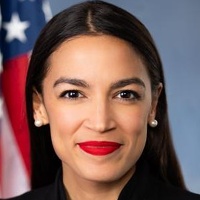
Alexandria Ocasio-Cortez
Representative
NY
Alexandria Ocasio-Cortez
Representative
NY
The Healthy Start Reauthorization Act of 2025 secures vital funding for the Healthy Start Initiative, a program dedicated to improving maternal and child health outcomes. This legislation specifically authorizes a consistent annual appropriation of \$145,000,000 for the program through fiscal year 2030. This reauthorization ensures predictable budgetary support for this critical public health effort.
This bill mandates dedicated, funded resources for specialized 988 Suicide Prevention Lifeline services for LGBTQ+ youth.
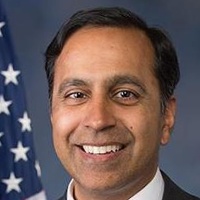
Raja Krishnamoorthi
Representative
IL
Raja Krishnamoorthi
Representative
IL
The **988 LGBTQ+ Youth Access Act of 2025** addresses the high rates of suicide risk among LGBTQ youth by strengthening specialized support through the national crisis hotline. This bill mandates that dedicated resources and services, such as a specific dialing option, must be maintained for LGBTQ individuals contacting 988. Furthermore, it requires that at least 9 percent of appropriated funds for the hotline be specifically reserved to ensure these specialized services for LGBTQ youth remain fully operational.
This resolution expresses support for and officially designates September 17, 2025, as "Constitution Day" to honor the foundational document as the 250th anniversary approaches.
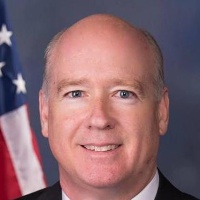
Robert Aderholt
Representative
AL
Robert Aderholt
Representative
AL
This resolution expresses strong support for and officially designates **September 17, 2025, as "Constitution Day."** It recognizes the profound historical importance of the U.S. Constitution as the nation approaches its 250th anniversary. The measure encourages all Americans to observe the day with suitable ceremonies reflecting on the freedoms and responsibilities the document grants.
This bill extends certain leave provisions currently available to Army commissioned officers to commissioned officers of the U.S. Public Health Service and their beneficiaries.
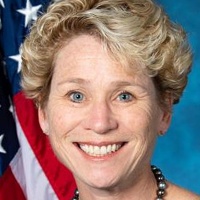
Chrissy Houlahan
Representative
PA
Chrissy Houlahan
Representative
PA
This bill amends the Public Health Service Act to extend certain leave benefits currently available to commissioned officers in the Army to commissioned officers of the U.S. Public Health Service (PHS) and their beneficiaries. It directly incorporates leave provisions from Title 10 of the U.S. Code into the PHS framework. The legislation also repeals an outdated section of the Public Health Service Act.
This bill establishes a six-year pilot program for selected hospitals to provide medically tailored, home-delivered meals and nutrition therapy to high-risk Medicare patients upon discharge to reduce hospital readmissions.
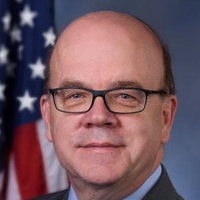
James McGovern
Representative
MA
James McGovern
Representative
MA
This bill establishes a six-year pilot program for hospitals to provide medically tailored, home-delivered meals and nutrition therapy to eligible Medicare patients upon discharge. The goal is to improve health outcomes and reduce hospital readmissions for individuals with diet-sensitive conditions who have difficulty with daily living activities. Participating hospitals will receive payment for these services, which must be provided at no out-of-pocket cost to the patient. The Secretary of Health and Human Services will evaluate the program's effectiveness using data collected from the participating sites.
This resolution expresses support for designating September 30, 2025, as "Rare Cancer Day" to boost awareness, improve early diagnosis, and advance treatment options for rare cancers.
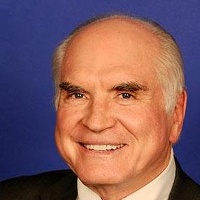
Mike Kelly
Representative
PA
Mike Kelly
Representative
PA
This resolution expresses support for designating September 30, 2025, as "Rare Cancer Day" to shine a light on the significant challenges faced by patients with rare cancers. It highlights that these cancers affect a substantial portion of patients and often result in lower survival rates compared to common cancers. The bill encourages increased awareness of rare cancer symptoms to improve early diagnosis and calls for greater collaboration to advance research and treatment options.
This bill amends the Social Security Act to provide Medicare coverage for FDA-approved multi-cancer early detection screening tests starting in 2028.
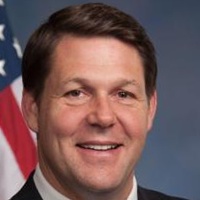
Jodey Arrington
Representative
TX
Jodey Arrington
Representative
TX
The Nancy Gardner Sewell Medicare Multi-Cancer Early Detection Screening Coverage Act amends the Social Security Act to provide Medicare Part B coverage for multi-cancer early detection screening tests starting January 1, 2028. This legislation establishes clear criteria for qualifying tests and outlines payment structures to ensure beneficiaries have access to these advanced diagnostic tools. Importantly, this coverage is designed to complement, rather than replace, existing Medicare-covered cancer screenings.
This Act mandates that new passenger motor vehicles sold in the U.S. must include standard equipment capable of receiving AM broadcast radio signals.

Gus Bilirakis
Representative
FL
Gus Bilirakis
Representative
FL
The AM Radio for Every Vehicle Act of 2025 mandates that the Secretary of Transportation establish a rule requiring AM broadcast radio receivers to be installed as standard equipment in new passenger motor vehicles. This requirement aims to ensure public access to AM radio signals, which are often used for emergency alerts. The bill also directs a GAO study on the effectiveness of AM radio within the national emergency alert system compared to other technologies. Finally, the Act preempts state and local laws on this matter and includes a sunset provision eight years after enactment.
This bill ensures Medicare coverage for certain breakthrough medical devices during a four-year transitional period while accelerating the final coverage decision process.
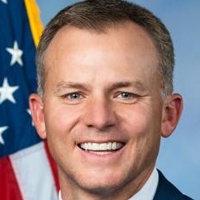
Blake Moore
Representative
UT
Blake Moore
Representative
UT
This Act, the Ensuring Patient Access to Critical Breakthrough Products Act, aims to speed up Medicare coverage for innovative, FDA-approved "breakthrough devices." It establishes a process for manufacturers to gain a four-year transitional coverage period for these devices, ensuring patients have timely access while long-term coverage decisions are finalized. The bill also allocates funding to CMS to manage these expedited reviews and allows for oversight of provider billing practices related to these new technologies.
This bill updates COPS Hiring Program grants to allow local law enforcement agencies to use funds for recruitment and retention bonuses when facing staffing shortages.
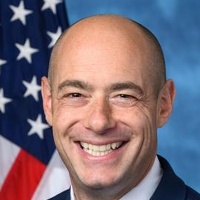
Greg Landsman
Representative
OH
Greg Landsman
Representative
OH
This Act, the Enhancing COPS Hiring Program Grants for Local Law Enforcement Act, updates federal grant guidelines to allow local law enforcement agencies to use public safety funds for hiring and retention bonuses. These bonuses are specifically permitted when departments face significant recruitment challenges or high attrition rates. The bill also clarifies the definition of a "law enforcement officer" for grant eligibility purposes.
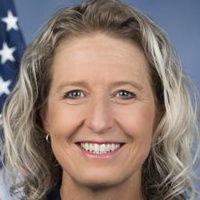
This Act ensures the automatic continuation of pay for active duty military personnel and essential civilian support staff if Congress fails to pass a budget for fiscal year 2026.
Jennifer Kiggans
Representative
VA
Jennifer Kiggans
Representative
VA
The Pay Our Troops Act of 2026 ensures that active duty military personnel and essential civilian support staff continue to receive their pay if Congress has not yet passed the full budget for fiscal year 2026. This act provides automatic continuing appropriations from the Treasury to prevent a lapse in military salaries due to budget delays. The funding automatically terminates once a new budget or continuing resolution is passed, or on January 1, 2027, whichever comes first.
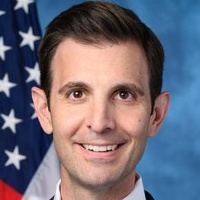
This Act expands the federal funding share for the Bulletproof Vest Partnership Program from 50% to 60% and authorizes $60 million annually for the program through fiscal year 2030.
Chris Deluzio
Representative
PA
Chris Deluzio
Representative
PA
The Bipartisan Bulletproof Vest Partnership Program Expansion Act increases the federal share of grant funding for certain public safety activities from 50% to 60%. This change aims to reduce the financial burden on states for purchasing essential equipment. Additionally, the Act authorizes $60 million annually for this program from fiscal years 2026 through 2030.
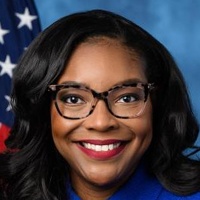
The Food Farmacy Act of 2025 establishes a grant program to fund non-profit organizations and local governments in creating "healthy food pharmacies" that provide free nutritious food and nutritional counseling to low-income and food-insecure communities.
Emilia Sykes
Representative
OH
Emilia Sykes
Representative
OH
The Food Farmacy Act of 2025 establishes a federal grant program to fund the creation and operation of "healthy food pharmacies." These pharmacies will provide free, nutritious food and professional nutritional counseling, primarily targeting low-income and food-insecure communities. The goal is to improve public health outcomes by integrating access to healthy food with medical care. The program authorizes $10 million annually from 2026 through 2030 to support these efforts.
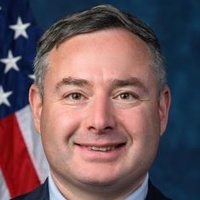
This Act permanently classifies the entire class of highly potent synthetic opioids known as nitazenes as Schedule I controlled substances to combat overdose deaths.
Eugene Vindman
Representative
VA
Eugene Vindman
Representative
VA
The Nitazene Control Act of 2025 permanently classifies the entire class of highly potent synthetic opioids known as nitazenes (2-Benzylbenzimidazole opioids) as Schedule I controlled substances. This action is taken due to their extreme danger, high potential for abuse, and role in fatal overdoses across the country. By scheduling the entire chemical class at once, the bill aims to proactively stop the emergence of new, dangerous analogs. This permanent scheduling subjects nitazenes to the strictest federal controls, mirroring those applied to fentanyl.
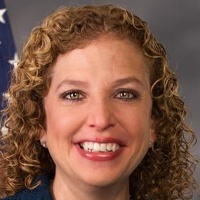
This bill establishes a program to identify and correct the grave markers of Jewish servicemembers mistakenly buried under Latin Crosses in overseas U.S. military cemeteries.
Debbie Wasserman Schultz
Representative
FL
Debbie Wasserman Schultz
Representative
FL
This act establishes the Fallen Servicemembers Religious Heritage Restoration Program to correct historical errors where Jewish service members killed in WWI and WWII were mistakenly buried under non-Jewish grave markers overseas. The American Battle Monuments Commission will contract with a nonprofit organization to identify these "covered members" and contact their survivors over a five-year period. The legislation also extends a deadline related to certain pension payments.
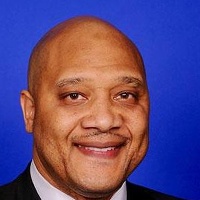
This resolution recognizes the vital contributions of medical research, particularly NIH-funded work, to public health and the economy, while designating September 15-19, 2025, as "Medical Research Week."
André Carson
Representative
IN
André Carson
Representative
IN
This resolution officially recognizes the vital contributions of medical research to public health and economic growth across the nation. It specifically designates September 15 through September 19, 2025, as "Medical Research Week." The bill emphasizes the critical role of sustained federal funding, particularly for the National Institutes of Health (NIH), in driving life-saving discoveries and ensuring national health security. It encourages public appreciation for the scientists and institutions conducting this essential work.
This resolution expresses support for designating a week in September 2025 as "National Adult Education and Family Literacy Week" to highlight the critical need for adult education and skills training across the country.
Lucy McBath
Representative
GA
Lucy McBath
Representative
GA
This resolution expresses strong support for designating a specific week as "National Adult Education and Family Literacy Week." The bill highlights the critical need to address low literacy rates among millions of adults, which impacts the economy, workforce readiness, and family success. It encourages communities nationwide to recognize and support local programs that provide essential education, job skills, and family literacy services.
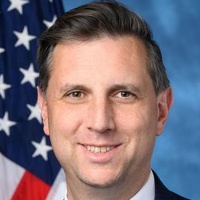
This bill establishes a regulated process for pension plan fiduciaries to transfer eligible unclaimed retirement distributions to state unclaimed property programs, protecting them from liability if proper search and notification procedures are followed.
Seth Magaziner
Representative
RI
Seth Magaziner
Representative
RI
The Unclaimed Retirement Rescue Plan establishes a process for pension plan administrators to transfer forgotten retirement funds to state unclaimed property programs via a national clearinghouse. Before transferring distributions of $50 or more, plans must attempt to locate the owner using databases and send a warning notice if new contact information is found. This act protects plan fiduciaries from liability for following these new transfer rules and mandates confidential reporting of all transfers to the Department of Labor.