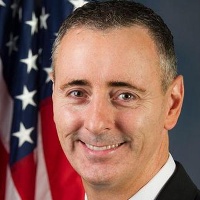
Legislative Activity
Track Brian's sponsored bills, co-sponsored legislation, and voting record
This act establishes a national awareness campaign to educate the public about the invasive spotted lanternfly and encourage its eradication.
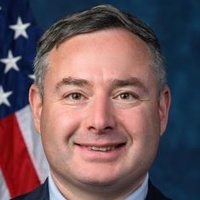
Eugene Vindman
Representative
VA
Eugene Vindman
Representative
VA
The "If You See It, Squish It Act of 2025" mandates the Secretary of Agriculture to launch a national awareness campaign about the invasive spotted lanternfly. This campaign must include public service announcements encouraging the public to kill any lanternflies they encounter. The goal is to educate citizens on the threat this pest poses to local agriculture.
This resolution supports designating a week in September 2025 as National Hazing Awareness Week to promote comprehensive prevention efforts against hazing on college campuses.
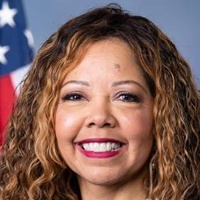
Lucy McBath
Representative
GA
Lucy McBath
Representative
GA
This resolution supports the designation of a National Hazing Awareness Week to highlight the serious and often tragic issue of hazing on college campuses. It builds upon existing federal law by emphasizing the need for comprehensive, ongoing prevention education for students, staff, and faculty. Ultimately, the bill encourages nationwide action to promote awareness and prevent hazing incidents.
This Act eliminates statutes of limitations for civil and criminal child sexual abuse cases and provides federal grants to states that adopt these reforms.
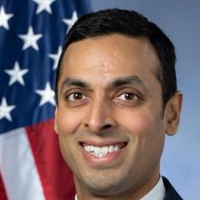
Suhas Subramanyam
Representative
VA
Suhas Subramanyam
Representative
VA
The Statutes of Limitation for Child Sexual Abuse Reform Act aims to address the epidemic of child sexual abuse by eliminating state statutes of limitations for civil and criminal cases involving child sexual abuse, exploitation, and sex trafficking. The bill incentivizes states to adopt these reforms by offering federal grants to those that eliminate time limits for filing lawsuits or reopen previously time-barred claims. This legislation is designed to ensure survivors have a meaningful opportunity to seek justice and hold perpetrators accountable, regardless of how long it took them to come forward.
This act increases the tax exclusion limit for dependent care assistance programs to support working families.
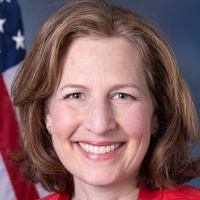
Kim Schrier
Representative
WA
Kim Schrier
Representative
WA
The Improving Child Care for Working Families Act of 2025 significantly increases the tax exclusion limit for dependent care assistance programs. This change raises the maximum exclusion from $\$7,500$ to $\$10,500$ for most taxpayers. The bill also adjusts the limit for married individuals filing separately to $\$5,250$. These provisions apply to dependent care expenses incurred in calendar years beginning after the Act's enactment.
This Act establishes federal grants to fund comprehensive, trauma-informed mental health services and support programs in schools for students facing significant challenges.
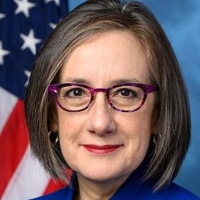
Andrea Salinas
Representative
OR
Andrea Salinas
Representative
OR
The Mental Health Services for Students Act of 2025 establishes a new federal program to provide comprehensive, trauma-informed mental health services and supports in schools through grants and contracts. These funds will support partnerships to implement awareness campaigns, staff training on trauma and suicide risk, and direct student and family treatment. The Secretary must ensure equitable distribution of funding, which is capped at \$2 million per award, with Congress authorized to appropriate \$300 million annually for the initial years.
The Ejiao Act of 2025 prohibits the knowing trade of donkeys, donkey hides, and ejiao products within U.S. commerce to combat the devastating impact of ejiao production on global donkey populations.
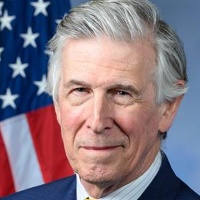
Donald Beyer
Representative
VA
Donald Beyer
Representative
VA
The Ejiao Act of 2025 prohibits the knowing trade, import, and export of donkeys, donkey hides, and ejiao products within U.S. commerce due to the devastating impact of the ejiao trade on global donkey populations. This legislation establishes significant civil and criminal penalties for violations, including substantial fines and imprisonment. Furthermore, the Act grants enforcement authority to agencies like U.S. Customs and Border Protection and mandates the forfeiture of illegal goods and related equipment.
This bill establishes a centralized online portal managed by the Appraisal Subcommittee for appraiser credentialing, AMC registration, fee collection, and streamlined FBI background checks, while preserving state licensing authority.
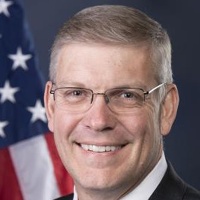
Barry Loudermilk
Representative
GA
Barry Loudermilk
Representative
GA
The Portal for Appraisal Licensing Act of 2025 establishes a centralized, cloud-based system managed by the Appraisal Subcommittee for appraiser credentialing and AMC registration. This portal will streamline license submissions, fee payments, and access to required FBI background checks for state regulators. While the system centralizes data and tracking via unique IDs, states retain final authority over licensing decisions. The Subcommittee will establish an advisory committee and charge reasonable user fees to fund the portal's development and maintenance.
The HEADACHE Act establishes a National Headache Disorders Initiative, an advisory council, and mandates annual reporting to Congress to improve research, care, and data collection for headache disorders.
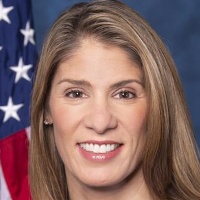
Lori Trahan
Representative
MA
Lori Trahan
Representative
MA
The HEADACHE Act establishes a comprehensive National Headache Disorders Initiative to improve research, workforce development, and care coordination for all headache disorders. It mandates the creation of an Advisory Council to guide federal efforts and requires the Secretary of Health and Human Services to submit annual reports to Congress detailing progress and recommending actions. This legislation aims to address disparities and reduce the societal and financial burden of these conditions before the Act automatically expires five years after enactment.
This bill authorizes the creation and presentation of a Congressional Gold Medal to honor Peace Corps Volunteers who served between 1961 and 2026 for their contributions to world peace and understanding.
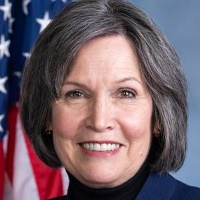
Betty McCollum
Representative
MN
Betty McCollum
Representative
MN
This bill authorizes the presentation of a Congressional Gold Medal to all Peace Corps Volunteers who served between August 28, 1961, and December 31, 2026, to recognize their distinguished service and promotion of world peace. The medal will be awarded to the Director of the Peace Corps for display at the agency's headquarters. The Secretary of the Treasury is also authorized to strike and sell bronze duplicates of the medal to cover production costs.
The POJA Act of 2025 explicitly extends age discrimination protections under the ADEA to job applicants and mandates an EEOC study on related claims.
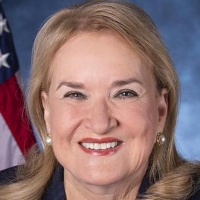
Sylvia Garcia
Representative
TX
Sylvia Garcia
Representative
TX
The Protect Older Job Applicants Act of 2025 (POJA Act) explicitly extends the protections of the Age Discrimination in Employment Act (ADEA) to job applicants, prohibiting employers from limiting or classifying applicants based on age during the hiring process. Additionally, the bill mandates that the EEOC conduct a study on age discrimination claims filed under the ADEA since 2015. The EEOC must then report these findings, along with recommendations for combating hiring bias, to Congress and the public.
The Safe Step Act mandates that group health plans using medication step therapy establish clear, timely exception processes for patients and doctors when required drugs are medically inappropriate or ineffective.
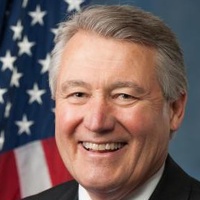
Rick Allen
Representative
GA
Rick Allen
Representative
GA
The Safe Step Act establishes mandatory, transparent exception processes for health plans that use "step therapy" protocols for prescription drugs. This ensures patients or their doctors can quickly request coverage for a prescribed medication when specific clinical criteria are met, such as previous treatment failure or risk of harm. Plans must decide on standard requests within 72 hours and urgent requests within 24 hours, and approved exceptions must last for at least one year. Furthermore, insurers must report detailed data annually on exception requests, approvals, and denials to the Secretary of Health and Human Services.
This Act ensures that disability compensation or pension payments received by veterans are excluded when determining eligibility for low-income housing tax credits and residential rental project bonds.
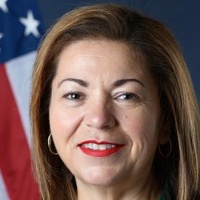
Linda Sánchez
Representative
CA
Linda Sánchez
Representative
CA
The Fair Housing for Disabled Veterans Act ensures that veterans' disability compensation or pension payments are excluded when determining income eligibility for low-income housing tax credits and related rental project bonds. This change prevents veterans from being penalized for their service-related benefits when applying for affordable housing assistance. The Act takes effect immediately upon passage.
The America’s CHILDREN Act of 2025 establishes a path to permanent residency for certain long-term college graduates who entered the U.S. as dependents of work visa holders and updates age-out protections for dependent children.
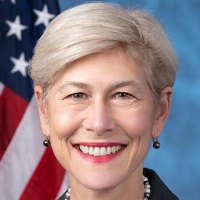
Deborah Ross
Representative
NC
Deborah Ross
Representative
NC
The America’s CHILDREN Act of 2025 establishes a new pathway to permanent residency for certain individuals who entered the U.S. as children, lived here legally for at least eight years as dependents of work visa holders, and subsequently earned a U.S. college degree. The bill also introduces significant "age-out" protections, allowing long-term dependents to retain their original priority dates for visa processing. Furthermore, it clarifies rules for derivative beneficiaries, potentially granting them work authorization in certain dependent statuses.
The Child Rescue Act establishes a national working group to study and recommend strategies for law enforcement to more effectively find and rescue children in imminent danger of sexual abuse and exploitation.
Eugene Vindman
Representative
VA
Eugene Vindman
Representative
VA
The Child Rescue Act establishes the United States Working Group on Children in Imminent Danger of Sexual Abuse and Exploitation to study and recommend strategies for law enforcement to better find and rescue children at risk. This new group, overseen by the Attorney General, must assess the scale of child sexual abuse material (CSAM) distribution and its link to physical abuse. The Working Group is tasked with providing Congress with comprehensive recommendations on necessary resources, investigative priorities, and policy changes within one year.
The PAAF Act grants automatic U.S. citizenship to certain internationally adopted individuals who meet specific residency and age requirements, clarifying and expanding existing pathways to citizenship.
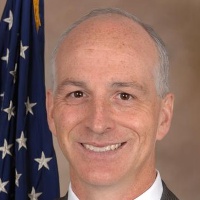
Adam Smith
Representative
WA
Adam Smith
Representative
WA
The Protect Adoptees and American Families Act (PAAF Act) aims to ensure that certain internationally adopted individuals automatically become U.S. citizens. This bill clarifies the requirements for automatic citizenship, particularly for adoptees who were physically present in the U.S. before turning 18. It also provides a pathway to citizenship for eligible adoptees residing abroad upon their legal entry into the United States.
This resolution supports designating the week of September 21 through September 27, 2025, as "Gold Star Families Remembrance Week" to honor the families of fallen service members.
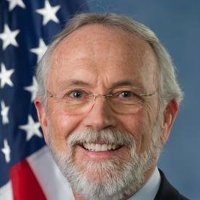
Dan Newhouse
Representative
WA
Dan Newhouse
Representative
WA
This resolution supports designating the week of September 21 through September 27, 2025, as "Gold Star Families Remembrance Week." The measure aims to officially recognize and honor the profound sacrifices made by families who have lost a loved one serving in the U.S. Armed Forces. It encourages communities nationwide to observe this week through acts of service and by celebrating the lives of these fallen service members.
This bill establishes a mechanism to ensure the Federal Aviation Administration remains funded and operational during a lapse in appropriations by drawing from the Airport and Airway Trust Fund.
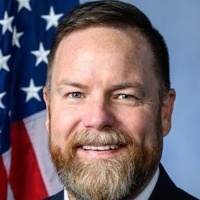
Aaron Bean
Representative
FL
Aaron Bean
Representative
FL
The Aviation Funding Stability Act of 2025 establishes a mechanism to ensure the Federal Aviation Administration (FAA) remains operational during a lapse in appropriations. If Congress fails to pass a budget, the FAA can draw from the Airport and Airway Trust Fund to continue existing programs and projects at the previous year's spending rate. This temporary funding lasts until a new budget is enacted or for a maximum of 30 days, whichever comes first. This measure aims to prevent disruptions to critical aviation services during government shutdowns.
The SHINE for Autumn Act of 2025 establishes federal grants for states to improve stillbirth surveillance, data collection, and risk factor research while mandating the development of standardized educational guidelines on stillbirth.
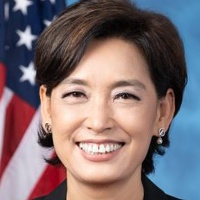
Young Kim
Representative
CA
Young Kim
Representative
CA
The SHINE for Autumn Act of 2025 aims to significantly improve federal support for state-level stillbirth research and data collection. It authorizes grants for states to enhance surveillance, track risk factors, and build local capacity for analyzing stillbirth data, provided the information remains de-identified. Furthermore, the bill mandates the development of standardized guidelines and educational materials regarding stillbirth awareness and risk factors, developed in consultation with experts and bereaved families.
This resolution officially recognizes the 250th anniversary of the United States Navy, celebrating its history, global strength, and vital contributions to national security and diplomacy.
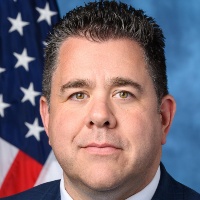
Nicolas LaLota
Representative
NY
Nicolas LaLota
Representative
NY
This resolution officially recognizes the 250th birthday of the United States Navy, celebrating its long history since the Continental Navy was established in 1775. Congress expresses deep gratitude for the bravery and dedication of all past and present Sailors who have defended the nation. The bill reaffirms the Navy's vital role in global security, humanitarian efforts, and maintaining American strength worldwide.
The Preparing And Retaining All (PARA) Educators Act establishes a federal grant program to help states fund local efforts aimed at recruiting, retaining, and credentialing school paraprofessionals, prioritizing high-need and low-income districts.
Lucy McBath
Representative
GA
Lucy McBath
Representative
GA
The Preparing And Retaining All (PARA) Educators Act establishes a new federal grant program to help states recruit and retain school paraprofessionals. Funds will be distributed to states based on their existing Title I allocations to support local districts. States must use these competitive subgrants to improve paraprofessional wages, offer professional development, and support credentialing, prioritizing high-need and rural schools. The law requires annual reporting on compensation improvements and retention efforts.