Legislative Activity
Track Cleo's sponsored bills, co-sponsored legislation, and voting record
This act establishes a pathway to permanent residency for certain immigrant workers who provided essential services following the September 11th terrorist attacks.
Alexandria Ocasio-Cortez
Representative
NY
Alexandria Ocasio-Cortez
Representative
NY
The 9/11 Immigrant Worker Freedom Act establishes a pathway for certain individuals who provided essential services during the rescue and cleanup efforts following the September 11th terrorist attacks to adjust their status to lawful permanent residents. This relief is available to workers and volunteers who meet specific service hour requirements at the World Trade Center, Pentagon, or Shanksville sites, or those who maintained contaminated vehicles. The bill also mandates fee waivers for eligible applicants and protects their privacy regarding public benefit usage and future immigration enforcement actions.
This Act caps out-of-pocket costs for essential prescription inhalers and nebulizers at a maximum of \$15 per 30-day supply for most insured and establishes a new assistance program for uninsured individuals.
Kweisi Mfume
Representative
MD
Kweisi Mfume
Representative
MD
The Affordable Inhalers and Nebulizers Act of 2025 aims to significantly reduce patient out-of-pocket costs for essential prescription inhalers and nebulizers used to treat conditions like asthma and COPD. This bill caps patient cost-sharing for these products at a maximum of \$15 per 30-day supply for most private insurance and Medicare beneficiaries, effective in 2026. Additionally, it establishes a new program to provide similar cost relief for uninsured individuals. The legislation ensures that payments made toward these caps count toward deductibles and out-of-pocket maximums.
This resolution recognizes suicide as a serious public health crisis and expresses support for designating September as National Suicide Prevention Month and September 10, 2025, as World Suicide Prevention Day.
Shri Thanedar
Representative
MI
Shri Thanedar
Representative
MI
This resolution officially recognizes suicide as a serious public health crisis in the United States, highlighting the urgent need for prevention efforts across all demographics. It expresses strong support for designating September as "National Suicide Prevention Month" and September 10th as "World Suicide Prevention Day" to raise awareness. The measure calls for prioritizing comprehensive, tailored strategies to improve access to mental health and suicide prevention services nationwide.
This Act prohibits companies from deceptively shrinking product sizes while maintaining similar packaging and requires clear consumer notification if downsizing occurs.
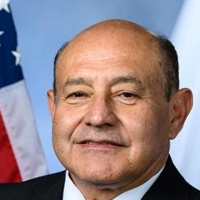
J. Correa
Representative
CA
J. Correa
Representative
CA
The Deceptive Downsizing Prohibition Act of 2025 aims to stop companies from secretly shrinking the size or quantity of consumer products while keeping the packaging the same, a practice known as "deceptive downsizing." This Act prohibits manufacturers from misleading consumers through this practice unless they provide clear, conspicuous notice of the reduced size on the product's principal display panel. The Federal Trade Commission (FTC) is tasked with writing the necessary regulations and enforcing compliance using its existing authority against unfair or deceptive business practices.
This act updates the population threshold defining an "urban area" to maintain eligibility for Rural Health Clinics under the Medicare program, effective January 1, 2027.
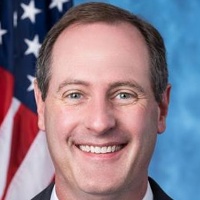
Tracey Mann
Representative
KS
Tracey Mann
Representative
KS
The Rural Health Clinic Location Modernization Act of 2025 updates the criteria for clinics to qualify as Rural Health Clinics (RHCs) under Medicare. This legislation revises the definition of an "urban area," setting a new population threshold of 50,000 people to determine eligibility. These changes to the location standards will take effect starting January 1, 2027.
This Act modernizes Medicare utilization requirements for rural facilities employing Physician Assistants and Nurse Practitioners by aligning their practice and oversight with state laws.
Tracey Mann
Representative
KS
Tracey Mann
Representative
KS
The Modernizing Rural Physician Assistant and Nurse Practitioner Utilization Act of 2025 updates Medicare payment requirements for facilities not directly directed by a physician. It mandates that these facilities must have formal arrangements with Physician Assistants (PAs) or Nurse Practitioners (NPs) whose practice adheres to state laws and regulations. These changes are set to take effect on January 1, 2027.
This Act enables states to establish specialized Medicaid health homes for individuals with sickle cell disease, mandating dental and vision coverage for enrollees.
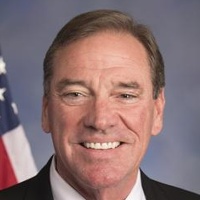
Neal Dunn
Representative
FL
Neal Dunn
Representative
FL
The Sickle Cell Disease Comprehensive Care Act enables states to establish specialized Medicaid health homes focused exclusively on individuals with sickle cell disease starting in 2026. If a state adopts this program, it must provide mandatory dental and vision coverage to enrolled patients, regardless of standard state Medicaid policies. States implementing these health homes will also be required to report on patient outcomes, access to care, and expenditures.
This bill removes the Medicare exclusion for services provided in facilities primarily focused on mental disease treatment, effective January 1, 2027.
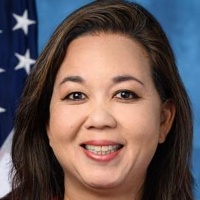
Jill Tokuda
Representative
HI
Jill Tokuda
Representative
HI
The Rural Behavioral Health Improvement Act of 2025 aims to enhance behavioral healthcare access in rural areas by modifying Medicare coverage rules. This bill specifically removes the existing exclusion that prevents Medicare payment for services provided in facilities primarily focused on treating mental diseases. This significant change is scheduled to take effect on January 1, 2027.
This Act limits the sharing of consumer reports requested in connection with a residential mortgage loan to prevent unauthorized access to homebuyers' sensitive financial information.
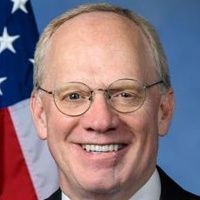
John Rose
Representative
TN
John Rose
Representative
TN
The Homebuyers Privacy Protection Act limits how consumer reporting agencies can share a consumer's report when it is requested in connection with a residential mortgage loan. Reports can only be shared with entities directly involved in the consumer's current mortgage or those providing a firm offer of credit or insurance. The Act also mandates a study by the GAO regarding the use and impact of "trigger leads" derived from credit checks.
This Act mandates the Bureau of Prisons to issue a REAL ID-compliant identification card, valid for at least 18 months, to all departing federal prisoners to facilitate access to essential federal services and state IDs.
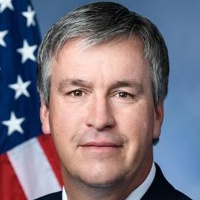
Barry Moore
Representative
AL
Barry Moore
Representative
AL
The BOP Release Card ID Act of 2025 mandates that the Bureau of Prisons issue a REAL ID-compliant photo identification card to all departing federal prisoners, valid for at least 18 months. This federal release card must be accepted for identity verification when accessing major federal benefits like Social Security, Medicaid, and SNAP. Furthermore, the BOP must establish agreements with states to help former inmates use this card to obtain standard state identification. The Attorney General will also issue guidance to states on creating similar release ID programs for state prisoners.
This resolution affirms Congress's strong support for the Federal Reserve's independence from political interference, particularly from the Executive Branch.
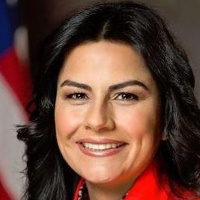
Nanette Barragán
Representative
CA
Nanette Barragán
Representative
CA
This resolution affirms strong Congressional support for the independence of the Federal Reserve System, its Chairman, and the Board of Governors. It emphasizes that the Fed must be free from political pressure to effectively manage monetary policy and maintain financial stability. The bill specifically warns against any executive interference that could undermine the Fed's integrity or global trust in the U.S. financial system.
The FEMA Act of 2025 establishes FEMA as an independent, cabinet-level agency and enacts sweeping reforms across public assistance, individual aid, and mitigation programs to speed up recovery and increase transparency.
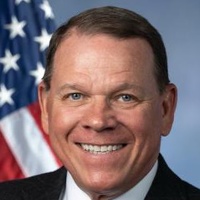
Sam Graves
Representative
MO
Sam Graves
Representative
MO
The FEMA Act of 2025 establishes the Federal Emergency Management Agency (FEMA) as an independent, cabinet-level agency to lead a unified, all-hazards approach to national emergency management. The bill enacts sweeping reforms across Public Assistance, Individual Assistance, and Mitigation programs to accelerate recovery, streamline funding, and reduce bureaucratic hurdles for disaster survivors and communities. Furthermore, it mandates significant new transparency measures, including public data reporting and GAO oversight, to ensure accountability for federal disaster spending.
The UNLOCK Act amends federal housing law to allow local governments to directly use certain federal funds for the construction of new low- and moderate-income housing.
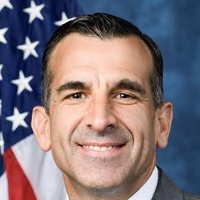
Sam Liccardo
Representative
CA
Sam Liccardo
Representative
CA
The UNLOCK Act amends the Housing and Community Development Act of 1974 to expand how federal housing funds can be used. This legislation now allows local entities to directly use these funds for the construction of new housing specifically for low- and moderate-income residents. The bill removes the requirement for these entities to partner with a nonprofit organization to carry out the new construction projects.
This Act repeals recent changes to Medicaid cost-sharing requirements and the exclusion of orphan drugs from the Drug Price Negotiation Program.
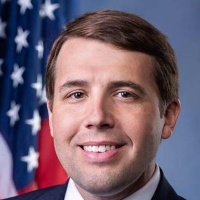
Chris Pappas
Representative
NH
Chris Pappas
Representative
NH
The Protect Patients from Costly Care Act aims to reverse recent changes to Medicaid cost-sharing requirements and the Drug Price Negotiation Program. This bill effectively deletes specific sections from a previous reconciliation act that altered these healthcare provisions. By repealing these changes, the Act restores the original rules regarding Medicaid cost-sharing and the exclusion of orphan drugs from price negotiations.
This resolution commemorates the 20th anniversary of Hurricanes Katrina and Rita, recognizing the devastation, praising recovery efforts, and reaffirming commitment to the rebuilding of the Gulf Coast region.
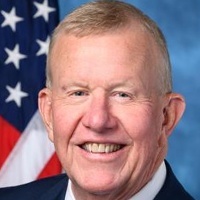
Mike Ezell
Representative
MS
Mike Ezell
Representative
MS
This resolution commemorates the 20th anniversary of Hurricanes Katrina and Rita, recognizing the immense devastation and loss suffered across the Gulf Coast. It honors the heroic efforts of first responders and the resilience of the affected communities. Furthermore, the resolution reaffirms the commitment to supporting the ongoing rebuilding, renewal, and restoration of the vital Gulf Coast region.
The SUN Act mandates timely and detailed congressional reporting and oversight for the domestic deployment of National Guard and reserve forces by the President, excluding deployments solely for natural disaster relief.
Sam Liccardo
Representative
CA
Sam Liccardo
Representative
CA
The Safeguarding the Use of the National Guard Act (SUN Act) enhances Congressional oversight of the President's domestic deployment of National Guard and reserve forces. It requires the President to submit a detailed report to Congress within 15 days outlining the legal justification, goals, costs, and impact of any domestic deployment. This reporting requirement is waived only when reserve forces are deployed specifically following a Presidential declaration under the Robert T. Stafford Act for a natural disaster.
This resolution terminates the President's declared crime emergency in the District of Columbia, asserting that the emergency is unwarranted and the legal basis for federal MPD control is flawed.
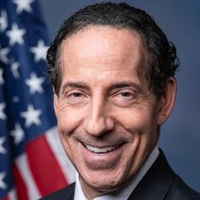
Jamie Raskin
Representative
MD
Jamie Raskin
Representative
MD
This resolution terminates the President's August 11, 2025, declaration of a crime emergency in the District of Columbia. Congress asserts that the President lacks the legal authority under the D.C. Home Rule Act to take operational control of the Metropolitan Police Department. Furthermore, the bill notes that local violent crime rates have been declining significantly.
The Keep Seniors Fed Act amends the Food and Nutrition Act of 2008 to include Title II Social Security payments when calculating eligibility for food assistance benefits.
Jill Tokuda
Representative
HI
Jill Tokuda
Representative
HI
The Keep Seniors Fed Act makes technical amendments to the Food and Nutrition Act of 2008 regarding how income is calculated for food assistance eligibility. Specifically, it mandates that income received under Title II of the Social Security Act must now be counted when determining eligibility for benefits. These changes will take effect 90 days after the bill is signed into law.
The Election Mail Act mandates same-day processing for incoming absentee ballots, requires intelligent mail barcodes on federal election mail, establishes delivery standards and free postage for completed ballots, and sets a national seven-day grace period for accepting postmarked federal mail-in ballots after Election Day.
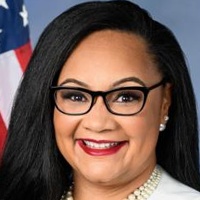
Nikema Williams
Representative
GA
Nikema Williams
Representative
GA
The Election Mail Act aims to ensure the timely and secure delivery of federal election mail through the U.S. Postal Service. It mandates same-day processing of received absentee ballots and requires the use of intelligent mail barcodes for tracking mailed ballots starting in 2026. Furthermore, the bill establishes protections against operational changes that would slow election mail delivery and sets a national standard to count mail-in ballots postmarked by Election Day if received within seven days after the election.
The Help America Run Act allows federal candidates to use campaign funds for essential personal living expenses like childcare and health insurance to enable working Americans to run for office.
Nikema Williams
Representative
GA
Nikema Williams
Representative
GA
The Help America Run Act aims to make it easier for everyday Americans to run for office by allowing campaign funds to cover essential living expenses. Specifically, the bill permits campaign committees to use funds for necessary personal services like childcare and elder care, which helps candidates who are not independently wealthy. This change is intended to increase the diversity of candidates and ensure elected officials better reflect the general population.