Legislative Activity
Track Gabe's sponsored bills, co-sponsored legislation, and voting record
The United States-Israel Defense Partnership Act of 2025 bolsters defense cooperation between the U.S. and Israel through joint programs, funding increases, and extended authorities related to countering unmanned systems, anti-tunnel technology, emerging technologies, and war reserve stockpiles, while also exploring Israel's inclusion in the national technology and industrial base and assessing integrated air and missile defense in the CENTCOM region.
Joe Wilson
Representative
SC
Joe Wilson
Representative
SC
The United States-Israel Defense Partnership Act of 2025 seeks to bolster the defense relationship between the United States and Israel through joint initiatives and increased cooperation. It establishes programs to counter unmanned systems, extend anti-tunnel and counter-UAS cooperation, and promote collaboration in emerging technologies like AI and cybersecurity. The act also mandates the establishment of a Defense Innovation Unit office in Israel and assesses integrated air and missile defense in the U.S. Central Command region. Finally, it explores Israel's potential inclusion in the national technology and industrial base.
This bill transfers the functions, assets, and responsibilities of the Food for Peace Act from the U.S. Agency for International Development to the Department of Agriculture.
Tracey Mann
Representative
KS
Tracey Mann
Representative
KS
This bill transfers the functions, assets, and responsibilities for implementing the Food for Peace Act from the U.S. Agency for International Development (USAID) to the Department of Agriculture (USDA). The Secretary of Agriculture will now administer the program, though the Famine Early Warning Systems Network will remain under USDA control. This change allows the USDA to quickly update necessary rules to ensure a smooth transition of the program.
Requires the Department of Homeland Security to conduct annual assessments of terrorist threats posed by terrorist organizations using foreign cloud-based messaging applications.
August Pfluger
Representative
TX
August Pfluger
Representative
TX
The "Countering Online Radicalization and Terrorism Act" directs the Department of Homeland Security, in coordination with the Director of National Intelligence, to conduct annual assessments on how terrorist organizations use foreign cloud-based messaging apps to threaten the United States. These assessments will analyze terrorist recruitment and radicalization, examine the use of online payment features to support terrorist financing, and provide recommendations to counter these threats. The goal of the act is to evaluate and address the national security risks associated with terrorist groups using these applications, while also ensuring compliance with legal, privacy, and civil rights protections.
The "Freedom to Invest in Tomorrow's Workforce Act" expands the use of 529 savings accounts to cover expenses related to postsecondary credentialing programs, including tuition, fees, books, supplies, equipment, and testing fees.

Robert Wittman
Representative
VA
Robert Wittman
Representative
VA
The "Freedom to Invest in Tomorrow's Workforce Act" amends Section 529 savings accounts to include expenses related to postsecondary credentialing programs. This allows 529 funds to cover costs like tuition, fees, books, supplies, and testing fees for recognized programs and credentials, as defined by the bill. These changes would apply to distributions made after the bill is enacted.
Exempts family farms and small businesses from asset considerations in need analysis for federal student aid.
Tracey Mann
Representative
KS
Tracey Mann
Representative
KS
The "Family Farm and Small Business Exemption Act" amends the Higher Education Act of 1965 to exclude the net value of a family farm (on which the family resides) or a small business (with no more than 100 employees and owned/controlled by the family) from consideration as an asset when determining financial need for federal student aid. This change aims to make higher education more accessible for students from family farm and small business backgrounds.
The "LOCAL Act" codifies the Bureau of Land Management headquarters in Grand Junction, Colorado, mandates a study on relocating additional BLM positions to western states, and aims to improve federal land management and community coordination.
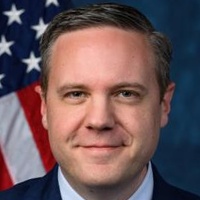
Jeff Hurd
Representative
CO
Jeff Hurd
Representative
CO
The LOCAL Act mandates the Bureau of Land Management headquarters be located in Grand Junction, Colorado. It requires a study on the feasibility of relocating additional BLM employee positions to Grand Junction or another western state. The study will assess the potential benefits of relocation on federal land management, community coordination, and various land uses. A report on the study's findings must be submitted to the House and Senate Committees on Natural Resources and Energy and Natural Resources within 365 days.
The HALT Fentanyl Act permanently classifies fentanyl-related substances as Schedule I controlled substances while streamlining registration procedures for legitimate scientific research.
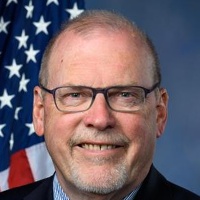
H. Griffith
Representative
VA
H. Griffith
Representative
VA
The Halt All Lethal Trafficking of Fentanyl (HALT Fentanyl) Act permanently classifies fentanyl-related substances as Schedule I controlled substances to strengthen enforcement and penalties against their trafficking. Additionally, the bill streamlines registration processes for researchers to facilitate legitimate scientific study of these substances. It also includes technical corrections and mandates updated federal rulemaking to ensure effective implementation.
The CONSTRUCTS Act of 2025 establishes a grant program for community colleges and trade schools to expand residential construction training, with a focus on serving rural and underserved populations.
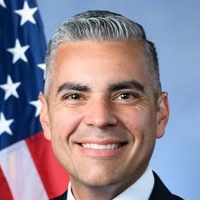
Juan Ciscomani
Representative
AZ
Juan Ciscomani
Representative
AZ
The CONSTRUCTS Act of 2025 establishes a competitive grant program to expand education and training for careers in the residential construction industry. By providing $20 million annually, the bill supports community colleges and trade schools in developing skilled labor pipelines, with a priority on serving rural and underserved populations. These programs aim to increase the supply of qualified workers while helping to address local housing needs through flexible, industry-aligned training.
The CARGO Act of 2025 prohibits the NIH from funding any research using live animals outside of the United States.
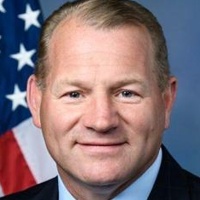
Troy Nehls
Representative
TX
Troy Nehls
Representative
TX
The CARGO Act of 2025 prohibits the National Institutes of Health (NIH) from funding research or programs involving live animals outside of the United States. This bill addresses concerns over the lack of oversight and potential mistreatment of animals in foreign research projects funded by American taxpayers. The Act ensures that NIH funding for animal research is restricted to projects conducted within the U.S. and its territories.
The PATROL Act prevents the federal government from using the Rivers and Harbors Act of 1899 to legally challenge state-led efforts to construct physical border barriers.
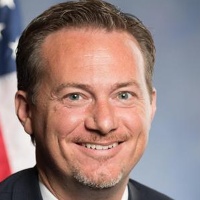
Michael Cloud
Representative
TX
Michael Cloud
Representative
TX
The PATROL Act (Preventing Aliens Through Rivers or Land Act) prohibits the federal government from using the Rivers and Harbors Act of 1899 to legally challenge states that construct physical barriers along their international borders. This legislation aims to protect state-led border security initiatives, such as walls, fences, or floating buoys, from federal civil lawsuits.
This resolution supports the goals and ideals of "Career and Technical Education Month" by recognizing the vital role of CTE programs in building a skilled workforce and strengthening the U.S. economy.
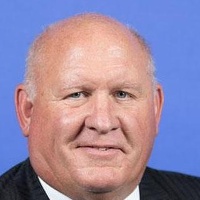
Glenn Thompson
Representative
PA
Glenn Thompson
Representative
PA
This resolution supports the designation of "Career and Technical Education Month" to celebrate the vital role of CTE programs in building a skilled workforce. It highlights how these programs provide students with essential training and credentials that align with modern economic demands. Furthermore, it encourages educators and parents to promote CTE as a respected and effective educational pathway for future success.
The Love Lives On Act of 2025 ensures that surviving spouses of veterans and service members retain their earned dependency compensation, survivor benefits, and TRICARE eligibility regardless of remarriage.
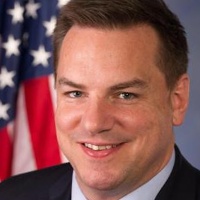
Richard Hudson
Representative
NC
Richard Hudson
Representative
NC
The Love Lives On Act of 2025 ensures that surviving spouses of veterans and service members retain their earned benefits, including dependency and indemnity compensation, educational assistance, and Survivor Benefit Plan annuities, regardless of remarriage. Additionally, the bill expands TRICARE eligibility to include widows and widowers whose subsequent marriages have ended. This legislation protects the financial security and healthcare access of surviving families by removing penalties associated with remarriage.
The Fair Access to Banking Act prohibits large financial institutions and payment networks from denying services to law-abiding businesses based on subjective, non-financial, or political criteria.
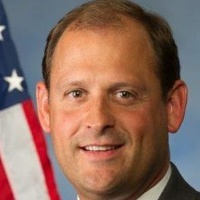
Garland Barr
Representative
KY
Garland Barr
Representative
KY
The Fair Access to Banking Act prohibits large financial institutions and payment networks from denying services to law-abiding businesses based on subjective, politically motivated, or reputational criteria. The bill mandates that financial institutions use impartial, quantitative, risk-based standards to evaluate customers rather than category-based exclusions. To ensure compliance, the legislation establishes enforcement mechanisms through federal regulators and provides a legal pathway for businesses to sue for damages if they are unfairly denied access to financial services.
This bill provides a 6.62 percent Medicare payment increase for physicians and practitioners from April through December 2025 to help stabilize medical practices.
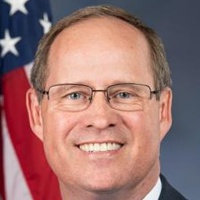
Gregory Murphy
Representative
NC
Gregory Murphy
Representative
NC
The Medicare Patient Access and Practice Stabilization Act of 2025 aims to support healthcare providers by extending Medicare payment adjustments through the end of 2025. Specifically, the bill provides a 6.62 percent payment increase for services rendered between April 1, 2025, and December 31, 2025, to help practitioners adjust to evolving Medicare payment policies.
The Educational Choice for Children Act of 2025 establishes federal tax credits for contributions to scholarship-granting organizations, providing lower- and middle-income families with financial support for K–12 educational expenses.

Adrian Smith
Representative
NE
Adrian Smith
Representative
NE
The Educational Choice for Children Act of 2025 establishes federal tax credits for individuals and corporations that contribute to scholarship-granting organizations. These organizations provide K–12 education scholarships to students from lower- and middle-income households to cover tuition, tutoring, and other qualified educational expenses. The bill also protects the autonomy of participating schools and scholarship organizations from government interference while ensuring that scholarship funds remain tax-free for recipient families.
The Charitable Act extends and modifies tax deductions for charitable contributions, allowing individuals who take the standard deduction to claim additional tax benefits for donations made in 2026 and 2027.
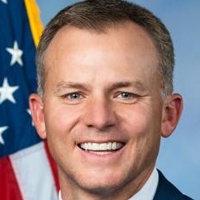
Blake Moore
Representative
UT
Blake Moore
Representative
UT
The Charitable Act allows individuals who take the standard deduction to also claim a deduction for charitable contributions during the 2026 and 2027 tax years. This legislation permits non-itemizers to deduct donations up to one-third of their standard deduction amount while removing previous penalties for overstatements.
This bill amends the Internal Revenue Code to allow corporations to deduct intangible drilling and development costs when calculating adjusted financial statement income for the corporate alternative minimum tax.
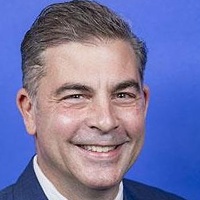
Mike Carey
Representative
OH
Mike Carey
Representative
OH
The Promoting Domestic Energy Production Act revises corporate tax accounting rules to incentivize domestic energy investment. By allowing corporations to deduct intangible drilling and development costs when calculating their alternative minimum tax, the bill aims to reduce the tax burden on energy producers.
The Main Street Tax Certainty Act makes the 20% pass-through business income deduction permanent by removing its scheduled expiration after 2025.
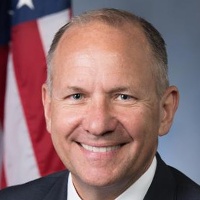
Lloyd Smucker
Representative
PA
Lloyd Smucker
Representative
PA
The Main Street Tax Certainty Act makes the 20% pass-through business income deduction permanent. By removing the current 2025 expiration date, this legislation ensures long-term tax relief for owners of qualified pass-through entities.
The 911 SAVES Act mandates the reclassification of public safety telecommunicators as "Protective Service Occupations" within the federal Standard Occupational Classification system to accurately reflect their critical role in emergency response.
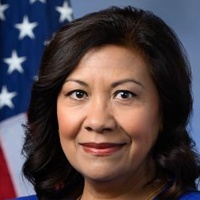
Norma Torres
Representative
CA
Norma Torres
Representative
CA
The 911 SAVES Act mandates that the Office of Management and Budget reclassify public safety telecommunicators as "Protective Service Occupations" within the federal Standard Occupational Classification system. This legislation recognizes the critical, high-stress, and lifesaving nature of 911 dispatchers, correcting their current misclassification to better reflect their essential role in emergency response.
The Chemical Tax Repeal Act eliminates federal excise taxes on specific chemicals and substances, effective January 1, 2024.
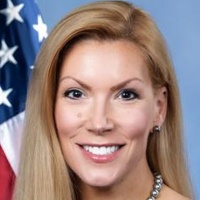
Beth Van Duyne
Representative
TX
Beth Van Duyne
Representative
TX
The Chemical Tax Repeal Act eliminates existing excise taxes on specific chemicals and substances. By amending the Internal Revenue Code, this legislation removes these financial burdens effective January 1, 2024.