Legislative Activity
Track Eli's sponsored bills, co-sponsored legislation, and voting record
This bill establishes a U.S. policy and reporting requirements to oppose foreign assistance to the Taliban and scrutinize U.S. cash assistance programs and the Afghan Fund.
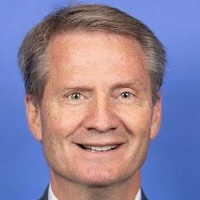
Tim Burchett
Representative
TN
Tim Burchett
Representative
TN
The "No Tax Dollars for Terrorists Act" establishes a U.S. policy to oppose foreign assistance to the Taliban from other countries and NGOs, requiring the Secretary of State to develop a strategy to discourage such support. The bill mandates several reports detailing foreign aid given to the Taliban and oversight of U.S. cash assistance programs in Afghanistan. Furthermore, it requires recurring reports on the status and controls surrounding the Afghan Fund to prevent Taliban misuse of assets.
This bill mandates the deportation and permanent inadmissibility of non-citizens who commit acts of violence against law enforcement or public property during civil unrest, with enhanced enforcement during declared emergencies.

Dan Crenshaw
Representative
TX
Dan Crenshaw
Representative
TX
The Returning Illegals over Turmoil Act establishes new grounds for the deportation and permanent inadmissibility of non-citizens who incite or participate in violent acts against law enforcement or public property during civil unrest. This legislation mandates strict enforcement during declared emergencies and grants the Secretary of Homeland Security expedited removal authority under those conditions. Furthermore, individuals removed under these provisions are permanently barred from receiving any form of immigration relief or future DACA eligibility.
This bill repeals the Freedom of Access to Clinic Entrances (FACE) Act, effectively removing federal criminal penalties for obstructing access to reproductive health clinics.
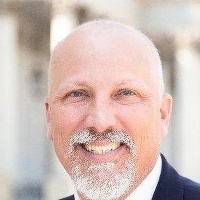
Chip Roy
Representative
TX
Chip Roy
Representative
TX
The FACE Act Repeal Act of 2025 seeks to eliminate federal protections that currently prohibit the obstruction of reproductive health clinic entrances, the use of force or threats against patients and providers, and the intentional damage of clinic property. If enacted, this legislation would immediately repeal these federal criminal prohibitions and apply to all pending or future prosecutions.
The New IDEA Act prohibits businesses from deducting wages paid to unauthorized workers unless they use the E-Verify program, while also making E-Verify permanent and voluntary with new employer protections.
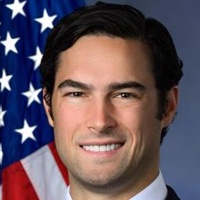
Brandon Gill
Representative
TX
Brandon Gill
Representative
TX
The New IDEA Act prohibits businesses from deducting wages paid to unauthorized workers from their taxable income unless they use the E-Verify program. This legislation makes the E-Verify program permanent and voluntary, offering employers who comply with its rules a legal presumption of compliance regarding employee work authorization. Furthermore, the bill mandates increased information sharing between government agencies to help enforce these new wage deduction and employment verification rules.
This act mandates the creation of a real-time, exclusive online portal for Members of Congress to access detailed federal award and spending information, including payments to individuals.
Chip Roy
Representative
TX
Chip Roy
Representative
TX
The Make DOGE Permanent Act mandates the creation of a special, real-time access portal for members of Congress to view federal award spending data. This exclusive access will provide Congress with the latest information, including details on payments made to individuals and federal employees, which may be restricted on the public website. The Office of Management and Budget (OMB) must establish this dedicated link within six months of the bill's enactment.
This Act codifies Executive Order 14290, making its directives the official law of the land.
Tim Burchett
Representative
TN
Tim Burchett
Representative
TN
The EO 14290 Act of 2025 officially codifies Executive Order 14290 into federal law. This action transforms the directives of the Executive Order into legally binding statutes with the full force of law. Consequently, the rules established by EO 14290 are now permanent federal requirements.
This bill aims to modernize the review of federal regulations by requiring agencies to use technology to identify outdated, ineffective, or burdensome rules, and to make regulations available in a machine-readable format. It also mandates agencies to develop and implement plans for the retrospective review of their existing regulations.
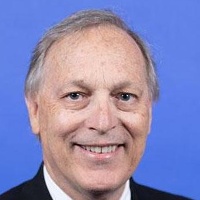
Andy Biggs
Representative
AZ
Andy Biggs
Representative
AZ
The "Modernizing Retrospective Regulatory Review Act" aims to improve the efficiency and accuracy of federal regulation reviews through technology. It mandates a report on making regulations machine-readable, directs guidance on using technology for retrospective reviews, and requires agencies to submit and implement plans for reviewing their regulations using these technologies. This act seeks to identify and eliminate obsolete, ineffective, or excessively burdensome regulations.
This resolution condemns former FBI Director James Comey for allegedly inciting violence against President Trump through a cryptic social media post and demands an investigation and his permanent barring from federal employment.
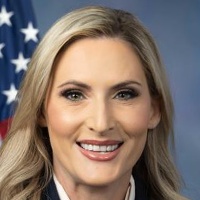
Laurel Lee
Representative
FL
Laurel Lee
Representative
FL
This resolution strongly condemns former FBI Director James Comey for a social media post interpreted as inciting violence against President Donald J. Trump during his overseas trip. Congress demands that federal authorities investigate Comey's actions and permanently bar him from any future federal employment. The measure asserts that political violence incitement by former high-ranking officials is unacceptable and threatens national security.
The Global Fairness in Drug Pricing Act aims to lower U.S. prescription drug costs by establishing international price targets, facilitating safe importation, cracking down on anticompetitive behavior, and studying global pricing impacts.
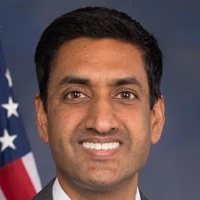
Ro Khanna
Representative
CA
Ro Khanna
Representative
CA
The Global Fairness in Drug Pricing Act aims to significantly lower prescription drug costs for Americans. It directs the HHS to establish "most-favored-nation" price targets based on international rates and enhances safe importation options. Additionally, the bill mandates enforcement actions against anticompetitive drug manufacturer behavior and requires a study on global pricing discrimination.
This Act exempts certain employees of seasonal or low-revenue outdoor recreational outfitting and guiding businesses from federal minimum wage and overtime requirements.
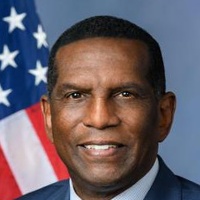
Clarence Owens
Representative
UT
Clarence Owens
Representative
UT
The Outdoor Recreational Outfitting and Guiding Act amends the Fair Labor Standards Act to create a new exemption from federal minimum wage and overtime requirements for certain employees of outdoor recreational outfitting or guiding businesses. This exemption applies only if the business meets specific seasonal operation or revenue tests. Essentially, this bill carves out an exception for smaller, seasonal outdoor recreation employers regarding federal wage protections for their guides and outfitters.
The Energy Freedom Act eliminates the majority of existing federal tax credits and deductions for energy efficiency, clean energy production, and related manufacturing, with most changes taking effect after December 31, 2025.
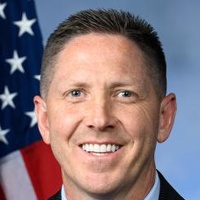
Josh Brecheen
Representative
OK
Josh Brecheen
Representative
OK
The Energy Freedom Act is a comprehensive bill focused almost entirely on repealing numerous existing tax credits and deductions related to energy efficiency, clean energy production, and alternative fuels. This legislation systematically eliminates incentives such as those for residential solar, clean vehicle purchases, advanced manufacturing, and carbon sequestration. With only one minor exception, the bill's primary effect is to remove these specific energy-related tax breaks from the Internal Revenue Code, generally taking effect for tax years beginning after December 31, 2025.
This bill removes federal tax and registration requirements for firearm silencers, preempts certain state regulations, mandates the destruction of existing federal silencer owner records, and updates related definitions and marking requirements.
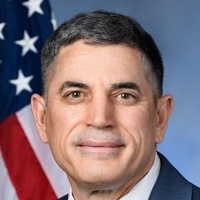
Andrew Clyde
Representative
GA
Andrew Clyde
Representative
GA
The Constitutional Hearing Protection Act aims to treat firearm silencers equally under federal tax law by updating definitions and removing certain registration requirements if existing firearm laws are followed. The bill also preempts state and local governments from imposing special taxes or registration burdens on silencers. Furthermore, it mandates the destruction of existing federal records identifying silencer owners within one year of enactment.
The American Privacy Restoration Act completely repeals the USA PATRIOT Act and restores the original text of the laws it amended as they existed before October 25, 2001.
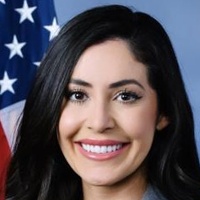
Anna Luna
Representative
FL
Anna Luna
Representative
FL
The American Privacy Restoration Act is a straightforward bill designed to completely repeal the USA PATRIOT Act. This action will erase all amendments made by the PATRIOT Act, reverting relevant sections of law to their original text as it existed before October 26, 2001. In essence, this legislation seeks to undo the legal changes enacted by the PATRIOT Act.
The DEFENSE Act authorizes the Secretary of Homeland Security or Attorney General to deputize state and local police to use authorized drone countermeasures for protecting specific large public events after mandatory training.
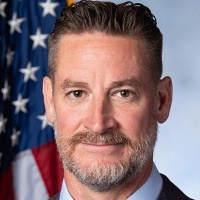
W. Steube
Representative
FL
W. Steube
Representative
FL
The DEFENSE Act authorizes the Secretary of Homeland Security or the Attorney General to deputize state and local police to use drone countermeasures for protecting specific large public events and restricted areas. This authority is contingent upon officers completing mandatory, specialized training developed in coordination with the FAA. The bill also mandates federal oversight and limits the use of equipment to an officially approved list maintained by the Department of Homeland Security.
This resolution commends United States Border Patrol Chief Jason Owens upon his retirement after 29 years of exemplary service, recognizing his leadership and dedication to the mission.
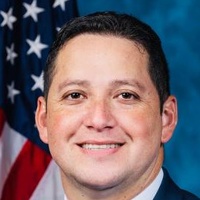
Ernest Gonzales
Representative
TX
Ernest Gonzales
Representative
TX
This resolution formally commends United States Border Patrol Chief Jason Owens upon his retirement after 29 years of dedicated public service. It recognizes his extensive career, highlighting his leadership in establishing key divisions to combat cartel activity and support agents. The bill serves as an official acknowledgment of his faithfulness and commitment to the Border Patrol's mission.
This resolution strongly supports the Second Amendment right to keep and bear arms while commending President Trump for working to reverse recent Biden administration infringements on those freedoms.
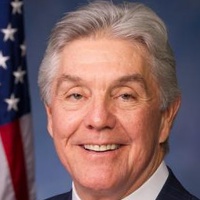
Roger Williams
Representative
TX
Roger Williams
Representative
TX
This resolution strongly affirms the constitutional right to keep and bear arms under the Second Amendment. It criticizes recent actions by the Biden administration and federal agencies, such as the ATF, for implementing what are viewed as infringements on these freedoms. The resolution commends former President Trump for his past efforts to protect Second Amendment rights against such measures.
The Safeguard American Voter Eligibility (SAVE) Act mandates that individuals registering to vote in federal elections must present documentary proof of U.S. citizenship.
Chip Roy
Representative
TX
Chip Roy
Representative
TX
The Safeguard American Voter Eligibility Act (SAVE Act) significantly amends federal law to require individuals registering to vote in federal elections to present documentary proof of U.S. citizenship. This legislation mandates that states actively clean their voter rolls and cooperate with federal agencies to verify citizenship status. It establishes new criminal penalties for officials who fail to enforce these documentation requirements.
This bill mandates that tax-exempt organizations receiving any federal funding must publicly disclose their full contributor lists from IRS Form 990 Schedule B, or risk losing their tax-exempt status.

Paul Gosar
Representative
AZ
Paul Gosar
Representative
AZ
The Putting Trust in Transparency Act mandates that any tax-exempt organization receiving federal funding must publicly disclose the names, zip codes, and donation amounts of its major contributors listed on IRS Form 990 Schedule B. This is intended to increase oversight of organizations acting as government agents using taxpayer money. Failure to comply with this new public disclosure requirement can result in the revocation of the organization's tax-exempt status.
This resolution affirms that members of Tren de Aragua constitute alien enemies perpetrating an invasion and supports the President's constitutional authority to repel this threat.
Andy Biggs
Representative
AZ
Andy Biggs
Representative
AZ
This resolution affirms Congress's agreement with the President's use of executive authority to address the threat posed by the criminal organization Tren de Aragua. It formally declares members of the group to be "alien enemies" engaged in an invasion of the United States. The bill supports the President's actions to detain and remove these individuals under the Alien Enemies Act of 1798.
This bill abolishes the Department of Education and redirects federal funding for K-12 education to states via block grants administered by the Secretary of the Treasury.
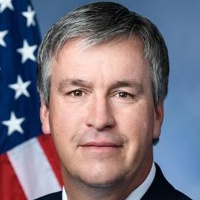
Barry Moore
Representative
AL
Barry Moore
Representative
AL
This bill proposes the immediate abolition of the Department of Education, transferring residual functions to the Secretary of the Treasury. It establishes a new block grant program, funding elementary and secondary education directly to states based on their residents' federal income tax contributions. The legislation emphasizes that states should use these funds to promote parental choice in K-12 schooling.