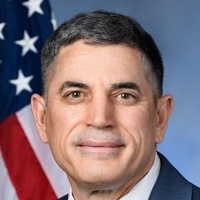
Legislative Activity
Track Andrew's sponsored bills, co-sponsored legislation, and voting record
This bill impeaches Chief Judge James E. Boasberg for allegedly abusing his power to obstruct the President's enforcement of immigration laws related to a designated terrorist organization.
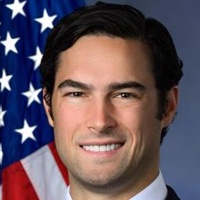
Brandon Gill
Representative
TX
Brandon Gill
Representative
TX
This bill impeaches Judge James E. Boasberg, Chief Judge for the District of Columbia, for high crimes and misdemeanors. The impeachment accuses Boasberg of abusing judicial power for political gain by obstructing the President's authority to remove aliens associated with a designated Foreign Terrorist Organization. Boasberg is accused of interfering with the President's enforcement of laws, jeopardizing national safety, and undermining the separation of powers. The bill seeks his removal from office.
This bill disallows the production tax credit and investment tax credit for offshore wind facilities placed in service in the inland navigable waters or coastal waters of the United States after December 31, 2025.
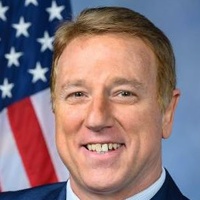
Patrick Fallon
Representative
TX
Patrick Fallon
Representative
TX
This bill amends the Internal Revenue Code to disallow the production tax credit and investment tax credit for offshore wind facilities placed in service in the inland navigable waters or coastal waters of the United States. It specifically restricts eligibility for the Clean Electricity Production Tax Credit and the Clean Electricity Investment Tax Credit for these projects. These changes will take effect for property placed in service after December 31, 2025.
This act exempts surplus broiler hatching eggs sold to egg breakers from a specific current shell egg rule while mandating a new regulation for their handling and temperature control.
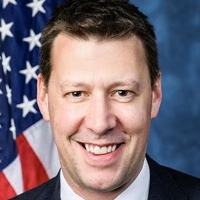
Josh Riley
Representative
NY
Josh Riley
Representative
NY
The Lowering Egg Prices Act of 2025 aims to reduce costs by streamlining the handling of surplus broiler hatching eggs sold to commercial egg breakers for processing into liquid egg products. This bill exempts these specific surplus eggs from certain current shell egg regulations. It also mandates the creation of a new rule within 180 days to establish appropriate temperature and time limits for holding these eggs before processing.
The Fair and Open Competition Act of 2025 prohibits the federal government from requiring or penalizing bidders or contractors on federally funded construction projects based on their agreement or non-agreement with labor unions.
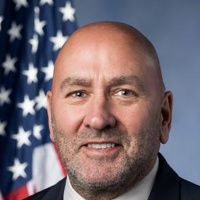
Clay Higgins
Representative
LA
Clay Higgins
Representative
LA
The Fair and Open Competition Act of 2025 ensures fair competition on federally funded construction projects by prohibiting the government from requiring or penalizing bidders based on union agreements. This legislation aims to keep federal agencies neutral in labor relations while promoting cost savings and opening opportunities for all businesses. Exceptions to this neutrality rule are strictly limited to specific public health, safety, or national security emergencies.
This act prohibits the EPA from issuing tailpipe emission regulations that mandate specific vehicle technologies or limit the availability of new motor vehicles based on engine type.
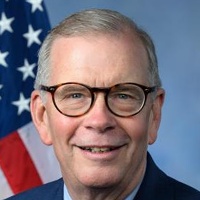
Tim Walberg
Representative
MI
Tim Walberg
Representative
MI
The Choice in Automobile Retail Sales Act of 2025 restricts the Environmental Protection Agency (EPA) from issuing tailpipe emission regulations that mandate specific vehicle technologies or limit the availability of new motor vehicles based on engine type. This ensures manufacturers maintain flexibility in meeting performance standards set by the EPA. The Act requires the EPA to update existing rules within two years to comply with these new limitations.
This act expands the Work Opportunity Tax Credit to include employers who hire qualified military spouses.
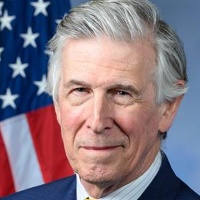
Donald Beyer
Representative
VA
Donald Beyer
Representative
VA
The Military Spouse Hiring Act amends the Internal Revenue Code to expand eligibility for the Work Opportunity Tax Credit (WOTC). This change allows employers to claim the tax credit for hiring qualified military spouses. A qualified military spouse is defined as someone certified as being married to a member of the U.S. Armed Forces.
This bill revokes the tax-exempt status for government bonds issued by jurisdictions designated as "sanctuary cities" for failing to cooperate with federal immigration enforcement.
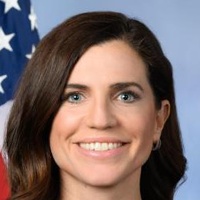
Nancy Mace
Representative
SC
Nancy Mace
Representative
SC
The No Tax Breaks for Sanctuary Cities Act proposes to revoke the tax-exempt status for bonds issued by state or local governments designated as "sanctuary jurisdictions." A sanctuary jurisdiction is defined as one that restricts its officials from sharing immigration status information or complying with federal detainers/release notifications from Homeland Security. This change would apply to bonds issued after the date the Act becomes law.
This resolution formally censures Representative Al Green of Texas for disrupting the 2024 State of the Union address and violating House decorum.
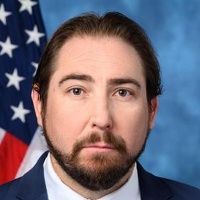
Eli Crane
Representative
AZ
Eli Crane
Representative
AZ
This resolution formally censures Representative Al Green of Texas for disrupting the 2024 State of the Union address. The measure asserts that his actions breached congressional decorum and undermined the dignity of the House. As part of the censure, Representative Green is required to appear in the well of the House to have the resolution read aloud.
This resolution expresses formal condolences to the families and loved ones of the 67 victims of the January 2025 collision between American Eagle Flight 5342 and a U.S. Army flight, while honoring the victims and commending the first responders.
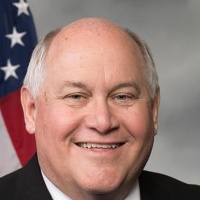
Ron Estes
Representative
KS
Ron Estes
Representative
KS
This resolution expresses the House of Representatives' deepest condolences to the families and loved ones of the 67 individuals who lost their lives in the January 29, 2025, collision of American Eagle Flight 5342 and a U.S. Army flight. It honors the victims, many of whom had strong ties to Wichita, Kansas, and commends the heroic efforts of the first responders and emergency personnel who managed the recovery.
This bill designates English as the official language of the United States, standardizing its use in government functions and naturalization processes, while allowing exceptions for certain circumstances.
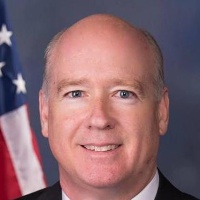
Robert Aderholt
Representative
AL
Robert Aderholt
Representative
AL
The "Designation of English as the Official Language of the United States Act of 2025" establishes English as the official language of the U.S., requiring the government to conduct official business in English and encouraging English language learning. It mandates a uniform English language standard for naturalization, ensuring new citizens can understand core American documents, while also providing exceptions for certain situations like language teaching, national security, and protection of rights. The bill also sets rules for interpreting U.S. laws, favoring interpretations that protect individual rights and state powers, and directs the Secretary of Homeland Security to develop uniform English language testing for citizenship applicants.
The SAFER Voter Act lowers the minimum age to purchase a handgun or handgun ammunition from a Federal firearms licensee to 18 years old.
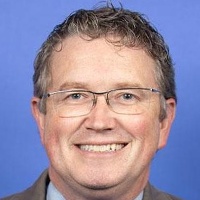
Thomas Massie
Representative
KY
Thomas Massie
Representative
KY
The SAFER Voter Act seeks to eliminate the age restriction that prevents individuals under 21 from purchasing handguns and handgun ammunition from licensed federal firearms dealers. This bill would amend title 18 of the United States Code, specifically sections 922(b)(1) and 922(c)(1), to allow adults 18 and over to purchase handguns.
This bill renames the U.S. National Poultry Research Center in Athens, Georgia, to the "Abit Massey Poultry Research Center".
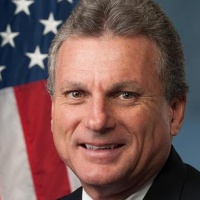
Earl Carter
Representative
GA
Earl Carter
Representative
GA
This bill renames the U.S. National Poultry Research Center in Athens, Georgia, as the "Abit Massey Poultry Research Center." Any reference to the U.S. National Poultry Research Center will now refer to the Abit Massey Poultry Research Center.
This resolution condemns the Iranian regime’s terrorism and human rights abuses while affirming support for the Iranian people’s right to establish a democratic, secular, and non-nuclear republic.
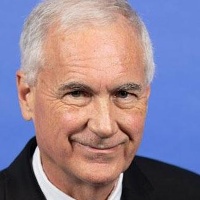
Tom McClintock
Representative
CA
Tom McClintock
Representative
CA
This resolution condemns the Iranian regime for its ongoing human rights abuses, state-sponsored terrorism, and regional instability. It expresses strong support for the Iranian people's struggle for a democratic, secular, and non-nuclear republic. Furthermore, the bill advocates for international accountability for the regime's crimes and calls for the protection of Iranian political refugees.
To award a Congressional Gold Medal to the 761st Tank Battalion, the first Black soldiers to serve in an American armored unit, for their valor and crucial contributions to the Allied victory in Europe.
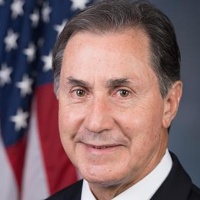
Gary Palmer
Representative
AL
Gary Palmer
Representative
AL
This bill authorizes the Speaker of the House and the President pro tempore of the Senate to award a Congressional Gold Medal to the 761st Tank Battalion, also known as the "Black Panthers," in recognition of their courageous service and crucial contributions during World War II. The medal will be given to the National Museum of African American History and Culture for display, honoring the 761st as the first Black soldiers to serve in an American armored unit and their significant role in the Allied victory in Europe. The bill also allows for the creation and sale of bronze duplicates of the medal to support the United States Mint Public Enterprise Fund.
This bill prohibits tax deductions and credits for marijuana businesses trafficking in controlled substances, aligning federal tax law with the prohibition of marijuana under federal law.
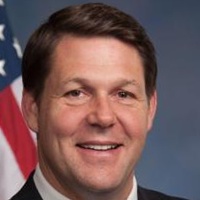
Jodey Arrington
Representative
TX
Jodey Arrington
Representative
TX
The "No Deductions for Marijuana Businesses Act" amends the Internal Revenue Code to prohibit businesses involved in marijuana or controlled substance trafficking from claiming tax deductions or credits for their expenses. This restriction applies regardless of whether the business is violating federal or state law. The change will be effective for expenses paid after the bill is enacted.
This resolution initiates impeachment proceedings against U.S. District Judge Paul A. Engelmayer for alleged high crimes, misdemeanors, and judicial misconduct.
Eli Crane
Representative
AZ
Eli Crane
Representative
AZ
This resolution initiates impeachment proceedings against United States District Judge Paul A. Engelmayer for high crimes and misdemeanors. The bill alleges that Judge Engelmayer abused his judicial authority and demonstrated political bias through specific rulings that restricted executive branch access to Department of the Treasury data. Consequently, the resolution seeks his removal from office for violating his oath and compromising the impartiality of the judiciary.
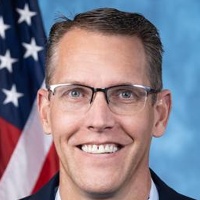
The "Death Tax Repeal Act" eliminates estate and generation-skipping transfer taxes, adjusts gift tax calculations, and sets a $10,000,000 lifetime gift exemption.
Randy Feenstra
Representative
IA
Randy Feenstra
Representative
IA
The "Death Tax Repeal Act" eliminates both estate and generation-skipping transfer taxes, effective from the date of enactment. It adjusts gift tax calculations by setting the lifetime gift exemption at $10,000,000, with inflation adjustments after 2011. The Act also includes transitional rules for applying certain sections of the Internal Revenue Code during the enactment year.
This bill eliminates federal regulations requiring flame mitigation devices and child-resistance standards for portable gas containers.

Chip Roy
Representative
TX
Chip Roy
Representative
TX
The "Gas Can Freedom Act of 2025" repeals the Portable Fuel Container Safety Act of 2020 and the Children's Gasoline Burn Prevention Act, eliminating regulations regarding flame mitigation devices and child-resistance standards for portable gasoline containers. It prohibits the Consumer Product Safety Commission from reinstating similar regulations.
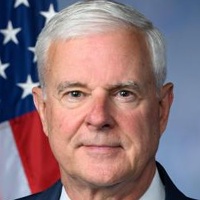
This resolution expresses Congressional opposition to imposing new performance fees or royalties on local radio stations and businesses for broadcasting or playing music.
Steve Womack
Representative
AR
Steve Womack
Representative
AR
The Local Radio Freedom Act expresses Congressional opposition to imposing new performance fees, taxes, or royalties on local radio stations and businesses for playing music. It argues that the current system of free airplay provides essential promotional value to artists and that new fees would threaten the financial viability of local broadcasters and the vital community services they provide.
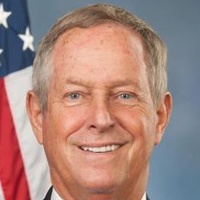
The "National Right-to-Work Act" prohibits mandatory union membership as a condition of employment, protecting employees' rights to choose whether or not to join or support a labor union.
Joe Wilson
Representative
SC
Joe Wilson
Representative
SC
The "National Right-to-Work Act" amends both the National Labor Relations Act and the Railway Labor Act to protect an employee's right to choose whether or not to join or support a labor union. It eliminates the possibility of mandatory union membership or dues payments as a condition of employment, ensuring that employees cannot be forced to join or support a union against their will.