
Legislative Activity
Track Kevin's sponsored bills, co-sponsored legislation, and voting record
This bill mandates the addition of the 74 crew members of the USS Frank E. Evans, killed in action on June 3, 1969, to the Vietnam Veterans Memorial Wall.
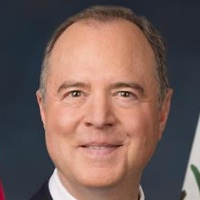
Adam Schiff
Senator
CA
Adam Schiff
Senator
CA
The USS Frank E. Evans Act mandates that the Secretary of Defense add the names of the 74 crew members lost when the USS Frank E. Evans sank on June 3, 1969, to the Vietnam Veterans Memorial Wall. This inclusion must be completed within one year of the Act becoming law. The bill also exempts this specific addition from standard regulations governing commemorative works.
This resolution designates the week of November 3 through November 7, 2025, as National Veterans Small Business Week to recognize the contributions of veteran-owned businesses.

Joni Ernst
Senator
IA
Joni Ernst
Senator
IA
This resolution officially designates the week of November 3 through November 7, 2025, as National Veterans Small Business Week. It recognizes the significant contributions of the over 1.65 million veteran-owned small businesses to the U.S. economy. The bill supports creating a business-friendly environment and expresses appreciation for veterans' continued service through entrepreneurship.
The Safer Supervision Act of 2025 reforms federal supervised release by requiring individualized assessments for imposing supervision, establishing a presumption for early termination based on compliance, clarifying violation standards, and mandating studies on officer pay and post-release services.
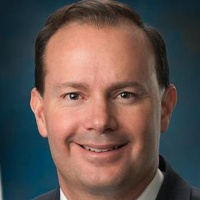
Mike Lee
Senator
UT
Mike Lee
Senator
UT
The Safer Supervision Act of 2025 aims to reform federal supervised release by requiring individualized assessments before imposing supervision and establishing a presumption for early termination based on compliance. The bill also mandates a report on providing law enforcement availability pay to probation officers and allows certain prisoners without supervision terms to apply earned time credits for early release. Finally, it directs the GAO to study federal post-release supervision practices and workforce needs.
This bill ensures the United States Capitol Police receive necessary funding for salaries and expenses in Fiscal Year 2026 if standard appropriations are not enacted by October 1, 2025.

Tim Scott
Senator
SC
Tim Scott
Senator
SC
The Pay Our Capitol Police Act ensures that the United States Capitol Police will continue to receive funding for salaries and essential expenses for Fiscal Year 2026, even if standard appropriations are delayed. This bill provides continuing appropriations to cover excepted employees, emergency workers, and necessary support staff. Funds spent under this Act will be charged against future official appropriations once enacted. The authority granted by this Act terminates on September 30, 2026, or earlier if standard appropriations are passed.
This resolution officially designates November 1, 2025, as National Bison Day to recognize the historical, cultural, and economic significance of the North American bison.
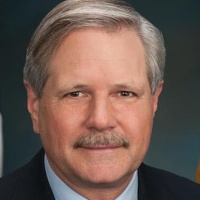
John Hoeven
Senator
ND
John Hoeven
Senator
ND
This resolution officially designates November 1, 2025, as National Bison Day to recognize the historical, cultural, and economic significance of the North American bison. It honors the bison's status as the national mammal, its importance to Indian Tribes, and its role in conservation and rural economies. The resolution encourages nationwide observance of this day annually on the first Saturday of November.
This Act facilitates the expansion of U.S. natural gas exports by streamlining the approval process for trade with most nations, excluding those under U.S. sanctions or designated for national security reasons.

Ted Cruz
Senator
TX
Ted Cruz
Senator
TX
The Natural Gas Export Expansion Act aims to boost domestic natural gas development, job creation, and economic growth by streamlining the approval process for natural gas exports. This bill modifies existing law to generally allow exports to any nation not already excluded. Expedited approval is provided unless a nation is subject to U.S. sanctions or specifically excluded by the President or Congress for national security reasons.
This bill ensures uninterrupted Supplemental Nutrition Assistance Program (SNAP) benefits for fiscal year 2026 by automatically appropriating necessary funds if Congress fails to pass the Department of Agriculture budget.
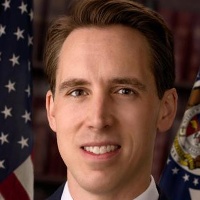
Joshua Hawley
Senator
MO
Joshua Hawley
Senator
MO
The Keep SNAP Funded Act of 2025 ensures that Supplemental Nutrition Assistance Program (SNAP) benefits continue without interruption, even if Congress fails to pass the Department of Agriculture's budget for fiscal year 2026. This legislation authorizes automatic funding from the Treasury to maintain payments and cover any retroactive benefits missed due to the delay. This temporary funding mechanism remains active until the regular fiscal year 2026 appropriations are officially enacted.
This resolution officially recognizes the 250th birthday of the United States Navy, celebrating its history, vital role in national security and global affairs, and expressing profound gratitude to all who have served.

Roger Wicker
Senator
MS
Roger Wicker
Senator
MS
This resolution officially recognizes and celebrates the 250th birthday of the United States Navy, honoring its long history since the Continental Navy. It expresses deep appreciation for the courage and service of all Navy personnel, past and present, who have defended the nation. Furthermore, the resolution reaffirms Congress's commitment to supporting the Navy's vital role in global security, humanitarian aid, and technological advancement.
This resolution recognizes the 250th anniversary of the United States Postal Service, honoring its history, vital role in connecting the nation, and the service of its employees.
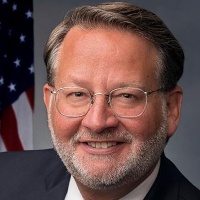
Gary Peters
Senator
MI
Gary Peters
Senator
MI
This resolution formally recognizes the 250th anniversary of the United States Postal Service, acknowledging its vital role in American history and infrastructure since 1775. Congress celebrates the USPS for connecting communities and commerce across the nation for two and a half centuries. The resolution honors current and past postal employees and encourages the public to celebrate this historic milestone.
The Employee Rights Act mandates secret ballot elections for union representation, restricts voting rights for undocumented workers, tightens standards for defining employees and joint employers, limits union spending of dues, and prohibits DEI mandates in collective bargaining agreements.
Tim Scott
Senator
SC
Tim Scott
Senator
SC
The Employee Rights Act mandates that union representation must be chosen through a secret ballot election run by the NLRB, and it prohibits non-lawful workers from voting in union elections. The bill also tightens the definition of an employee versus an independent contractor and limits the use of employee contact information provided for organizing drives. Furthermore, it restricts union dues spending to bargaining activities unless explicit, time-limited written consent is obtained from the employee.
This bill extends the authority for government and private sector cybersecurity information sharing for ten years, renaming the underlying act to the "Protecting America from Cyber Threats Act."
Gary Peters
Senator
MI
Gary Peters
Senator
MI
The Extending Expired Cybersecurity Authorities Act ensures the continuation of vital cybersecurity information sharing between the government and private industry. This bill extends the authority for sharing cyber threat information for an additional ten years, pushing the expiration date from 2025 to 2035. Furthermore, it retroactively applies this extension to prevent any lapse in coverage and officially renames the program to the "Protecting America from Cyber Threats Act."
This resolution condemns the October 7th Hamas terrorist attack, affirms Israel's right to self-defense, and supports an outcome ensuring Israel's survival, the elimination of Hamas, and the release of all hostages.
Joni Ernst
Senator
IA
Joni Ernst
Senator
IA
This resolution formally condemns the brutal Hamas-led terrorist attack on Israel of October 7, 2023, and supports Israel's right to self-defense. It further condemns antisemitic and destructive protests within the United States. Ultimately, the resolution calls for an outcome that ensures Israel's survival, eliminates Hamas's ability to operate, and secures the release of all remaining hostages.
This resolution expresses support for designating October 5 through October 11, 2025, as National 4-H Week to celebrate the organization's impact on youth development.
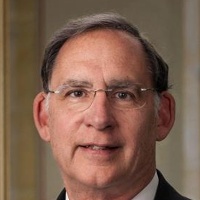
John Boozman
Senator
AR
John Boozman
Senator
AR
This resolution expresses support for designating October 5 through October 11, 2025, as National 4-H Week. It recognizes 4-H as a vital youth development program that empowers millions of young people through hands-on learning. The bill encourages citizens to celebrate the organization's significant impact on developing confident and compassionate leaders.
This resolution designates October 4, 2025, as "National Energy Appreciation Day" to celebrate the U.S. energy workforce and highlight the critical role of the nation's diverse energy sources in supporting the economy, security, and quality of life.
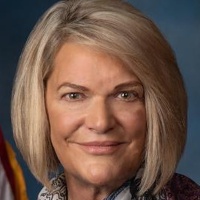
Cynthia Lummis
Senator
WY
Cynthia Lummis
Senator
WY
This resolution officially designates October 4, 2025, as "National Energy Appreciation Day." It celebrates the vital role of the U.S. energy sector in driving the economy, creating jobs, and improving quality of life globally. The bill emphasizes support for an "all-of-the-above" energy strategy, recognizing the contributions of fossil fuels, coal, nuclear, hydro, and renewables. It encourages public events to raise awareness about the importance of reliable and affordable energy.
This resolution designates a week in October 2025 as "Religious Education Week" to affirm the importance of religious education for civic and moral development and encourages states to accommodate students seeking religious instruction.
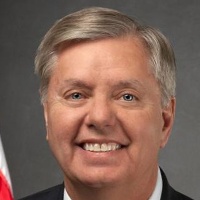
Lindsey Graham
Senator
SC
Lindsey Graham
Senator
SC
This resolution officially designates the week of October 5–11, 2025, as "Religious Education Week" to celebrate the importance of religious education in the United States. It affirms that religious instruction is vital for developing moral and civic citizens, citing historical precedent and Supreme Court rulings that protect parental rights in education. Furthermore, the resolution calls upon states and territories to accommodate students who wish to be released from public school for religious instruction.
This act authorizes the creation and issuance of new circulating and numismatic $2.50 coins to commemorate the Semiquincentennial of the United States.
Cynthia Lummis
Senator
WY
Cynthia Lummis
Senator
WY
This Act authorizes the creation and issuance of a new circulating $2.50 coin to commemorate the 250th anniversary of the United States. The bill also allows the Treasury Secretary to mint special numismatic (collector's) $2.50 coins in precious metals. Both coin types will feature initial designs inspired by the 1926 Sesquicentennial Gold Coin, celebrating American liberty and heritage. Congress hopes these coins will be available by July 4, 2026.
The Safe Step Act establishes mandatory exceptions processes and timelines for group health plans that use step therapy protocols for prescription drugs.

Lisa Murkowski
Senator
AK
Lisa Murkowski
Senator
AK
The Safe Step Act establishes mandatory exception processes for group health plans and insurance issuers that utilize step therapy protocols for prescription drugs. This ensures patients and doctors have a clear, timely pathway to request coverage for medically necessary alternatives when required initial treatments are inappropriate or ineffective. Plans must provide rapid decisions for urgent requests and adhere to specific reporting requirements detailing exception outcomes.
The SHINE for Autumn Act of 2025 aims to improve stillbirth research and data collection through federal grants to states while mandating the creation and publication of public educational guidelines on stillbirth risk factors.
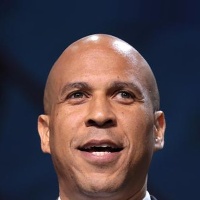
Cory Booker
Senator
NJ
Cory Booker
Senator
NJ
The SHINE for Autumn Act of 2025 aims to significantly improve the national understanding and prevention of stillbirths. It authorizes federal grants to help states enhance stillbirth surveillance, data collection, and analysis, ensuring all collected data remains de-identified. Furthermore, the Act mandates the creation of clear federal guidelines for standardized data collection and the development of public educational materials regarding stillbirth risk factors.
The America’s CHILDREN Act of 2025 creates a path to permanent residency for certain long-term college graduates who entered the U.S. as children and establishes new protections against "aging out" for dependent visa applicants.

Alejandro Padilla
Senator
CA
Alejandro Padilla
Senator
CA
The America’s CHILDREN Act of 2025 establishes a new pathway to permanent residency for certain college graduates who entered the U.S. as long-term dependents of temporary visa holders. It also introduces significant age-out protections, allowing many individuals to retain their original priority dates for visa processing. Furthermore, the bill updates the definition of "child" for immigration purposes and grants work authorization to certain nonimmigrant dependents.
This act ensures that public colleges receiving federal funds cannot deny religious student groups the same rights, benefits, and privileges granted to other student organizations.
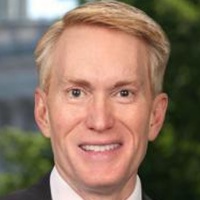
James Lankford
Senator
OK
James Lankford
Senator
OK
The Equal Campus Access Act of 2025 ensures that public colleges receiving federal funding must grant religious student organizations the same rights, benefits, and privileges afforded to all other student groups. This prevents institutions from denying resources or penalizing religious groups based on their beliefs, practices, speech, leadership selection, or conduct standards. Essentially, the bill mandates equal treatment for all student organizations on campus to maintain federal funding eligibility.