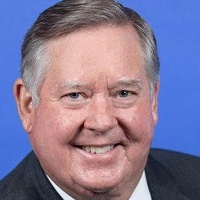
Legislative Activity
Track Ken's sponsored bills, co-sponsored legislation, and voting record
This resolution expresses Congressional opposition to imposing new performance fees or royalties on local radio stations and businesses for broadcasting or playing music.
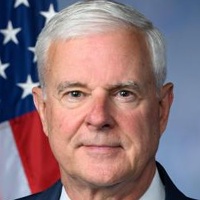
Steve Womack
Representative
AR
Steve Womack
Representative
AR
The Local Radio Freedom Act expresses Congressional opposition to imposing new performance fees, taxes, or royalties on local radio stations and businesses for playing music. It argues that the current system of free airplay provides essential promotional value to artists and that new fees would threaten the financial viability of local broadcasters and the vital community services they provide.
The "More Homes on the Market Act" increases the tax exclusion for profit from the sale of a primary residence, incentivizing homeowners to sell and increasing housing supply.
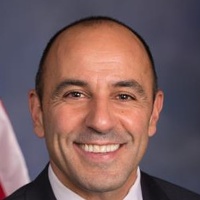
Jimmy Panetta
Representative
CA
Jimmy Panetta
Representative
CA
The "More Homes on the Market Act" increases the tax exclusion for profit from the sale of a primary residence, raising it to $500,000 for single filers and $1,000,000 for married couples filing jointly. These amounts will be adjusted for inflation starting in 2025. This change encourages homeowners to sell their properties, thereby increasing the availability of homes on the market.
The "Death Tax Repeal Act" eliminates estate and generation-skipping transfer taxes, adjusts gift tax calculations, and sets a $10,000,000 lifetime gift exemption.
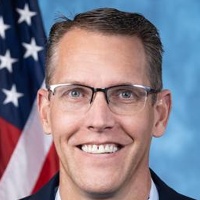
Randy Feenstra
Representative
IA
Randy Feenstra
Representative
IA
The "Death Tax Repeal Act" eliminates both estate and generation-skipping transfer taxes, effective from the date of enactment. It adjusts gift tax calculations by setting the lifetime gift exemption at $10,000,000, with inflation adjustments after 2011. The Act also includes transitional rules for applying certain sections of the Internal Revenue Code during the enactment year.
Protects water and wastewater treatment facilities from CERCLA liability for PFAS releases if they comply with applicable laws and are not grossly negligent.
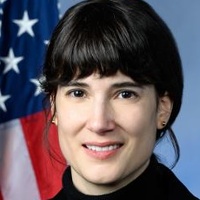
Marie Gluesenkamp Perez
Representative
WA
Marie Gluesenkamp Perez
Representative
WA
The "Water Systems PFAS Liability Protection Act" shields water and wastewater treatment facilities from CERCLA liability for PFAS releases if they comply with applicable laws and handle PFAS during or after water treatment. This protection covers specific non-polymeric PFAS and applies to public water systems, treatment works, and related entities. The exemption does not apply in cases of gross negligence or willful misconduct.
The "National Right-to-Work Act" prohibits mandatory union membership as a condition of employment, protecting employees' rights to choose whether or not to join or support a labor union.
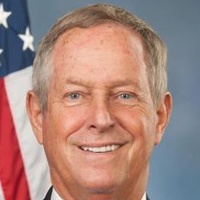
Joe Wilson
Representative
SC
Joe Wilson
Representative
SC
The "National Right-to-Work Act" amends both the National Labor Relations Act and the Railway Labor Act to protect an employee's right to choose whether or not to join or support a labor union. It eliminates the possibility of mandatory union membership or dues payments as a condition of employment, ensuring that employees cannot be forced to join or support a union against their will.
Extends federal death benefits to retired law enforcement officers who die or are disabled from targeted attacks related to their service.
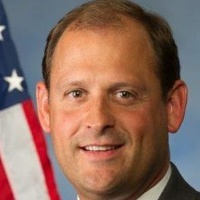
Garland Barr
Representative
KY
Garland Barr
Representative
KY
The "Chief Herbert D. Proffitt Act of 2025" amends the Omnibus Crime Control and Safe Streets Act of 1968 to extend death benefits to retired law enforcement officers who die or are disabled from targeted attacks due to their service. The bill applies retroactively to pending matters before the Bureau of Justice Assistance, or those filed/accruing after the enactment date, with exceptions for actions against retired law enforcement officers that occurred on or after August 28, 2012.
The SAFE for America Act of 2025 eliminates the diversity visa program, effective October 1, 2025.
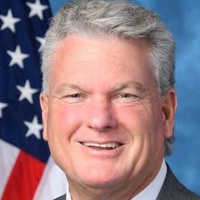
Mike Collins
Representative
GA
Mike Collins
Representative
GA
The SAFE for America Act of 2025 eliminates the Diversity Visa Program, which makes visas available to persons from countries with low rates of immigration to the United States. This is achieved through repealing subsection (c) of Section 203 of the Immigration and Nationality Act. The Act also makes corresponding technical amendments to other sections of the Immigration and Nationality Act to reflect this change. These changes would take effect beginning October 1, 2025.
This bill prohibits unauthorized workers' wages and self-employment income from being used to calculate Social Security benefits.
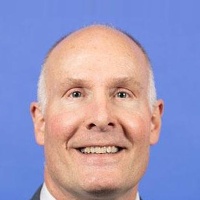
John Moolenaar
Representative
MI
John Moolenaar
Representative
MI
The "No Social Security for Illegal Aliens Act of 2025" amends the Social Security Act to exclude wages and self-employment income earned by unauthorized aliens in the U.S. from being used to calculate Social Security benefits. This change applies to income earned both before, on, and after the law's enactment, with benefit adjustments taking effect after enactment. The Social Security Administration will recalculate insurance amounts to reflect these changes.
The "Freedom to Invest in Tomorrow's Workforce Act" expands the use of 529 savings accounts to cover expenses related to postsecondary credentialing programs, including tuition, fees, books, supplies, equipment, and testing fees.
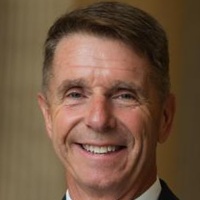
Robert Wittman
Representative
VA
Robert Wittman
Representative
VA
The "Freedom to Invest in Tomorrow's Workforce Act" amends Section 529 savings accounts to include expenses related to postsecondary credentialing programs. This allows 529 funds to cover costs like tuition, fees, books, supplies, and testing fees for recognized programs and credentials, as defined by the bill. These changes would apply to distributions made after the bill is enacted.
The Safe Passage on Interstates Act of 2025 establishes federal criminal penalties for individuals who knowingly obstruct, interfere with, or endanger the normal flow of traffic on interstate highways.
Mike Collins
Representative
GA
Mike Collins
Representative
GA
The Safe Passage on Interstates Act of 2025 establishes federal criminal penalties for knowingly obstructing or interfering with the normal use of an interstate highway. The bill imposes significant fines and prison sentences for activities that delay traffic, endanger motorists, or impede emergency vehicles. Lawful activities authorized by government entities remain exempt from these prohibitions.
The CONSTRUCTS Act of 2025 establishes a grant program for community colleges and trade schools to expand residential construction training, with a focus on serving rural and underserved populations.
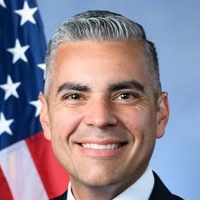
Juan Ciscomani
Representative
AZ
Juan Ciscomani
Representative
AZ
The CONSTRUCTS Act of 2025 establishes a competitive grant program to expand education and training for careers in the residential construction industry. By providing $20 million annually, the bill supports community colleges and trade schools in developing skilled labor pipelines, with a priority on serving rural and underserved populations. These programs aim to increase the supply of qualified workers while helping to address local housing needs through flexible, industry-aligned training.
The Marc Fischer Memorial Act mandates the implementation of a comprehensive digital mail scanning strategy across all federal prisons to detect and interdict synthetic drugs like fentanyl.
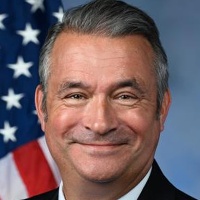
Don Bacon
Representative
NE
Don Bacon
Representative
NE
The Marc Fischer Memorial Act mandates that the Bureau of Prisons implement a comprehensive strategy to achieve 100% digital scanning of all inmate mail to interdict fentanyl and other synthetic drugs. By transitioning to digital mail processing, the Act aims to protect staff and inmates from lethal exposure, improve institutional security, and alleviate the administrative burden on correctional personnel.
This resolution condemns the wrongful detention and mistreatment of Dr. Gubad Ibadoghlu by the Azerbaijani government and calls for his immediate and unconditional release.
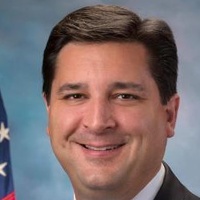
David Rouzer
Representative
NC
David Rouzer
Representative
NC
This resolution condemns the Government of Azerbaijan for the wrongful detention, abuse, and suppression of academic freedom regarding Dr. Gubad Ibadoghlu. It demands his immediate and unconditional release, the provision of necessary medical care, and an end to the harassment of his family. Furthermore, it urges the U.S. Secretary of State to prioritize Dr. Ibadoghlu’s well-being and release in all diplomatic engagements.
The Fair Access to Banking Act prohibits large financial institutions and payment networks from denying services to law-abiding businesses based on subjective, non-financial, or political criteria.
Garland Barr
Representative
KY
Garland Barr
Representative
KY
The Fair Access to Banking Act prohibits large financial institutions and payment networks from denying services to law-abiding businesses based on subjective, politically motivated, or reputational criteria. The bill mandates that financial institutions use impartial, quantitative, risk-based standards to evaluate customers rather than category-based exclusions. To ensure compliance, the legislation establishes enforcement mechanisms through federal regulators and provides a legal pathway for businesses to sue for damages if they are unfairly denied access to financial services.
The Educational Choice for Children Act of 2025 establishes federal tax credits for contributions to scholarship-granting organizations, providing lower- and middle-income families with financial support for K–12 educational expenses.
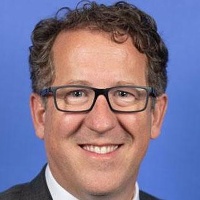
Adrian Smith
Representative
NE
Adrian Smith
Representative
NE
The Educational Choice for Children Act of 2025 establishes federal tax credits for individuals and corporations that contribute to scholarship-granting organizations. These organizations provide K–12 education scholarships to students from lower- and middle-income households to cover tuition, tutoring, and other qualified educational expenses. The bill also protects the autonomy of participating schools and scholarship organizations from government interference while ensuring that scholarship funds remain tax-free for recipient families.
This bill prohibits states from accepting or utilizing private funding, donations, or services for the administration of federal elections, with a limited exception for the use of donated polling space.
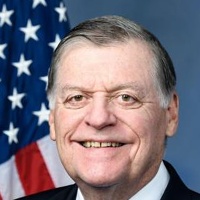
Tom Cole
Representative
OK
Tom Cole
Representative
OK
The Protect American Election Administration Act of 2025 prohibits state and local governments from accepting or spending private donations to fund the administration of federal elections, including voter outreach and registration activities. While it provides a limited exception for the donation of physical polling space, the bill mandates that all other election-related costs be covered by public funds. This legislation aims to ensure election integrity by enforcing these restrictions through the Help America Vote Act.
The Born-Alive Abortion Survivors Protection Act requires health care practitioners to provide the same level of care to infants born alive after an abortion attempt as they would to any other newborn, mandating immediate hospitalization and imposing penalties for violations, while protecting the mother from prosecution. It also allows the mother of a child born alive to file a civil action against anyone who violated the act.
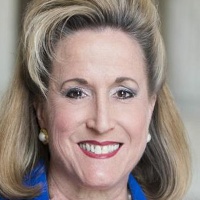
Ann Wagner
Representative
MO
Ann Wagner
Representative
MO
The "Born-Alive Abortion Survivors Protection Act" ensures that infants born alive after an abortion receive the same medical care as any other newborn, mandating immediate hospitalization and requiring healthcare practitioners to report any failures to comply. Violators face fines, imprisonment, and potential prosecution for homicide or attempted homicide, while the mother of the child cannot be prosecuted. The bill also allows the woman who had the abortion to file a civil action against anyone who violated the act. It defines abortion and attempts at abortion, and renames "Partial-Birth Abortions" to "Abortions" in relevant sections of the U.S. Code.
The "Fix Our Forests Act" aims to reduce wildfire risks, improve forest health, and support communities by focusing on landscape-scale restoration, protecting wildland-urban interface areas, and enhancing transparency and technology in forest management. It also establishes a casualty assistance program for wildland firefighters and their families.
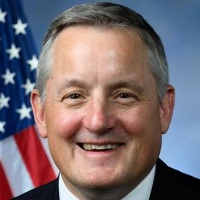
Bruce Westerman
Representative
AR
Bruce Westerman
Representative
AR
The "Fix Our Forests Act" aims to improve forest management and wildfire resilience through landscape-scale restoration, community protection in wildland-urban interfaces, and enhanced transparency and technology. It establishes programs for wildfire risk reduction, reforestation, and biochar development, while also focusing on restoring white oak populations and supporting the families of firefighters. The act streamlines project approvals, encourages collaboration, and implements litigation reforms to expedite forest management activities. Additionally, it creates a casualty assistance program for firefighters and support personnel who are seriously injured, become ill, or die while on duty.
The Main Street Tax Certainty Act makes the 20% pass-through business income deduction permanent by removing its scheduled expiration after 2025.
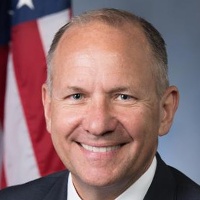
Lloyd Smucker
Representative
PA
Lloyd Smucker
Representative
PA
The Main Street Tax Certainty Act makes the 20% pass-through business income deduction permanent. By removing the current 2025 expiration date, this legislation ensures long-term tax relief for owners of qualified pass-through entities.
This bill proposes a constitutional amendment to permanently set the number of Supreme Court justices at nine, requiring ratification by three-fourths of the states within seven years.
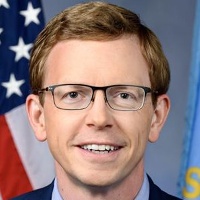
Dusty Johnson
Representative
SD
Dusty Johnson
Representative
SD
This bill proposes a constitutional amendment to fix the number of Supreme Court justices at nine. For this amendment to be valid, three-fourths of the state legislatures must ratify it within seven years of its submission.