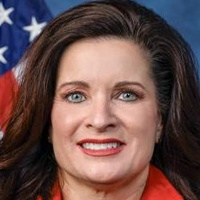
Legislative Activity
Track Sheri's sponsored bills, co-sponsored legislation, and voting record
This bill prohibits federal funding or support for research using human fetal tissue obtained from induced abortions while permitting research using tissue from miscarriages or stillbirths under updated guidelines.
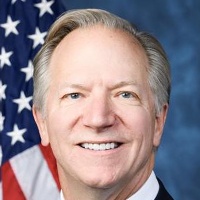
Robert Onder
Representative
MO
Robert Onder
Representative
MO
The Protecting Life and Integrity in Research Act of 2025 bans all federal funding or support for research utilizing human fetal tissue obtained specifically from an induced abortion. The bill permits federal research on tissue derived from miscarriages or stillbirths, provided it adheres to updated Public Health Service Act guidelines. Furthermore, it prohibits the solicitation or knowing acceptance of human fetal tissue donations if the donor knows the tissue resulted from an induced abortion or was procured for that purpose. This legislation also repeals an existing law concerning NIH revitalization.
Designates April 5, 2025, as "Barth Syndrome Awareness Day" to raise awareness, encourage research, and support those affected by this rare genetic disorder.
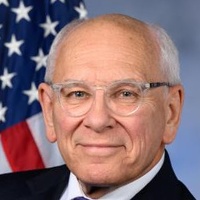
Paul Tonko
Representative
NY
Paul Tonko
Representative
NY
This bill supports the designation of April 5, 2025, as "Barth Syndrome Awareness Day" to raise awareness, encourage early diagnosis, and promote research for this rare and life-threatening genetic disorder. It recognizes the challenges in diagnosis and treatment, while also acknowledging the role of the Orphan Drug Act and the importance of patient perspectives. The bill aims to advance research, develop new treatments, and improve regulatory pathways for ultra-rare diseases like Barth syndrome.
The GUARD Act prohibits states from receiving federal funding if they discriminate against parents or guardians who oppose gender identity interventions for minors that do not align with their biological sex at birth.
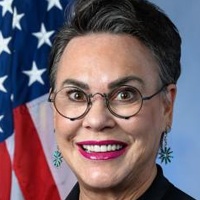
Harriet Hageman
Representative
WY
Harriet Hageman
Representative
WY
The GUARD Act amends the Child Abuse Prevention and Treatment Act to protect the rights of parents or guardians to oppose gender identity affirmation interventions for minors whose gender identity is inconsistent with their biological sex. States that discriminate against these parents or guardians will not receive federal funding. Parents or guardians who experience discrimination can sue the Department of Health and Human Services to stop funding to the state.
Prohibits federal funding to the United Nations' immigration and refugee relief organizations IOM, UNHCR, and UNRWA, and requires a study and audit of past funding.
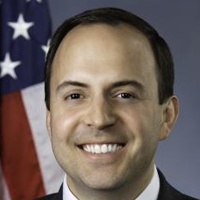
Lance Gooden
Representative
TX
Lance Gooden
Representative
TX
The "No Tax Dollars for the United Nations Immigration Invasion Act" prohibits the U.S. government from financially contributing to the United Nations International Organization for Migration (IOM), the United Nations High Commissioner for Refugees (UNHCR), and the United Nations Relief and Works Agency for Palestine Refugees in the Near East (UNRWA). It also mandates a study by the Comptroller General to identify all federal assistance programs that provide funds to these organizations, detailing amounts, restrictions, and potential repayments, as well as an audit of the Department of State’s Refugee Travel Loan Program. A report summarizing the study and audit results must be submitted to Congress within 180 days of the Act's enactment.
The "Federal Firearms Licensee Protection Act of 2025" increases penalties for stealing firearms from licensed dealers, manufacturers, or importers, especially during burglaries or robberies, and clarifies related definitions.
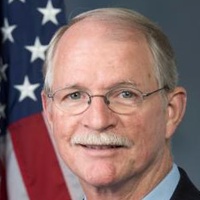
John Rutherford
Representative
FL
John Rutherford
Representative
FL
The "Federal Firearms Licensee Protection Act of 2025" increases penalties for stealing firearms from licensed dealers. It sets stricter punishments, including up to 20 years in prison, for violating laws related to firearm theft. The act also mandates minimum prison sentences of 3 years for burglaries and 5 years for robberies targeting licensed firearm businesses.
The "End FEMA Benefits for Illegal Immigrants Act" terminates FEMA's program that funds shelter services for individuals awaiting immigration processing and redirects unspent funds.
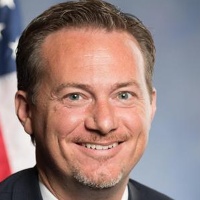
Michael Cloud
Representative
TX
Michael Cloud
Representative
TX
The "End FEMA Benefits for Illegal Immigrants Act" terminates FEMA's program that funds shelters and services for migrants, which aimed to reduce overcrowding in Customs and Border Protection facilities. It also rescinds any remaining funds allocated to FEMA from previous appropriations acts that were intended for Customs and Border Protection operations.
This resolution condemns the Iranian regime’s terrorism and human rights abuses while affirming support for the Iranian people’s right to establish a democratic, secular, and non-nuclear republic.
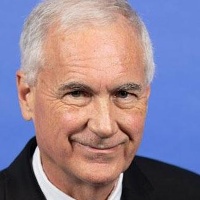
Tom McClintock
Representative
CA
Tom McClintock
Representative
CA
This resolution condemns the Iranian regime for its ongoing human rights abuses, state-sponsored terrorism, and regional instability. It expresses strong support for the Iranian people's struggle for a democratic, secular, and non-nuclear republic. Furthermore, the bill advocates for international accountability for the regime's crimes and calls for the protection of Iranian political refugees.
The Cyber PIVOTT Act establishes a CISA-led program providing full scholarships, internships, and skills-based training at community and technical colleges to build a qualified, service-oriented cybersecurity workforce.
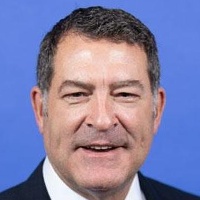
Mark Green
Representative
TN
Mark Green
Representative
TN
The Cyber PIVOTT Act establishes a CISA-led program to build a skilled cybersecurity workforce by providing full scholarships, internships, and hands-on training to students at community colleges and technical schools. Participants receive comprehensive financial support in exchange for a two-year service obligation in a cyber-related role within government or critical infrastructure. The bill aims to rapidly scale the cyber talent pipeline through partnerships with educational institutions and targeted federal recruitment initiatives.
The SCREEN Act requires online platforms that host or provide pornographic content to implement technology to verify users' ages and prevent minors from accessing harmful material.
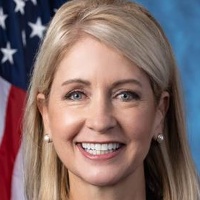
Mary Miller
Representative
IL
Mary Miller
Representative
IL
The SCREEN Act requires online platforms that host or provide pornographic content to implement technology verification measures to prevent minors from accessing harmful material. It mandates that these platforms use reliable age verification methods, undergo regular audits by the Federal Trade Commission (FTC) to ensure compliance, and protect user data collected during the verification process. The FTC is responsible for enforcing the Act, and the Government Accountability Office (GAO) must report to Congress on the effectiveness and impact of these measures. This act aims to protect children from the harmful effects of online pornography.
This resolution establishes uniform standards and oversight for the authorized display of flags within House of Representatives facilities.
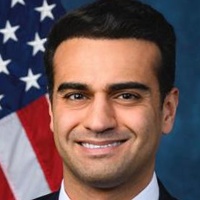
Abraham Hamadeh
Representative
AZ
Abraham Hamadeh
Representative
AZ
This resolution establishes uniform standards for the display of flags within House of Representatives facilities, excluding individual Members' personal offices. It explicitly defines the authorized flags permitted for display and designates the Committee on House Administration and the Sergeant at Arms to oversee compliance and manage temporary exceptions.
To award a Congressional Gold Medal to the 761st Tank Battalion, the first Black soldiers to serve in an American armored unit, for their valor and crucial contributions to the Allied victory in Europe.
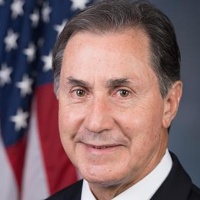
Gary Palmer
Representative
AL
Gary Palmer
Representative
AL
This bill authorizes the Speaker of the House and the President pro tempore of the Senate to award a Congressional Gold Medal to the 761st Tank Battalion, also known as the "Black Panthers," in recognition of their courageous service and crucial contributions during World War II. The medal will be given to the National Museum of African American History and Culture for display, honoring the 761st as the first Black soldiers to serve in an American armored unit and their significant role in the Allied victory in Europe. The bill also allows for the creation and sale of bronze duplicates of the medal to support the United States Mint Public Enterprise Fund.
Prohibits the purchase of real estate near U.S. federal lands by agents or businesses associated with the government of the People's Republic of China with 25% or more equity interest.
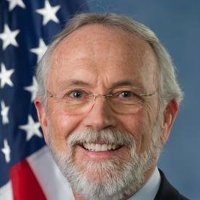
Dan Newhouse
Representative
WA
Dan Newhouse
Representative
WA
The "No American Land for Communist China Act" prohibits the President from allowing individuals or entities associated with the Chinese government from purchasing real estate near covered federal lands. Covered lands include those managed by the Departments of Interior, Defense, Agriculture (Forest Service), and Energy, as well as Indian country. This restriction applies to entities with at least 25% equity interest held by Chinese government-affiliated individuals or businesses. The Act defines "United States" broadly to include states, territories, and other U.S. possessions.
This bill adds the Secretary of Agriculture to the Committee on Foreign Investment in the United States (CFIUS) and requires CFIUS to review agricultural land transactions, especially those involving entities from China, North Korea, Russia, or Iran.
Dan Newhouse
Representative
WA
Dan Newhouse
Representative
WA
The "Protecting American Agriculture from Foreign Adversaries Act of 2025" adds the Secretary of Agriculture to the Committee on Foreign Investment in the United States (CFIUS) for agricultural matters. It mandates CFIUS review of agricultural land transactions, particularly those involving entities from China, North Korea, Russia, or Iran, to safeguard American agriculture. This ensures scrutiny of foreign investments in agricultural land and related industries, addressing potential threats to national security. The requirements for a specific country will end if that country is removed from the list of foreign adversaries in section 791.4 of title 15, Code of Federal Regulations.
The "DOC Access Act of 2025" aims to improve dental and vision care coverage by ensuring fair payment practices, protecting providers' choices, and upholding state regulatory authority.
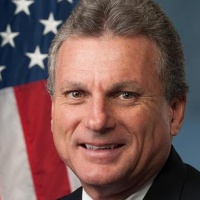
Earl Carter
Representative
GA
Earl Carter
Representative
GA
The "DOC Access Act of 2025" aims to enhance health care coverage under vision and dental plans by ensuring fair payment practices, protecting doctors' choices in labs and suppliers, and respecting state laws. It allows optometrists and dentists to charge their standard rate for non-covered services if the plan's payment is unreasonable, while ensuring they can only charge the contracted rate for dental cleanings. The bill also gives doctors more control over agreement extensions with limited benefit plans and allows them to opt out of certain provisions. Ultimately, this act seeks to balance federal guidelines with state oversight in regulating health insurance issuers and dental or vision benefit plans.
Prohibits the EPA from using its Integrated Risk Information System program to create regulations, carry out enforcement, or inform air toxics assessments.
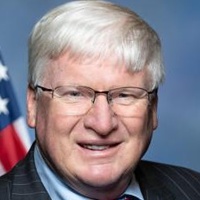
Glenn Grothman
Representative
WI
Glenn Grothman
Representative
WI
The "No Industrial Restrictions in Secret Act of 2025" or "No IRIS Act of 2025" prevents the EPA Administrator from utilizing assessments produced by the EPA's Integrated Risk Information System program. This prohibition extends to developing regulations, enforcement actions, permitting, and informing air toxics assessments.
The Agent Raul Gonzalez Officer Safety Act establishes federal criminal penalties and immigration consequences for individuals who use a motor vehicle to evade law enforcement near the U.S. border.
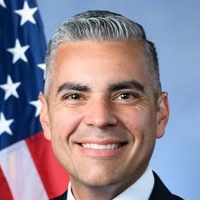
Juan Ciscomani
Representative
AZ
Juan Ciscomani
Representative
AZ
The Agent Raul Gonzalez Officer Safety Act establishes a new federal criminal offense for using a motor vehicle to evade law enforcement near the U.S. border, with penalties increasing significantly if the act results in injury or death. Additionally, the bill mandates that non-citizens convicted of this offense are inadmissible to the U.S., subject to deportation, and ineligible for immigration relief such as asylum. The legislation also requires the Attorney General to submit annual reports to Congress detailing enforcement data and prosecution outcomes.
This resolution expresses Congressional opposition to imposing new performance fees or royalties on local radio stations and businesses for broadcasting or playing music.
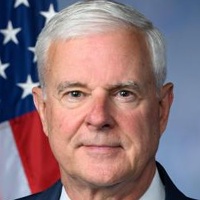
Steve Womack
Representative
AR
Steve Womack
Representative
AR
The Local Radio Freedom Act expresses Congressional opposition to imposing new performance fees, taxes, or royalties on local radio stations and businesses for playing music. It argues that the current system of free airplay provides essential promotional value to artists and that new fees would threaten the financial viability of local broadcasters and the vital community services they provide.
This Act establishes a three-year pilot program to offer donated-fund supported hyperbaric oxygen therapy for veterans with TBI or PTSD and extends certain pension payment limits.
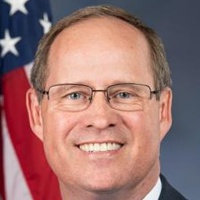
Gregory Murphy
Representative
NC
Gregory Murphy
Representative
NC
This Act establishes a three-year pilot program to provide hyperbaric oxygen therapy (HBOT) to veterans suffering from traumatic brain injury (TBI) or PTSD, funded solely through donations. It also mandates an updated Government Accountability Office (GAO) report assessing recent clinical trials on HBOT for these conditions. Finally, the bill extends the expiration date for certain limitations on veteran pension payments.
The "Death Tax Repeal Act" eliminates estate and generation-skipping transfer taxes, adjusts gift tax calculations, and sets a $10,000,000 lifetime gift exemption.
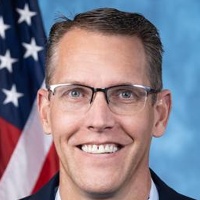
Randy Feenstra
Representative
IA
Randy Feenstra
Representative
IA
The "Death Tax Repeal Act" eliminates both estate and generation-skipping transfer taxes, effective from the date of enactment. It adjusts gift tax calculations by setting the lifetime gift exemption at $10,000,000, with inflation adjustments after 2011. The Act also includes transitional rules for applying certain sections of the Internal Revenue Code during the enactment year.
The "Women’s Protection in Telehealth Act" excludes providers who prescribe abortion-inducing drugs via telehealth from participating in Medicare, requiring in-person examinations and follow-up visits.
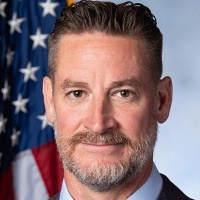
W. Steube
Representative
FL
W. Steube
Representative
FL
The Women's Protection in Telehealth Act amends the Social Security Act to exclude individuals or entities from Medicare if they provide abortion-inducing drugs via telehealth. To be eligible for Medicare, a physician must physically examine the patient, be present during the drug's administration, and schedule an in-person follow-up within 14 days. This exclusion is permanent and not subject to standard waivers.