Legislative Activity
Track Nicholas's sponsored bills, co-sponsored legislation, and voting record
This act reauthorizes the Young Fishermen's Development Act through fiscal year 2031.
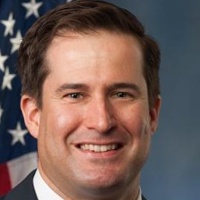
Seth Moulton
Representative
MA
Seth Moulton
Representative
MA
This act reauthorizes the Young Fishermen's Development Act through fiscal year 2031. It is named in honor of Captain Accursio “Gus” Sanfilippo.
The FERRIES Act authorizes and appropriates significant long-term federal funding to modernize passenger ferry fleets, improve terminal infrastructure, and expand essential ferry services for urban and rural communities.
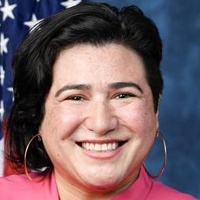
Emily Randall
Representative
WA
Emily Randall
Representative
WA
The FERRIES Act authorizes and provides significant new funding from 2027 through 2031 to modernize, expand, and sustain passenger ferry services across the United States. This legislation strengthens critical infrastructure by increasing support for ferry boat construction, urban transit programs, rural connectivity, and fleet modernization. By establishing permanent grant programs and providing dedicated appropriations, the bill aims to improve the reliability and efficiency of essential maritime transportation.
This bill prohibits federal agencies from providing funding or support for the creation or maintenance of state-level firearm ownership databases, with exceptions for records of lost or stolen weapons.

Paul Gosar
Representative
AZ
Paul Gosar
Representative
AZ
The Gun Owner Registration Information Protection Act prohibits federal agencies from providing funding or support for the creation and maintenance of state-level firearm ownership databases. This legislation ensures that federal resources cannot be used to track lawful gun owners, with a specific exception for databases tracking lost or stolen firearms.
This bill directs the Comptroller General to review the Coast Guard's budget and capabilities for its role as the Sector Risk Management Agency for the marine transportation system's cybersecurity.
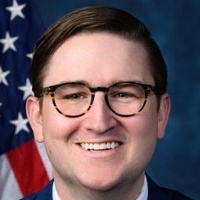
Addison McDowell
Representative
NC
Addison McDowell
Representative
NC
This bill, the MTS CYBER Act of 2026, directs the Comptroller General to review the budget, resources, and capabilities of the Coast Guard in its role as a Sector Risk Management Agency for the marine transportation system. The review will assess whether the Coast Guard has sufficient funding and personnel to enforce new cybersecurity regulations protecting critical maritime infrastructure. The resulting report will provide Congress with recommendations to ensure the Coast Guard can effectively mitigate cyber threats to the nation's vital maritime trade.
This bill exempts specific less-than-lethal projectile devices from federal firearm restrictions, excise taxes, and National Firearms Act regulations to promote de-escalation innovation in law enforcement.
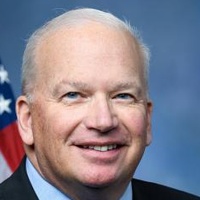
Scott Fitzgerald
Representative
WI
Scott Fitzgerald
Representative
WI
The Law-Enforcement Innovate to De-Escalate Act aims to promote de-escalation by exempting specific, clearly defined less-than-lethal projectile devices from federal firearm restrictions and excise taxes. This legislation provides a formal process for determining which devices qualify for these exemptions under both federal law and the National Firearms Act. The bill also modernizes tax regulations by exempting qualifying less-than-lethal devices and their ammunition from federal excise taxes.
The SAFE Act mandates a GAO study on "chameleon carriers" and requires the FMCSA to develop an advanced automated tool to detect them during the DOT registration process.
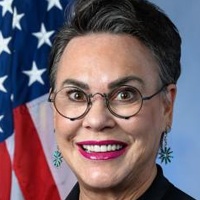
Harriet Hageman
Representative
WY
Harriet Hageman
Representative
WY
The Safety and Accountability in Freight Enforcement (SAFE) Act aims to combat "chameleon carriers" who evade safety regulations and enforcement actions. It mandates a GAO study on the prevalence and impact of these carriers and requires the FMCSA to develop an advanced automated tool to detect them during the DOT registration process. The bill ensures human oversight remains in final registration decisions and establishes reporting requirements on the tool's effectiveness.
This Act mandates increased transparency, efficiency, and updated guidance for the FAA's aircraft certification process while affirming U.S. leadership in aviation innovation.
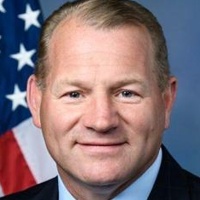
Troy Nehls
Representative
TX
Troy Nehls
Representative
TX
The Aviation Innovation and Global Competitiveness Act aims to enhance the safety and efficiency of the FAA's aircraft certification process. It mandates increased transparency, establishes standard expected timelines for key certification milestones, and updates guidance on delegating certification work to industry. Ultimately, the bill seeks to solidify U.S. global leadership in aviation innovation by streamlining regulatory procedures.
This act streamlines the permitting process for undersea fiber optic cables in national marine sanctuaries and broadens the scope of activities eligible for sanctuary special use permits.
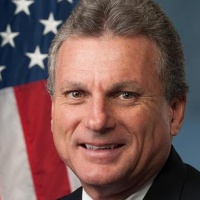
Earl Carter
Representative
GA
Earl Carter
Representative
GA
The Undersea Cable Protection Act of 2025 streamlines the installation and operation of undersea fiber optic cables in national marine sanctuaries. It prevents the Secretary of Commerce from imposing duplicative permitting requirements if federal or state authorization is already secured. Additionally, the bill removes previous restrictions on the types of activities that can be covered by sanctuary special use permits.
This bill authorizes the minting of special $2.50 commemorative coins for the 250th anniversary of the Declaration of Independence and mandates a study on the feasibility of issuing a $2.50 coin for general circulation.
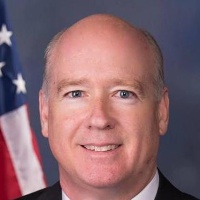
Robert Aderholt
Representative
AL
Robert Aderholt
Representative
AL
This act establishes the "$2.50 for America's 250th Act" to commemorate the 250th anniversary of the Declaration of Independence. It authorizes the Treasury to mint and issue special commemorative gold, silver, and clad $2.50 coins featuring designs from the 1926 Sesquicentennial coin. Additionally, the bill mandates a study on the feasibility of minting and issuing a $2.50 coin for wide circulation.
This bill mandates that Federally-qualified health centers receive the full 340B discounted drug price upfront at the point of purchase, prohibiting post-purchase price adjustments.
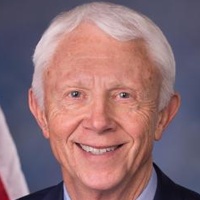
Jack Bergman
Representative
MI
Jack Bergman
Representative
MI
The Community Health Center Drug Pricing Protection Act ensures that Federally-qualified health centers (FQHCs) receive the full 340B discounted price for drugs at the point of purchase. This legislation prohibits manufacturers from requiring FQHCs to pay more than the established ceiling price upfront, regardless of any later rebates or reimbursements. The goal is to guarantee immediate, upfront savings for these vital health centers.
This Act establishes a national policy to achieve dominance in hardrock mineral production by analyzing import reliance, expediting domestic mining projects on federal lands, and reviewing burdensome regulations.
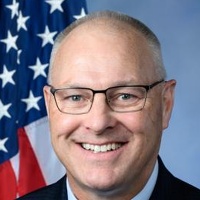
Pete Stauber
Representative
MN
Pete Stauber
Representative
MN
The Critical Mineral Dominance Act establishes a national policy to make the U.S. the world's leading producer of hardrock minerals to strengthen supply chains and national security. The bill mandates economic impact reports on mineral import reliance and directs the expedited approval of priority mining projects on federal lands. Furthermore, it requires identifying all federal lands with hardrock mineral potential and reviewing regulations that impede domestic mining development.
This bill mandates that unspent federal agency funds be split, with most going to debt reduction, some rolled over for one year, and a small portion used for employee retention bonuses, while also limiting future budget requests.
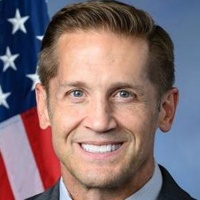
Rich McCormick
Representative
GA
Rich McCormick
Representative
GA
The Incentivize Savings Act mandates how federal agencies must handle unspent appropriations by dedicating the majority to debt reduction and allowing a portion for employee retention bonuses. This legislation also restricts future budget requests to only account for inflation unless the agency fully spends its prior allocation. Ultimately, the bill aims to encourage fiscal responsibility by linking unspent funds to debt reduction and limiting budget growth.
This bill establishes federal standards for voter identification, registration, election administration, and mail-in ballot procedures for federal elections.
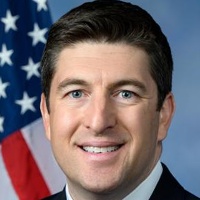
Bryan Steil
Representative
WI
Bryan Steil
Representative
WI
The Make Elections Great Again Act establishes new federal standards for voter identification, citizenship verification for registration, and statewide voter list maintenance for federal elections. It also standardizes election administration by mandating paper ballots, banning ranked-choice voting, and implementing strict new rules for requesting and returning mail-in ballots. The bill aims to increase election integrity through enhanced documentation and procedural uniformity across states.
This bill mandates proof of U.S. citizenship for federal voter registration and requires photo identification showing citizenship status for voting in federal elections.

Chip Roy
Representative
TX
Chip Roy
Representative
TX
The Safeguard American Voter Eligibility Act (SAVE America Act) mandates that individuals must provide documentary proof of U.S. citizenship to register to vote in federal elections. It also establishes a federal requirement for voters to present a photo ID indicating U.S. citizenship when casting a ballot in federal elections. The bill outlines specific acceptable forms of proof and requires states to implement verification programs to ensure only citizens are registered and voting.
This bill mandates improved staffing coordination and reporting for Center Weather Service Units to enhance aviation safety.
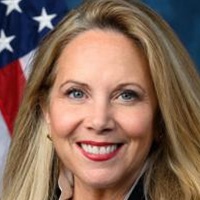
Laura Gillen
Representative
NY
Laura Gillen
Representative
NY
The Aviation Weather Safety Improvement Act focuses on enhancing aviation safety by ensuring adequate staffing at Center Weather Service Units. It mandates coordination between the Department of Transportation, the National Weather Service, the FAA, and employee unions to meet staffing needs for safe air commerce. The bill also requires annual reports to Congress detailing the implementation of these new staffing coordination requirements.
This Act mandates that federal agencies use specific sex-based terms like "female" or "mother" instead of "birthing person" in official communications.
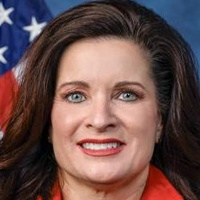
Sheri Biggs
Representative
SC
Sheri Biggs
Representative
SC
The Protecting Motherhood Act mandates that federal agencies use specific, sex-based terminology such as "mother," "woman," or "female" instead of the term "birthing person" in all official documents. This legislation defines the required terms to ensure consistency in federal communications regarding pregnancy and parenthood.
This bill increases federal financial reporting thresholds for currency transactions and suspicious activity, mandates periodic inflation adjustments, and extends the congressional testimony requirement for the Director of FinCEN.
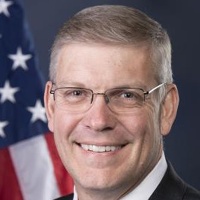
Barry Loudermilk
Representative
GA
Barry Loudermilk
Representative
GA
The Financial Reporting Threshold Modernization Act increases the dollar thresholds for mandatory currency transaction and suspicious activity reports to reduce administrative burdens on financial institutions. The bill also mandates periodic inflation adjustments for these thresholds and requires the Treasury Department to review and modernize reporting forms to improve efficiency. Additionally, it extends the requirement for the FinCEN Director to provide annual testimony before Congress.
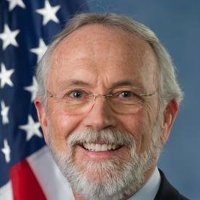
This bill allows the Federal Energy Regulatory Commission to grant up to a six-year extension for commencing construction on certain hydropower projects and permits the reinstatement of expired licenses.
Dan Newhouse
Representative
WA
Dan Newhouse
Representative
WA
This bill allows the Federal Energy Regulatory Commission (FERC) to grant license holders an extension of up to six additional years to begin construction on certain hydropower projects licensed before March 13, 2020. It also authorizes FERC to reinstate licenses that expired after December 31, 2023, under specific conditions. The goal is to provide more time for approved hydropower projects to commence construction.
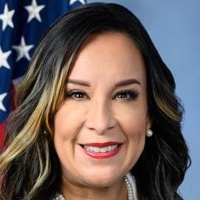
This act excludes service-connected disability compensation from income calculations for certain housing assistance programs and mandates a report on HUD's treatment of this compensation.
Mónica De La Cruz
Representative
TX
Mónica De La Cruz
Representative
TX
The Disabled Veterans Housing Support Act ensures that service-connected disability compensation received by veterans is excluded when calculating income for eligibility in certain federal housing programs. This change aims to increase access to affordable housing for disabled veterans. The bill also mandates a report to Congress reviewing how HUD currently treats this compensation across its programs.
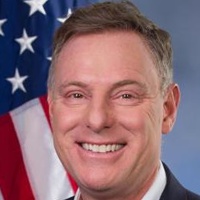
This bill mandates that state Medicaid programs cover whole genome and whole exome sequencing for children with specific medical needs starting in 2027.
Scott Peters
Representative
CA
Scott Peters
Representative
CA
The Genomic Answers for Children’s Health Act of 2026 mandates that state Medicaid programs cover whole genome and whole exome sequencing for children with specific medical conditions, effective January 1, 2027. This sequencing is to be covered as a first-tier diagnostic test for genetic disorders, rare diseases, or conditions of unknown origin. The bill also directs the HHS Secretary to promote awareness and address implementation challenges for this new mandatory benefit.