
Legislative Activity
Track Nicholas's sponsored bills, co-sponsored legislation, and voting record
This bill expresses congressional disapproval of the Bureau of Land Management's rule withdrawing federal lands in three Minnesota counties.
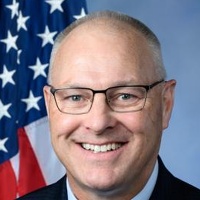
Pete Stauber
Representative
MN
Pete Stauber
Representative
MN
This bill expresses the disapproval of Congress regarding a Bureau of Land Management rule that withdrew federal lands in specific Minnesota counties under Public Land Order No. 7917. By disapproving the rule, Congress renders it legally void.
This bill extends the effectiveness of certain North Atlantic right whale protection regulations from 2028 to 2035.

Jared Golden
Representative
ME
Jared Golden
Representative
ME
This bill extends the effectiveness of current regulations designed to protect the North Atlantic right whale. It amends existing law to push back the expiration date of these protective measures from 2028 to 2035. This provides an additional seven years of regulatory protection for the species.
The HEATS Act streamlines geothermal energy development on certain lands by eliminating the federal drilling permit requirement when state permits are obtained and federal subsurface interest is below 50%.

Young Kim
Representative
CA
Young Kim
Representative
CA
The Harnessing Energy At Thermal Sources Act of 2026 (HEATS Act) streamlines geothermal energy development by eliminating the federal drilling permit requirement for activities on non-federal surface land when the U.S. ownership interest in the subsurface is less than 50%. This change exempts qualifying projects from major federal reviews under NEPA and the Endangered Species Act, allowing operations to commence shortly after state permit submission. The Act maintains federal oversight regarding royalty collection and excludes all activities on Indian lands.
This Act establishes penalties and restrictions to deter foreign adversaries from stealing proprietary, closed-source artificial intelligence models owned by U.S. entities through model extraction attacks.
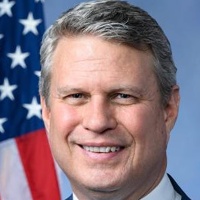
Bill Huizenga
Representative
MI
Bill Huizenga
Representative
MI
The Deterring American AI Model Theft Act of 2026 aims to protect proprietary, closed-source Artificial Intelligence models owned by U.S. entities from theft by foreign adversaries. It establishes new legal restrictions and penalties targeting "model extraction attacks" used by designated "entities of concern" to replicate advanced AI capabilities. The bill mandates government assessments, public reporting, and grants the President authority to impose sanctions against those found violating these provisions.
This bill establishes a license requirement for exporting digital sequences of synthetic DNA or RNA to foreign entities of concern to protect U.S. intellectual property from adversaries like China.
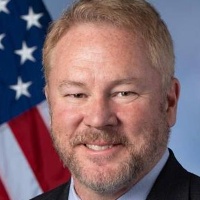
Warren Davidson
Representative
OH
Warren Davidson
Representative
OH
The Biological Intellectual Property Protection Act of 2025 aims to safeguard sensitive U.S. biotechnology by controlling the export of synthetic DNA and RNA sequences. This bill establishes a license requirement for transferring these digital sequences to foreign entities of concern, particularly those linked to adversaries like the People's Republic of China. Congress finds this action necessary to prevent intellectual property theft that supports foreign military modernization and strategic technology development.
The **Fighting Foreign Illegal Seafood Harvests Act of 2025 (FISH Act of 2025)** establishes a public blacklist of vessels involved in illegal, unreported, and unregulated (IUU) fishing or forced labor, imposes sanctions on offenders, and enhances U.S. international and domestic strategies to combat these illicit activities.

Dan Crenshaw
Representative
TX
Dan Crenshaw
Representative
TX
The Fighting Foreign Illegal Seafood Harvests Act of 2025 (FISH Act of 2025) establishes a public "black list" of foreign vessels involved in illegal, unreported, and unregulated (IUU) fishing or forced labor, banning them from U.S. ports and commerce. The bill mandates increased interagency cooperation to combat IUU fishing, including developing strategies to optimize data sharing and prevent seafood caught illegally or with forced labor from entering U.S. markets. Furthermore, it authorizes the Treasury Secretary to impose sanctions on entities engaged in these illicit activities and encourages international agreements to strengthen global enforcement.
This Act repeals the federal beneficial ownership information reporting requirements for domestic persons and entities, limiting them only to foreign individuals and foreign-connected companies, and mandates the deletion of existing domestic data.
Warren Davidson
Representative
OH
Warren Davidson
Representative
OH
The Repealing Big Brother Overreach Act significantly narrows the federal beneficial ownership information reporting requirements. This legislation limits reporting obligations exclusively to foreign individuals and foreign-connected companies. Furthermore, it mandates the deletion of all previously collected data pertaining to domestic persons and entities.
This bill prohibits liability against energy businesses for damages or relief related to the use of their products, effectively banning climate-related lawsuits in federal and state courts.
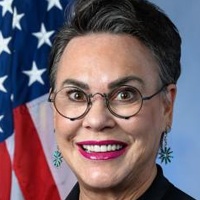
Harriet Hageman
Representative
WY
Harriet Hageman
Representative
WY
This bill, the Stop Climate Shakedowns Act of 2026, prohibits federal and state courts from hearing lawsuits seeking damages or relief against energy companies for harms related to climate change. It voids existing state laws that impose liability on energy businesses for climate-related issues, asserting that the regulation of emissions falls under exclusive federal jurisdiction. The Act aims to protect the energy industry from litigation and ensure affordable, reliable energy.
This bill mandates comprehensive safety upgrades for civilian and military aviation, focusing on collision avoidance technology, air traffic control training, and enhanced airspace transparency, particularly around high-traffic airports.
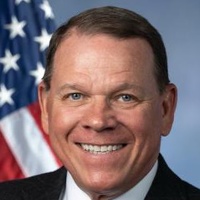
Sam Graves
Representative
MO
Sam Graves
Representative
MO
The Airspace Location and Enhanced Risk Transparency Act of 2026 mandates significant safety upgrades across both civilian and military aviation to prevent midair collisions. It requires the FAA to implement advanced collision avoidance systems and new air traffic controller training, while also compelling the Department of Defense to equip most military helicopters with transponders for increased visibility. The bill establishes new transparency measures, including public tracking of safety rule implementation and enhanced reporting on near-miss incidents, particularly around major airports like Reagan National.
The Election Infrastructure Integrity Act mandates the creation of a public database to track private election vendors, their ownership, and contract details to ensure greater transparency in federal election systems.
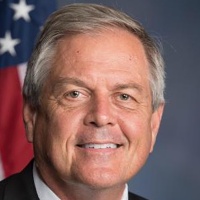
Ralph Norman
Representative
SC
Ralph Norman
Representative
SC
The Election Infrastructure Integrity Act mandates the creation of a publicly accessible database to track private vendors involved in federal election systems. States are required to report detailed vendor information, including ownership structures and contract terms, following each federal election. Failure to comply with these transparency requirements will result in the loss of federal election administration funding.
The Military Financial Literacy Act of 2026 mandates expanded, personalized financial and housing counseling services to better support the long-term financial stability of members of the Armed Forces.

Kristen McDonald Rivet
Representative
MI
Kristen McDonald Rivet
Representative
MI
The Military Financial Literacy Act of 2026 expands and enhances financial and housing counseling services for members of the Armed Forces. The bill mandates a new, personalized one-on-one counseling program focused on credit management, budgeting, and homeownership, delivered through partnerships with qualified veteran-focused organizations. Additionally, it requires the Department of Defense to report on the program's effectiveness in improving financial stability and housing outcomes for service members.
This Act establishes new federal standards and requirements for states issuing commercial driver's licenses (CDLs) to individuals who are not residents of that issuing state, particularly focusing on drivers from foreign countries and U.S. territories.
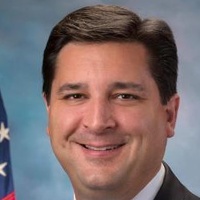
David Rouzer
Representative
NC
David Rouzer
Representative
NC
The Non-Domiciled CDL Integrity Act establishes new federal standards for states issuing Commercial Driver's Licenses (CDLs) to individuals who do not reside in that state. This bill sets specific, strict requirements for foreign nationals seeking a CDL, including proof of lawful status and job-related visas, while also outlining distinct procedures for applicants residing in U.S. territories. The legislation mandates enhanced record-keeping and reporting by states to the Secretary of Transportation regarding these non-domiciled licenses.
This bill amends the Federal Funding Accountability and Transparency Act to require federal award information to be posted publicly within three days of issuance rather than thirty.
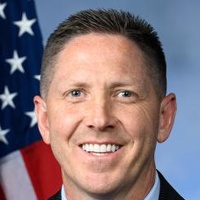
Josh Brecheen
Representative
OK
Josh Brecheen
Representative
OK
This bill amends the Federal Funding Accountability and Transparency Act of 2006 to increase government transparency. It mandates that information regarding federal awards be published online within three days of issuance, significantly accelerating the current 30-day reporting requirement to provide the public with near real-time access.
This Act establishes a Department of the Interior program to provide technical and financial assistance to Indian Tribes for the restoration, management, and cultural preservation of buffalo herds on Tribal lands.
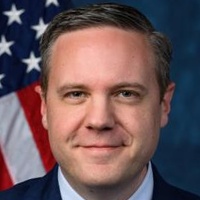
Jeff Hurd
Representative
CO
Jeff Hurd
Representative
CO
The Don Young Doug LaMalfa Indian Buffalo Management Act establishes a Department of the Interior program to support Indian Tribes in the restoration, management, and protection of buffalo herds on Tribal lands. Through grants, technical assistance, and the transfer of surplus buffalo from federal lands, the Act empowers Tribes to enhance their cultural, spiritual, and economic connections to the species. The program prioritizes the integration of traditional ecological knowledge while ensuring the protection of culturally sensitive information.
This bill reauthorizes and updates the Integrated Coastal and Ocean Observation System Act of 2009 to expand oceanographic research capabilities and authorize $47.5 million in annual funding through 2030.
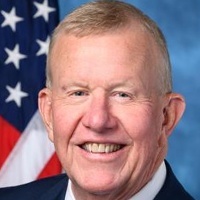
Mike Ezell
Representative
MS
Mike Ezell
Representative
MS
This bill reauthorizes the Integrated Coastal and Ocean Observation System Act of 2009, updating its governing structure and expanding the scope of its oceanographic research and data-sharing capabilities. It also mandates improved collaboration between regional and federal observing systems to enhance data integration. Additionally, the legislation authorizes $47.5 million in annual funding for these initiatives from fiscal years 2026 through 2030.
The Enhanced Iran Sanctions Act of 2025 mandates broad economic and immigration sanctions on foreign individuals, entities, and financial institutions that support Iran’s nuclear, missile, drone, or terrorist activities, while specifically targeting the country's petroleum and petrochemical sectors.
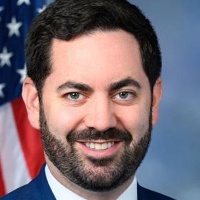
Michael Lawler
Representative
NY
Michael Lawler
Representative
NY
The Enhanced Iran Sanctions Act of 2025 strengthens U.S. policy by imposing mandatory sanctions on foreign persons and financial institutions that support Iran’s nuclear, ballistic missile, drone, and terrorist activities. The bill specifically targets Iran’s petroleum and petrochemical sectors to cut off funding for these malign programs. Additionally, it expands the State Department’s "Rewards for Justice" program to incentivize the reporting of individuals who evade these sanctions.
This bill updates the Geothermal Steam Act of 1970 by establishing new definitions and revising the royalty calculation structure for electricity generated from geothermal resources.

Mike Kennedy
Representative
UT
Mike Kennedy
Representative
UT
The Geothermal Royalty Reform Act updates the Geothermal Steam Act of 1970 by establishing new definitions for geothermal facilities and modifying how royalties are calculated for electricity production. This legislation revises the royalty rate structure, basing the initial 10-year royalty period on the facility's in-service date rather than the lease date. These changes aim to modernize the royalty framework for geothermal electric generating facilities.
The GEO Act mandates the Secretary of the Interior to continue processing geothermal leasing applications despite pending civil actions, unless a court specifically vacates the lease or issues an injunction.

Celeste Maloy
Representative
UT
Celeste Maloy
Representative
UT
The Geothermal Energy Opportunity (GEO) Act mandates that the Secretary of the Interior must continue processing geothermal leasing applications, including permits and rights-of-way, even if a related civil lawsuit is pending. This requirement remains in effect unless a federal court has specifically enjoined or vacated the lease or authorization. The bill ensures that administrative review proceeds unless explicitly halted by a court order.
This bill streamlines geothermal energy development on federal lands by establishing categorical exclusions from certain environmental review requirements for specific exploration projects and activities.
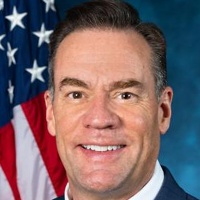
Russ Fulcher
Representative
ID
Russ Fulcher
Representative
ID
The Enhancing Geothermal Production on Federal Lands Act aims to accelerate geothermal energy development by streamlining the regulatory process for exploration projects on federal lands. The bill establishes specific criteria for "geothermal exploration projects" and "covered activities," exempting them from the requirement to prepare detailed environmental impact statements under the National Environmental Policy Act (NEPA). By implementing these categorical exclusions, the legislation seeks to reduce administrative hurdles and expedite the approval of geothermal energy exploration.
This bill seeks to disapprove the Bureau of Land Management's rule regarding the Grand Staircase-Escalante National Monument Resource Management Plan.
Celeste Maloy
Representative
UT
Celeste Maloy
Representative
UT
This bill seeks to disapprove the Bureau of Land Management's recent rule regarding the Grand Staircase-Escalante National Monument Record of Decision and Approved Resource Management Plan. If enacted, this disapproval would nullify the BLM's rule, preventing it from taking effect.