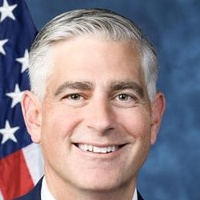
Legislative Activity
Track Michael's sponsored bills, co-sponsored legislation, and voting record
This bill rescinds specific financial waivers and licenses related to Iran and prohibits the President from reauthorizing similar permissions for accessing certain Iranian funds.
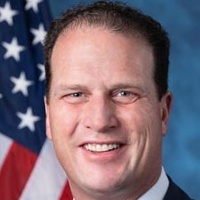
August Pfluger
Representative
TX
August Pfluger
Representative
TX
This bill mandates the immediate rescission of specific waivers and licenses that previously allowed certain international money transfers related to Iran. It explicitly prohibits the President from reissuing similar permissions or granting new licenses that would allow the Iranian government access to restricted financial accounts. In essence, this legislation closes specific financial pathways previously opened concerning Iran.
This bill drastically tightens and expands U.S. sanctions against Iran across its leadership, military, and economy while severely restricting the President's authority to lift these restrictions.
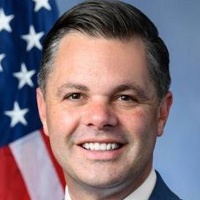
Zachary (Zach) Nunn
Representative
IA
Zachary (Zach) Nunn
Representative
IA
The Maximum Pressure Act dramatically tightens and expands U.S. sanctions against Iran across its military, missile, and economic sectors, codifying existing restrictions and severely limiting the President's authority to grant sanctions relief. It mandates immediate sanctions on top Iranian officials and increases penalties for international parties aiding Iran's weapons programs. Furthermore, the bill enhances oversight by requiring numerous detailed reports to Congress regarding Iran's terrorism financing, nuclear timeline, and economic influence, while also redirecting certain frozen Iranian funds to victims of state-sponsored terrorism.
This Act permits 501(c)(3) organizations to make political campaign statements within the ordinary course of their tax-exempt activities, provided the cost is de minimis.
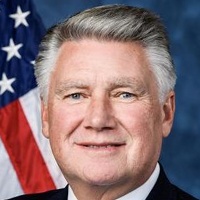
Mark Harris
Representative
NC
Mark Harris
Representative
NC
The Free Speech Fairness Act amends tax law to allow 501(c)(3) organizations to make political campaign statements without jeopardizing their tax-exempt status. This protection applies only if the statement is made as part of the organization's ordinary course of activities and incurs only a de minimis (trivial) cost. This ensures non-profits can speak on political matters related to their mission without penalty, provided spending remains minimal.
The SHORT Act redefines "firearm" to exclude certain collector's items, eliminates disparate federal treatment of short-barreled rifles and shotguns, preempts state and local registration/tax burdens on these items, and mandates the destruction of certain existing NFA records.
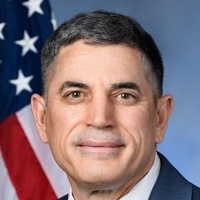
Andrew Clyde
Representative
GA
Andrew Clyde
Representative
GA
The SHORT Act aims to reform federal firearms regulations by redefining what constitutes a "firearm" for tax purposes, largely excluding antique or collector's items. It eliminates disparate federal treatment for short-barreled rifles and shotguns used lawfully and preempts state and local governments from imposing special taxes or registration requirements on these specific weapons. Furthermore, the bill mandates the destruction of certain existing federal registration and transfer records related to defined firearms.
This Act establishes a 20% federal tax credit for converting eligible commercial buildings into affordable housing units, subject to state allocation and specific income restrictions.

Mike Carey
Representative
OH
Mike Carey
Representative
OH
The Revitalizing Downtowns and Main Streets Act establishes a new 20% federal tax credit for converting eligible, older commercial buildings into affordable housing. This incentive aims to increase housing supply by requiring that at least 20% of the converted units remain rent-restricted for low-income residents for 30 years. State agencies will allocate these credits, which are subject to a national cap of $12 billion, based on approved plans prioritizing financially necessary projects.
This bill establishes national reciprocity for concealed carry permits, allowing individuals legally permitted to carry in their home state to carry a handgun in any other state that allows concealed carry.
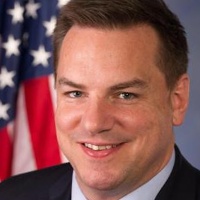
Richard Hudson
Representative
NC
Richard Hudson
Representative
NC
The Constitutional Concealed Carry Reciprocity Act of 2025 establishes a national standard for carrying concealed handguns across state lines. This act allows individuals legally permitted to carry in their home state to carry concealed in any other state that allows its residents to carry concealed firearms. The law does not override private property restrictions or prohibitions on government property, but it provides protections and legal recourse for those traveling in compliance with the new federal standard.
The Air America Act of 2025 authorizes one-time monetary awards to former Air America employees or their survivors for service supporting the CIA between 1950 and 1976.
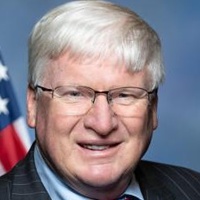
Glenn Grothman
Representative
WI
Glenn Grothman
Representative
WI
The Air America Act of 2025 recognizes the sacrifices of former Air America employees who served the U.S. Government between 1950 and 1976. This Act authorizes a one-time monetary award, up to $40,000 plus potential additional amounts, for qualifying service members or their survivors. The CIA Director is responsible for administering these payments, which are capped at a total of $60 million, and establishing the application procedures. Decisions made by the Director regarding these awards are final and not subject to judicial review.
The Major Richard Star Act ensures that military retirees with combat-related disabilities can concurrently receive their full military retirement pay and VA disability compensation without reduction.

Gus Bilirakis
Representative
FL
Gus Bilirakis
Representative
FL
The Major Richard Star Act ensures that military retirees with combat-related disabilities can receive both their military retirement pay and VA disability compensation concurrently without reduction. This law removes previous restrictions that caused military retirement pay to be offset by VA disability payments for these specific cases. The changes take effect on the first day of the month following the Act's enactment.
The REDI Act allows medical and dental interns and residents to defer both principal and interest payments on their student loans while in training.
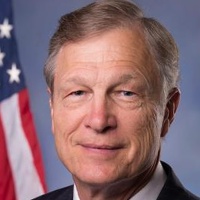
Brian Babin
Representative
TX
Brian Babin
Representative
TX
The Resident Education Deferred Interest (REDI) Act amends federal student loan regulations to provide a specific deferment for medical and dental residents. This allows borrowers currently serving in an internship or residency program to pause principal payments and prevent interest accrual on their student loans during that training period.
The VOTE Act would prohibit states from receiving federal election funds for any year they provide federal election ballots in languages other than English, while also eliminating existing federal requirements for bilingual voting materials in certain jurisdictions.
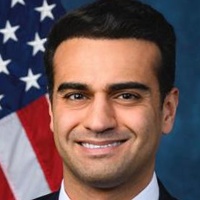
Abraham Hamadeh
Representative
AZ
Abraham Hamadeh
Representative
AZ
The VOTE Act, or Voting Only Through English Act, restricts federal election funding for any state that provides ballots in languages other than English for federal elections. This bill eliminates existing federal requirements that mandate bilingual ballots or assistance in certain jurisdictions. Consequently, states choosing to offer multilingual ballots risk losing federal election administration funds for the entire fiscal year.
The POWER Act prohibits the federal government from breaching dams or retiring energy sources if doing so significantly harms the environment, commerce, or energy reliability and affordability.

Dan Newhouse
Representative
WA
Dan Newhouse
Representative
WA
The POWER Act restricts the Secretary of the Army from breaching federally operated dams if doing so negatively impacts carbon emissions, navigation, product prices, or land use acreage. Furthermore, the bill prohibits the retirement of federally owned hydropower sources if it significantly increases electricity rates or decreases energy reliability in several Western states. Any retired generation source must have its baseload power replaced within 30 days.
This bill directs Congress to award a Congressional Gold Medal to honor the service of the Red Cross "Donut Dollies" who provided recreation and morale support to U.S. troops during the Vietnam War.

Mikie Sherrill
Representative
NJ
Mikie Sherrill
Representative
NJ
This bill, the Donut Dollies Congressional Gold Medal Act, directs the striking of a Congressional Gold Medal to honor the American Red Cross volunteers who served in the Supplemental Recreation Activities Overseas (SRAO) program during the Vietnam War. These volunteers, known as "Donut Dollies," provided crucial morale support to troops on the front lines. The original medal will be presented on behalf of Congress and ultimately housed at the Smithsonian Institution, with provisions made for selling bronze duplicates.
This act prohibits federal funding for any study, change, or removal of the Lower Snake River dams and restricts special water spillage operations without high-level approval.
Dan Newhouse
Representative
WA
Dan Newhouse
Representative
WA
The Defending our Dams Act prohibits the use of federal funds for any study, action, or support related to breaching, changing the function of, or removing the four Lower Snake River dams. This legislation also restricts special water spillage operations at these dams without dual approval from the Secretary of the Army and the Bonneville Power Administration Administrator. The Act specifically targets the Ice Harbor, Lower Monumental, Little Goose, and Lower Granite Dams.
This bill allows investors to defer taxes on capital gain dividends from mutual funds when those dividends are automatically reinvested until the shares are sold or the investor passes away.

Beth Van Duyne
Representative
TX
Beth Van Duyne
Representative
TX
This bill, the Generating Retirement Ownership through Long-Term Holding Act, allows individual investors to defer paying taxes on capital gain dividends from mutual funds if those dividends are automatically reinvested into more fund shares. Taxes on these deferred gains are only due when the investor sells the shares or upon death. This provision aims to encourage long-term investment in mutual funds by providing immediate tax relief on reinvested earnings.
The Credit for Caring Act of 2025 establishes a new, partially refundable federal income tax credit for working family caregivers covering qualified expenses exceeding \$2,000, up to a \$5,000 annual limit.
Mike Carey
Representative
OH
Mike Carey
Representative
OH
The Credit for Caring Act of 2025 establishes a new, non-refundable federal income tax credit for working family caregivers who incur significant expenses caring for a relative with long-term care needs. Eligible caregivers can claim a credit equal to 30% of qualified expenses exceeding \$2,000, up to a maximum annual credit of \$5,000. The bill specifies detailed requirements for the care recipient's needs, the types of allowable expenses, and includes income phase-out limits for claiming the benefit.
This Act resets the probationary period for certain federal employees unfairly separated between January 20, 2025, and January 20, 2029, by crediting them for time already served.

Sarah Elfreth
Representative
MD
Sarah Elfreth
Representative
MD
The Protect Our Probationary Employees Act resets the probationary period for certain federal employees who were involuntarily separated between January 20, 2025, and January 20, 2029. If these employees are rehired into a similar role at the same agency, their new probationary period will be reduced by the time they already served previously. This provision is temporary and will expire on January 20, 2029.
This Act mandates a Congressional review period before the President can reduce or alter certain sanctions imposed on Iran.
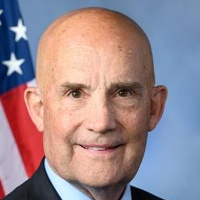
Keith Self
Representative
TX
Keith Self
Representative
TX
The Iran Sanctions Relief Review Act of 2025 establishes a mandatory Congressional review process for any Presidential action that significantly alters or terminates sanctions against Iran. Before implementing such changes, the President must submit a detailed report to Congress, which then has 30 to 60 days to review the proposed action. During this review period, the President is prohibited from taking the action unless Congress passes a joint resolution of approval. If Congress passes a joint resolution of disapproval, the President is permanently barred from taking that specific action.
This bill censures Representative Al Green for disrupting the President's address to Congress and requires him to receive a formal reprimand before the House.
Dan Newhouse
Representative
WA
Dan Newhouse
Representative
WA
This bill censures Representative Al Green of Texas for disrupting the President's address to Congress on March 4, 2025. It condemns his actions and orders him to appear before the House of Representatives to receive a formal reprimand. During this time the Speaker of the House will publicly read the resolution of censure.
This bill repeals the excise tax on indoor tanning services, effective after the date of enactment.
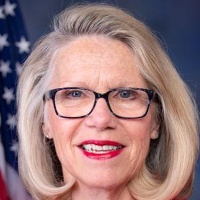
Carol Miller
Representative
WV
Carol Miller
Representative
WV
The "Tanning Tax Repeal Act of 2025" eliminates the federal excise tax on indoor tanning services. This bill removes Chapter 49 from the Internal Revenue Code, effectively repealing the tax. The repeal is applicable for services provided after the bill's enactment.
Permanently allows individuals with health savings accounts (HSAs) to utilize telehealth services without needing to meet their deductible.
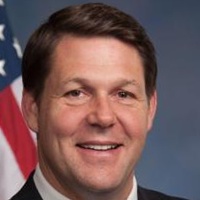
Jodey Arrington
Representative
TX
Jodey Arrington
Representative
TX
The "Telehealth Expansion Act of 2025" permanently allows individuals with Health Savings Accounts (HSAs) to access telehealth services without needing to meet their deductible first, starting after December 31, 2024. This removes a barrier to accessing telehealth services for HSA holders.