Legislative Activity
Track Tom's sponsored bills, co-sponsored legislation, and voting record
This Act limits the sharing of consumer reports requested in connection with a residential mortgage loan to prevent unauthorized access to homebuyers' sensitive financial information.
John Rose
Representative
TN
John Rose
Representative
TN
The Homebuyers Privacy Protection Act limits how consumer reporting agencies can share a consumer's report when it is requested in connection with a residential mortgage loan. Reports can only be shared with entities directly involved in the consumer's current mortgage or those providing a firm offer of credit or insurance. The Act also mandates a study by the GAO regarding the use and impact of "trigger leads" derived from credit checks.
The GRACE Act prohibits federal education funding for schools or agencies with vaccination requirements unless they provide an unconditional religious exemption without requiring documentation.
W. Steube
Representative
FL
W. Steube
Representative
FL
The GRACE Act prohibits federal education funding for any school or agency that mandates vaccinations unless they provide a religious exemption based solely on an individual's stated sincerely held religious beliefs. This exemption cannot require any proof or documentation to support the religious objection. Consequently, institutions requiring documentation for religious vaccine exemptions risk losing federal education funds.
This joint resolution formally establishes a National Day of Remembrance to honor the thirteen U.S. service members killed in the August 26, 2021, Abbey Gate bombing during the Afghanistan withdrawal.

Max Miller
Representative
OH
Max Miller
Representative
OH
This joint resolution formally honors the thirteen U.S. service members who were killed in the August 26, 2021, bombing at Abbey Gate during the withdrawal from Afghanistan. It recognizes their ultimate sacrifice in service to the nation and expresses deep gratitude to their Gold Star Families. The bill essentially establishes a National Day of Remembrance to ensure their faithful service in the fight for liberty is never forgotten.
This act mandates that the Veterans Health Administration expand its informed consent requirements to specifically cover the prescription of antipsychotics, stimulants, antidepressants, anxiolytics, and narcotics.

Gus Bilirakis
Representative
FL
Gus Bilirakis
Representative
FL
The Written Informed Consent Act mandates that the Veterans Health Administration (VHA) expand its informed consent directives to specifically cover several classes of medications, including antipsychotics, stimulants, antidepressants, anxiolytics, and narcotics. This ensures veterans receive a thorough understanding of these prescribed drugs. The Secretary of Veterans Affairs must update VHA Directive 1005 to reflect these expanded requirements.
This Act eliminates age restrictions and simplifies premium requirements for adult children covered under the TRICARE Young Adult program.
Patrick Ryan
Representative
NY
Patrick Ryan
Representative
NY
The Health Care Fairness for Military Families Act of 2025 significantly improves the TRICARE Young Adult (TYA) program for military dependents. This legislation eliminates the age restriction for TYA eligibility and removes the separate premium requirement for coverage. These changes aim to provide broader and simpler healthcare access for adult children of service members.
The SAVES Act establishes a VA pilot program to award grants to nonprofits providing service dogs and veterinary insurance to eligible veterans managing specific service-connected conditions.

Morgan Luttrell
Representative
TX
Morgan Luttrell
Representative
TX
The SAVES Act establishes a Department of Veterans Affairs (VA) pilot program to award grants to nonprofit organizations that provide service dogs to eligible veterans. These grants, up to $\$2,000,000$ each, will fund the training and provision of service dogs for veterans with qualifying conditions like PTSD or TBI. The bill also extends the expiration date for certain limits on veterans' pension payments until February 2033.
The Veterans’ ACCESS Act of 2025 improves veteran health care by establishing clear eligibility standards for community care, mandating timely mental health treatment, and streamlining administrative processes to ensure faster, more transparent access to services.
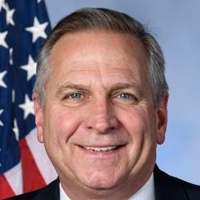
Mike Bost
Representative
IL
Mike Bost
Representative
IL
The Veterans’ ACCESS Act of 2025 strengthens the Veterans Community Care Program by establishing clear, enforceable standards for care eligibility and wait times while streamlining the referral process. The legislation also overhauls access to residential mental health and substance abuse treatment, ensuring veterans receive timely, localized care with robust oversight. Additionally, it mandates the development of digital tools and pilot programs to reduce bureaucratic hurdles and improve transparency across the VA healthcare system.
This bill establishes a grant program to foster collaborative PTSD research between the United States and Israel.
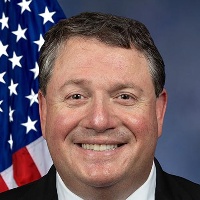
Randall Fine
Representative
FL
Randall Fine
Representative
FL
This bill establishes the United States-Israel PTSD Collaborative Research Act to foster scientific partnerships between the two nations. It creates a grant program, managed by the Secretary of Defense, to fund joint research projects between U.S. academic or non-profit entities and Israeli institutions specializing in PTSD treatment. The goal is to advance new and improved methods for diagnosing and treating post-traumatic stress disorder.
This Act mandates that television advertisements for prescription drugs and biologics covered by Medicare or Medicaid must clearly display the list price for a standard supply.
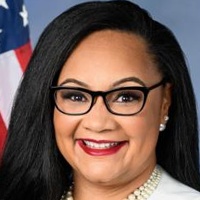
Nikema Williams
Representative
GA
Nikema Williams
Representative
GA
The Plain Prescription Prices Act mandates that television advertisements for prescription drugs and biologics covered by Medicare or Medicaid must clearly display the list price for a standard supply. This aims to increase transparency by ensuring consumers see the cost information directly in drug advertisements. The Secretary of Health and Human Services will establish the specific rules and enforcement mechanisms for this price disclosure.
The PEACE Act of 2025 imposes strict financial sanctions on foreign institutions dealing with Russia and transfers seized Russian central bank assets held in the U.S. to support Ukraine.
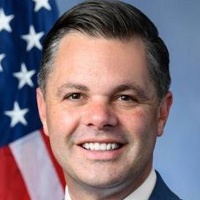
Zachary (Zach) Nunn
Representative
IA
Zachary (Zach) Nunn
Representative
IA
The PEACE Act of 2025 imposes strict new financial sanctions on foreign banks knowingly dealing with sanctioned Russian entities following escalating attacks on Ukraine. It mandates the Treasury Department to seize specific Russian Central Bank assets held in the U.S. and transfer them to a fund supporting Ukraine. The Act also requires a review of major Russian energy companies and includes provisions for presidential waivers and a sunset clause tied to Russia ceasing destabilizing actions.
This bill directs the Government Accountability Office to report on the effectiveness of current systems for military and overseas voting and to study ways to improve voter registration assistance for service members and their families.
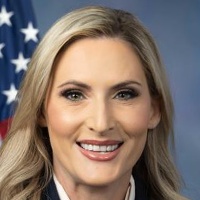
Laurel Lee
Representative
FL
Laurel Lee
Representative
FL
The Supporting Military Voters Act mandates that the Government Accountability Office (GAO) conduct a comprehensive review of how effectively the government supports voting access for absent uniformed services members and their families. This review will analyze current ballot delivery and counting processes under existing law. Furthermore, the GAO must study actionable steps the military departments can take to improve voter registration assistance for service members. The final report detailing these findings and recommendations is due by September 30, 2027.
The MAGA Act mandates a Department of Defense study and report on the prevalence of foreign-made or foreign-owned small arms and light weapons used by the U.S. military, along with recommendations for increasing domestic sourcing.
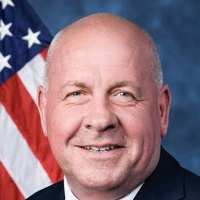
David Taylor
Representative
OH
David Taylor
Representative
OH
The Make American Guns Again (MAGA) Act of 2025 requires the Secretary of Defense to study the prevalence of foreign-made or foreign-owned small arms and light weapons used by the U.S. military. Within 180 days, the Secretary must report these findings to Congress and the President. This report must also include recommendations for increasing the procurement of domestically manufactured and owned small arms.
This bill mandates the Attorney General to release nearly all unclassified Department of Justice records related to Jeffrey Epstein within 30 days, with limited exceptions for victim privacy or active investigations.

Thomas Massie
Representative
KY
Thomas Massie
Representative
KY
This bill, titled the Epstein Files Transparency Act, mandates the Attorney General to release nearly all unclassified Department of Justice records related to Jeffrey Epstein within 30 days of enactment. The legislation strictly limits the justifications for withholding or redacting documents, prohibiting secrecy based on political sensitivity or potential embarrassment. The only permissible redactions involve victim privacy, child sexual abuse material, or narrowly defined threats to active investigations or national security classifications. Upon completion, the Attorney General must submit a detailed report to Congress listing all released and withheld materials, including an unredacted list of all named government officials.
This Act mandates that VA medical staff promptly certify the deaths of veterans who died from natural causes within 48 hours to expedite burial and survivor benefits.
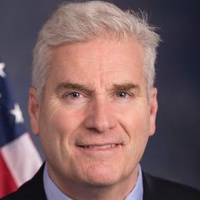
Tom Emmer
Representative
MN
Tom Emmer
Representative
MN
The Veteran Burial Timeliness and Death Certificate Accountability Act addresses significant delays in obtaining death certificates for veterans who die from natural causes, often due to VA medical staff delays. This bill mandates that VA medical providers must certify a veteran's death within 48 hours or allow the local medical examiner to step in. Furthermore, the VA must annually report on its compliance with this new timely certification requirement.
This bill mandates that elementary, secondary, and higher education institutions must certify compliance with biological fairness requirements in women's sports to receive federal funding, with penalties for non-compliance.
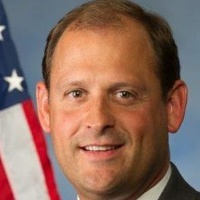
Garland Barr
Representative
KY
Garland Barr
Representative
KY
The Defend Girls Athletics Act mandates that elementary, secondary, and higher education institutions must certify compliance with Executive Order 14201 regarding biological fairness in women's sports to receive federal funding. This certification must be renewed annually for K-12 districts and by July 1st for colleges and universities. Failure to comply or report results in the immediate requirement to return unobligated federal funds and ineligibility for future federal financial assistance until compliance is restored.
The SAMS Act of 2025 codifies several existing Executive Orders related to critical minerals into permanent federal law.
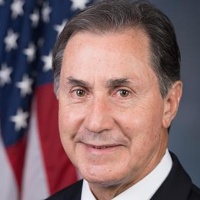
Gary Palmer
Representative
AL
Gary Palmer
Representative
AL
The SAMS Act of 2025 codifies several previous Executive Orders into permanent law, specifically focusing on policies related to critical minerals. This action elevates existing presidential directives concerning these vital resources to the full force and effect of statutory law. The bill ensures the long-term legal standing of established critical mineral supply chain strategies.
The PBM Reform Act of 2025 mandates sweeping changes to increase transparency, ensure fair pharmacy access in Medicare, and prohibit abusive spread pricing in Medicaid by holding Pharmacy Benefit Managers accountable for their financial dealings.

Earl Carter
Representative
GA
Earl Carter
Representative
GA
The Pharmacy Benefit Manager Reform Act of 2025 aims to increase transparency and accountability across the prescription drug supply chain. It mandates fairer pharmacy network access for Medicare beneficiaries and imposes strict new financial reporting and service fee requirements on Pharmacy Benefit Managers (PBMs) working with Medicare and private health plans. Furthermore, the bill establishes new federal mechanisms to accurately track drug acquisition costs in Medicaid and explicitly bans the practice of "spread pricing" in state Medicaid contracts.
This Act mandates the reporting of positive hair drug test results from FDA-cleared devices to the Drug and Alcohol Clearinghouse for commercial drivers.

Eric Crawford
Representative
AR
Eric Crawford
Representative
AR
The Drug and Alcohol Clearinghouse Public Safety Improvement Act of 2025 mandates the inclusion of positive hair drug test results for certain commercial drivers into the federal Drug and Alcohol Clearinghouse. This requires motor carriers to report these results from FDA-cleared testing devices, provided the testing laboratory meets specific accreditation and guideline standards. The Secretary of Transportation has one year to implement the necessary regulations to enforce this update.
This resolution expresses support for designating September 25th as National Stop SuiSilence Day to encourage open conversation and action regarding suicide prevention.
Morgan Luttrell
Representative
TX
Morgan Luttrell
Representative
TX
This resolution expresses strong support for designating **September 25th** as **National Stop SuiSilence Day**. The bill emphasizes that open conversation is crucial for reducing the stigma surrounding suicide and preventing loss of life. It encourages individuals, communities, and the government to actively engage in suicide prevention awareness and action on this designated day.
The LEDGER Act mandates the establishment of a comprehensive, government-wide system to track and record the exact destination and availability period of every federal expenditure.
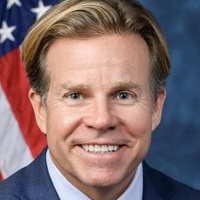
Mike Haridopolos
Representative
FL
Mike Haridopolos
Representative
FL
The LEDGER Act mandates the creation of a comprehensive, centralized system managed by the Secretary of the Treasury to track every expenditure made by all branches of the U.S. Government. This new system must detail exactly where federal funds are spent and how long those funds were available for obligation. The goal is to significantly enhance the traceability and transparency of government spending.