
Legislative Activity
Track Tim's sponsored bills, co-sponsored legislation, and voting record
The National Constitutional Carry Act prohibits state and local governments from restricting the public carry of firearms by individuals who are legally eligible to possess them under federal law.

Thomas Massie
Representative
KY
Thomas Massie
Representative
KY
The National Constitutional Carry Act seeks to protect the Second Amendment right of law-abiding citizens to carry firearms in public for self-defense. The bill prohibits state and local governments from imposing criminal or civil penalties on individuals who are legally eligible to possess firearms. By overriding restrictive local regulations, the legislation aims to ensure a uniform standard for the right to bear arms across the United States.
This bill prohibits federal funding for Planned Parenthood and redirects those resources to other eligible health care providers to ensure continued access to essential women's health services.
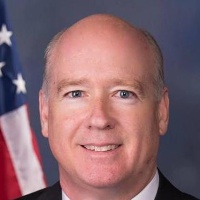
Robert Aderholt
Representative
AL
Robert Aderholt
Representative
AL
The Protect Funding for Women’s Health Care Act prohibits federal funding for the Planned Parenthood Federation of America and its affiliates. The bill ensures that these redirected funds remain available to other eligible healthcare providers to maintain access to essential services, such as cancer screenings, prenatal care, and family planning.
The SHOW UP Act of 2025 mandates that executive agencies revert to pre-pandemic telework policies and requires rigorous certification before any future expansion of remote work.

James Comer
Representative
KY
James Comer
Representative
KY
The SHOW UP Act of 2025 requires executive agencies to revert their telework policies to pre-pandemic levels by December 31, 2019. Any future expansion of telework must be supported by a comprehensive impact study and certified by the Office of Personnel Management to ensure it improves mission performance and reduces agency costs.
The Offshore Lands Authorities Act of 2025 nullifies previous presidential withdrawals of unleased offshore lands and establishes strict new limitations and congressional oversight procedures for future executive leasing restrictions.
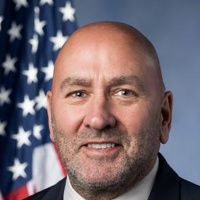
Clay Higgins
Representative
LA
Clay Higgins
Representative
LA
The Offshore Lands Authorities Act of 2025 nullifies several previous Presidential withdrawals of offshore lands, effectively reopening those areas to potential mineral leasing. The bill also establishes strict new limitations on the President’s authority to withdraw unleased offshore lands, including size and duration caps, mandatory resource assessments, and a streamlined congressional disapproval process.
This bill increases the railroad track maintenance tax credit, introduces annual inflation adjustments, and extends the eligibility period for qualifying expenditures.
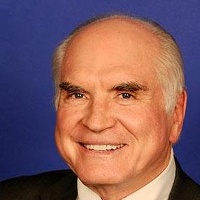
Mike Kelly
Representative
PA
Mike Kelly
Representative
PA
This bill amends the Internal Revenue Code to expand the railroad track maintenance credit by increasing the per-mile tax credit to $6,100 and implementing annual inflation adjustments starting in 2026. It also extends the eligibility window for qualifying maintenance expenditures to include costs incurred through 2023. These updates aim to provide greater financial support for ongoing railroad infrastructure improvements.
Affirms states' rights to defend against invasion, citing the influx of cartels and criminal elements across the southern border and criticizing the Biden administration's border security policies.
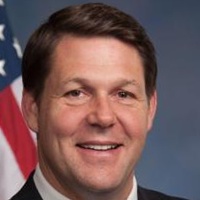
Jodey Arrington
Representative
TX
Jodey Arrington
Representative
TX
This bill asserts the constitutional right of states to defend themselves against invasion, citing the situation at the southern border from 2021-2024 as an invasion by cartels, terrorists, and criminal elements. It criticizes the Biden administration's border policies and claims the federal government failed to protect southern border states, thus empowering states to take defensive action.
The Tennessee Valley Authority Salary Transparency Act requires the TVA to disclose the names, salaries, and duties of high-level employees in its annual report, while protecting this information from public disclosure under certain acts.

Steve Cohen
Representative
TN
Steve Cohen
Representative
TN
The Tennessee Valley Authority Salary Transparency Act requires the TVA to disclose the names, salaries, and duties of its executives, board members, and management-level employees earning at or above the GS15 pay grade level in its annual report. This information will be excluded from public disclosure under the Freedom of Information Act and the Access to Congressionally Mandated Reports Act.
The FORCE Act prohibits the removal of Cuba from the State Sponsors of Terrorism list until the country meets specific democratic and human rights requirements.

Maria Salazar
Representative
FL
Maria Salazar
Representative
FL
The FORCE Act prohibits the President and the Secretary of State from removing Cuba from the State Sponsors of Terrorism list. This restriction remains in effect until the administration certifies that Cuba has met the specific democratic and human rights requirements outlined in the LIBERTAD Act of 1996.
This bill reclassifies silencers under federal tax law, removes federal registration requirements for legally transferred silencers, preempts state taxation and registration of silencers in commerce, and mandates the destruction of existing federal silencer registration records.

Ben Cline
Representative
VA
Ben Cline
Representative
VA
The Hearing Protection Act aims to remove silencers from the purview of the National Firearms Act (NFA) by treating them similarly to standard firearms under federal tax law. This legislation preempts certain state and local taxes and registration requirements related to silencers involved in interstate commerce. Furthermore, the bill mandates the destruction of existing federal silencer registration records and updates federal marking requirements for manufacturers.
This Act directs the Secretary of the Treasury to mint commemorative coins in 2028 to honor the diverse women who served on the Home Front during World War II, with proceeds supporting the Rosie the Riveter WWII Home Front National Historical Park.

John Garamendi
Representative
CA
John Garamendi
Representative
CA
The Rosie the Riveter Commemorative Coin Act directs the Secretary of the Treasury to mint and issue a series of commemorative coins in 2028 to honor the diverse women who served on the Home Front during World War II. Proceeds from the sale of these coins will support the Rosie the Riveter Trust in its efforts to maintain the Rosie the Riveter/WWII Home Front National Historical Park and fund educational programs. This initiative ensures the legacy of these essential workers is preserved and recognized through a national numismatic program.
The Old Glory Only Act mandates that only the United States flag may be flown at U.S. diplomatic and consular posts.
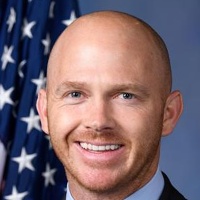
William Timmons
Representative
SC
William Timmons
Representative
SC
The Old Glory Only Act mandates that only the official United States flag may be flown at U.S. diplomatic and consular posts. This legislation prohibits the display of any other flags at these facilities.
The Thin Blue Line Act amends federal law to include the killing or attempted killing of law enforcement officers, firefighters, and other first responders as an aggravating factor in capital sentencing cases.

Vern Buchanan
Representative
FL
Vern Buchanan
Representative
FL
The Thin Blue Line Act amends federal law to designate the killing or attempted killing of a law enforcement officer, firefighter, or first responder as an aggravating factor in capital sentencing. This legislation ensures that when a jury considers the death penalty, they must take into account whether the victim was targeted due to their status as a public servant or while performing their official duties.
This bill prohibits Title X federal funding for entities that perform abortions, with specific exceptions for cases of rape, incest, or life-endangerment.

Virginia Foxx
Representative
NC
Virginia Foxx
Representative
NC
The Title X Abortion Provider Prohibition Act amends the Public Health Service Act to prohibit Title X federal funding for entities that perform abortions, with specific exceptions for cases of rape, incest, or life-endangerment. The bill also establishes new annual reporting requirements for the Secretary of Health and Human Services regarding the distribution of these grants and the performance of permitted abortions.
This bill proposes the full repeal of the National Firearms Act, eliminating federal taxes, registration requirements, and transfer restrictions on items such as silencers and short-barreled firearms.
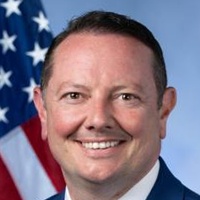
Eric Burlison
Representative
MO
Eric Burlison
Representative
MO
The "Repeal the NFA Act" proposes the complete elimination of the National Firearms Act (NFA). This legislation would remove federal taxes, registration requirements, and transfer restrictions currently imposed on items such as machine guns, short-barreled rifles, short-barreled shotguns, and silencers.
Allows Members of the House of Representatives, Delegates, and the Resident Commissioner to designate a proxy to vote on their behalf in the House, in committee, and in the Committee of the Whole for a period of 12 weeks following the birth of a child or in the event of a pregnancy-related serious medical condition.

Brittany Pettersen
Representative
CO
Brittany Pettersen
Representative
CO
The "Proxy Voting for New Parents Resolution" allows Members of the House, Delegates, and the Resident Commissioner who have recently given birth or whose spouse has given birth to designate another Member to vote on their behalf in the House, in committee, and in the Committee of the Whole for a period of 12 weeks. This proxy voting authority can begin before the birth if a doctor advises that the pregnancy presents a serious medical condition or that she is unable to travel safely. The resolution outlines specific procedures for designating, changing, and revoking proxy designations, ensuring transparency and adherence to instructions. Members whose votes are cast by proxy will not be counted for quorum purposes.
This bill mandates the formal abolishment of the Bureau of Alcohol, Tobacco, Firearms and Explosives (ATF).
Eric Burlison
Representative
MO
Eric Burlison
Representative
MO
The Abolish the ATF Act is a legislative proposal that mandates the immediate dissolution of the Bureau of Alcohol, Tobacco, Firearms and Explosives. This bill seeks to formally terminate the agency and eliminate its federal oversight functions.
This bill proposes a constitutional amendment to limit members of the House of Representatives to three terms and Senators to two terms, with specific provisions for partial terms. Terms served before the amendment's ratification would not be counted towards these limits, and the amendment must be ratified within seven years to be valid.
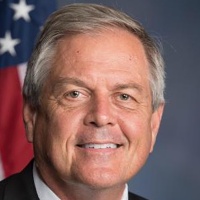
Ralph Norman
Representative
SC
Ralph Norman
Representative
SC
This bill proposes a constitutional amendment to limit the number of terms a member of Congress can serve. Representatives would be limited to 3 terms and Senators to 2 terms, with specific rules for partial terms. Terms served before the amendment's ratification would not be counted. The amendment must be ratified by three-fourths of the states within seven years to be valid.
The "Fentanyl is a WMD Act" mandates the Department of Homeland Security to classify illicit fentanyl as a weapon of mass destruction.

Lauren Boebert
Representative
CO
Lauren Boebert
Representative
CO
The "Fentanyl is a WMD Act" mandates the Department of Homeland Security to classify illicit fentanyl as a weapon of mass destruction. This directs the Assistant Secretary for the Countering Weapons of Mass Destruction Office to treat illicit fentanyl as such, as defined in the Homeland Security Act of 2002.
The FIND Act prohibits federal agencies from contracting with entities that discriminate against the firearm and ammunition industry, ensuring fair access to government contracts for these businesses. Contractors must certify they do not discriminate against firearm entities, with violations leading to contract termination.
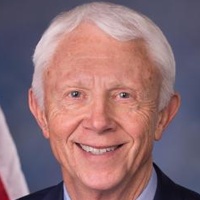
Jack Bergman
Representative
MI
Jack Bergman
Representative
MI
The FIND Act prohibits federal agencies from contracting with entities that discriminate against the firearm and ammunition industry. It requires federal contractors to certify they do not discriminate against firearm entities and prohibits them from awarding subcontracts to entities that do not provide a similar certification. Violations of these clauses will result in contract termination. The act defines "discriminate" as making judgments or refusing/limiting services based on biased criteria, rather than case-by-case evaluations, empirical data, financial risk, or legal non-compliance.
The Regulations from the Executive in Need of Scrutiny (REINS) Act of 2025 increases congressional accountability by requiring federal agencies to obtain legislative approval for all "major" rules before they can take effect.

Katherine Cammack
Representative
FL
Katherine Cammack
Representative
FL
The Regulations from the Executive in Need of Scrutiny (REINS) Act of 2025 aims to increase federal regulatory accountability by requiring Congress to approve any "major" rule before it can take effect. Under this legislation, rules with a significant economic impact require a joint resolution of approval from both chambers of Congress to become law. By shifting this authority back to the legislative branch, the Act seeks to ensure greater transparency and oversight of the federal rulemaking process.