Legislative Activity
Track Don's sponsored bills, co-sponsored legislation, and voting record
This Act allows urbanized area formula grant funds to be used for public transportation operating costs, contingent upon recipients certifying and maintaining their local spending efforts.
Michael Lawler
Representative
NY
Michael Lawler
Representative
NY
The Transit Funding Flexibility Act amends federal law to allow Urbanized Area Formula grant funds to be used more flexibly for public transportation operating costs. It removes specific population-based restrictions on grant eligibility. Crucially, recipients must now annually certify they will maintain their local spending effort for federally funded equipment and facilities, or face a mandatory 13% reduction in future federal funding.
This bill mandates a Department of Defense report assessing the threat posed by violent antisemitism within transnational extremist movements by March 20, 2026.
Eugene Vindman
Representative
VA
Eugene Vindman
Representative
VA
The Violent Antisemitism Threat Assessment Act mandates the Secretary of Defense to produce a comprehensive report by March 20, 2026. This report must detail the threat posed by violent antisemitism when integrated within transnational extremist movements. It will specifically analyze antisemitic ideology, related violence, propaganda, and the resulting danger to U.S. persons and interests globally.
This Act mandates the phase-out and eventual ban of engine bleed air systems in new and existing aircraft designs to improve cabin air quality.
Maxwell Frost
Representative
FL
Maxwell Frost
Representative
FL
The Safe Air on Airplanes Act mandates the phase-out of "bleed air systems" in new aircraft designs to improve cabin air quality. This legislation requires the FAA to ban these systems in future aircraft designs within six months. For existing aircraft designs still in production, the bill requires the installation of specialized filters within seven years, followed by a 30-year timeline for completely eliminating bleed air systems from newly manufactured planes.
This Act directs the U.S. Postal Service to issue a special semipostal stamp to raise funds for Lyme disease and tick-borne illness research at the National Institute of Allergy and Infectious Diseases.
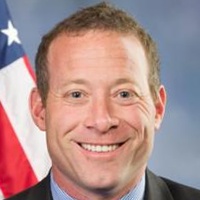
Josh Gottheimer
Representative
NJ
Josh Gottheimer
Representative
NJ
The Stamp Out Lyme Disease Act directs the U.S. Postal Service to issue a special semipostal stamp to raise funds for Lyme disease research. All proceeds from the sale of this stamp will be directed to the National Institute of Allergy and Infectious Diseases (NIAID). This measure aims to support research into tick-borne illnesses, acknowledging the significant public health and financial burden of Lyme disease in the United States.
This Act establishes a pilot program to provide grants to states for creating electronic services that identify ticks, assess disease risk, and offer public guidance.
Josh Gottheimer
Representative
NJ
Josh Gottheimer
Representative
NJ
The Tick Identification Pilot Program Act of 2025 establishes a pilot program to provide grants to states for creating electronic tick identification services. These state programs will allow residents to submit photos of ticks for review by qualified biologists within 72 hours. The goal is to rapidly inform the public about the tick species, potential disease risk, and necessary next steps to combat tick-borne illnesses.
The BITE Act establishes a comprehensive national system utilizing AI, data tracking, and public education to prevent and predict vector-borne diseases like those transmitted by ticks.
Josh Gottheimer
Representative
NJ
Josh Gottheimer
Representative
NJ
The Battling Infections Transmitted by Ticks and Exposure (BITE) Act establishes a comprehensive national system to prevent vector-borne diseases like Lyme disease. This system will utilize AI-driven early warning alerts, expert identification services, and real-time monitoring of insurance claims and symptoms. A key goal of the Act is to support efforts to reduce Lyme disease cases by 25% by 2035.
This bill penalizes companies that move call center jobs overseas while requiring transparency about agent location and AI use during customer service communications.
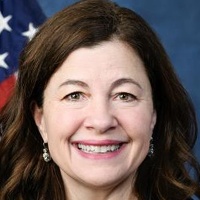
Kristen McDonald Rivet
Representative
MI
Kristen McDonald Rivet
Representative
MI
The Keep Call Centers in America Act of 2025 aims to incentivize keeping customer service jobs in the U.S. by penalizing companies that move call centers overseas with loss of federal grants and contracts. The bill also mandates transparency, requiring businesses to disclose an agent's physical location or the use of AI during customer service communications. Furthermore, it ensures that all call center work performed under a federal contract must be completed within the United States.
This Act establishes a multi-sector Task Force, led by the Treasury Secretary, to study, recommend strategies for, and report on preventing evolving electronic payment scams.
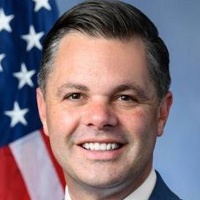
Zachary (Zach) Nunn
Representative
IA
Zachary (Zach) Nunn
Representative
IA
The Taskforce for Recognizing and Averting Payment Scams Act (TRAPS Act) establishes a new Task Force led by the Secretary of the Treasury. This diverse group, including federal agencies, industry experts, and consumer advocates, will study evolving payment scams. The Task Force is charged with developing cross-sector prevention strategies and submitting comprehensive recommendations for new laws and improved coordination to combat these fraudulent activities.
The Afghan Adjustment Act creates pathways to conditional permanent residency for eligible Afghans already in the U.S. and establishes special refugee processing for at-risk Afghan allies who worked with U.S. interests.
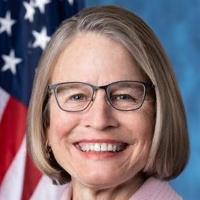
Mariannette Miller-Meeks
Representative
IA
Mariannette Miller-Meeks
Representative
IA
The Afghan Adjustment Act establishes new pathways for certain Afghan nationals already in the U.S. to obtain conditional permanent resident status, contingent upon rigorous security vetting. It also creates a special referral process for at-risk Afghan allies still outside the U.S. to access the U.S. Refugee Admissions Program remotely. Furthermore, the bill extends deadlines and expands eligibility for existing Special Immigrant Visas (SIVs) while mandating significant interagency coordination and reporting to Congress on processing efficiency.
This resolution formally recognizes the 20th anniversary of the Renewable Fuel Standard and affirms its foundational role in boosting U.S. energy security, supporting rural economies, and improving environmental performance.
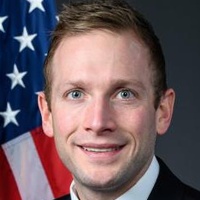
Max Miller
Representative
OH
Max Miller
Representative
OH
This resolution formally recognizes the 20th anniversary of the Renewable Fuel Standard (RFS) and celebrates its foundational role in strengthening U.S. energy security and supporting rural economies. It highlights the RFS's success in driving domestic fuel innovation, creating jobs, and improving environmental performance. The measure affirms the ongoing importance of the RFS in achieving national energy, economic, and environmental goals.
This bill mandates a long-term study and creation of a health registry to investigate the neurological and mental health effects of G-force stress and flight operations on military aviators.
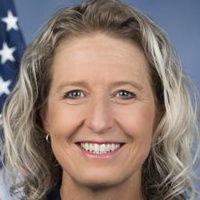
Jennifer Kiggans
Representative
VA
Jennifer Kiggans
Representative
VA
The Warrior Impact from Neurological and G-Force Stress Act (WINGS Act) mandates a comprehensive, long-term study by the VA to investigate the physical and mental health effects of military flight operations, particularly high G-forces, on aviators. This research will examine links between flight stress and conditions like TBI, cognitive decline, and mental health issues, comparing aviators to other service members. The bill also requires the creation of a dedicated Military Aviator Neurohealth Registry to track this data over time.
The Save Our Seniors Act mandates that Social Security trust fund reports include a comparison graph showing budget assumptions versus actual projected payouts based on dedicated funding.
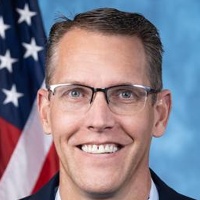
Randy Feenstra
Representative
IA
Randy Feenstra
Representative
IA
The Save Our Seniors Act (SOS Act) mandates that reports on the Social Security Old-Age and Survivors Insurance and Disability Insurance Trust Funds must now include a new graphical comparison. This comparison will show the difference between initial budget assumptions and the actual projected payouts from the Trust Funds based on dedicated funding sources. The goal is to provide clearer transparency regarding the financial status and projections of these vital funds.
The College Transparency Act establishes a secure, centralized system for tracking student data across postsecondary institutions to increase transparency regarding costs, completion, and post-college outcomes.
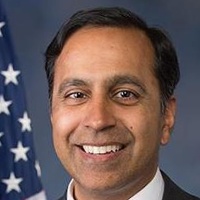
Raja Krishnamoorthi
Representative
IL
Raja Krishnamoorthi
Representative
IL
The College Transparency Act establishes a secure, new national system for tracking student data from postsecondary institutions to improve transparency regarding enrollment, completion, costs, and post-college outcomes. This system will collect detailed, student-level data, securely matched with other federal records, to create public, aggregate reports for comparison. The law mandates strict privacy and security standards while aiming to reduce overall reporting burdens for colleges.
This Act extends the security risk assessment program for SBA activities until 2030 and codifies safeguards to prevent small businesses majority-owned by certain investment firms from receiving SBIR awards if controlled by a covered foreign entity.
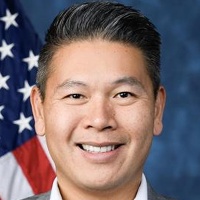
Derek Tran
Representative
CA
Derek Tran
Representative
CA
This act, the SBIR/STTR Foreign Interference Safeguard Act, extends the Small Business Administration's security risk assessment program until 2030. It also establishes new safeguards to prevent small businesses majority-owned by certain investment firms from receiving SBIR awards if they are controlled by a "covered foreign entity." The legislation clearly defines what constitutes a "covered foreign entity" and a "foreign entity of concern" for the purpose of these restrictions.
This Act establishes a federal grant program to fund community-based mentoring initiatives for children and young adults who are currently in or have aged out of the foster care system.
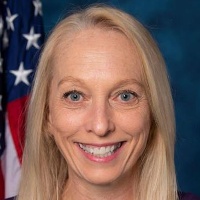
Mary Scanlon
Representative
PA
Mary Scanlon
Representative
PA
The Foster Youth Mentoring Act of 2025 establishes a new federal grant program to fund community-based organizations that provide structured, long-term mentoring for children and young adults who are currently or formerly in foster care. These grants aim to expand high-quality mentoring relationships, requiring rigorous mentor training, thorough background screening, and significant input from youth with lived experience. The goal is to improve outcomes for foster youth in areas like education, mental health, and successful transition to adulthood.
This bill establishes a new system for distributing up to 2,000 additional Medicare-funded residency positions annually from 2026 through 2032, prioritizing hospitals serving underserved areas, and mandates a study on strategies to increase workforce diversity.
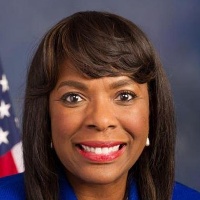
Terri Sewell
Representative
AL
Terri Sewell
Representative
AL
The Resident Physician Shortage Reduction Act of 2025 establishes a structured process for distributing up to 2,000 additional, federally funded residency positions annually between fiscal years 2026 and 2032. This distribution prioritizes hospitals serving in underserved areas, those already training above their limit, and those committed to primary care and general surgery training. The bill also mandates a study and report by the Comptroller General on effective strategies to increase diversity within the health professional workforce.
This bill ensures urban Indian organizations providing healthcare services through the Indian Health Service receive the same federal medical assistance matching funds as tribal organizations.
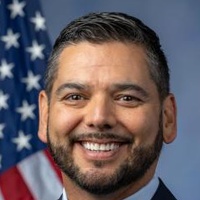
Raul Ruiz
Representative
CA
Raul Ruiz
Representative
CA
The Urban Indian Health Parity Act ensures that urban Indian organizations providing healthcare services under contract with the Indian Health Service can receive the same enhanced federal medical assistance matching funds (FMAP) currently available to tribes. This change expands access to federal healthcare dollars for these vital community organizations. The bill aims to achieve parity in federal funding for urban Indian healthcare providers.
This bill establishes a federal right for producers to sell covered livestock and their derived products across state lines, preempting state and local regulations on the raising of animals outside their jurisdiction.
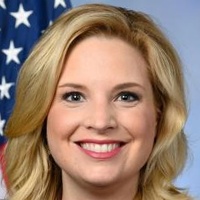
Ashley Hinson
Representative
IA
Ashley Hinson
Representative
IA
The Save Our Bacon Act establishes a federal right for producers to move and sell products derived from covered livestock across state lines, ensuring a single national market. This legislation prevents individual states from imposing unique production standards on livestock or products raised outside their borders. Essentially, it standardizes regulations to ensure free interstate commerce for meat and dairy products, excluding those primarily derived from egg-laying animals.
This Act expands Medicare coverage for hereditary cancer genetic testing, preventative surgeries, and evidence-based cancer screenings for at-risk individuals.
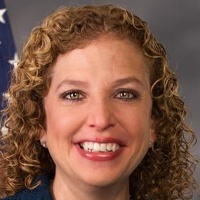
Debbie Wasserman Schultz
Representative
FL
Debbie Wasserman Schultz
Representative
FL
The Reducing Hereditary Cancer Act expands Medicare coverage for individuals with a family or personal history suggestive of hereditary cancer. This legislation mandates Medicare coverage for appropriate genetic testing and risk-reducing preventive surgeries. Furthermore, it allows for expanded, evidence-based cancer screenings for individuals already diagnosed with a hereditary cancer gene mutation.
This bill mandates a comprehensive study to investigate potential links between military rotary-wing operations and increased cancer prevalence or mortality among pilots and support personnel.
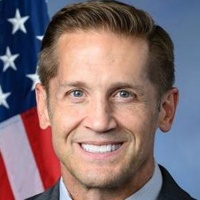
Rich McCormick
Representative
GA
Rich McCormick
Representative
GA
The ROTOR Act mandates a comprehensive study to investigate cancer prevalence and mortality rates among military rotary-wing pilots and aviation support personnel. This research, conducted by the Defense Health Agency in partnership with the NIH and NCI, will first compare cancer rates in these service members against the general population. If elevated rates are found, a second phase will seek to identify potential toxic exposures or environmental factors linked to helicopter operations that may be causing the increased risk.