Legislative Activity
Track Julia's sponsored bills, co-sponsored legislation, and voting record
The Better CARE for Animals Act of 2025 strengthens the enforcement of the Animal Welfare Act by expanding investigative authority, establishing new civil penalties up to \$10,000 per day, and explicitly granting the Attorney General power to file civil actions, including seeking seizure and forfeiture of animals.
Nicole Malliotakis
Representative
NY
Nicole Malliotakis
Representative
NY
The Better CARE for Animals Act of 2025 significantly strengthens enforcement of the Animal Welfare Act by clarifying definitions and expanding the scope of investigations. It grants the Attorney General explicit authority to file civil actions seeking penalties up to $10,000 per day, and mandates that collected fines help cover temporary animal care costs. The bill also requires the Secretary of Agriculture and the Attorney General to establish a formal agreement for coordinated enforcement.
The Equality Act comprehensively prohibits discrimination based on sex, sexual orientation, and gender identity across key areas including public accommodations, employment, housing, credit, and jury service.
Mark Takano
Representative
CA
Mark Takano
Representative
CA
The Equality Act comprehensively expands federal civil rights protections against discrimination based on sex, sexual orientation, and gender identity across key areas of American life. It amends existing laws to prohibit discrimination in public accommodations, housing, credit, employment, and federal funding. The purpose of the bill is to provide consistent, explicit, and comprehensive remedies for individuals facing bias in these essential sectors.
The Agriculture Resilience Act of 2025 mandates aggressive national goals to achieve net-zero agricultural emissions by 2040 through sweeping changes in research funding, soil management, livestock practices, and conservation programs.

Chellie Pingree
Representative
ME
Chellie Pingree
Representative
ME
The Agriculture Resilience Act of 2025 establishes aggressive national goals for the agricultural sector to achieve net-zero greenhouse gas emissions by 2040, mandating rapid changes in farming practices, research funding, and land management. It significantly reforms federal conservation and insurance programs to prioritize soil health, climate adaptation, and the development of resilient food systems. The bill also boosts support for on-farm renewable energy, strengthens local food infrastructure, and standardizes food labeling to reduce waste. Overall, it directs substantial federal resources toward transforming agriculture to meet ambitious climate targets while supporting farmers through new incentives and research.
This resolution expresses support for designating the last Tuesday of April as "APOL1-Mediated Kidney Disease (AMKD) Awareness Day" to promote education and genetic testing for this serious health disparity affecting people of African descent.
Stacey Plaskett
Representative
VI
Stacey Plaskett
Representative
VI
This resolution expresses the support of Congress for designating the last Tuesday of April as "APOL1-Mediated Kidney Disease (AMKD) Awareness Day." It highlights the disproportionate impact of AMKD, often linked to APOL1 gene variants common in people of African descent, on kidney health. The bill encourages public education and genetic testing to help identify at-risk individuals early. Ultimately, it aims to raise awareness to reduce kidney disease disparities and promote further research into specific treatments.
This Act significantly increases the civil and criminal penalties, including fines and jail time, for causing oil spills under federal law.
Ted Lieu
Representative
CA
Ted Lieu
Representative
CA
The Increasing Penalties for Offshore Polluters Act significantly strengthens federal enforcement against oil spills. This legislation revises the Federal Water Pollution Control Act to establish much higher minimum and maximum civil fines for polluters. Furthermore, it substantially increases the criminal penalties, doubling the maximum jail time and fines associated with various levels of oil spill violations.
This bill repeals the Arctic National Wildlife Refuge oil and gas program and designates over 1.5 million acres of the refuge as protected wilderness.
Jared Huffman
Representative
CA
Jared Huffman
Representative
CA
The Arctic Refuge Protection Act officially repeals the previous law authorizing oil and gas leasing in the Arctic National Wildlife Refuge. This legislation simultaneously designates approximately 1.56 million acres within the Refuge as protected wilderness under the National Wilderness Preservation System. The Secretary of the Interior is now required to manage this newly designated land according to strict wilderness preservation standards.
This Act authorizes the President to impose sanctions, including asset freezes and visa bans, on foreign individuals involved in violence, property destruction, or displacement in the West Bank.
Jerrold Nadler
Representative
NY
Jerrold Nadler
Representative
NY
The West Bank Violence Prevention Act of 2025 declares extreme settler violence and displacement in the West Bank a threat to U.S. national security interests. This Act mandates the President to impose sanctions, including asset freezes and visa bans, on foreign individuals responsible for undermining peace and stability in the region. The Treasury Department must report to Congress on the implementation of these sanctions every 90 days.
This bill increases the authorized funding for comprehensive service programs aimed at assisting homeless veterans through fiscal year 2024 and sets a specific funding level for 2025.
Delia Ramirez
Representative
IL
Delia Ramirez
Representative
IL
This bill aims to strengthen support for homeless veterans by increasing the authorization of appropriations for comprehensive service programs. It extends the funding authorization through fiscal year 2024 and sets a specific funding target of \$350 million for fiscal year 2025. Moving forward, the bill authorizes necessary funding for these vital services indefinitely.
This resolution expresses the sense of Congress in supporting the recognition of April as National Arab American Heritage Month to celebrate the history, culture, and significant contributions of Arab Americans.
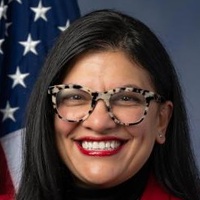
Rashida Tlaib
Representative
MI
Rashida Tlaib
Representative
MI
This resolution expresses the strong support of Congress for recognizing April as National Arab American Heritage Month (NAAHM). It celebrates the rich history, diverse culture, and significant contributions of Arab Americans across all sectors of U.S. society. The measure encourages communities nationwide to observe this month with appropriate programs and activities.
This bill significantly enhances the Child and Dependent Care Tax Credit by raising expense limits, adjusting income phase-outs, and making the credit partially refundable.
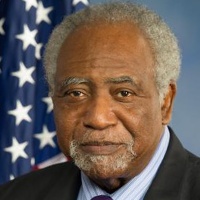
Danny Davis
Representative
IL
Danny Davis
Representative
IL
The Child and Dependent Care Tax Credit Enhancement Act of 2025 significantly increases the maximum expenses eligible for the Child and Dependent Care Tax Credit to \$8,000 for one child and \$16,000 for two or more. This legislation also modifies the income-based calculation for the credit percentage and makes the credit partially or fully refundable for eligible taxpayers. Furthermore, key dollar limits will be adjusted annually for inflation starting in 2026.
This resolution expresses support for honoring Earth Day, recognizes past environmental achievements, warns against undermining current climate laws, and urges the President to issue a proclamation encouraging environmental action.

Doris Matsui
Representative
CA
Doris Matsui
Representative
CA
This resolution expresses strong support for honoring Earth Day and recognizes its historical importance in launching the modern environmental movement. It highlights ongoing challenges like climate change while celebrating recent landmark investments in clean energy and infrastructure. Ultimately, the bill urges the President to issue a proclamation recognizing Earth Day and encourages all Americans to take sustained action to protect the environment for future generations.
This resolution officially designates April 2025 as Community College Month to recognize the vital role over 1,000 community colleges play in providing accessible education, workforce training, and economic prosperity across the United States.
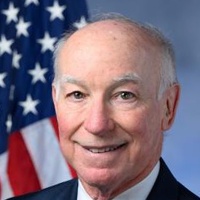
Joe Courtney
Representative
CT
Joe Courtney
Representative
CT
This resolution officially designates April 2025 as "Community College Month" to celebrate the vital role of over 1,000 community colleges nationwide. It recognizes these institutions for providing accessible, affordable higher education and critical workforce training. The bill highlights their significant economic contributions and commitment to local community needs.
This act officially recognizes accounting education as part of a well-rounded curriculum to improve access to accounting programs, especially for underrepresented students.

Young Kim
Representative
CA
Young Kim
Representative
CA
The Accounting STEM Pursuit Act of 2025 officially recognizes accounting education as a vital component of a well-rounded K-12 curriculum. This legislation amends federal education law to ensure accounting is counted within core curriculum planning frameworks. The Act specifically directs states and districts to improve access to quality accounting programs, with a focus on increasing opportunities for underrepresented students.
The Youth Workforce Readiness Act of 2025 establishes grants for out-of-school programs run by community organizations to prepare eligible youth (ages 6-18) for employment through work experience, training, and mentorship, while also strengthening local Youth Councils.
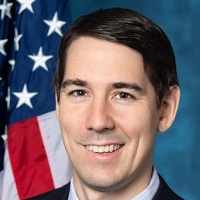
Josh Harder
Representative
CA
Josh Harder
Representative
CA
The Youth Workforce Readiness Act of 2025 establishes a competitive grant program to fund national organizations in developing comprehensive, out-of-school workforce readiness programs for youth aged 6 to 18. This Act aims to boost employment opportunities by connecting youth education and training with employer needs through community partnerships. Furthermore, it strengthens youth voices by mandating the reestablishment and integration of Youth Councils within local workforce boards to advise on training and readiness initiatives.
This bill permanently prohibits new and existing oil and gas leasing for drilling in designated Arctic areas of the outer Continental Shelf.
Jared Huffman
Representative
CA
Jared Huffman
Representative
CA
The Stop Arctic Ocean Drilling Act of 2025 permanently prohibits the issuance of new oil and gas leases, or the extension of existing ones, for mineral exploration and production in designated Arctic areas of the outer Continental Shelf. This measure establishes an ironclad ban on offshore drilling in these specific Arctic waters.
This act permanently bans new oil and gas leasing for exploration, development, or production in the Southern California Planning Area.
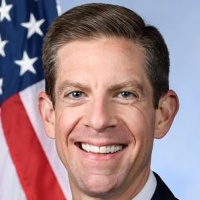
Mike Levin
Representative
CA
Mike Levin
Representative
CA
The Southern California Coast and Ocean Protection Act permanently prohibits the Secretary of the Interior from issuing any new oil or gas leases within the Southern California Planning Area. This measure specifically bans all exploration, development, and production authorizations in the region defined by the September 2023 leasing program. The Act ensures long-term protection for the Southern California coast against new offshore drilling activities.
The Neighborhood Homes Investment Act establishes a new federal tax credit to incentivize the development and substantial rehabilitation of affordable starter homes in low-income communities by closing the financing gap between construction costs and sale prices.
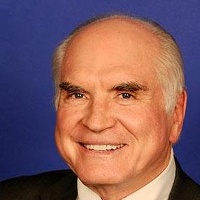
Mike Kelly
Representative
PA
Mike Kelly
Representative
PA
The Neighborhood Homes Investment Act establishes a new federal tax credit designed to close the financing gap hindering the construction and rehabilitation of affordable starter homes in distressed communities. This credit incentivizes developers to build or substantially renovate housing in specific low-income census tracts and sell it affordably to qualified moderate-income homeowners. State agencies will manage the allocation of these credits, ensuring projects meet affordability standards and promoting revitalization in struggling neighborhoods.
This Act establishes an Advisory Council to survey needs, identify best practices, and disseminate comprehensive resources for victims of all forms of gun violence.
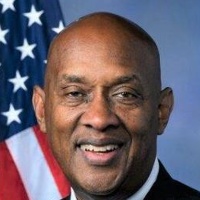
Dwight Evans
Representative
PA
Dwight Evans
Representative
PA
The Resources for Victims of Gun Violence Act of 2025 establishes an Advisory Council, led by HHS, to assess the needs of gun violence victims and service providers. This Council will survey stakeholders, review existing support programs, and identify best practices for medical, financial, and mental health assistance. Its primary function is to compile and widely distribute a comprehensive list of available federal, state, and nonprofit resources to ensure victims can easily access necessary aid.
This act permanently bans new oil and gas leasing for exploration and production in the Central California Planning Area offshore.
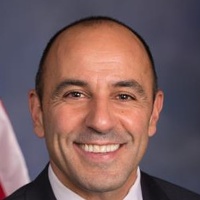
Jimmy Panetta
Representative
CA
Jimmy Panetta
Representative
CA
The Central Coast of California Conservation Act of 2025 permanently prohibits the Secretary of the Interior from issuing new oil and gas leases in the Central California Planning Area. This legislation secures the protection of this offshore region from future energy exploration and development.
The SOAR Act of 2025 reforms Medicare oxygen benefits by removing competitive bidding, establishing specific supplier responsibilities, enhancing fraud protection through electronic documentation, and enshrining patient rights for supplemental oxygen recipients.
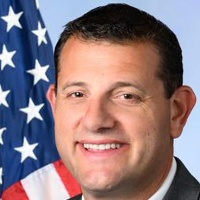
David Valadao
Representative
CA
David Valadao
Representative
CA
The SOAR Act of 2025 aims to significantly reform Medicare access to supplemental oxygen by removing it from the competitive bidding program and establishing new payment rates. The bill also mandates clearer documentation requirements for medical necessity using electronic templates and restores clinical judgment in claim audits. Finally, it establishes specific rights for oxygen beneficiaries and improves reimbursement for respiratory therapists.