Legislative Activity
Track Suzanne's sponsored bills, co-sponsored legislation, and voting record
This bill establishes a mechanism to ensure the Federal Aviation Administration remains funded and operational during a lapse in appropriations.

Steve Cohen
Representative
TN
Steve Cohen
Representative
TN
The Aviation Funding Stability Act of 2025 establishes an automatic mechanism to ensure the Federal Aviation Administration (FAA) remains funded during a lapse in appropriations. This allows the FAA to continue essential operations using existing funds from the Airport and Airway Trust Fund until a new budget or continuing resolution is enacted. Funding will cease after 30 days if no new appropriations are passed. This ensures continuity for core FAA programs, including operations, infrastructure, and grants.
This House resolution strongly condemns all forms of political violence and demands an end to dehumanizing rhetoric against political opponents.
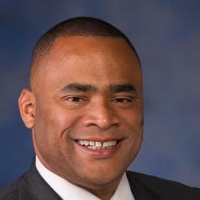
Marc Veasey
Representative
TX
Marc Veasey
Representative
TX
This House Resolution strongly condemns all forms of political violence and threats against elected officials and public figures, regardless of political affiliation. It affirms that disagreements must be resolved through peaceful and democratic means, not intimidation or force. The resolution urges law enforcement to prosecute those who commit or encourage such violence. Finally, it calls on all leaders to cease using dehumanizing rhetoric and promote civil discourse.
This bill reauthorizes a federal grant program to help colleges provide affordable, high-quality child care access to Pell Grant-eligible student parents to support their success in postsecondary education.

Katherine Clark
Representative
MA
Katherine Clark
Representative
MA
The CCAMPIS Reauthorization Act updates federal law to continue providing grants to colleges and universities that help student parents access affordable, high-quality child care. These funds support on-campus services, subsidized care, or related support programs for Pell Grant-eligible student parents. Institutions must meet specific quality standards and report annually on student outcomes to maintain funding.
The Preparing And Retaining All (PARA) Educators Act establishes a federal grant program to help states fund local efforts aimed at recruiting, retaining, and credentialing school paraprofessionals, prioritizing high-need and low-income districts.
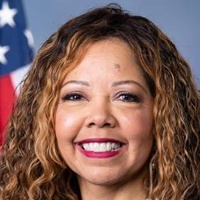
Lucy McBath
Representative
GA
Lucy McBath
Representative
GA
The Preparing And Retaining All (PARA) Educators Act establishes a new federal grant program to help states recruit and retain school paraprofessionals. Funds will be distributed to states based on their existing Title I allocations to support local districts. States must use these competitive subgrants to improve paraprofessional wages, offer professional development, and support credentialing, prioritizing high-need and rural schools. The law requires annual reporting on compensation improvements and retention efforts.
This Act conditions eligibility for Edward Byrne Memorial Justice Assistance Grants on prohibiting firearm transfers with licensed dealers identified by the ATF as frequently selling guns used quickly in crimes.
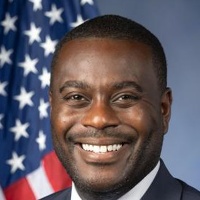
Gabe Amo
Representative
RI
Gabe Amo
Representative
RI
The Responsible Retirement of Law Enforcement Firearms Act of 2025 (RRLEF Act) amends the Edward Byrne Memorial Justice Assistance Grant Program to require state and local agencies to cease firearm transfers with licensed dealers flagged by the ATF. Dealers are placed on a restricted list if a significant number of their traced firearms show a "short time-to-crime." Furthermore, the Act mandates increased public disclosure of firearm tracing data by the ATF, removing previous statutory restrictions on making this information public.
This Act mandates that most health insurance plans, Medicare Part D, Medicaid, and CHIP must cover specific, currently recommended vaccines without out-of-pocket costs for a limited time.

Frank Pallone
Representative
NJ
Frank Pallone
Representative
NJ
The Protecting Free Vaccines Act mandates that most private health insurance plans must cover specific vaccines recommended by the CDC's Advisory Committee on Immunization Practices (ACIP) without any out-of-pocket costs until January 1, 2030. This requirement also updates coverage rules for Medicare Part D, Medicaid, and CHIP to ensure continuity of coverage for these recommended immunizations. The bill locks in coverage based on the ACIP recommendations in place as of October 25, 2024, across various federal health programs.
This resolution expresses support for designating the week of September 20 through September 27, 2025, as "National Estuaries Week" to recognize the vital economic and environmental importance of these coastal ecosystems.
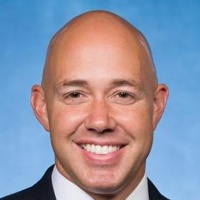
Brian Mast
Representative
FL
Brian Mast
Representative
FL
This resolution expresses strong support for designating the week of September 20 through September 27, 2025, as "National Estuaries Week." It highlights the critical economic and environmental value of estuaries, which support millions of jobs and provide vital natural protection for coastal communities. The bill aims to raise public awareness about the need to protect and restore these essential ecosystems.
This bill amends the Social Security Act to provide Medicare coverage for FDA-approved multi-cancer early detection screening tests starting in 2028.
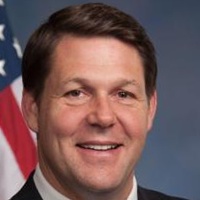
Jodey Arrington
Representative
TX
Jodey Arrington
Representative
TX
The Nancy Gardner Sewell Medicare Multi-Cancer Early Detection Screening Coverage Act amends the Social Security Act to provide Medicare Part B coverage for multi-cancer early detection screening tests starting January 1, 2028. This legislation establishes clear criteria for qualifying tests and outlines payment structures to ensure beneficiaries have access to these advanced diagnostic tools. Importantly, this coverage is designed to complement, rather than replace, existing Medicare-covered cancer screenings.
This bill establishes a six-year pilot program for selected hospitals to provide medically tailored, home-delivered meals and nutrition therapy to high-risk Medicare patients upon discharge to reduce hospital readmissions.
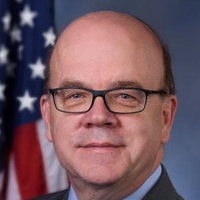
James McGovern
Representative
MA
James McGovern
Representative
MA
This bill establishes a six-year pilot program for hospitals to provide medically tailored, home-delivered meals and nutrition therapy to eligible Medicare patients upon discharge. The goal is to improve health outcomes and reduce hospital readmissions for individuals with diet-sensitive conditions who have difficulty with daily living activities. Participating hospitals will receive payment for these services, which must be provided at no out-of-pocket cost to the patient. The Secretary of Health and Human Services will evaluate the program's effectiveness using data collected from the participating sites.
This bill mandates dedicated, funded resources for specialized 988 Suicide Prevention Lifeline services for LGBTQ+ youth.
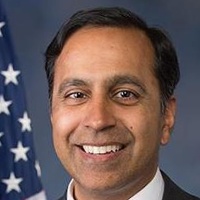
Raja Krishnamoorthi
Representative
IL
Raja Krishnamoorthi
Representative
IL
The **988 LGBTQ+ Youth Access Act of 2025** addresses the high rates of suicide risk among LGBTQ youth by strengthening specialized support through the national crisis hotline. This bill mandates that dedicated resources and services, such as a specific dialing option, must be maintained for LGBTQ individuals contacting 988. Furthermore, it requires that at least 9 percent of appropriated funds for the hotline be specifically reserved to ensure these specialized services for LGBTQ youth remain fully operational.
This constitutional amendment grants Congress and the states the authority to regulate campaign contributions and expenditures, and to establish public financing systems for political campaigns.
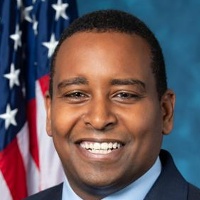
Joe Neguse
Representative
CO
Joe Neguse
Representative
CO
This constitutional amendment seeks to grant Congress and the states the authority to regulate contributions and expenditures in political campaigns. It specifically allows for the establishment of public financing systems to offset the influence of private money in elections. The amendment ensures that any regulations enacted must not infringe upon the freedom of the press.
This Act amends the Fair Housing Act to prohibit discrimination in housing based on source of income, veteran status, or military status.

Scott Peters
Representative
CA
Scott Peters
Representative
CA
The Fair Housing Improvement Act of 2025 amends the Fair Housing Act to prohibit discrimination in housing based on source of income, veteran status, and military status. This expansion ensures that landlords cannot deny housing based on factors like the use of housing vouchers or military service. The Act also strengthens existing prohibitions against intimidation related to these newly protected statuses.
The FAMILY Act establishes a national paid family and medical leave insurance program administered by the Social Security Administration, providing benefits for caregiving related to serious health conditions or victims of violence.

Rosa DeLauro
Representative
CT
Rosa DeLauro
Representative
CT
The FAMILY Act establishes a national Paid Family and Medical Leave Insurance program administered by a new office within the Social Security Administration. This program provides monthly benefits to eligible individuals who take time off for qualified caregiving reasons, including serious health conditions or victims of violence. The Act also sets forth detailed eligibility requirements, benefit calculation formulas, and job protection guarantees for employees utilizing the leave. Finally, it creates a funding mechanism to support existing state-level paid leave programs that meet federal standards.
This Act establishes grants for Minority-Serving Institutions to enhance arts education, support minority students, and address diversity gaps in the arts sector.
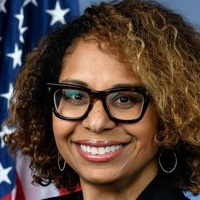
Sydney Kamlager-Dove
Representative
CA
Sydney Kamlager-Dove
Representative
CA
The Equitable Arts Education Enhancement Act establishes a new grant program to boost arts education at Minority-Serving Institutions (MSIs). These funds are intended to increase access to the arts for minority students through financial aid, mentorship, and career development. The bill aims to address the lack of diversity in arts leadership by supporting institutions well-positioned to train diverse arts professionals. Ultimately, this legislation seeks to preserve and promote the work of artists of color while strengthening arts programs nationwide.
The FAIR Act of 2025 invalidates pre-dispute arbitration agreements and joint-action waivers for employment, consumer, antitrust, and civil rights claims, while preserving the right to voluntary arbitration after a dispute arises.

Henry Johnson
Representative
GA
Henry Johnson
Representative
GA
The FAIR Act of 2025 invalidates pre-dispute arbitration agreements and class action waivers for employment, consumer, antitrust, and civil rights claims. This law restores the right for individuals to pursue these disputes in court or through collective legal action. The provisions apply to all covered disputes arising on or after the date the Act is enacted.
This resolution expresses support for designating a week to recognize the vital role of Community School Coordinators in supporting students and strengthening community partnerships.
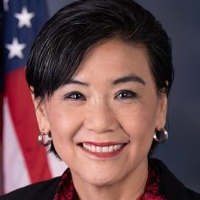
Judy Chu
Representative
CA
Judy Chu
Representative
CA
This resolution expresses the House's strong support for designating a week to honor Community School Coordinators. It highlights the vital role these coordinators play in integrating school and community resources to improve student outcomes. The bill specifically designates the week of September 14 through September 20, 2025, as "Community School Coordinators Appreciation Week."
The George Floyd Justice in Policing Act of 2025 comprehensively reforms policing by increasing accountability, mandating transparency through data collection, restricting dangerous tactics, and prohibiting sexual misconduct by officials acting under color of law.
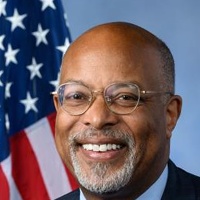
Glenn Ivey
Representative
MD
Glenn Ivey
Representative
MD
The George Floyd Justice in Policing Act of 2025 is a comprehensive bill designed to increase police accountability and transparency nationwide through federal mandates and funding incentives. It reforms standards for prosecuting civil rights violations, eliminates qualified immunity, and establishes national registries for police misconduct and use-of-force data. Furthermore, the Act bans specific dangerous police tactics like chokeholds and restricts the transfer of military equipment to local departments.
The FLAME Act establishes notification and reimbursement procedures for significant cancellations of training courses offered by the National Academy for Fire Prevention and Control and mandates a GAO study on the impact of such cancellations.
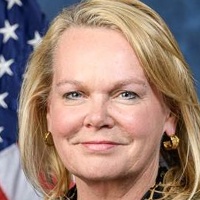
April McClain Delaney
Representative
MD
April McClain Delaney
Representative
MD
The Firefighter Learning And Management Education (FLAME) Act establishes new notification requirements for the Administrator of the U.S. Fire Administration when large-scale cancellations of National Academy for Fire Prevention and Control courses occur. It mandates timely notification to Congress and affected students regarding any significant course reductions. Furthermore, the bill allows fire departments to seek reimbursement for incurred expenses if a course is cancelled for reasons other than "good cause" and requires a GAO study on the impact of these cancellations.
This bill posthumously awards a Congressional Gold Medal to honor the groundbreaking civil rights achievements of Constance Baker Motley and authorizes the production and sale of bronze duplicates.
Rosa DeLauro
Representative
CT
Rosa DeLauro
Representative
CT
This bill, the Congressional Tribute to Constance Baker Motley Act of 2025, posthumously awards the Congressional Gold Medal to the pioneering civil rights attorney and federal judge, Constance Baker Motley. The legislation recognizes her historic achievements, including her role in *Brown v. Board of Education* and her service as the first African-American woman appointed as a federal judge. The Secretary of the Treasury is authorized to strike the medal, and provisions are made for selling bronze duplicates to cover production costs.
The Weather Act Reauthorization Act of 2025 comprehensively updates and funds federal weather research, modernizes forecasting infrastructure, integrates commercial data, and improves public communication to enhance severe weather preparedness and mitigation across the nation.

Frank Lucas
Representative
OK
Frank Lucas
Representative
OK
The Weather Act Reauthorization Act of 2025 aims to significantly enhance U.S. weather forecasting, research, and public safety measures across five years. It mandates the modernization of critical infrastructure, including radar systems and data processing, while prioritizing the integration of commercial technology and social science research into actionable, impact-based warnings. The bill focuses on improving predictions for severe events like tornadoes, hurricanes, and droughts, and overhauls how NOAA acquires and utilizes private sector weather data. Ultimately, this legislation seeks to deliver faster, clearer, and more reliable hazard information to protect American lives and property.