Legislative Activity
Track Richard's sponsored bills, co-sponsored legislation, and voting record
The Asunción Valdivia Heat Illness, Injury, and Fatality Prevention Act of 2025 mandates that employers protect workers from heat stress and requires the Secretary to establish comprehensive, science-based worker heat protection standards with strict enforcement and reporting mechanisms.
Alejandro Padilla
Senator
CA
Alejandro Padilla
Senator
CA
The Asunción Valdivia Heat Illness, Injury, and Fatality Prevention Act of 2025 mandates that employers protect workers from dangerous heat stress conditions. This Act requires the Secretary (of Labor) to rapidly establish comprehensive, science-based worker heat protection standards, including mandatory rest, water, and shade provisions. Furthermore, it grants enforcement power to OSHA, ensuring these new heat safety rules carry the full weight of existing occupational safety law. The legislation also establishes strong anti-retaliation protections for employees who report heat hazards.
This bill amends federal law to establish new restrictions, cooling-off periods, and public reporting requirements for donations made to Presidential Libraries and Centers.

Elizabeth Warren
Senator
MA
Elizabeth Warren
Senator
MA
This bill establishes new restrictions and transparency requirements for donations made to Presidential Libraries and Centers. It bans certain prohibited entities, such as lobbyists and foreign nationals, from donating while a President is in office or for two years after leaving. The legislation also imposes a $10,000 aggregate donation limit per person and mandates public quarterly reporting of all significant contributions.
This Act requires the Department of Health and Human Services to regularly publish science-based physical activity recommendations for all Americans, without imposing mandatory fitness standards.

Roger Wicker
Senator
MS
Roger Wicker
Senator
MS
The Promoting Physical Activity for Americans Act requires the Secretary of Health and Human Services to publish comprehensive, science-based physical activity recommendations for all Americans, updated at least every ten years. This legislation mandates specific guidance for diverse populations, including advice on reducing sedentary behavior. The resulting reports must inform federal health program guidelines, though the Act explicitly prohibits mandatory fitness standards for individuals.
This concurrent resolution formally recognizes the health and safety emergency facing children due to the previous administration's fossil fuel promotion and suppression of climate science, demanding alignment with children's rights and climate stability goals.

Jeff Merkley
Senator
OR
Jeff Merkley
Senator
OR
This concurrent resolution formally recognizes a health and safety emergency disproportionately affecting children due to the previous administration's directives promoting fossil fuels and suppressing climate science. Congress asserts these policies increased greenhouse gas emissions, endangering children's fundamental constitutional rights to life and security. The resolution demands the reversal of policies that hindered clean energy and calls for federal actions to align with limiting CO2 to below 350 ppm this century to protect future generations.
The Child Care for Working Families Act establishes federal entitlements and grants to guarantee access to affordable, high-quality child care and universal preschool while mandating significant wage increases for early childhood educators.
Patty Murray
Senator
WA
Patty Murray
Senator
WA
The Child Care for Working Families Act establishes comprehensive federal programs to guarantee access to high-quality, affordable child care for young children of working families. It mandates significant investments to stabilize the child care workforce by requiring higher provider pay and sets strict caps on costs for parents based on income. Additionally, the bill creates a framework for universal, free preschool for three- and four-year-olds and extends service hours and raises compensation for Head Start staff.
This bill authorizes the creation and sale of commemorative coins for the 2028 Los Angeles Olympic and Paralympic Games and the 2034 Salt Lake City Winter Olympic and Paralympic Games to help fund their hosting and legacy programs.
Alejandro Padilla
Senator
CA
Alejandro Padilla
Senator
CA
This Act authorizes the creation and sale of commemorative coins to celebrate the upcoming 2028 Summer Olympic and Paralympic Games in Los Angeles and the 2034 Winter Olympic and Paralympic Games in Salt Lake City. The Secretary of the Treasury is empowered to mint various denominations of gold, silver, and clad coins for each event, with designs reflecting American participation. A mandatory surcharge on each coin sold will directly fund the respective organizing committees for the Games and their legacy programs, provided the government recovers all minting costs first.
This Act establishes strict new consent and disclosure requirements for businesses using automatic renewals, free trials, and negative option features to prevent deceptive online billing practices.

Chris Van Hollen
Senator
MD
Chris Van Hollen
Senator
MD
The Consumer Online Payment Transparency and Integrity Act establishes strict new rules to protect consumers from deceptive automatic renewal and free trial charges. It mandates that businesses must obtain express, informed consent before billing for renewals and provide clear, easy cancellation methods upfront. Violations of these consent and disclosure requirements will render the renewal void, requiring full refunds, and will be enforced by the FTC as unfair business practices.
This concurrent resolution officially recognizes Black Women's Equal Pay Day to highlight the significant and persistent wage disparity Black women face compared to White, non-Hispanic men.
Lisa Blunt Rochester
Senator
DE
Lisa Blunt Rochester
Senator
DE
This concurrent resolution officially recognizes the significance of equal pay and highlights the persistent wage disparity faced by Black women compared to White, non-Hispanic men. It designates July 10, 2025, as Black Women's Equal Pay Day to draw attention to the economic losses caused by this gap. The resolution underscores that closing this disparity is vital for the economic stability and wealth-building of Black women and their families.
This resolution expresses support for designating July 10, 2025, as Journeyman Lineworkers Recognition Day to honor their critical, often dangerous, service to the nation's power grid.

Catherine Cortez Masto
Senator
NV
Catherine Cortez Masto
Senator
NV
This resolution expresses support for designating July 10, 2025, as Journeyman Lineworkers Recognition Day. It honors the critical, often dangerous work these essential employees perform to maintain the nation's power grid 24/7. The day commemorates their service, especially during emergencies, and recognizes the sacrifice of those who have lost their lives in the line of duty.
This Act authorizes the Treasury to mint and sell commemorative gold, silver, and clad coins in 2029 to honor the history and service of the U.S. Foreign Service, with surcharges benefiting the Association for Diplomatic Studies and Training.
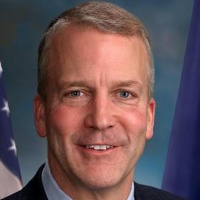
Dan Sullivan
Senator
AK
Dan Sullivan
Senator
AK
This Act authorizes the Secretary of the Treasury to mint and issue a limited series of commemorative gold, silver, and clad coins to honor the history and service of the United States Foreign Service. The coins must be issued in 2029, with designs approved after consultation with the Association for Diplomatic Studies and Training. All surcharges collected from the sale of these coins will be directed to that Association to support its mission of preserving diplomatic history. The Treasury must fully recover all production and issuance costs before any surcharge funds are distributed.
The VISIBLE Act mandates that federal immigration officers clearly display their agency and identification number or name on their outermost clothing during public enforcement activities to enhance transparency and accountability.
Alejandro Padilla
Senator
CA
Alejandro Padilla
Senator
CA
The VISIBLE Act mandates that federal immigration officers (CBP and ICE) clearly display their agency and name/badge number on their outermost clothing during all public-facing enforcement activities. This law aims to increase transparency and public trust by ensuring officers are easily identifiable from a distance. The Department of Homeland Security must report annually to Congress on compliance rates and disciplinary actions taken for violations. Furthermore, the DHS Office for Civil Rights and Civil Liberties will investigate public complaints regarding these new identification standards.
This resolution officially recognizes June 2025 as LGBTQ Pride Month to honor the community's history, acknowledge ongoing struggles, and celebrate their contributions to the nation.

Tina Smith
Senator
MN
Tina Smith
Senator
MN
This resolution officially recognizes June 2025 as LGBTQ Pride Month to honor the history, struggles, and significant contributions of the LGBTQ community in the United States. It acknowledges past and ongoing discrimination while celebrating key legal milestones toward equality. The Senate encourages the nation to use this month to learn about inequality and celebrate the community's achievements both domestically and globally.
This bill establishes federal funding and programs through HHS and the Department of Labor to support community-based violence intervention and provide job training for opportunity youth in high-violence areas.
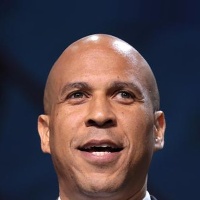
Cory Booker
Senator
NJ
Cory Booker
Senator
NJ
The Break the Cycle of Violence Act establishes a comprehensive federal strategy to reduce community violence through non-carceral, evidence-based interventions. Title I creates a new grant program within HHS to fund local violence intervention programs focused on high-risk individuals and trauma-responsive care. Title II authorizes $1.5 billion in Department of Labor grants to fund year-round job training and workforce development specifically for opportunity youth in high-violence areas. Overall, the bill directs significant federal resources toward community-led solutions that prioritize public health, economic opportunity, and violence reduction.
This act prohibits the use of a victim's sexual orientation or gender identity as a basis for a "panic defense" in federal criminal cases, while requiring annual reporting on bias-motivated crimes against LGBTQ+ individuals.
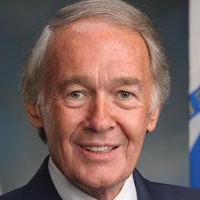
Edward Markey
Senator
MA
Edward Markey
Senator
MA
The LGBTQ+ Panic Defense Prohibition Act of 2025 bans the use of a victim's sexual orientation or gender identity as a justification or mitigation for committing a violent crime in federal court. This legislation aims to eliminate "panic defenses" that wrongly suggest a person's identity can excuse criminal behavior. The bill also mandates an annual report from the Attorney General detailing federal prosecutions of bias-motivated crimes against LGBTQ+ individuals.
The ATF DATA Act mandates the annual public reporting of detailed firearm trace data collected by the ATF, including statistics on top sellers, high-crime areas, and ghost guns.
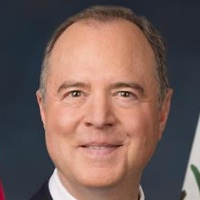
Adam Schiff
Senator
CA
Adam Schiff
Senator
CA
The ATF Data and Anti-Trafficking Accountability (ATF DATA) Act mandates the Bureau of Alcohol, Tobacco, Firearms and Explosives (ATF) to annually publish detailed firearm trace data for Congress and the public. This comprehensive report must break down tracing statistics by seller type, highlight the top 200 sellers, and analyze recovery data in high-homicide areas. The bill also requires specific reporting on "ghost guns," firearms recovered from multiple sales, and overall firearm trafficking patterns.
This Act prohibits firearm sales to individuals subject to a court order restricting gun possession while awaiting trial and provides federal grants to states for reporting such orders to the NICS background check system.
Cory Booker
Senator
NJ
Cory Booker
Senator
NJ
The Preventing Pretrial Gun Purchases Act amends federal law to prohibit individuals subject to a court order restricting firearm possession while awaiting trial from purchasing or possessing guns. This legislation establishes a federal definition for "pretrial release order" and requires licensed dealers to check for these new prohibitions during sales. Furthermore, the bill creates a grant program to incentivize states and tribes to report these restrictive court orders to the National Instant Criminal Background Check System (NICS).
This Act strengthens protections for domestic violence and stalking survivors by expanding the definition of an intimate partner, clarifying dating relationships, protecting children from dating partners, and prohibiting firearm possession for those convicted of misdemeanor stalking.

Amy Klobuchar
Senator
MN
Amy Klobuchar
Senator
MN
The Strengthening Protections for Domestic Violence and Stalking Survivors Act of 2025 updates definitions to expand protections for victims of intimate partner violence, including broadening who qualifies as an intimate partner. This legislation clarifies what constitutes a "dating relationship" and extends misdemeanor domestic violence protections to children harmed by a parent's dating partner. Crucially, the Act also creates a new federal prohibition preventing individuals convicted of misdemeanor stalking from owning or possessing firearms.
The Equal Dignity for Married Taxpayers Act of 2025 systematically updates the Internal Revenue Code to use gender-neutral language when referring to married couples and spouses, without altering existing tax rules.
Ron Wyden
Senator
OR
Ron Wyden
Senator
OR
The Equal Dignity for Married Taxpayers Act of 2025 is a legislative update designed to modernize the Internal Revenue Code by ensuring gender-neutral language is used when referencing married taxpayers and their spouses. This bill systematically replaces outdated gendered terms like "husband and wife" or "his" with inclusive terms such as "married couple" and "spouse." The changes are purely linguistic, ensuring consistency across tax rules without altering any existing tax liabilities or deductions.
This Act extends the deadline for certain legally married couples to amend past tax filings to claim joint filing benefits based on Revenue Ruling 2013-17.
Elizabeth Warren
Senator
MA
Elizabeth Warren
Senator
MA
The Refund Equality Act of 2025 extends the deadline for certain legally married couples to amend past tax returns filed separately before September 16, 2013, based on Revenue Ruling 2013-17. This allows these couples to now file jointly for those years, extending the statute of limitations for filing the joint return and claiming related refunds or credits. These extensions are strictly limited to changes resulting from recognizing their marital status for federal tax purposes.
The Clean Hands Firearm Procurement Act prohibits federal agencies from contracting with firearm dealers who have been frequently traced in recent crime gun recoveries, while requiring public disclosure of these dealers.
Alejandro Padilla
Senator
CA
Alejandro Padilla
Senator
CA
The Clean Hands Firearm Procurement Act requires the Attorney General to publicly list licensed firearms dealers whose sales are frequently traced in connection with crime guns. Federal agencies are prohibited from awarding contracts to these "covered dealers" within two years of their listing, unless a national security waiver is granted. This aims to restrict federal business with dealers whose firearms are quickly recovered after sale in criminal investigations.