
Legislative Activity
Track Marsha's sponsored bills, co-sponsored legislation, and voting record
This resolution designates September 2025 as National Literacy Month to raise awareness about the importance of reading and promote evidence-based literacy initiatives nationwide.
John Reed
Senator
RI
John Reed
Senator
RI
This resolution officially designates September 2025 as National Literacy Month to raise awareness about the critical importance of reading skills. It highlights the significant national challenges in literacy rates and the economic costs associated with low literacy. The measure calls upon all sectors of society to observe the month by promoting evidence-based reading programs and activities.
This resolution condemns the assassination of Charlie Kirk while honoring his life, legacy, and commitment to civil discourse on college campuses.
Mike Lee
Senator
UT
Mike Lee
Senator
UT
This resolution formally condemns the assassination of Charlie Kirk and honors his life and legacy as a devoted husband, father, and founder of Turning Point USA. It recognizes his commitment to encouraging civil discourse on college campuses across the nation. The Senate also extends its deepest sympathies to his surviving family.
This act repeals previous incarceration reduction laws and establishes a new grant program to support survivors of violent crime in D.C.

John Cornyn
Senator
TX
John Cornyn
Senator
TX
The JUSTICE in D.C. Act repeals previous legislation regarding incarceration reduction and second look sentencing in the District of Columbia. This act establishes a new annual grant program, starting in fiscal year 2026, to support organizations providing services to survivors of violent crime. These grants will be administered by the Office of Victim Services and Justice Grants, with a maximum award of $200,000 per organization annually.
This resolution expresses support for designating November 16, 2025, as "National Warrior Call Day" to encourage vital peer-to-peer connection and support for members of the Armed Forces and veterans.

Jeanne Shaheen
Senator
NH
Jeanne Shaheen
Senator
NH
This resolution expresses support for designating November 16, 2025, as "National Warrior Call Day" to combat isolation and suicide among service members and veterans. It encourages all Americans to reach out and connect with those who have served to strengthen vital support structures. The day aims to foster peer-to-peer connection as a critical step in addressing the mental health challenges faced by our military community.
The DECLINE Act mandates federal agencies to immediately deactivate and reclaim government charge cards from separating employees and requires annual GAO oversight of compliance.

Joni Ernst
Senator
IA
Joni Ernst
Senator
IA
The DECLINE Act mandates that federal agencies must immediately deactivate and collect all government charge cards from separating employees, including removing them from digital wallets. Agencies must establish clear policies to ensure these cards are returned and accounts are closed upon separation. Furthermore, the Government Accountability Office (GAO) will annually audit agency compliance with these new deactivation procedures.
This Act mandates FCC reporting improvements after disaster system activations, reclassifies 911 dispatchers as protective service occupations, and requires a report on enforcing multi-line phone system safety rules.

Amy Klobuchar
Senator
MN
Amy Klobuchar
Senator
MN
The Enhancing First Response Act mandates the FCC to hold annual hearings and issue reports following major disaster communications outages to identify areas for improvement. It also requires the Office of Management and Budget to officially classify 911 dispatchers as a protective service occupation. Furthermore, the bill directs the FCC to report on the enforcement and effectiveness of existing laws regarding multi-line phone system compliance for emergency calls.
The RESULTS Act reforms Medicare's payment rate setting for clinical diagnostic laboratory tests by mandating the use of comprehensive, independently collected private insurance claims data starting in 2028 to ensure greater accuracy.
Thom Tillis
Senator
NC
Thom Tillis
Senator
NC
The RESULTS Act of 2025 aims to significantly improve the accuracy of Medicare payment rates for common clinical diagnostic laboratory tests. It mandates that the Department of Health and Human Services (HHS) contract with an independent, certified entity to collect payment data from a massive, nationwide private insurance claims database. This shift ensures payment rates are based on comprehensive, validated external data rather than relying solely on self-reported information. If this external data is unavailable, default inflation-adjusted rates will apply until accurate data collection resumes.
This bill prohibits the use of federal funds for fundamental research collaboration with designated "covered entities" unless a national security waiver is granted based on strict university enrollment criteria.

Tom Cotton
Senator
AR
Tom Cotton
Senator
AR
The Protecting American Research and Talent Act prohibits the use of federal funds for fundamental research collaborations between U.S. universities and "covered entities." Federal agencies can only waive this restriction if necessary for U.S. national security, provided the university meets strict international student enrollment caps. The bill mandates annual reporting to Congress detailing compliance and any granted waivers.
This resolution designates September 9, 2025, as "National World War II Italian Campaign Remembrance Day" to honor the sacrifices of American and Allied soldiers who liberated Italy.

Jerry Moran
Senator
KS
Jerry Moran
Senator
KS
This resolution officially designates September 9, 2025, as "National World War II Italian Campaign Remembrance Day." It serves to honor the immense sacrifices made by American and Allied soldiers who fought to liberate Italy from German occupation. The day encourages national commemoration and educational efforts to preserve the memory of this long and costly campaign.
This Act establishes a policy prioritizing classical and traditional architectural styles for new and renovated federal public buildings to ensure they are inspiring, respectable, and reflect American dignity.
Jim Banks
Senator
IN
Jim Banks
Senator
IN
The Beautifying Federal Civic Architecture Act of 2025 establishes a national policy favoring traditional and classical architectural styles for new federal public buildings to ensure they are inspiring and command public respect. The Act mandates that the GSA prioritize these preferred styles, especially in Washington D.C., and requires significant community input in the design process. Furthermore, it sets up new GSA requirements, including specialized training and the creation of a Senior Advisor role, to enforce these architectural standards.
This Act establishes a system of automatic, 14-day continuing appropriations to prevent government shutdowns while imposing travel and procedural restrictions on Congress and federal employees during funding lapses.

James Lankford
Senator
OK
James Lankford
Senator
OK
The Prevent Government Shutdowns Act of 2025 establishes an automatic, 14-day continuing funding mechanism to keep federal programs operational if Congress fails to pass a full budget by the start of the fiscal year. This automatic funding continues in two-week increments until a final budget is enacted, while simultaneously imposing strict travel and procedural limitations on Congress and federal employees during these lapses. The Act is designed to prevent government shutdowns by ensuring continuity of essential services while incentivizing timely budget passage.
The Telehealth Modernization Act extends key Medicare telehealth flexibilities until 2027, extends the Acute Hospital Care at Home waiver until 2030, enhances DME program integrity, and mandates guidance for LEP telehealth access.

Tim Scott
Senator
SC
Tim Scott
Senator
SC
The Telehealth Modernization Act primarily extends key Medicare telehealth flexibilities, such as geographic and audio-only options, until September 30, 2027. The bill also extends the Acute Hospital Care at Home waiver through 2030 and mandates a comprehensive study comparing home-based and traditional hospital care. Additionally, it introduces new program integrity measures for Durable Medical Equipment (DME) and requires guidance to ensure language access for Limited English Proficiency patients utilizing telehealth.
This bill mandates that schools receiving federal funding must obtain parental consent before affirming a minor's gender transition and prohibits staff from concealing such information from parents.
Jim Banks
Senator
IN
Jim Banks
Senator
IN
The Empower Parents to Protect their Kids Act of 2025 aims to ensure that schools receiving federal funding cannot affirm a student's gender identity that differs from their biological sex without explicit parental consent. This bill mandates that school employees must not conceal information from parents regarding a student's gender transition discussions or social changes. Any school violating these requirements faces civil lawsuits from affected parents or the Attorney General, with the potential for financial penalties and court-ordered relief.
This Act officially renames the Department of Defense to the Department of War and changes the title of its head to the Secretary of War.
Mike Lee
Senator
UT
Mike Lee
Senator
UT
The Department of War Restoration Act of 2025 officially renames the Department of Defense to the Department of War. This legislation also changes the title of the head of the department from the Secretary of Defense to the Secretary of War. All existing laws and documents referencing the former names will be updated to reflect these new titles.
This bill establishes a Veterans Experience Office within the VA, mandates quarterly budget briefings for Congress, and places new restrictions on executive bonuses.
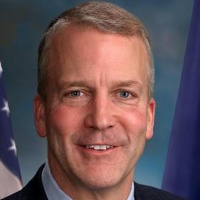
Dan Sullivan
Senator
AK
Dan Sullivan
Senator
AK
The Protecting Regular Order for Veterans Act of 2025 mandates quarterly budget briefings for Congress by the VA Secretary and places new restrictions on critical skills bonuses for senior executives. Additionally, the bill establishes a new Veterans Experience Office, reporting directly to the Secretary, tasked with improving beneficiary satisfaction and reporting on customer feedback data to Congress. This new office will sunset on September 30, 2028, following a review by the Comptroller General.
This resolution officially designates July 30, 2025, as National Whistleblower Appreciation Day to honor those who report wrongdoing and encourages federal agencies to educate employees and the public about whistleblower rights.
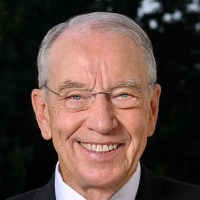
Charles Grassley
Senator
IA
Charles Grassley
Senator
IA
This resolution officially designates July 30, 2025, as "National Whistleblower Appreciation Day." It honors individuals who report waste, fraud, and abuse, recognizing their vital role in government accountability. Furthermore, the bill directs federal agencies to use this day to educate employees and the public about whistleblower rights and acknowledge the importance of their service.
The Bankruptcy Administration Improvement Act of 2025 increases compensation for Chapter 7 trustees, adjusts bankruptcy fee structures to fund the U.S. Trustee System, and extends the terms of certain temporary bankruptcy judge offices.

Christopher Coons
Senator
DE
Christopher Coons
Senator
DE
The Bankruptcy Administration Improvement Act of 2025 aims to modernize the bankruptcy system by increasing the compensation for Chapter 7 trustees to a level reflecting current economic realities. The bill also adjusts various bankruptcy fees to ensure the U.S. Trustee System remains fully funded without taxpayer assistance. Finally, it extends the terms of certain temporary bankruptcy judge offices to ensure continued judicial capacity.
This resolution solemnly marks the anniversary of the attempted assassination of President Trump, condemns political violence, and honors the victims and first responders involved.
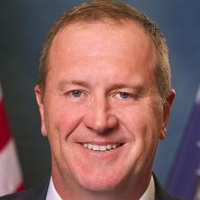
Eric Schmitt
Senator
MO
Eric Schmitt
Senator
MO
This resolution solemnly marks the one-year anniversary of the attempted assassination of former President Donald J. Trump. It condemns the multiple attempts against his life and other political officials, while honoring the victims and first responders involved in the July 2024 shooting. The measure further calls for an end to the incitement of political violence that threatens the democratic process.
The Equal Shot Act of 2025 prohibits the Small Business Administration from denying financial assistance to qualified firearm entities, affiliates, or trade associations solely based on their connection to the firearms industry.

James Risch
Senator
ID
James Risch
Senator
ID
The Equal Shot Act of 2025 aims to prevent discrimination against businesses within the firearms industry when applying for financial assistance from the Small Business Administration (SBA). This legislation explicitly prohibits the SBA from denying loans or guarantees solely based on an applicant's status as a firearm entity, affiliate, or trade association. The Act first establishes clear definitions for these industry participants to ensure fair and equal consideration for all qualified applicants.
This bill prohibits non-citizens from voting in District of Columbia elections and repeals the Local Resident Voting Rights Amendment Act of 2022.

Katie Britt
Senator
AL
Katie Britt
Senator
AL
This bill prohibits non-U.S. citizens from voting in any election within the District of Columbia. It also repeals the Local Resident Voting Rights Amendment Act of 2022, effectively undoing that prior legislation. The measure ensures that only citizens can participate in D.C. local elections and ballot initiatives.