
Legislative Activity
Track Tammy's sponsored bills, co-sponsored legislation, and voting record
This bill authorizes the Commandant of the Coast Guard to enter into intergovernmental support agreements to improve operational efficiency and community collaboration.

Christopher Murphy
Senator
CT
Christopher Murphy
Senator
CT
The Strengthening Coast Guard Communities Act of 2026 authorizes the Commandant of the Coast Guard to enter into intergovernmental support agreements to improve operational efficiency. This legislation streamlines administrative processes while ensuring congressional oversight by requiring notification to relevant committees whenever this authority is exercised.
The Honoring the Sacrifice of Troops in War Act of 2026 prevents the Department of Defense from reclassifying military operations to obscure casualty statistics or deny service members and their families earned benefits and recognition.

Tammy Duckworth
Senator
IL
Tammy Duckworth
Senator
IL
The **Honoring the Sacrifice of Troops in War Act of 2026** ensures transparency and accountability by preventing the Department of Defense from using administrative reclassifications to obscure the human cost of war or deny service members their earned benefits. The bill mandates that casualty records remain accurate and permanent, regardless of changes to an operation's name or status. Additionally, it requires the restoration of records and benefits for personnel affected by recent reclassifications related to Operation Epic Fury.
This joint resolution directs the President to remove United States Armed Forces from unauthorized hostilities against Iran unless Congress provides explicit authorization.

John Hickenlooper
Senator
CO
John Hickenlooper
Senator
CO
This joint resolution directs the President to remove United States Armed Forces from unauthorized hostilities against the Islamic Republic of Iran. It asserts that because Congress has not declared war or provided specific authorization for military force, the current deployment violates the War Powers Resolution. The bill mandates a withdrawal of forces while still allowing for defensive actions to protect U.S. personnel, intelligence operations, and support for partner nations.
The Momnibus Act is a comprehensive legislative package designed to end preventable maternal mortality, close racial and ethnic disparities in maternal health outcomes, and improve care for pregnant and postpartum individuals through targeted federal investments, community-based support, and expanded research.
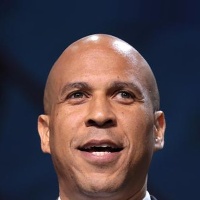
Cory Booker
Senator
NJ
Cory Booker
Senator
NJ
The Momnibus Act is a comprehensive legislative package designed to end preventable maternal mortality and close racial and ethnic disparities in maternal health outcomes. By investing in social determinants of health, expanding nutritional support, diversifying the perinatal workforce, and improving data collection, the bill seeks to provide holistic, equitable care for all pregnant and postpartum individuals. It also addresses critical gaps in maternal health for veterans, incarcerated individuals, and those impacted by climate change and public health emergencies.
This resolution celebrates the 35th anniversary of Ukraine’s independence while reaffirming the United States' commitment to Ukraine's sovereignty, democratic development, and security against Russian aggression.

Jeanne Shaheen
Senator
NH
Jeanne Shaheen
Senator
NH
This resolution commemorates the 35th anniversary of Ukraine’s independence, honoring the nation's democratic journey and its resilience against Russian aggression. It reaffirms the United States' commitment to Ukraine’s sovereignty and territorial integrity while advocating for continued diplomatic support and security cooperation. Additionally, the resolution encourages ongoing democratic reforms in Ukraine and the integration of lessons learned from the conflict to strengthen trans-Atlantic security.
The HCBS Access Act mandates home and community-based services as a core Medicaid benefit while providing significant federal funding to expand access, strengthen the direct care workforce, and support family caregivers.
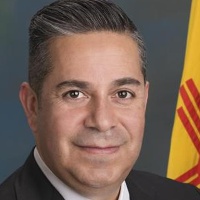
Ben Luján
Senator
NM
Ben Luján
Senator
NM
The HCBS Access Act transforms home and community-based services into a mandatory Medicaid benefit, ensuring older adults and people with disabilities can receive long-term care in their own homes rather than institutions. The legislation provides significant federal funding to eliminate waiting lists, strengthen the direct care workforce, and offer critical support to unpaid family caregivers. Additionally, it establishes new national standards for workforce data, career development, and program evaluation to ensure high-quality, accessible care nationwide.
The PROTECT Act establishes a comprehensive CDC-led initiative to research, prevent, and treat youth e-cigarette and tobacco addiction through public education, provider guidance, and expanded cessation support.

Richard Blumenthal
Senator
CT
Richard Blumenthal
Senator
CT
The **PROTECT Act** establishes a comprehensive federal initiative to combat youth e-cigarette and tobacco use through expanded research, public education campaigns, and improved cessation resources. By funding state and local health efforts, the bill aims to better understand usage patterns, health impacts, and effective prevention strategies. Ultimately, this legislation seeks to reduce nicotine addiction among young people by providing schools and healthcare providers with the tools and guidance necessary to intervene effectively.
The SUSTAIN 340B Act strengthens the 340B drug discount program by enhancing transparency, accountability, and program integrity through new reporting requirements, standardized definitions, and improved oversight of contract pharmacies and child sites.

Jerry Moran
Senator
KS
Jerry Moran
Senator
KS
The **SUSTAIN 340B Act** aims to strengthen the integrity, transparency, and accountability of the 340B drug discount program. The legislation establishes new requirements for contract pharmacies, defines patient eligibility, and mandates the creation of a data clearinghouse to prevent duplicate discounts. Additionally, the bill introduces rigorous reporting standards for covered entities regarding program savings and enhances federal oversight through expanded auditing and sanctioning authority.
This bill ensures that individuals held in custody while awaiting trial retain access to health care coverage through Medicaid, Medicare, CHIP, and the Department of Veterans Affairs.
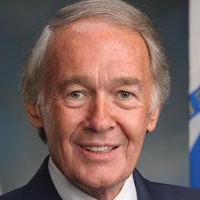
Edward Markey
Senator
MA
Edward Markey
Senator
MA
The Equity in Pretrial Health Coverage Act ensures that individuals held in custody while awaiting trial maintain access to essential health care. By removing current exclusions, the bill allows these individuals to remain covered under Medicaid, Medicare, CHIP, and Department of Veterans Affairs programs. This legislation aims to provide continuity of care for those who have not yet been convicted of a crime.
The Youth Poisoning Protection Act bans the sale of consumer products containing high concentrations of sodium nitrite to prevent accidental or intentional poisoning.
Tammy Duckworth
Senator
IL
Tammy Duckworth
Senator
IL
The Youth Poisoning Protection Act bans the sale of consumer products containing 10% or more sodium nitrite by weight to prevent accidental or intentional poisoning. This legislation classifies such high-concentration products as banned hazardous substances under the Consumer Product Safety Act. The ban includes specific exemptions for industrial use, as well as regulated food, drug, and cosmetic products.
This Act strengthens federal protections for domestic violence survivors by closing loopholes to prevent abusive dating partners and individuals subject to temporary restraining orders from purchasing or possessing firearms.
Richard Blumenthal
Senator
CT
Richard Blumenthal
Senator
CT
The Lori Jackson-Nicolette Elias Domestic Violence Survivor Protection Act strengthens federal law by closing loopholes that allow abusive dating partners and individuals subject to emergency protective orders to possess firearms. The bill expands the definition of prohibited domestic abusers and establishes a federal grant program to assist state, tribal, and local governments in the safe removal and storage of firearms from those under domestic violence restraining orders. By setting a national standard, this legislation aims to reduce intimate partner homicides and enhance protections for survivors of domestic violence.
The ASSET Act promotes financial stability for low-income families by eliminating asset-based eligibility limits for TANF, SNAP, and LIHEAP, while increasing and indexing resource limits for SSI.

Christopher Coons
Senator
DE
Christopher Coons
Senator
DE
The ASSET Act aims to improve financial security for low-income families by eliminating restrictive asset limits in key public assistance programs, including TANF, SNAP, and LIHEAP. By removing these barriers, the bill allows families to build savings without risking their eligibility for essential support. Additionally, the Act significantly raises and indexes resource limits for Supplemental Security Income (SSI) to keep pace with inflation.
The College Transparency Act establishes a secure, privacy-protected federal data system to provide students and families with transparent information on college costs, enrollment, and post-graduation outcomes.

Bill Cassidy
Senator
LA
Bill Cassidy
Senator
LA
The College Transparency Act establishes a secure, privacy-protected federal data system to track postsecondary student outcomes, including enrollment, completion, and post-college earnings. By repealing the existing ban on a national student-level database, the bill aims to provide students and families with transparent, customizable information to help them make informed educational decisions. The system is designed to streamline institutional reporting requirements while strictly prohibiting the use of personal data for law enforcement, immigration, or federal ranking purposes.
This bill prohibits the transfer of specific Department of Education offices and functions to other federal agencies while mandating quarterly public reporting on the costs of all interagency agreements.
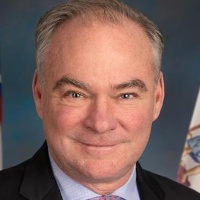
Timothy Kaine
Senator
VA
Timothy Kaine
Senator
VA
This bill prohibits the Secretary of Education from transferring the functions or responsibilities of four key offices—including those overseeing special, postsecondary, Indian, and elementary/secondary education—to other federal agencies. It also mandates rigorous quarterly reporting on the costs of any interagency agreements and restricts the Secretary’s travel funding if these reporting requirements are not met.
The Audit the Pentagon Act mandates a 2% funding reduction for any Department of Defense component that fails to achieve a clean financial audit, with withheld funds applied toward deficit reduction.

Bernard Sanders
Senator
VT
Bernard Sanders
Senator
VT
The Audit the Pentagon Act mandates financial accountability by imposing a 2 percent funding reduction on any Department of Defense component that fails to achieve a clean audit opinion. These withheld funds are then redirected to the U.S. Treasury to be used exclusively for deficit reduction.
The Restoring Justice for Workers Act prohibits employers from forcing workers into mandatory arbitration or class-action waivers, ensuring employees retain their right to pursue legal claims in court.
Patty Murray
Senator
WA
Patty Murray
Senator
WA
The Restoring Justice for Workers Act prohibits employers from forcing workers to sign away their right to pursue legal claims in court or join class-action lawsuits as a condition of employment. The bill bans mandatory pre-dispute arbitration agreements and ensures that any agreement to arbitrate or waive collective action rights made after a dispute arises is strictly voluntary and informed. By amending the National Labor Relations Act and the Federal Arbitration Act, this legislation protects workers' rights to act collectively and seek justice for workplace violations.
This bill mandates gender-neutral occupational standards across the Armed Forces, prohibits gender-based assignment exclusions, and requires enhanced congressional oversight and reporting on military performance standards and operational effectiveness.

Mazie Hirono
Senator
HI
Mazie Hirono
Senator
HI
This bill mandates gender-neutral standards for all occupational specialties and assignments across the U.S. Armed Forces, prohibiting gender-based exclusions. It establishes rigorous, science-based performance requirements and increases transparency through enhanced annual reporting and congressional oversight. Additionally, the legislation requires the Department of Defense to provide Congress with comprehensive, unredacted reviews regarding the operational effectiveness of ground combat units.
The Supreme Court Ethics Act mandates the creation of a formal code of conduct for Supreme Court justices, establishes an independent Ethics Investigations Counsel to oversee compliance, and requires public disclosure of recusal decisions.
Christopher Murphy
Senator
CT
Christopher Murphy
Senator
CT
The Supreme Court Ethics Act mandates that the Supreme Court and the Judicial Conference establish formal codes of conduct for all federal judges and justices. The bill creates an independent Ethics Investigations Counsel to oversee compliance, investigate potential violations, and issue annual public reports. Additionally, it requires Supreme Court justices to publicly disclose their reasoning when recusing themselves from a case or denying a motion for recusal.
The Right to IVF Act of 2026 establishes a federal right to fertility treatments, mandates comprehensive insurance coverage for ART and IUI, and expands access to these services for veterans and federal employees.
Tammy Duckworth
Senator
IL
Tammy Duckworth
Senator
IL
The Right to IVF Act of 2026 establishes a federal right to access assisted reproductive technology (ART) and intrauterine insemination (IUI) by overriding restrictive state laws. The bill further expands family-building support by mandating comprehensive fertility coverage for military service members, veterans, federal employees, and those enrolled in private insurance, Medicare, or Medicaid. These measures aim to ensure equitable, affordable access to fertility treatments nationwide.
The SHIELD Our Elections Act strengthens election integrity by establishing civil remedies for voter intimidation, extending statutes of limitations for election crimes, restricting the seizure of election materials, and providing grants for state ballot tracking programs.

Alejandro Padilla
Senator
CA
Alejandro Padilla
Senator
CA
The SHIELD Our Elections Act strengthens election integrity by establishing a private right of action against voter intimidation and extending the statute of limitations for election-related crimes. The bill also protects election records by restricting the seizure of voting materials and provides federal grants to states to implement comprehensive, transparent absentee ballot tracking programs.