
Legislative Activity
Track Angela's sponsored bills, co-sponsored legislation, and voting record
This Act posthumously awards a Congressional Gold Medal to honor the life and groundbreaking civil rights achievements of Constance Baker Motley.
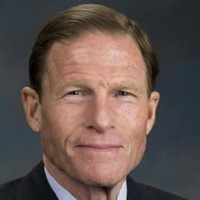
Richard Blumenthal
Senator
CT
Richard Blumenthal
Senator
CT
This Act officially establishes the Congressional Tribute to Constance Baker Motley Act of 2025 to honor the life and groundbreaking civil rights achievements of the late legal pioneer. The bill authorizes the posthumous presentation of a Congressional Gold Medal to her family in recognition of her service, including her role in *Brown v. Board of Education*. Furthermore, it permits the Treasury to strike and sell bronze duplicates of the medal to cover production costs.
This bill mandates the creation of a public NOAA database and webpage to track and display detailed information, including costs and maps, for all U.S. billion-dollar disasters annually.
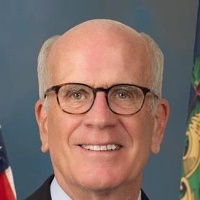
Peter Welch
Senator
VT
Peter Welch
Senator
VT
The Measuring the Cost of Disasters Act of 2025 mandates the National Oceanic and Atmospheric Administration (NOAA) to establish and maintain a public database and webpage detailing all U.S. "billion-dollar disasters." This hub must include estimated costs, location, and type of event, updated at least every six months. The system will also feature historical maps and graphs, ensuring continuity with previous disaster tracking methods.
The Keep Billionaires Out of Social Security Act aims to protect Social Security from external government agencies, restrict political access to sensitive data, stabilize office operations, reestablish key oversight offices, and increase funding for customer service and disability applicant assistance.
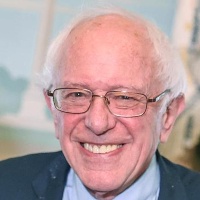
Bernard Sanders
Senator
VT
Bernard Sanders
Senator
VT
The Keep Billionaires Out of Social Security Act aims to protect Social Security from external government interference, specifically exempting it from the jurisdiction of the new Department of Government Efficiency (DOGE). The bill also tightens restrictions on political appointees accessing beneficiary data, mandates that only verified deceased individuals are added to the Death Master File, and locks in current SSA office levels. Finally, it allocates significant new funding for improving customer service, modernizing technology, and establishing state and community grants to assist disability applicants.
The Yes in God's Backyard Act establishes technical assistance and challenge grants to help faith-based organizations and universities increase the supply of affordable rental housing by removing local barriers.

Mark Warner
Senator
VA
Mark Warner
Senator
VA
The Yes in God's Backyard Act aims to increase the supply of affordable rental housing by providing technical assistance and competitive challenge grants. These resources are specifically directed toward faith-based organizations, institutions of higher education, and local governments to help them overcome barriers to developing or preserving housing on their land. The bill defines affordable housing based on income limits and prioritizes assistance for projects serving extremely low-income or vulnerable populations.
This joint resolution terminates the President's declared crime emergency in the District of Columbia, arguing against using local police for federal tasks amid declining crime rates and local funding restrictions.

Chris Van Hollen
Senator
MD
Chris Van Hollen
Senator
MD
This joint resolution terminates the President's declared crime emergency in the District of Columbia from August 2025. Congress asserts that the emergency is unwarranted given declining crime rates and argues against diverting local Metropolitan Police Department resources for federal tasks. The resolution effectively ends the special conditions established by the Executive Order.
This bill repeals the President's authority to assume emergency control over the District of Columbia police force.
Chris Van Hollen
Senator
MD
Chris Van Hollen
Senator
MD
The District of Columbia Police Home Rule Act eliminates the President's long-standing authority to assume emergency control over the Metropolitan Police Department. This legislation amends the D.C. Home Rule Act by striking the section granting the President this power. The bill effectively returns full, non-contingent control of the D.C. police force to local D.C. authorities.
This bill transfers command authority of the District of Columbia National Guard from the President of the United States to the Mayor of the District of Columbia and makes necessary conforming amendments across federal and local law.
Chris Van Hollen
Senator
MD
Chris Van Hollen
Senator
MD
This bill, the District of Columbia National Guard Home Rule Act, transfers primary command authority of the D.C. National Guard from the President of the United States to the Mayor of the District of Columbia. It updates outdated laws to officially name the Mayor as Commander-in-Chief, granting them authority over appointments, calling up the Guard, and disciplinary actions. The legislation also makes numerous technical amendments across federal military codes to ensure the Mayor is the recognized authority for the D.C. National Guard.
This Act extends key clean energy tax credits for homeowners and producers while adjusting the phase-out timeline for electricity production credits based on emissions targets.
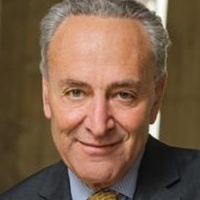
Charles Schumer
Senator
NY
Charles Schumer
Senator
NY
The Lowering Electric Bills Act extends crucial tax credits for residential clean energy installations until 2034. It also modifies the phase-out schedule for the Clean Electricity Production and Investment Credits, tying their continuation to achieving specific emissions reduction targets or the year 2032. These changes aim to provide long-term stability for clean energy investments.
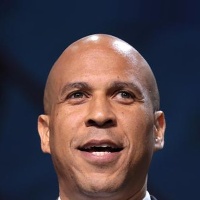
This Act authorizes the President to impose asset freezes and visa bans on foreign individuals and groups whose actions threaten the peace, security, or stability of the West Bank.
Cory Booker
Senator
NJ
Cory Booker
Senator
NJ
The West Bank Violence Prevention Act of 2025 mandates the President to impose targeted sanctions, including asset freezes and visa bans, on foreign individuals or groups whose actions threaten the peace and stability of the West Bank. These penalties specifically target those involved in violence against civilians, property destruction, or terrorism. The law requires regular reporting to Congress detailing those sanctioned and the steps being taken to mitigate violence in the region.
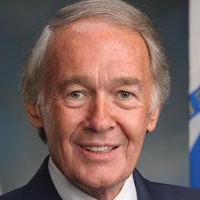
The Warehouse Worker Protection Act establishes new federal standards for warehouse worker quotas, safety, and break requirements, while strengthening protections against retaliation for organizing.
Edward Markey
Senator
MA
Edward Markey
Senator
MA
The Warehouse Worker Protection Act establishes new federal standards to safeguard warehouse employees from excessive performance quotas and unsafe working conditions. It creates a dedicated office within the Department of Labor to enforce transparency requirements regarding quotas and mandates new OSHA standards to prevent musculoskeletal injuries. Furthermore, the bill strengthens labor protections by clarifying when performance targets unlawfully interfere with workers' rights to organize.
The SAFE Act expands Medicare coverage for physical and occupational therapy during wellness visits and initial exams for elderly patients at risk of falling.

Jim Justice
Senator
WV
Jim Justice
Senator
WV
The Stopping Addiction and Falls for the Elderly (SAFE) Act expands Medicare coverage to include physical and occupational therapy during Annual Wellness Visits and Initial Preventive Physical Exams for seniors at risk of falling. This aims to provide preventative care by covering falls risk assessments and fall prevention services for eligible patients. Additionally, the bill mandates annual reporting to Congress on fall incidents and resulting injuries among Medicare beneficiaries aged 65 and older.
This bill reauthorizes support for state maternal mortality review committees and directs the HHS Secretary to disseminate best practices for preventing maternal deaths.

Shelley Capito
Senator
WV
Shelley Capito
Senator
WV
This bill aims to strengthen efforts to prevent maternal deaths by reauthorizing support for State-based Maternal Mortality Review Committees. It directs the Secretary of Health and Human Services to regularly disseminate proven best practices for maternal mortality prevention to hospitals and professional societies. Furthermore, the legislation increases federal funding dedicated to these crucial prevention initiatives.
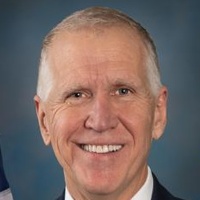
The SAVES Act of 2025 establishes a five-year VA pilot program to award competitive grants, up to \$2 million each, to nonprofits providing service dogs and necessary veterinary insurance to eligible veterans with specific disabilities.
Thom Tillis
Senator
NC
Thom Tillis
Senator
NC
The SAVES Act of 2025 establishes a five-year pilot program within the VA to award competitive grants to nonprofits providing service dogs to eligible veterans with disabilities like PTSD or mobility issues. These grants, capped at $2 million per recipient, will cover the cost of training the dog and veteran, and the VA will also provide veterinary insurance for each service dog. The goal is to ensure veterans receive necessary support dogs without incurring any personal fees.
This Act mandates the immediate public release of all unclassified Department of Justice records related to Jeffrey Epstein and Ghislaine Maxwell, with limited exceptions for victim privacy and active investigations.

Jeff Merkley
Senator
OR
Jeff Merkley
Senator
OR
The Epstein Files Transparency Act mandates the Attorney General to release all unclassified Department of Justice records related to Jeffrey Epstein and Ghislaine Maxwell within 30 days of enactment. This sweeping requirement covers investigations, travel logs, and communications, with limited exceptions primarily focused on protecting victim privacy and active cases. Any redactions must be publicly justified, and the Attorney General must report the details of the release and any withheld information to Congress.
This Act repeals previous health subtitle changes and permanently extends enhanced, uncapped premium tax credits to lower the cost of health insurance.
Charles Schumer
Senator
NY
Charles Schumer
Senator
NY
The Protecting Health Care and Lowering Costs Act primarily repeals previous health subtitle changes and permanently extends enhanced premium tax credits for marketplace health insurance. This extension removes the income cap for receiving enhanced credits and updates the calculation method for determining an individual's required premium contribution. The bill aims to simplify the tax code related to health insurance affordability.
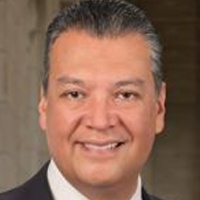
This resolution designates the week of August 3 through August 9, 2025, as "National Farmers Market Week" to recognize their vital role in local economies, community health, and food access.
Alejandro Padilla
Senator
CA
Alejandro Padilla
Senator
CA
This resolution officially designates the week of August 3 through August 9, 2025, as "National Farmers Market Week." It aims to celebrate the vital role farmers markets play in strengthening local economies and supporting farmers across the nation. Furthermore, the resolution recognizes how these markets improve community health by increasing access to fresh food and promoting sustainable agriculture.
This Act establishes national, standardized phrases—"BEST If Used By" for quality and "USE By" for discard—for food date labeling to clarify product freshness and safety.
Richard Blumenthal
Senator
CT
Richard Blumenthal
Senator
CT
The Food Date Labeling Act of 2025 establishes national standards for food date labeling, requiring manufacturers to use specific phrases like "BEST If Used By" for quality dates and "USE By" for discard dates. This legislation clarifies the meaning of these dates for consumers and prevents states from creating conflicting terminology. The new labeling requirements will take effect two years after the bill is enacted.
This Act extends medical coverage and provides significant reeducation, reemployment, and transition support for veteran caregivers, while mandating studies on their long-term retirement options.

Jerry Moran
Senator
KS
Jerry Moran
Senator
KS
The Veteran Caregiver Reeducation, Reemployment, and Retirement Act aims to support designated primary caregivers for veterans by extending their medical coverage for 180 days after leaving their role. The bill mandates the VA to provide job assistance, including funding for certifications and transition support, for 180 days post-caregiving. Furthermore, it requires studies on establishing "returnship" programs and exploring the feasibility of creating a dedicated retirement savings plan for these essential caregivers.
This bill mandates training and guidance for federal agencies that fail to meet their contract award goals for small businesses owned by service-disabled veterans.

John Kennedy
Senator
LA
John Kennedy
Senator
LA
The Service-Disabled Veteran Opportunities in Small Business Act aims to increase federal contract awards to small businesses owned and controlled by service-disabled veterans. It mandates that the Small Business Administrator provide specialized training to any agency failing to meet its established contract goals for these businesses. Furthermore, the Act requires the Administrator to issue best practices guidance and report annually to Congress on agency compliance and training efforts.
The All Aboard Act of 2025 establishes massive federal funding programs to electrify, modernize, and expand national passenger and freight rail infrastructure while prioritizing zero-emission technology and robust labor protections.
Edward Markey
Senator
MA
Edward Markey
Senator
MA
The All Aboard Act of 2025 aims to significantly modernize and expand the nation's passenger and freight rail systems through massive federal investment. It establishes major grant programs focused on electrifying infrastructure, developing zero-emission locomotives, and improving high-performance rail service. Furthermore, the Act mandates strong labor protections and creates new training centers to ensure a skilled workforce is ready for the industry's technological transition.