
Legislative Activity
Track Angela's sponsored bills, co-sponsored legislation, and voting record
This bill changes how Social Security cost-of-living adjustments (COLAs) are calculated by mandating the use of the more favorable index between the Consumer Price Index for Urban Wage Earners and Clerical Workers or a newly established Consumer Price Index for Elderly Consumers.

Richard Blumenthal
Senator
CT
Richard Blumenthal
Senator
CT
The Boosting Benefits and COLAs for Seniors Act seeks to update how Social Security cost-of-living adjustments (COLAs) are calculated. It mandates using the index that results in a higher adjustment: either the Consumer Price Index for Urban Wage Earners and Clerical Workers or a newly established Consumer Price Index for Elderly Consumers. This change aims to provide a more accurate reflection of seniors' actual cost of living in benefit calculations starting after September 2026.
This resolution condemns President Trump's pardon of Binance founder Changpeng Zhao for violating anti-money laundering laws and calls on Congress to prevent such corruption.

Elizabeth Warren
Senator
MA
Elizabeth Warren
Senator
MA
This resolution formally condemns President Trump's pardon of Binance founder Changpeng Zhao, who previously pleaded guilty to violating U.S. anti-money laundering laws. The measure expresses strong disapproval of the pardon, citing potential conflicts of interest related to the Trump family's financial dealings with Binance. Finally, it calls upon Congress to utilize its authority to prevent similar acts of corruption in the pardon process moving forward.
This bill appropriates funds to ensure military and federal employees and contractors receive full compensation for work performed or time furloughed during a lapse in government appropriations between October 1, 2025, and the date of enactment.
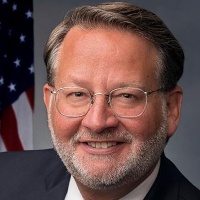
Gary Peters
Senator
MI
Gary Peters
Senator
MI
The Military and Federal Employee Protection Act ensures that federal employees, military members, and covered contractors receive their full standard compensation for work performed or time furloughed during a lapse in government appropriations occurring after September 30, 2025. This bill appropriates necessary funds for agencies to make these retroactive payments. Payments must be made promptly, generally within seven days of enactment for furloughed individuals. This legislation guarantees that no covered individual loses pay due to a government shutdown during the specified period.
This Act ensures back pay for federal employees, contractors, and service members affected by a government shutdown beginning October 1, 2025, and prohibits agency staffing reductions during such lapses.

Chris Van Hollen
Senator
MD
Chris Van Hollen
Senator
MD
The True Shutdown Fairness Act ensures that federal employees, contractors, and service members affected by a government funding lapse starting October 1, 2025, receive retroactive back pay for the period they worked without funding. Additionally, the bill prohibits agencies from initiating permanent staffing reductions or furloughs during such a lapse. These provisions are designed to provide financial security and stability to essential government personnel during periods of lapsed appropriations.
This Act implements the transfer, investment, and quarterly obligation of frozen Russian sovereign assets into a Ukraine Support Fund to provide timely financial assistance to Ukraine.

Sheldon Whitehouse
Senator
RI
Sheldon Whitehouse
Senator
RI
The REPO for Ukrainians Implementation Act of 2025 builds upon existing law to facilitate the use of frozen Russian sovereign assets for Ukraine's benefit. It formally recognizes the Porto Declaration urging the repurposing of these assets and grants the President authority to transfer non-confiscated Russian assets into an interest-bearing Ukraine Support Fund. Furthermore, the bill mandates the investment of these funds and requires the quarterly obligation of at least $250 million to provide assistance to Ukraine. Finally, it requires the executive branch to report on the location of Russian sovereign assets globally and engage diplomatically with key allies to encourage asset repurposing.
This resolution designates the week beginning October 12, 2025, as National Wildlife Refuge Week to recognize the critical conservation, economic, and recreational value of the National Wildlife Refuge System.

Christopher Coons
Senator
DE
Christopher Coons
Senator
DE
This resolution officially designates the week beginning October 12, 2025, as "National Wildlife Refuge Week." It recognizes the critical role of the National Wildlife Refuge System in conserving over 850 million acres of vital habitat for threatened and endangered species. The resolution also highlights the refuges' significant contributions to local economies, public recreation, and community access to nature. Ultimately, it reaffirms Congress's commitment to supporting the conservation mission of the U.S. Fish and Wildlife Service.
This Act significantly boosts federal deposit insurance coverage up to an additional \$10 million for noninterest-bearing transaction accounts at most banks and credit unions.
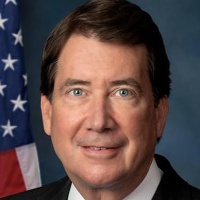
Bill Hagerty
Senator
TN
Bill Hagerty
Senator
TN
The Main Street Depositor Protection Act significantly boosts federal deposit insurance for specific business accounts by adding up to an extra \$10 million in coverage for noninterest-bearing transaction accounts at most banks and credit unions. This enhanced coverage is designed to protect essential operating funds for businesses, excluding those at globally systemically important banks. The bill also mandates a 10-year phase-in period for how these newly insured deposits affect insurance assessments for smaller institutions.
This resolution officially recognizes the 250th birthday of the United States Navy, celebrating its history, vital role in national security and global affairs, and expressing profound gratitude to all who have served.

Roger Wicker
Senator
MS
Roger Wicker
Senator
MS
This resolution officially recognizes and celebrates the 250th birthday of the United States Navy, honoring its long history since the Continental Navy. It expresses deep appreciation for the courage and service of all Navy personnel, past and present, who have defended the nation. Furthermore, the resolution reaffirms Congress's commitment to supporting the Navy's vital role in global security, humanitarian aid, and technological advancement.
This act directs federal financial regulators to issue guidance encouraging financial institutions to offer flexible relief to consumers and businesses impacted by a government shutdown.
Chris Van Hollen
Senator
MD
Chris Van Hollen
Senator
MD
The Shutdown Guidance for Financial Institutions Act requires federal financial regulators to issue guidance encouraging banks and lenders to support consumers and businesses impacted by a government shutdown. This guidance must promote flexible loan modifications and prevent negative credit reporting for those experiencing lost income. Furthermore, regulators must quickly inform the public when a shutdown occurs and report on the effectiveness of the guidance afterward.
The Voter Purge Protection Act establishes strict federal standards for removing registered voters, prohibits purging based solely on moving within a state, and allows voters to update their address on Election Day.

Alejandro Padilla
Senator
CA
Alejandro Padilla
Senator
CA
The Voter Purge Protection Act aims to safeguard voter registration by preventing states from removing individuals from voter rolls solely because they moved within the state. This legislation establishes strict standards for voter list maintenance, requiring objective proof before removal and allowing registered voters to update their address up to Election Day. Furthermore, it ensures that voters who move within a state can easily cast their ballot by updating their address at the polls.
This resolution condemns recent Russian incursions into NATO territory and airspace while reaffirming the United States' commitment to collective defense under Article 5 of the North Atlantic Treaty.

Richard Durbin
Senator
IL
Richard Durbin
Senator
IL
This resolution strongly condemns recent Russian incursions into the airspace of NATO member countries and reaffirms the United States' unwavering commitment to Article 5 of the North Atlantic Treaty. It explicitly denounces Russia's ongoing aggression against Ukraine and its pattern of intimidation against allies. The measure serves as a clear statement that the U.S. will defend every inch of NATO territory against attack.
This resolution expresses Congress's strong opposition to the growing trend of book banning and threats to freedom of expression in the United States.
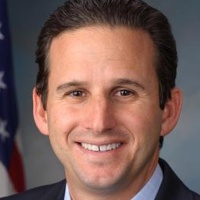
Brian Schatz
Senator
HI
Brian Schatz
Senator
HI
This resolution expresses deep concern over the rising trend of book banning and threats to freedom of expression across the United States. It strongly opposes censorship in schools and libraries, citing constitutional rights and the harm done to democratic discourse. The measure urges local entities to protect students' access to diverse viewpoints and calls for the reversal of restrictive orders impacting educational materials.
The FAST Justice Act allows federal employees to sue the government in district court if the Merit Systems Protection Board (MSPB) fails to rule on their appeal within 120 days.
Richard Blumenthal
Senator
CT
Richard Blumenthal
Senator
CT
The FAST Justice Act grants federal employees the right to sue in federal district court if the Merit Systems Protection Board (MSPB) fails to issue a decision on their appeal within 120 days. This allows individuals to challenge the underlying personnel action when the MSPB causes undue delay. The bill outlines specific rules for where these lawsuits can be filed and how the court must review the case. Filing such a lawsuit requires the MSPB to immediately pause its work on the original appeal.
This Act temporarily halts certain legal and administrative actions that could harm the civil rights of federal employees and contractors during a government shutdown.
Brian Schatz
Senator
HI
Brian Schatz
Senator
HI
The Federal Employees Civil Relief Act temporarily halts certain legal and administrative actions that could negatively affect the civil rights of federal employees and contractors during a government shutdown. This protection includes pausing evictions, foreclosures, lien enforcement, and providing relief for student loan and income tax obligations. The law also ensures that seeking these protections will not negatively impact an employee's credit or future financial standing.
This resolution expresses support for designating October 5 through October 11, 2025, as National 4-H Week to celebrate the organization's impact on youth development.

John Boozman
Senator
AR
John Boozman
Senator
AR
This resolution expresses support for designating October 5 through October 11, 2025, as National 4-H Week. It recognizes 4-H as a vital youth development program that empowers millions of young people through hands-on learning. The bill encourages citizens to celebrate the organization's significant impact on developing confident and compassionate leaders.
This bill waives the 10% early withdrawal tax penalty for federal workers taking up to \$30,000 from their Thrift Savings Plan during a government shutdown and adjusts TSP loan rules during such lapses in appropriations.
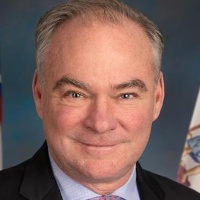
Timothy Kaine
Senator
VA
Timothy Kaine
Senator
VA
The Emergency Relief for Federal Workers Act of 2025 provides financial relief to federal employees affected by government shutdowns. This bill waives the 10% early withdrawal penalty on Thrift Savings Plan (TSP) distributions up to \$30,000 taken due to a shutdown. Furthermore, it establishes rules allowing furloughed or non-paid employees to take TSP loans and prevents missed loan payments during a shutdown from being treated as a taxable distribution.
This bill prohibits the use of the Exchange Stabilization Fund to provide any financial assistance to Argentina's financial markets until December 10, 2027.
Elizabeth Warren
Senator
MA
Elizabeth Warren
Senator
MA
This Act prohibits the use of the U.S. Treasury Department's Exchange Stabilization Fund to provide any financial assistance or bailout to Argentina's financial markets. Congress asserts that these funds should instead protect American jobs and stability against foreign currency manipulation. The prohibition on using the fund to aid Argentina remains in effect until December 10, 2027.
This bill allows federal contractors and affected government employees to make penalty-free, tax-deferred withdrawals of up to $30,000 from retirement accounts during a federal funding lapse, with a three-year window to repay the funds.

Catherine Cortez Masto
Senator
NV
Catherine Cortez Masto
Senator
NV
The Emergency Relief for Federal Contractors Act of 2025 allows individuals affected by a federal government shutdown to make penalty-free withdrawals of up to $30,000 from their retirement plans. These "Federal Government shutdown distributions" allow affected contractors, grantees, and D.C. employees to access funds during a lapse in appropriations lasting at least two weeks. Withdrawals are spread out over three tax years for income tax purposes, and individuals have three years to repay the withdrawn amount.
This Act mandates federal agencies to compensate contractors for employee costs incurred due to funding lapses and appropriates necessary funds to cover resulting contract price adjustments.

Tina Smith
Senator
MN
Tina Smith
Senator
MN
The Fair Pay for Federal Contractors Act of 2025 ensures federal agencies compensate contractors for employee costs incurred due to government funding lapses or shutdowns. This act mandates contract price adjustments to cover reasonable expenses for furloughed or impacted contractor employees, up to a specified weekly limit. The law also provides necessary appropriations to cover these adjustments and requires public reporting on the compensation provided.
This joint resolution seeks to disapprove and nullify the recent CMS rule concerning the Patient Protection and Affordable Care Act's Market Integrity and Affordability.

Mark Warner
Senator
VA
Mark Warner
Senator
VA
This joint resolution seeks to disapprove and nullify a specific rule published by the Centers for Medicare & Medicaid Services concerning the "Patient Protection and Affordable Care Act; Market Integrity and Affordability." If enacted, this measure would prevent the CMS rule from having any legal force or effect.