Legislation
This bill mandates new electronic, transparent, and timely prior authorization requirements for Medicare Advantage plans to improve seniors' access to care.

Roger Marshall
Senator
KS
Roger Marshall
Senator
KS
The Improving Seniors’ Timely Access to Care Act of 2025 aims to modernize and increase transparency in the prior authorization process for Medicare Advantage plans. This bill mandates the adoption of electronic prior authorization systems and requires plans to publicly report detailed data on their approval, denial, and appeal rates. Furthermore, it establishes new standards to protect enrollees and grants the Secretary authority to enforce faster decision timelines for care requests.
The AG RESEARCH Act establishes a dedicated, mandatory funding stream to provide grants for modernizing and upgrading U.S. agricultural research facilities and equipment, with proposal review consulting NIFA experts.

Mazie Hirono
Senator
HI
Mazie Hirono
Senator
HI
The AG RESEARCH Act aims to modernize and strengthen the nation's agricultural research infrastructure to keep U.S. farming competitive. It establishes a new, mandatory funding stream to provide grants for the construction, repair, and equipment upgrades of agricultural research facilities. The bill also ensures that grant proposals are reviewed with input from experts at the National Institute of Food and Agriculture (NIFA).
This bill establishes an expedited process for the Department of Homeland Security to deport non-citizens convicted of serious crimes, including gang membership, terrorism support, and specific violent offenses.

Ashley Moody
Senator
FL
Ashley Moody
Senator
FL
The Expedited Removal of Criminal Aliens Act establishes a new, faster process for the government to deport non-citizens who are members of criminal gangs or terrorist organizations, or who have been convicted of specific serious crimes. This process mandates detention and bars these individuals from seeking withholding of removal. The law specifically defines vulnerable groups for the purpose of determining which misdemeanor convictions qualify for this expedited action.
Connor's Law mandates that commercial motor vehicle operators must demonstrate the ability to read and speak English sufficiently to perform essential driving and reporting tasks, or face immediate out-of-service orders.
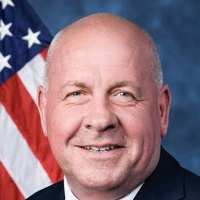
David Taylor
Representative
OH
David Taylor
Representative
OH
Connor's Law establishes a mandatory English language proficiency requirement for all commercial motor vehicle (CMV) operators seeking a Commercial Driver's License (CDL). This ensures drivers can effectively communicate, understand traffic signs, and complete necessary documentation in English. Failure to meet this standard will result in an immediate out-of-service order for the driver.
This Act restores the right to sue over disparate impact discrimination under Title VI, mandates equity compliance officers in federally funded schools, and establishes a Special Assistant for Equity and Inclusion within the Department of Education.
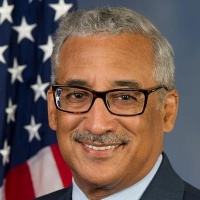
Robert Scott
Representative
VA
Robert Scott
Representative
VA
The Equity and Inclusion Enforcement Act of 2025 restores the right to sue for disparate impact violations under Title VI of the Civil Rights Act of 1964. It also mandates that all federally funded educational institutions designate an employee to coordinate Title VI compliance and publicly share their contact information. Finally, the Act establishes a new Special Assistant for Equity and Inclusion within the Department of Education to oversee and promote compliance efforts.
This bill mandates immediate medical attention for individuals in federal custody displaying medical distress and establishes penalties for officials who negligently fail to provide it.

Ayanna Pressley
Representative
MA
Ayanna Pressley
Representative
MA
The Andrew Kearse Accountability for Denial of Medical Care Act of 2025 mandates that federal officials immediately provide or secure medical attention for individuals in federal custody displaying medical distress. Negligently failing to do so, resulting in unnecessary pain, injury, or death, is established as a federal crime punishable by fines or imprisonment. The bill also empowers State Attorneys General to sue federal officials over violations and requires mandatory training and confidential complaint mechanisms for agency staff.
This Act ensures parity for Native Hawaiian veterans by updating VA housing loan definitions and mandating VA payment for medical care provided by Native Hawaiian health systems, while also eliminating cost-sharing for these veterans.

Jill Tokuda
Representative
HI
Jill Tokuda
Representative
HI
The Parity for Native Hawaiian Veterans Act of 2025 aims to improve benefits for Native Hawaiian veterans. This bill updates the definition used for VA direct housing loans to align with existing Native American housing law. Furthermore, it mandates that the VA must reimburse Native Hawaiian health systems for care provided to eligible veterans and eliminates cost-sharing requirements for Native Hawaiian veterans receiving VA medical care.
This bill officially revokes the twenty Medals of Honor awarded for actions during the Wounded Knee Massacre of 1890 while allowing recipients to keep the physical medals and associated benefits.
Jill Tokuda
Representative
HI
Jill Tokuda
Representative
HI
The Remove the Stain Act officially rescinds the 20 Medals of Honor awarded to U.S. soldiers for actions during the Wounded Knee Massacre of 1890. This legislation aims to preserve the integrity of the nation's highest military honor by voiding awards given for the killing of predominantly unarmed Native Americans. While the recognition is revoked and names will be removed from the official rolls, recipients will not be required to return the physical medal or forfeit any associated benefits.
This Act prevents federal agencies from regulating medical practice and restricts interference with a doctor's ability to prescribe FDA-approved drugs for unapproved uses, while preserving existing federal restrictions on certain procedures.

Ron Johnson
Senator
WI
Ron Johnson
Senator
WI
The Right to Treat Act establishes that federal agencies cannot regulate the practice of medicine, reserving that authority for local entities. It specifically prevents federal interference with a doctor's ability to prescribe already-approved drugs for uses not officially sanctioned by the FDA. This Act does not alter existing federal restrictions on procedures like abortion or gender transition interventions.
This bill prohibits the allocation of any federal funds to the National Endowment for Democracy.

Eli Crane
Representative
AZ
Eli Crane
Representative
AZ
This bill aims to completely prohibit the allocation of any federal funds to the National Endowment for Democracy (NED). It mandates that leaders of all federal agencies are barred from sending any appropriated money to the organization. In essence, this legislation stops all federal financial support for the NED.
The PILLS Act establishes new tax credits to incentivize the domestic production and investment in facilities for manufacturing generic drugs and biosimilars.

Tom Cotton
Senator
AR
Tom Cotton
Senator
AR
The PILLS Act introduces two new tax incentives designed to boost domestic manufacturing of essential generic drugs and biosimilars. It establishes a production credit rewarding companies for manufacturing eligible drug components within the U.S., with bonuses for using American-sourced materials. Additionally, the Act creates an investment credit to encourage building and equipping U.S. facilities dedicated to producing these vital medicines. Both credits offer options for direct payment or transferability, ensuring their utility for businesses.
This bill permanently extends the Iran Sanctions Act of 1996 by repealing its scheduled expiration date.

Tim Scott
Senator
SC
Tim Scott
Senator
SC
This bill seeks to permanently reauthorize the Iran Sanctions Act of 1996 by repealing its scheduled expiration date. By removing the sunset provision, Congress ensures these sanctions against Iran's weapons programs and support for terrorism remain in effect indefinitely. The legislation reaffirms the U.S. policy to fully enforce the existing sanctions.
This Act stabilizes the Crime Victims Fund by expanding its revenue sources to include certain non-conviction settlements and temporary deposits from False Claims Act recoveries.

Lisa Murkowski
Senator
AK
Lisa Murkowski
Senator
AK
The Crime Victims Fund Stabilization Act of 2025 aims to strengthen the Crime Victims Fund by expanding the sources of deposits. This includes allowing the Fund to receive money from certain legal settlements that do not result in a criminal conviction. Additionally, the bill temporarily allows certain recoveries from False Claims Act settlements to fund victim services through 2030, while protecting payments to whistleblowers and the government's direct recovery.
This Act mandates that Members of Congress and their immediate families must place certain stock and investment holdings into qualified blind trusts or divest them, while prohibiting new covered investments during their term.

Jon Ossoff
Senator
GA
Jon Ossoff
Senator
GA
This bill, the Ban Congressional Stock Trading Act, requires Members of Congress, their spouses, and dependent children to place most stock and commodity investments into qualified blind trusts or sell them within 120 days of the law taking effect or taking office. The legislation strictly prohibits acquiring new covered investments while serving in office, with exceptions for inheritance. Failure to comply results in escalating civil penalties equal to a member's monthly salary until the requirements are met.
This act bans the interstate transportation of horses using vehicles with two or more stacked levels.

Steve Cohen
Representative
TN
Steve Cohen
Representative
TN
The Horse Transportation Safety Act of 2025 prohibits the interstate transport of horses using any truck or trailer with two or more stacked levels. This measure aims to enhance animal welfare during cross-state travel by banning multilevel transport configurations. Violators who knowingly break this rule face civil penalties ranging from $\$100$ to $\$500$ per violation.
This Act mandates the SEC to establish rules allowing regulated financial entities to deliver required investor documents electronically while ensuring investors receive clear notice, the option to opt for paper, and continued access to information.
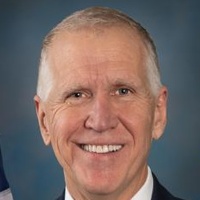
Thom Tillis
Senator
NC
Thom Tillis
Senator
NC
The Improving Disclosure for Investors Act of 2025 mandates the SEC to establish new rules modernizing how financial firms deliver required regulatory documents to investors, primarily by facilitating electronic delivery. This legislation sets deadlines for the SEC to finalize rules that allow digital distribution of documents like prospectuses and annual reports, while ensuring investor protections remain in place. The bill focuses solely on the method of delivery, not the substance or timing of the required disclosures themselves. If the SEC delays, covered entities can proceed with electronic delivery based on the standards outlined in the Act.
The Agriculture Resilience Act of 2025 mandates aggressive national goals to achieve net-zero agricultural emissions by 2040 through sweeping changes in research funding, soil management, livestock practices, and conservation programs.

Chellie Pingree
Representative
ME
Chellie Pingree
Representative
ME
The Agriculture Resilience Act of 2025 establishes aggressive national goals for the agricultural sector to achieve net-zero greenhouse gas emissions by 2040, mandating rapid changes in farming practices, research funding, and land management. It significantly reforms federal conservation and insurance programs to prioritize soil health, climate adaptation, and the development of resilient food systems. The bill also boosts support for on-farm renewable energy, strengthens local food infrastructure, and standardizes food labeling to reduce waste. Overall, it directs substantial federal resources toward transforming agriculture to meet ambitious climate targets while supporting farmers through new incentives and research.
The American Ownership and Resilience Act establishes a Department of Commerce-run facility to leverage government backing for investment companies that finance the sale of businesses to Employee Stock Ownership Plans (ESOPs) or worker-owned cooperatives.

Blake Moore
Representative
UT
Blake Moore
Representative
UT
The American Ownership and Resilience Act establishes an Ownership Investment Facility within the Department of Commerce to provide government-backed leverage to investment companies. This facility is designed to encourage capital investments that support the sale of businesses to Employee Stock Ownership Plans (ESOPs) or worker-owned cooperatives. The bill sets strict oversight, fairness, and control requirements for these employee-centric transactions while establishing licensing and capital standards for the participating investment companies.
This bill amends the Rural Surface Transportation Grant Program to set aside 10% of funding for eligible projects on farm-to-market roads in counties with high agricultural output.

David Valadao
Representative
CA
David Valadao
Representative
CA
This bill amends the Rural Surface Transportation Grant Program to create a new funding set-aside for specific counties with high agricultural output. It defines "covered counties" based on significant annual agricultural production value and density. Ten percent of the program's funds must then be reserved for projects located on "farm-to-market roads" within these designated counties.
The USA CAR Act allows taxpayers to take an above-the-line federal income tax deduction for interest paid on loans used to purchase automobiles assembled in the United States.
David Taylor
Representative
OH
David Taylor
Representative
OH
The United States Automobile Consumer Assistance and Relief Act (USA CAR Act) introduces a new federal income tax deduction for interest paid on loans used to purchase automobiles assembled in the United States. This "qualified automobile interest" can be deducted "above-the-line," reducing a taxpayer's Adjusted Gross Income (AGI). These provisions apply to loans taken out on or after the date the Act is enacted.