Legislation
This Act reauthorizes and updates U.S. tsunami warning, research, and mitigation efforts by improving data management, expanding geographic coverage, enhancing interagency cooperation, and prioritizing timely public alerts.
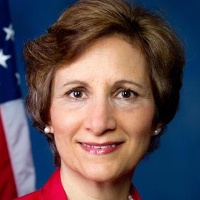
Suzanne Bonamici
Representative
OR
Suzanne Bonamici
Representative
OR
The Tsunami Warning, Research, and Education Act of 2025 reauthorizes and updates the nation's tsunami warning system to enhance the timeliness and accuracy of alerts. This legislation mandates improvements in data management, expands the geographic scope of coverage, and integrates social and behavioral science into mitigation efforts. It also authorizes specific funding levels through fiscal year 2030 to support these critical upgrades across warning, research, and education programs.
This Act mandates that major federal agencies report to Congress on their compliance with existing 2020 guidelines for accepting and verifying electronic consent for sharing personal records.

Shontel Brown
Representative
OH
Shontel Brown
Representative
OH
The Electronic Consent Accountability Act of 2025 mandates that major federal agencies report to Congress on their progress in implementing existing 2020 guidelines for accepting digital consent and identity verification. This oversight is necessary because agencies have failed to fully adopt the rules previously established by the Office of Management and Budget (OMB). Agencies must detail their implementation schedule or explain any delays in adopting these electronic record-sharing standards.
This Act mandates that Medicare separately cover FDA-approved treatments for dialysis-related amyloidosis at 100% of reasonable charges, removing them from the standard bundled dialysis payment.
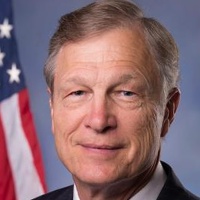
Brian Babin
Representative
TX
Brian Babin
Representative
TX
The Dialysis-Related Amyloidosis Treatment Act of 2025 ensures Medicare coverage for FDA-approved treatments for amyloidosis that develops in patients undergoing dialysis. This legislation mandates that these specific treatments must be paid for separately by Medicare, rather than being included in the standard bundled payment for renal dialysis services. This change takes effect immediately upon enactment.
The RAMP Act clarifies the private right of action for individuals to sue group health plans that fail to make primary payments or provide appropriate reimbursement when Medicare should have paid first.

Gus Bilirakis
Representative
FL
Gus Bilirakis
Representative
FL
The RAMP Act, or Repair Abuses of MSP Payments Act, clarifies the legal pathway for individuals to sue their group health plans. This legislation specifically allows for a private cause of action when a group health plan fails to make primary payments or provide appropriate reimbursement as required under Medicare secondary payer rules. Essentially, it updates existing law to ensure group health plans are held accountable for improper payment sequencing involving Medicare.
This Act establishes Haskell Indian Nations University as a federally chartered corporation governed by an independent Board of Trustees to enhance its educational mission for Native American students.
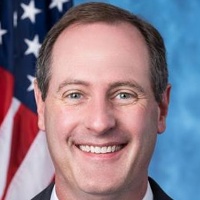
Tracey Mann
Representative
KS
Tracey Mann
Representative
KS
The Haskell Indian Nations University Improvement Act establishes Haskell Indian Nations University as a federally chartered corporation, granting it greater independence from the Bureau of Indian Education. This restructuring creates an independent Board of Trustees to govern the tuition-free institution dedicated to educating Native American students. The Act also establishes an endowment program and sets forth new operational, financial, and reporting requirements for the University.
The Define to Defeat Act of 2025 mandates the adoption of the IHRA definition of antisemitism across federal anti-discrimination training and judicial proceedings while requiring its consideration in civil rights investigations.
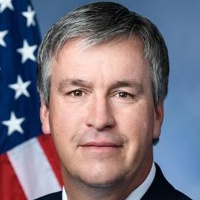
Barry Moore
Representative
AL
Barry Moore
Representative
AL
The Define to Defeat Act of 2025 mandates the adoption of the International Holocaust Remembrance Alliance (IHRA) definition of antisemitism across federal agencies. This law requires that the IHRA definition be included in all federal anti-discrimination training and provided to juries in relevant federal cases. Furthermore, federal agencies must consider antisemitism as a motivating factor when investigating civil rights complaints under specified existing laws. The Act explicitly states it does not expand agency enforcement authority or infringe upon First Amendment rights.
This Act mandates that every state in the lower 48 must have at least one full-service Veterans Health Administration hospital or comparable contracted services available to veterans within its borders.

Chris Pappas
Representative
NH
Chris Pappas
Representative
NH
The Veterans Full-Service Care and Access Act of 2025 mandates that the Department of Veterans Affairs (VA) must ensure at least one full-service VA hospital is located within the borders of each of the 48 contiguous states. This guarantees a baseline level of in-state hospital access for eligible veterans. The VA must report to Congress one year after enactment detailing compliance and the impact on care quality.
This Act prohibits the federal government from funding entities that rate or demonetize domestic organizations based on their lawful speech.
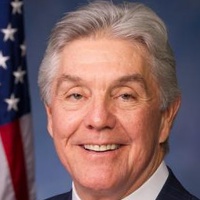
Roger Williams
Representative
TX
Roger Williams
Representative
TX
The Protect the First Amendment Act prohibits the federal government from providing funding, grants, or contracts to specific entities, such as NewsGuard Technologies and the Disinformation Index groups, if they engage in "covered behavior." Covered behavior is defined as rating or demonetizing domestic organizations based on their lawful speech, which these entities claim is misinformation or disinformation. This restriction applies to both for-profit companies and 501(c)(3) nonprofit organizations that engage in these rating activities.
This bill establishes a pilot program to provide grants for training family caregivers of young children with autism or developmental disabilities in essential skills to improve child well-being and community involvement.
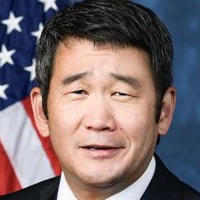
Dave Min
Representative
CA
Dave Min
Representative
CA
The Autism Family Caregivers Act of 2025 establishes a new pilot program to award grants for evidence-based skills training to family caregivers of children with autism or developmental disabilities. This training aims to improve child well-being and community engagement by focusing on communication, daily living skills, and caregiver self-care. The Secretary of Health and Human Services will oversee the program, which requires grantees to establish diverse advisory committees and report annually on program effectiveness. Funding is authorized through fiscal year 2030 to support at least 25 entities across multiple states.
This bill mandates the transfer of the Space Shuttle Discovery from the Smithsonian to NASA's Johnson Space Center in Houston for public STEM education display.
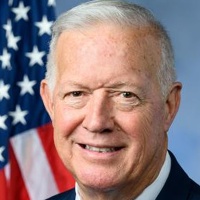
Randy Weber
Representative
TX
Randy Weber
Representative
TX
The Bring the Space Shuttle Home Act mandates the relocation of the Space Shuttle Discovery from the Smithsonian's Udvar-Hazy Center to NASA's Johnson Space Center in Houston, Texas, within 18 months. This legislation requires a joint plan for the transfer and ensures the shuttle remains on public display for STEM education near the Houston center. Ultimately, NASA is authorized to transfer ownership to a selected nonprofit organization, provided the display requirements are maintained.
The SPEED Act expedites the execution and delivery of small transportation projects by increasing the federal funding thresholds for categorical exclusions.
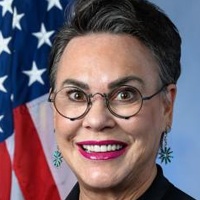
Harriet Hageman
Representative
WY
Harriet Hageman
Representative
WY
The Small Projects Expedited Execution and Delivery (SPEED) Act aims to speed up the delivery of certain transportation projects by increasing the federal funding thresholds for categorical exclusions. This allows projects with greater federal investment, up to $\$12$ million or $\$70$ million depending on the category, to qualify for a streamlined environmental and planning review process. By raising these limits, the bill seeks to accelerate the execution and delivery of smaller-scale infrastructure improvements.
This Act authorizes the Secretary of State to designate foreign countries as "State Sponsors of Unlawful or Wrongful Detention" and outlines congressional oversight and mandatory review of U.S. response tools against such nations.

J. Hill
Representative
AR
J. Hill
Representative
AR
The Countering Wrongful Detention Act of 2025 authorizes the Secretary of State to designate foreign countries as "State Sponsors of Unlawful or Wrongful Detention" if they illegally hold U.S. citizens. This designation triggers mandatory reviews of diplomatic and legal tools to deter such actions. Furthermore, Congress must approve these designations for them to remain in effect beyond six months.
The Medicare Patient Choice Act expands Medicare beneficiaries' right to choose their healthcare providers by explicitly including therapists and qualified audiologists alongside physicians and practitioners.
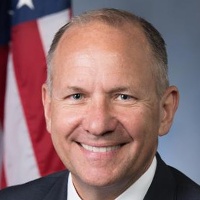
Lloyd Smucker
Representative
PA
Lloyd Smucker
Representative
PA
The Medicare Patient Choice Act expands the freedom of choice for Medicare beneficiaries by explicitly including therapists and qualified audiologists alongside physicians and practitioners in Medicare regulations. This amendment ensures patients can select these specific providers for their care under existing Medicare choice provisions. The bill formally defines the included therapist types (physical, occupational, and speech-language pathologists) for clarity.
This Act prohibits the exclusion of any individual from District of Columbia juries based on their sexual orientation, gender identity, or related sex characteristics.

Eleanor Norton
Representative
DC
Eleanor Norton
Representative
DC
The District of Columbia Local Juror Non-Discrimination Act of 2025 prohibits the exclusion of any person from serving on a jury in the District of Columbia based on their sexual orientation or gender identity. This legislation amends D.C. law to explicitly define "sex" for jury service purposes to include sexual orientation, gender identity, and related characteristics. The Act ensures that jury selection is based solely on citizenship, reinforcing protections against identity-based discrimination in the judicial process.
The WEAR IT Act allows individuals to treat up to \$375 annually for the cost of qualifying health-monitoring wearable devices as a qualified medical expense for HSAs, Archer MSAs, and FSAs/HRAs, effective after December 31, 2025.
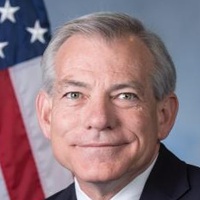
David Schweikert
Representative
AZ
David Schweikert
Representative
AZ
The WEAR IT Act allows individuals to treat the cost of certain health-monitoring wearable devices as qualified medical expenses for tax-advantaged accounts like HSAs, Archer MSAs, and FSAs/HRAs. This provision permits up to a \$375 annual deduction for these devices, provided they help diagnose, treat, or manage a health condition. These changes will take effect for expenses incurred after December 31, 2025.
This Act prohibits states from interfering with or penalizing individuals who provide, receive, or facilitate abortion services that are legal in the state where the service occurs, including interstate travel for such care.

Lizzie Fletcher
Representative
TX
Lizzie Fletcher
Representative
TX
The Ensuring Women’s Right to Reproductive Freedom Act prohibits states from interfering with or retaliating against individuals who provide or receive abortion services that are legal in the state where the service occurs. This protection extends to interstate travel for legal abortion care and the movement of FDA-approved abortion-related drugs across state lines. Individuals harmed by violations can sue in federal court for damages and legal fees.
This Act mandates a comprehensive, publicly accessible survey of grape production data, followed by annual data releases for the top five producing states.

Claudia Tenney
Representative
NY
Claudia Tenney
Representative
NY
The Fairness in Vineyard Data Act mandates the Secretary of Agriculture to conduct a comprehensive, public survey of grape production across all states. Following this initial survey, the government must annually publish detailed data for the top five grape-producing states for three years. This legislation aims to increase transparency and public access to crucial grape industry statistics.
This bill updates the Congressional Review Act by clarifying the definition of a joint resolution for disapproving federal rules and making technical renumbering changes to the existing law.
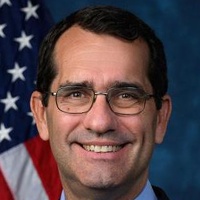
Derek Schmidt
Representative
KS
Derek Schmidt
Representative
KS
The Congressional Review Reform Act of 2025 makes technical amendments to the existing Congressional Review Act (CRA), the law governing how Congress overturns federal regulations. This bill primarily focuses on clarifying the definition of a "joint resolution" used for disapproval and reorganizing the numbering and lettering of various sections within the CRA. These changes are structural housekeeping designed to streamline the review process for new federal rules.
This act extends existing federal limits on on-duty hours to include railroad yardmaster employees.
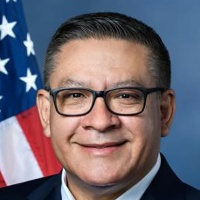
Salud Carbajal
Representative
CA
Salud Carbajal
Representative
CA
The Railroad Yardmaster Protection Act of 2025 expands existing federal regulations to establish mandatory duty hour limitations for railroad yardmaster employees. This legislation specifically defines the role of a yardmaster and applies current rules governing train employee work hours to them during train movements. The goal is to enhance safety by limiting the maximum on-duty time for these critical supervisory personnel.
This Act prohibits charging retailers fees for processing SNAP benefit transactions, with an exception for equipment rental, effective October 1, 2025.
Shontel Brown
Representative
OH
Shontel Brown
Representative
OH
The Ensuring Fee-Free Benefit Transactions Act of 2025 prohibits states and their contractors from charging SNAP-authorized retailers any fees for processing basic Supplemental Nutrition Assistance Program (SNAP) EBT transactions. This ban does not apply to fees specifically charged for the rental of necessary transaction equipment, such as card readers. These new provisions will take effect on October 1, 2025, overriding previous related regulations.