Legislation
This resolution condemns the deadly July 2025 New York City mass shooting and calls for comprehensive federal action to close loopholes in state-by-state gun laws.

Dan Goldman
Representative
NY
Dan Goldman
Representative
NY
This resolution formally condemns the tragic mass shooting in New York City on July 28, 2025, which highlighted the danger of inconsistent state gun laws. It calls for immediate and comprehensive federal action to establish national gun safety standards. The bill emphasizes that stronger federal laws are necessary to prevent firearms from easily crossing state lines and undermining local safety efforts. Ultimately, Congress is urging the passage of nationwide measures like universal background checks to combat the epidemic of gun violence.
This resolution expresses support for designating August 17, 2025, as "Marcus Garvey Recognition Day" to honor his significant contributions to Black history and economic self-reliance.
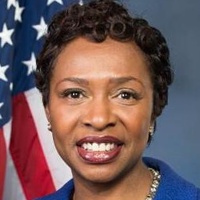
Yvette Clarke
Representative
NY
Yvette Clarke
Representative
NY
This resolution expresses strong support for the President to officially designate August 17, 2025, as "Marcus Garvey Recognition Day." It highlights Marcus Garvey's historical significance as the leader of the largest African-American movement and his dedication to Black economic self-reliance. The designation seeks to formally honor his enduring legacy following his posthumous pardon.
This resolution terminates the President's declared crime emergency in the District of Columbia, asserting that the emergency is unwarranted and the legal basis for federal MPD control is flawed.
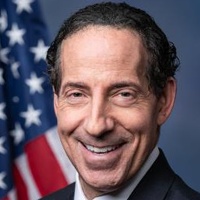
Jamie Raskin
Representative
MD
Jamie Raskin
Representative
MD
This resolution terminates the President's August 11, 2025, declaration of a crime emergency in the District of Columbia. Congress asserts that the President lacks the legal authority under the D.C. Home Rule Act to take operational control of the Metropolitan Police Department. Furthermore, the bill notes that local violent crime rates have been declining significantly.
This resolution officially establishes August 20th as Original Slavery Remembrance Day to recognize the history of slavery, honor those who fought against it, and acknowledge its lasting effects.
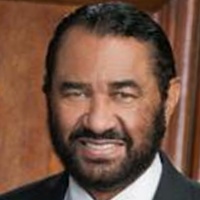
Al Green
Representative
TX
Al Green
Representative
TX
This resolution officially establishes August 20th as **Original Slavery Remembrance Day** to formally recognize and condemn the history of slavery in the U.S. and globally. It commemorates the lives of enslaved people, honors historical figures who fought for freedom, and acknowledges the lasting effects of slavery on contemporary society. The resolution requests the President to issue a proclamation calling for appropriate national observance of this day.
This resolution formally states Congress's commitment to upholding the current retirement ages for Social Security and Medicare, affirming the President's promise not to raise them.

Marcy Kaptur
Representative
OH
Marcy Kaptur
Representative
OH
This resolution formally affirms Congress's commitment to maintaining the current retirement ages for Social Security and Medicare benefits. It declares that raising the eligibility age would constitute an unfair cut to the earned benefits of current and future retirees. The measure highlights the reliance of millions on these programs and rejects any proposals to push back access to earned retirement security and healthcare.
This resolution expresses Congressional support for designating August 15, 2025, as "Indian Independence Day: A National Day of Celebration of the World's Two Largest Democracies."
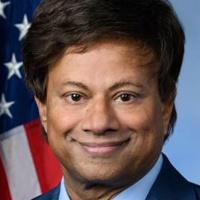
Shri Thanedar
Representative
MI
Shri Thanedar
Representative
MI
This resolution expresses strong support for designating August 15, 2025, as "Indian Independence Day: A National Day of Celebration of the World's Two Largest Democracies." It celebrates India's independence and recognizes the deep, shared commitment to democracy between the United States and India. The bill further acknowledges the vital contributions of Americans of Indian heritage to U.S. society and reaffirms the strategic partnership between the two nations.
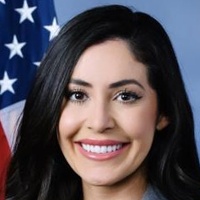
This resolution extends the Presidentially declared crime emergency in the District of Columbia until a new order terminates it.
Anna Luna
Representative
FL
Anna Luna
Representative
FL
This bill extends the crime emergency declaration previously issued by the President for the District of Columbia on August 11, 2025. The resolution ensures that this emergency status remains in effect until the President formally issues an order to terminate it. The remainder of the document outlines various related administrative and statutory updates.
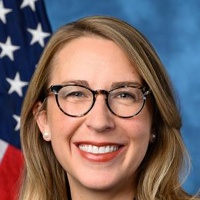
This Act mandates the U.S. International Trade Commission to study and report on the inflationary effects of tariffs imposed by executive order since January 20, 2025.
Hillary Scholten
Representative
MI
Hillary Scholten
Representative
MI
The Toll of Tariffs Act of 2025 mandates that the U.S. International Trade Commission conduct an urgent study on the inflationary effects of tariffs implemented via executive order since January 20, 2025. The Commission must report its findings to Congress within 60 days. This report will specifically detail the impact of these tariffs on the Consumer Price Index (CPI-U) and related measures.
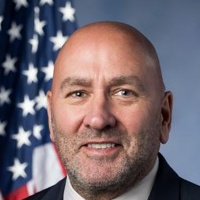
This bill establishes pilot projects for the Department of Homeland Security to test advanced technologies, including AI, to improve the detection of contraband like fentanyl at U.S. land ports of entry.
Clay Higgins
Representative
LA
Clay Higgins
Representative
LA
The CATCH Fentanyl Act mandates the Department of Homeland Security to establish pilot projects at land ports of entry to test advanced inspection technologies, including those utilizing Artificial Intelligence. These tests aim to improve the detection of contraband like fentanyl while increasing inspection efficiency. The Secretary must report on the effectiveness of these technologies and provide recommendations for nationwide deployment within five years of enactment.
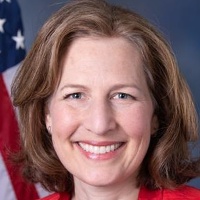
The State Public Option Act establishes a state-optional Medicaid buy-in program, extends enhanced primary care payment rates, adjusts federal funding timelines for newly eligible individuals, and mandates Medicaid coverage for comprehensive sexual and reproductive health services.
Kim Schrier
Representative
WA
Kim Schrier
Representative
WA
The State Public Option Act establishes a new Medicaid buy-in option for uninsured residents starting in 2026, while also ensuring federal administrative cost-sharing for states offering the program. The bill mandates that Medicaid payments for primary care services must meet or exceed Medicare rates for certain providers, and it expands required Medicaid coverage to include comprehensive sexual and reproductive health services beginning in 2026. Furthermore, it adjusts federal matching fund timelines for states newly expanding Medicaid coverage and requires updates to Medicaid quality measures.
This Act generally prohibits the use of cell-site simulators by law enforcement and intelligence agencies unless a specific, narrowly tailored warrant is obtained, with limited exceptions for emergencies.
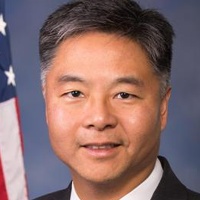
Ted Lieu
Representative
CA
Ted Lieu
Representative
CA
The Cell-Site Simulator Warrant Act of 2025 generally prohibits law enforcement and intelligence agencies from using cell-site simulators (devices that mimic cell towers) without obtaining a warrant. Warrants require agencies to prove other tracking methods failed and must narrowly define the scope and duration of use. The Act also establishes strict requirements for emergency use, mandates public notification after monitoring, and blocks evidence obtained through illegal simulator use from being admitted in court.
The Disaster Relief Medicaid Act establishes a simplified, federally funded Medicaid coverage pathway for survivors of major disasters for two years following a declaration.
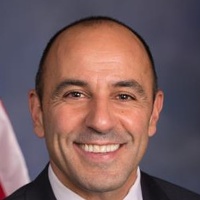
Jimmy Panetta
Representative
CA
Jimmy Panetta
Representative
CA
The Disaster Relief Medicaid Act establishes a new, streamlined federal framework for states to provide Medicaid coverage to survivors of major disasters for up to two years. This law simplifies enrollment through self-attestation and presumptive eligibility, while ensuring federal funding covers 100% of the costs for eligible survivors in impacted areas. Additionally, it mandates an independent, multi-year evaluation of the program's effectiveness and provides federal support for states developing emergency home and community care response teams.
This bill clarifies the Holocaust Expropriated Art Recovery Act of 2016 by explicitly barring time-based and other procedural defenses to ensure claims for Nazi-looted art are decided on their merits.
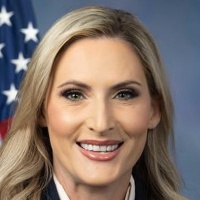
Laurel Lee
Representative
FL
Laurel Lee
Representative
FL
This bill significantly strengthens the Holocaust Expropriated Art Recovery Act of 2016 by explicitly blocking time-based and procedural defenses that have previously prevented claims for Nazi-looted art from being heard on their merits. The changes ensure that courts must now focus on whether the art was actually stolen, regardless of when the claim is brought or the citizenship of the original owner. These improvements apply immediately to both pending and future lawsuits seeking the return of art expropriated during the Nazi era.
This Act mandates that a majority of the members appointed to the Commission of Fine Arts must be residents of the District of Columbia.

Eleanor Norton
Representative
DC
Eleanor Norton
Representative
DC
This Act, the Commission of Fine Arts District of Columbia Residency Act, mandates that a majority of the members serving on the Commission of Fine Arts must be residents of the District of Columbia. This residency requirement will take effect one year after the bill is enacted into law. The President will continue to appoint members, but must now ensure this majority residency standard is met.
This act mandates the public release of psychiatric hospital inspection and accreditation survey results on the CMS Care Compare website while protecting patient and provider privacy.
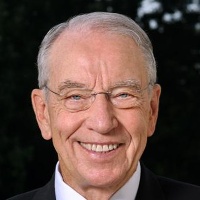
Charles Grassley
Senator
IA
Charles Grassley
Senator
IA
The Psychiatric Hospital Inspection Transparency Act of 2025 mandates the public release of accreditation and inspection survey results for psychiatric hospitals on the CMS Care Compare website. This ensures consumers can easily access standardized information to make informed healthcare choices. The Secretary must develop a standardized reporting form while strictly protecting patient and individual provider privacy under HIPAA guidelines.
The International Maritime Pollution Accountability Act of 2025 establishes reporting requirements and imposes fees on large cargo vessels for carbon and air pollutant emissions, while dedicating collected funds to decarbonization and clean technology projects in shipping and port communities.

Doris Matsui
Representative
CA
Doris Matsui
Representative
CA
The International Maritime Pollution Accountability Act of 2025 establishes new reporting requirements and imposes fees on large cargo vessels engaged in "covered voyages" to account for their carbon dioxide and criteria air pollutant emissions. These fees are designed to fund significant investments in decarbonizing the shipping industry, modernizing the U.S. Jones Act fleet, and improving air quality monitoring in port communities. The fee structure will terminate if the International Maritime Organization implements a comparable global emissions fee.
The MEDIC Careers Act of 2025 aims to streamline the transition of military medics into civilian healthcare occupations through improved credentialing recommendations and a new grant program supporting their hiring and retention in underserved areas.
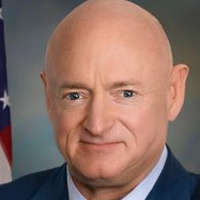
Mark Kelly
Senator
AZ
Mark Kelly
Senator
AZ
The MEDIC Careers Act of 2025 aims to streamline the transition of military medics into civilian healthcare careers by developing recommendations to align military training with civilian licensing requirements. It also establishes a pilot grant program to fund eligible healthcare organizations that hire, train, and retain separating service members in medically underserved areas. The goal is to reduce barriers and ensure medics can quickly utilize their valuable experience in the civilian workforce.
The Skilled Workforce Act establishes a federal tax credit for non-foreign entities investing in projects that expand or improve eligible institutions for high-demand workforce training.

Jon Ossoff
Senator
GA
Jon Ossoff
Senator
GA
The Skilled Workforce Act establishes a new federal tax credit for non-foreign entities investing in projects that expand job training for high-demand fields like advanced manufacturing and high-tech. This credit equals 30% of the qualified investment in eligible property used to upgrade career and technical education institutions. The program is capped at $500 million in total credits and requires the Secretary to establish a certification process within 180 days.
This Act establishes new processes for supporting Afghan allies outside the U.S., grants conditional permanent resident status to eligible Afghans already in the country, and streamlines refugee processing for at-risk allies.

Amy Klobuchar
Senator
MN
Amy Klobuchar
Senator
MN
The Fulfilling Promises to Afghan Allies Act aims to streamline and enhance support for Afghan nationals who aided the U.S. mission. It establishes new processes for remote refugee processing, creates a pathway to conditional permanent resident status for eligible allies already in the U.S., and creates a new Special Immigrant Visa category for certain relatives of U.S. service members. The bill also mandates increased reporting and interagency coordination to improve efficiency and transparency in these resettlement efforts.
This act allows the President to permit the construction of certain Coast Guard vessels in foreign shipyards under specific national security, geographic, and cost conditions.
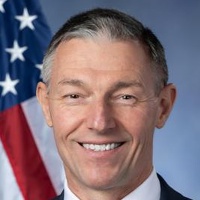
Mike Kennedy
Representative
UT
Mike Kennedy
Representative
UT
The Ensuring Coast Guard Readiness Act amends existing law to allow the President to authorize the construction of certain Coast Guard vessels in foreign shipyards under specific national security circumstances. This exception requires the foreign shipyard to be located in a NATO or mutual defense treaty country and mandates that the foreign construction cost be lower than domestic costs. Furthermore, the President must certify to Congress that the shipyard is not controlled by entities based in the People's Republic of China.