Legislation
This bill mandates that the Navy's flight demonstration squadron, the Blue Angels, remain based in Pensacola, Florida, requiring local shows and specific training percentages within the state.
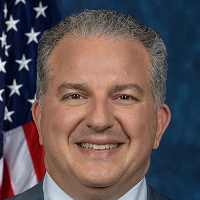
Jimmy Patronis
Representative
FL
Jimmy Patronis
Representative
FL
The Blue Angels Act officially mandates that the U.S. Navy maintain its flight demonstration squadron, commonly known as the Blue Angels, based in Pensacola, Florida. This legislation requires the squadron to perform at least two annual shows in Pensacola and conduct a minimum of 60% of its training flights within the state annually. Furthermore, the bill protects the squadron's personnel and aircraft levels, preventing reductions below the staffing levels set as of July 31, 2025.
The Liberty City Rising Act mandates enhanced safety and security standards for federally assisted housing in designated high-crime areas and prioritizes Capital Fund grants for safety upgrades in those locations.
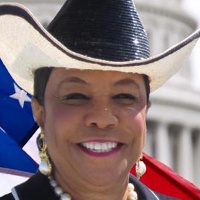
Frederica Wilson
Representative
FL
Frederica Wilson
Representative
FL
The Liberty City Rising Act aims to enhance safety in federally assisted housing located in designated high-crime areas. This legislation mandates new, specific security standards—such as cameras and improved lighting—for both public housing and privately owned assisted buildings in these zones. Furthermore, the Act prioritizes federal grant funding for safety and security upgrades in public housing projects situated within these high-crime neighborhoods.
This act establishes a new federal grant program to provide financial assistance to eligible animal shelters for improving animal care, staffing, and operations.
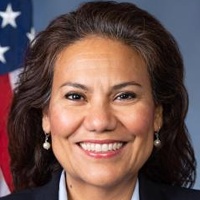
Veronica Escobar
Representative
TX
Veronica Escobar
Representative
TX
The Supporting Our Shelters Act establishes a new federal grant program to provide financial assistance directly to eligible animal shelters. These funds are intended to improve animal care, facility operations, and staffing capabilities. Recipients must submit annual reports detailing animal outcomes and fund expenditures, while the Secretary must also report annually to Congress on the program's effectiveness.
This bill establishes a mandatory two-step approval process, requiring both executive branch sign-off and subsequent Congressional joint resolution, for exporting advanced AI chips to the People's Republic of China.
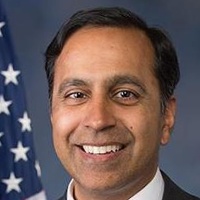
Raja Krishnamoorthi
Representative
IL
Raja Krishnamoorthi
Representative
IL
The No Advanced Chips for the CCP Act of 2025 establishes a stringent, two-step approval process for exporting advanced AI semiconductors to China, requiring both executive branch approval and specific Congressional resolution. This process mandates a thorough national security review by multiple federal agencies before any transfer can be considered. The Act defines "advanced AI semiconductor" based on specific performance thresholds and includes a three-year sunset provision.
This Act establishes a "Mega-Decade Sports Diplomacy Strategy" to leverage major U.S.-hosted sporting events between 2024 and 2034 to enhance America's global standing and diplomatic ties through a newly established Office of Sports Diplomacy.
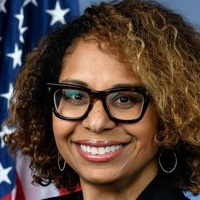
Sydney Kamlager-Dove
Representative
CA
Sydney Kamlager-Dove
Representative
CA
The American Decade of Sports Act establishes a "Mega-Decade Sports Diplomacy Strategy" to leverage major international sporting events hosted in the U.S. between 2024 and 2034 to enhance America's global standing. This requires the State Department to create comprehensive 5-year plans detailing diplomatic goals, partnerships, and visa facilitation efforts. Furthermore, the Act mandates the creation of a dedicated Office of Sports Diplomacy to coordinate and execute these strategy objectives across government and private sectors. The Secretary of State must provide annual progress reports to Congress on the implementation of these goals until the end of 2034.
This act establishes that trafficking fentanyl, as broadly defined, constitutes attempted murder under federal law.
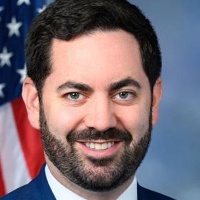
Michael Lawler
Representative
NY
Michael Lawler
Representative
NY
The Fentanyl Kills Act establishes a new federal definition for "trafficked fentanyl," encompassing the manufacture, distribution, and financing of illicit fentanyl and its precursors. Crucially, this bill automatically equates engaging in the defined fentanyl trafficking activities with the crime of attempted murder. This change subjects individuals involved in fentanyl trafficking to the severe penalties associated with attempted murder charges.
This Act permanently classifies the entire class of highly potent synthetic opioids known as nitazenes as Schedule I controlled substances to combat rising overdose deaths.
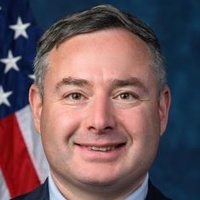
Eugene Vindman
Representative
VA
Eugene Vindman
Representative
VA
The Nitazene Control Act permanently classifies the entire class of highly potent synthetic opioids known as nitazenes as Schedule I controlled substances. This action aims to proactively combat the rising threat of these dangerous analogues, which are often more potent than fentanyl. By scheduling the entire chemical class, the law seeks to simplify enforcement and enhance public health protection against fatal overdoses. The Act also includes provisions to ensure ongoing, approved medical research can continue temporarily under specific conditions.
This act amends federal law to allow states to use Emergency Solutions Grant Program funds for operating and supporting designated safe parking areas that connect people living in vehicles with re-housing services.
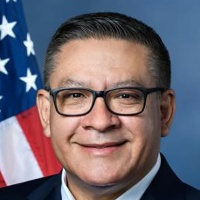
Salud Carbajal
Representative
CA
Salud Carbajal
Representative
CA
The Naomi Schwartz and Susan Rose Safe Parking Act of 2025 amends federal law to officially designate "safe parking" as an eligible activity under the Emergency Solutions Grant (ESG) Program. This allows states to use ESG funds to operate secure overnight parking locations for individuals experiencing homelessness in vehicles. These designated sites must connect residents with re-housing services and supportive assistance to help them transition into stable housing.
This act empowers the Secretary of HUD to establish and enforce a mandatory indoor temperature range of 71 to 81 degrees Fahrenheit in federally assisted housing, including Section 8, public housing, and elderly housing units.
Frederica Wilson
Representative
FL
Frederica Wilson
Representative
FL
The Safe Temperature Act of 2025 empowers the Secretary of Housing and Urban Development (HUD) to establish mandatory temperature standards for federally assisted housing. This bill requires landlords and public housing agencies to maintain indoor temperatures between 71 and 81 degrees Fahrenheit in covered units. It also authorizes the use of specific federal funds to ensure compliance with these new comfort and safety requirements.
The Greyhound Protection Act of 2025 bans commercial greyhound racing, live lure training, and open field coursing nationwide starting in late 2027 due to documented animal welfare concerns.
Salud Carbajal
Representative
CA
Salud Carbajal
Representative
CA
The Greyhound Protection Act of 2025 seeks to end commercial greyhound racing and related cruel training practices nationwide by October 1, 2027. This legislation bans all forms of wagering on greyhound races and prohibits the use of live animals for training or coursing events. Violators face significant fines and potential imprisonment under the strengthened Animal Welfare Act. The bill reflects concerns over widespread animal injuries, drug use, and inhumane confinement within the declining industry.
This Act adjusts corporate income tax rates based on the CEO-to-median-worker pay ratio and grants federal contracting preference to companies with lower executive compensation gaps.
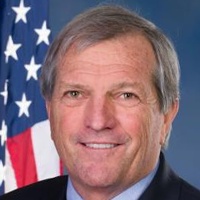
Mark DeSaulnier
Representative
CA
Mark DeSaulnier
Representative
CA
The CEO Accountability and Responsibility Act ties a publicly traded corporation's federal income tax rate directly to the ratio between its CEO's compensation and its median worker's pay. Companies with higher executive-to-worker pay gaps will face higher tax rates, with additional penalties for shifting domestic jobs overseas or to contractors. Furthermore, federal agencies must grant contracting preferences to businesses whose executive pay ratio is less than 50-to-1.
This bill establishes a mandatory supply fee paid by Medicare drug plans to long-term care pharmacies for specific prescriptions in 2026 and 2027, while also mandating a GAO study on the financial sustainability of the current payment system.
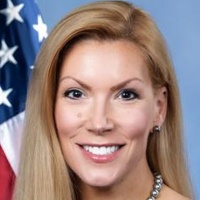
Beth Van Duyne
Representative
TX
Beth Van Duyne
Representative
TX
This Act establishes a mandatory supply fee for Medicare drug plans to pay long-term care pharmacies for specific prescriptions dispensed in 2026 and 2027. The bill mandates a $30 fee per prescription in 2026, increasing in 2027, with penalties for non-payment. Additionally, the GAO is required to study the financial sustainability of the current payment structure for these essential pharmacies. This legislation aims to ensure continued access to medications for patients in long-term care settings.
The SAFE Act of 2025 allows individuals to sue federal employees directly for intentional or willful violations of the Privacy Act that cause demonstrable harm, removing immunity defenses for such misconduct.
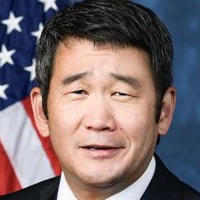
Dave Min
Representative
CA
Dave Min
Representative
CA
The Security and Accountability For Everyone (SAFE) Act of 2025 amends the Privacy Act of 1974 to allow individuals to sue federal employees directly for intentional or willful violations of their privacy rights that result in demonstrable harm. This legislation removes immunity defenses for federal personnel in such cases and makes them personally liable for damages, meaning the U.S. government will not cover these specific judgments. Additionally, State Attorneys General are empowered to bring civil actions on behalf of state residents harmed by these intentional privacy breaches.
This bill establishes a grant program through the USDA to fund domestic market development projects for U.S.-grown specialty crops, requiring a minimum 25% non-federal match.
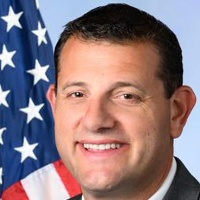
David Valadao
Representative
CA
David Valadao
Representative
CA
The Specialty Crop Domestic Market Promotion and Development Program Act of 2025 establishes a new federal grant program to boost the domestic market for U.S.-grown specialty crops. The Secretary of Agriculture will award funds to eligible organizations to execute approved marketing and development projects. Recipients must provide non-Federal matching funds and adhere to strict spending guidelines monitored through annual reviews and audits.
This resolution expresses support for designating August 22, 2025, as "Chuck Brown Day" to honor the Godfather of Go-Go's musical contributions and deep connection to the District of Columbia.

Eleanor Norton
Representative
DC
Eleanor Norton
Representative
DC
This resolution expresses support for designating August 22, 2025, as "Chuck Brown Day" to honor the life and legacy of the "Godfather of Go-Go." It recognizes Chuck Brown's profound musical contributions, including creating the distinct D.C. go-go sound and achieving national success. The bill further highlights his deep connection to the District of Columbia and his advocacy for its rights.
This Act streamlines U.S. arms export controls and eliminates certain certification requirements for defense transfers and technical agreements involving Australia and the United Kingdom under the AUKUS partnership.
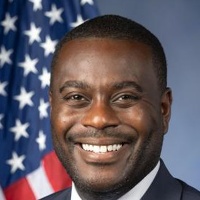
Gabe Amo
Representative
RI
Gabe Amo
Representative
RI
The AUKUS Improvement Act of 2025 streamlines defense cooperation between the United States, Australia, and the United Kingdom. This legislation eases restrictions on the export, re-export, and transfer of defense articles among the three nations, removing certain presidential authorization requirements. Furthermore, it eliminates specific certification requirements for technical assistance and manufacturing license agreements conducted within Australia or the United Kingdom. Overall, the bill aims to increase flexibility and efficiency in defense trade and technology sharing under the AUKUS partnership.
This bill extends the emergency period during which the President can exercise control over the Metropolitan Police Department from 30 days to 180 days.
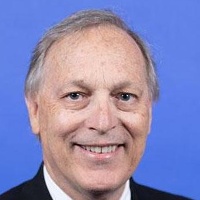
Andy Biggs
Representative
AZ
Andy Biggs
Representative
AZ
This bill amends the District of Columbia Home Rule Act to significantly extend the emergency period during which the President may exercise control over the Metropolitan Police Department. Specifically, it changes the standard emergency declaration period from 30 days to 180 days. This extension applies to both current and future emergency declarations made under the relevant section of the Act.
This bill codifies Executive Order 14331 to establish permanent federal law guaranteeing fair banking practices for all Americans.
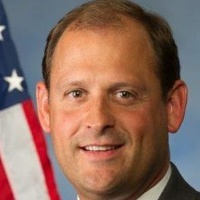
Garland Barr
Representative
KY
Garland Barr
Representative
KY
This bill seeks to establish the principles of fair banking outlined in Executive Order 14331 as permanent federal law. By codifying the order, it ensures that the requirements for guaranteeing fair banking practices for all Americans are permanently enshrined in the U.S. Code. This action transitions the executive directive into enduring statutory law.
The ALCATRAZ Act establishes a DHS grant program to reimburse state and local governments for migrant detention costs incurred after January 20, 2025.
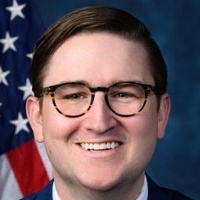
Addison McDowell
Representative
NC
Addison McDowell
Representative
NC
The ALCATRAZ Act establishes a new Department of Homeland Security (DHS) grant program to reimburse state and local governments for the costs associated with detaining migrants within their borders starting in 2025. This program will initially be funded by redirecting unspent money from FEMA's Shelter and Services Program. Furthermore, DHS must report on plans to expedite the construction of new migrant detention facilities and identify underused government accounts for potential funding redirection.
This Act allows urbanized area formula grant funds to be used for public transportation operating costs, contingent upon recipients certifying and maintaining their local spending efforts.
Michael Lawler
Representative
NY
Michael Lawler
Representative
NY
The Transit Funding Flexibility Act amends federal law to allow Urbanized Area Formula grant funds to be used more flexibly for public transportation operating costs. It removes specific population-based restrictions on grant eligibility. Crucially, recipients must now annually certify they will maintain their local spending effort for federally funded equipment and facilities, or face a mandatory 13% reduction in future federal funding.