Legislation
The Stop Illegal Entry Act of 2025 significantly increases prison sentences for non-citizens who illegally enter the U.S. and subsequently commit crimes, and imposes harsher mandatory penalties for those who reenter after being removed.
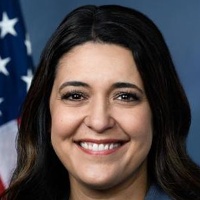
Stephanie Bice
Representative
OK
Stephanie Bice
Representative
OK
The Stop Illegal Entry Act of 2025 significantly increases penalties for non-citizens who enter the U.S. illegally and subsequently commit crimes, imposing mandatory minimum sentences. This legislation also raises the maximum penalty for initial illegal entry and establishes much harsher prison terms for individuals who reenter the country after being previously removed or deported. These enhanced penalties include mandatory minimums of 10 years for repeat offenders or those with prior serious criminal convictions.
This resolution honors the victims and survivors of the September 11, 2001, attacks while urging continued strong support for the Department of Homeland Security's mission to protect the nation.
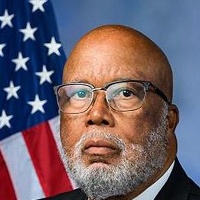
Bennie Thompson
Representative
MS
Bennie Thompson
Representative
MS
This resolution officially honors the victims, survivors, and all those impacted by the September 11, 2001, attacks. It reaffirms the critical importance of the Department of Homeland Security (DHS) in maintaining national security and preparedness. Furthermore, it expresses concern over potential weakening of counterterrorism efforts and urges full support for DHS's mission to protect the homeland.
This bill grants immediate U.S. citizenship to Miguel Lopez Luvian.
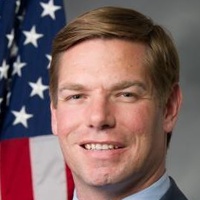
Eric Swalwell
Representative
CA
Eric Swalwell
Representative
CA
This bill grants immediate U.S. citizenship to Miguel Lopez Luvian. It recognizes his long-standing ties to the United States, including his marriage to a U.S. citizen and having citizen children and grandchildren. The legislation bypasses standard naturalization requirements to correct his recent deportation and allow him to return home to his family in California.
This constitutional amendment proposes strict limits on individual and corporate spending in federal elections, mandates a public financing system for qualifying candidates, and reserves the right for states to regulate their own local campaign finance.
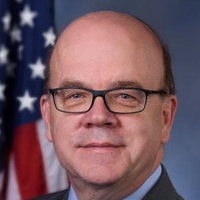
James McGovern
Representative
MA
James McGovern
Representative
MA
This proposed constitutional amendment seeks to fundamentally reform campaign finance for federal elections by setting strict contribution limits for individuals and banning all corporate political spending. It mandates Congress to establish a public financing system covering at least 80% of allowable campaign costs for qualifying candidates. Furthermore, the amendment explicitly reserves the authority for states to set their own reasonable limits on campaign finance for state and local elections.
This resolution recognizes suicide as a serious public health crisis and expresses support for designating September as National Suicide Prevention Month and September 10, 2025, as World Suicide Prevention Day.
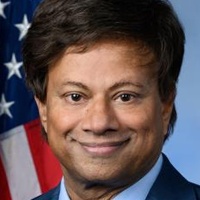
Shri Thanedar
Representative
MI
Shri Thanedar
Representative
MI
This resolution officially recognizes suicide as a serious public health crisis in the United States, highlighting the urgent need for prevention efforts across all demographics. It expresses strong support for designating September as "National Suicide Prevention Month" and September 10th as "World Suicide Prevention Day" to raise awareness. The measure calls for prioritizing comprehensive, tailored strategies to improve access to mental health and suicide prevention services nationwide.
This bill restructures the State Department to enhance its capacity for international security affairs by establishing new high-level positions, dedicated bureaus, and an office to combat human trafficking.
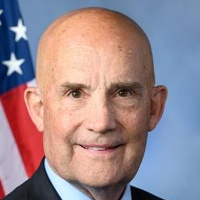
Keith Self
Representative
TX
Keith Self
Representative
TX
This bill restructures the Department of State to enhance its management of international security challenges by creating a new Under Secretary for International Security Affairs. It establishes several new high-level bureaus and offices, including a dedicated office to coordinate the fight against human trafficking. The legislation aims to centralize security policy oversight and ensure dedicated resources for critical areas like counterterrorism and nonproliferation.
This bill establishes a new Under Secretary for Public Diplomacy to oversee all U.S. international communication efforts and creates supporting Assistant Secretary roles for Educational and Cultural Affairs and Strategic Communications, along with authorizing funding for these functions.
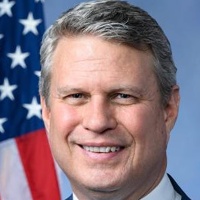
Bill Huizenga
Representative
MI
Bill Huizenga
Representative
MI
This bill significantly restructures the State Department's public diplomacy efforts by establishing a new, high-level Under Secretary for Public Diplomacy to oversee all foreign communication strategy. It also creates two new subordinate positions: an Assistant Secretary for Educational and Cultural Affairs and an Assistant Secretary for Strategic Communications. Finally, the legislation authorizes necessary appropriations for these new roles for fiscal years 2026 and 2027.
This resolution formally condemns the assassination of Charlie Kirk and reaffirms the right to peaceful assembly against political violence.
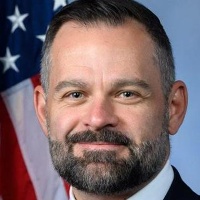
Cory Mills
Representative
FL
Cory Mills
Representative
FL
This resolution formally condemns the horrific political assassination of conservative spokesman Charlie Kirk on September 10, 2025, in Orem, Utah. It expresses deep condolences to his family and recognizes the bravery of the first responders at the scene. Ultimately, the measure reaffirms the fundamental American right to peaceful assembly and stands firmly against political violence.
This resolution expresses support for designating September 9 as "National African Immigrant and Refugee HIV/AIDS and Hepatitis Awareness Day" to address significant health disparities in this growing community.
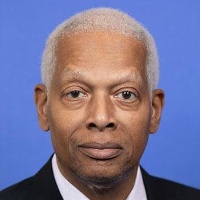
Henry Johnson
Representative
GA
Henry Johnson
Representative
GA
This resolution expresses support for designating September 9th as "National African Immigrant and Refugee HIV/AIDS and Hepatitis Awareness Day" (NAIRHHA Day). The day aims to address significant health disparities, including high rates of HIV and Hepatitis B, within the rapidly growing African immigrant community. NAIRHHA Day will focus on reducing stigma, increasing education on prevention and screening, and advocating for culturally sensitive healthcare access. Ultimately, this initiative seeks to improve health outcomes and reduce new infections for this specific population.
This bill restructures the State Department to establish a new Under Secretary for Political Affairs and specialized bureaus to better coordinate and execute U.S. foreign policy, with a specific focus on countering the influence of the People's Republic of China.
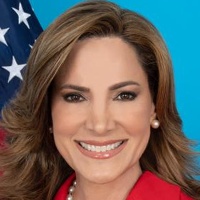
Maria Salazar
Representative
FL
Maria Salazar
Representative
FL
This bill restructures the Department of State to enhance the coordination and execution of U.S. foreign policy by establishing a new Under Secretary for Political Affairs. It creates specialized diplomatic roles, including Ambassadors-at-Large for the Arctic and Indian Ocean regions, and mandates a new Bureau of East Asian and Pacific Affairs. Furthermore, the legislation establishes a temporary unit to counter influence from the People's Republic of China.
This resolution urges the Centers for Medicare & Medicaid Services to immediately halt its AI-driven pilot program for determining Medicare coverage to protect seniors' access to critical healthcare.
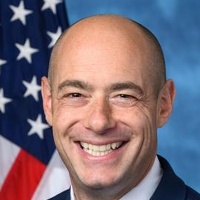
Greg Landsman
Representative
OH
Greg Landsman
Representative
OH
This resolution expresses the sense of the House of Representatives that the Centers for Medicare & Medicaid Services (CMS) must immediately halt its pilot program utilizing artificial intelligence to determine Medicare coverage. Congress is urging CMS to stop using AI in coverage decisions to ensure seniors' access to critical healthcare is not jeopardized. Furthermore, the resolution requires CMS to review any coverage decisions made under the suspended pilot program.
This bill restructures the Department of State by establishing a new Under Secretary for Management to oversee centralized bureaus for administration, technology, consular services, and asset management.
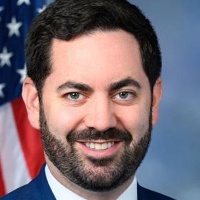
Michael Lawler
Representative
NY
Michael Lawler
Representative
NY
This bill enacts a major internal reorganization of the Department of State by establishing a new Under Secretary for Management to centralize oversight of key operational functions. It creates dedicated Bureaus for areas like technology, administration, and consular affairs to streamline global support and logistics. The legislation also strengthens consular fraud prevention through enhanced data sharing and institutes new controls over foreign property acquisition in the U.S.
This resolution expresses support for designating September 2025 as "National Workforce Development Month" to highlight the importance of job training and skills development initiatives.
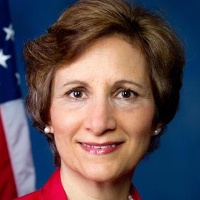
Suzanne Bonamici
Representative
OR
Suzanne Bonamici
Representative
OR
This resolution expresses strong support for designating September 2025 as "National Workforce Development Month." It signals Congress's intent to strengthen federal job training programs, like WIOA, to better meet current economic needs and address skill gaps. The goal is to improve access to critical training, apprenticeships, and career pathways for millions of Americans seeking economic security.
This resolution celebrates the 60th anniversary of Singapore's independence and reaffirms the strong, multifaceted relationship between the United States and Singapore across economic, security, and people-to-people ties.
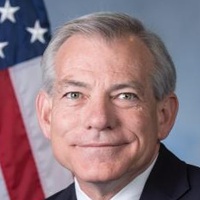
David Schweikert
Representative
AZ
David Schweikert
Representative
AZ
This resolution recognizes the 60th anniversary of the Republic of Singapore's independence and celebrates the strong, multifaceted relationship between the U.S. and Singapore. It highlights the deep economic partnership, vital security cooperation in the Indo-Pacific, and growing people-to-people connections. Ultimately, the bill reaffirms strong U.S. support for this crucial alliance.
This bill establishes a new Under Secretary for Foreign Assistance and supporting oversight structures within the State Department to coordinate and manage all U.S. foreign aid efforts.
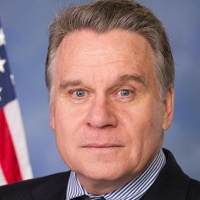
Christopher Smith
Representative
NJ
Christopher Smith
Representative
NJ
This bill establishes a new high-level position, the Under Secretary for Foreign Assistance, to centralize and direct U.S. foreign aid strategy and policy within the Department of State. This Under Secretary will oversee a newly created Office of Foreign Assistance Oversight, led by a Director, to ensure all foreign assistance is coordinated, strategically aligned with foreign policy goals, and effectively managed. The legislation also authorizes necessary appropriations to fund these new roles and structures for fiscal years 2026 and 2027.
This resolution expresses the sense of Congress to observe August 30, 2025, as the 135th anniversary of the historically significant 1890 Institutions.
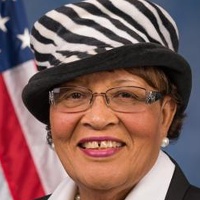
Alma Adams
Representative
NC
Alma Adams
Representative
NC
This resolution expresses the sense of Congress to observe August 30, 2025, as the 135th anniversary of the 1890 Institutions. It recognizes the vital history and ongoing contributions of these 19 historically Black land-grant universities to education, research, and community extension. The bill encourages federal and state partners to celebrate this milestone and reaffirms commitment to strengthening federal collaboration with these institutions.
This resolution expresses the House's opposition to the Chinese Communist Party's historical revisionism regarding World War II, commemorates the Republic of China's contributions, and acknowledges Japan's role in modern Indo-Pacific stability.
Christopher Smith
Representative
NJ
Christopher Smith
Representative
NJ
This resolution expresses the House of Representatives' opposition to the Chinese Communist Party's historical revisionism regarding the Allied victory in Asia during World War II. It formally recognizes the significant contributions of the Republic of China (ROC) and calls for accurate historical teaching that counters CCP propaganda. Furthermore, the bill acknowledges Japan's postwar contributions to peace and stability in the Indo-Pacific region.
This resolution urges all 50 states to include the events of the September 11th terrorist attacks in their K-12 school curricula to ensure future generations never forget that day and the sacrifices made.
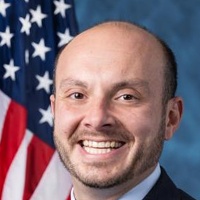
Andrew Garbarino
Representative
NY
Andrew Garbarino
Representative
NY
This resolution expresses the sense of the House of Representatives that all 50 states should include the events of the September 11th terrorist attacks in their elementary and secondary school curricula. The goal is to ensure that future generations understand the significance of that day and honor the sacrifices made by first responders. By mandating this education, Congress seeks to prevent the memory of 9/11 from fading.
This bill establishes a Department of Defense program to support and expand domestic bioindustrial manufacturing capacity for critical products.
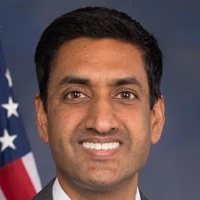
Ro Khanna
Representative
CA
Ro Khanna
Representative
CA
This bill establishes a Department of Defense program to support and expand domestic bioindustrial manufacturing capacity for critical products. The program will provide competitive awards to private companies to build, update, or retool U.S. facilities for commercial-scale biomanufacturing. Selections will prioritize strengthening supply chains, meeting future military needs, and ensuring facility flexibility. This initiative aims to secure the nation's access to essential biomanufactured goods for the next decade.
This bill restructures the Department of State by establishing new leadership roles, defining the UN Ambassador's duties, creating specialized bureaus, and setting new reporting requirements for the Secretary of State.
Cory Mills
Representative
FL
Cory Mills
Representative
FL
This bill aims to significantly restructure and strengthen the Department of State's organization and operational capacity. It establishes new high-level support roles, defines the responsibilities of the U.S. Ambassador to the UN, and creates specialized bureaus to enhance policy, intelligence, and congressional coordination. Furthermore, the legislation imposes new transparency requirements, including a "Red Team Capability" and detailed reporting on unfunded priorities to Congress.