Legislation
This bill establishes the National Flood Insurance Program Affordability Act to provide means-tested financial assistance for flood insurance costs to eligible policyholders and mandates monthly premium payment options.
Robert Bresnahan
Representative
PA
Robert Bresnahan
Representative
PA
The National Flood Insurance Program Affordability Act establishes a means-tested financial assistance program to lower flood insurance costs for eligible homeowners, small businesses, and non-profits. This program provides graduated discounts on premiums for policyholders whose household income is at or below 120% of the area median income. Additionally, the bill mandates that FEMA implement monthly installment payment options for flood insurance premiums within 180 days of enactment.
This bill mandates Federal Reserve regulations to promote competition in credit card processing networks by requiring large issuers to allow merchants to choose between eligible networks for transaction routing.
Lance Gooden
Representative
TX
Lance Gooden
Representative
TX
The Credit Card Competition Act of 2026 aims to increase competition in credit card processing by requiring large issuers and networks to allow merchants to choose which network processes their transactions. This legislation mandates new Federal Reserve Board regulations that prohibit restrictions preventing merchants from selecting an eligible processing network. The rules specifically target large card issuers and networks, while exempting certain three-party payment systems.
This Act establishes a Department of Energy program to enhance the physical security and cybersecurity of natural gas pipelines and LNG facilities through coordination, technology development, and training.
Randy Weber
Representative
TX
Randy Weber
Representative
TX
The Pipeline Cybersecurity Preparedness Act establishes a Department of Energy program to enhance the physical security and cybersecurity of natural gas pipelines and LNG facilities. This program will focus on improving coordination, leading incident response, developing new technologies, and providing workforce training. The Act ensures that existing security authorities of other federal agencies remain in place.
This Act expands the Small Business Administration's microloan program to include the Commonwealth of the Northern Mariana Islands.
Kimberlyn King-Hinds
Representative
MP
Kimberlyn King-Hinds
Representative
MP
The Northern Mariana Islands Small Business Access Act amends the Small Business Act to officially include the Commonwealth of the Northern Mariana Islands (CNMI) in the federal microloan program. This legislation expands access to vital microloans for small businesses operating within the CNMI. The bill also includes minor technical corrections to existing statutory language.
This bill seeks to disapprove and nullify the Department of Veterans Affairs' final rule regarding "Reproductive Health Services."
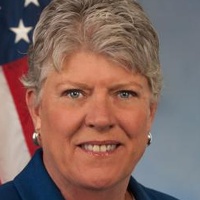
Julia Brownley
Representative
CA
Julia Brownley
Representative
CA
This resolution seeks to disapprove the Department of Veterans Affairs' final rule concerning "Reproductive Health Services" issued in September 2024. If enacted, this disapproval, made under the Congressional Review Act, would prevent the VA rule from taking legal effect.
This bill prohibits the use of federal funds to support Venezuela's oil and petroleum infrastructure and requires an annual report from the Secretary of State on compliance.
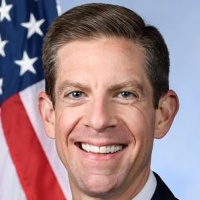
Mike Levin
Representative
CA
Mike Levin
Representative
CA
This bill prohibits the use of any federal funds to support, finance, or insure Venezuela's oil and petroleum infrastructure. It ensures taxpayer money is not used to aid the development or expansion of the Venezuelan oil sector. Furthermore, the Secretary of State must submit an annual report to Congress detailing compliance with this prohibition.
This Act establishes new federal fire suppression standards for college dormitories and creates a compliance designation program tied to participation in federal student aid.
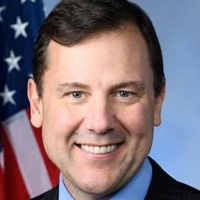
Thomas Kean
Representative
NJ
Thomas Kean
Representative
NJ
The Seton Hall Fire Victims Remembrance Act of 2026 establishes new federal fire suppression standards for college and university dormitories. It mandates that institutions develop a compliance assessment program, leading to designations as a "Federally Recognized Fire-Safe Campus" or otherwise. Compliance with these new safety standards is linked to participation in federal student aid programs.
This bill establishes a Veterans Scam and Fraud Evasion Officer within the VA to coordinate fraud prevention, reporting, and veteran resource guidance, while also extending certain pension payment limits.
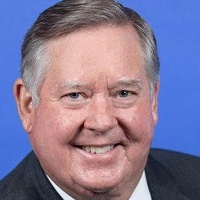
Ken Calvert
Representative
CA
Ken Calvert
Representative
CA
The Veterans Scam And Fraud Evasion Act of 2025, or VSAFE Act, establishes a dedicated Veterans Scam and Fraud Evasion Officer within the Department of Veterans Affairs. This officer will centralize the VA's efforts to prevent, report, and respond to fraud and scams targeting veterans. The role includes developing guidance, promoting reporting resources, and coordinating with other federal agencies to better protect veterans and their families.
This bill allows states to use TANF funds to support pregnancy centers that offer resources to expectant and parenting families.
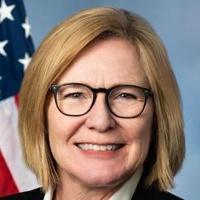
Michelle Fischbach
Representative
MN
Michelle Fischbach
Representative
MN
The Supporting Pregnant and Parenting Women and Families Act aims to ensure states can use Temporary Assistance for Needy Families (TANF) funds to support pregnancy centers. This legislation specifically defines pregnancy centers as organizations that promote the life of the mother and unborn child while offering various resources and services to expecting and new parents.
This resolution recognizes and celebrates the significant contributions of Catholic schools across the United States during the 52nd annual National Catholic Schools Week in January 2026.
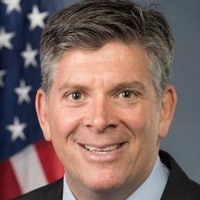
Darin LaHood
Representative
IL
Darin LaHood
Representative
IL
This resolution officially recognizes and celebrates the 52nd annual National Catholic Schools Week, taking place from January 25 to January 31, 2026. It honors the significant contributions of Catholic schools nationwide, highlighting their commitment to academic excellence, diverse student populations, and values-based education. The bill supports the goals of this week, which is cosponsored by the National Catholic Educational Association and the U.S. Conference of Catholic Bishops.
This act permanently bars individuals convicted of violent crimes from federal employment and prohibits the government from contracting with them or entities where they hold key positions.
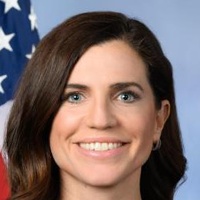
Nancy Mace
Representative
SC
Nancy Mace
Representative
SC
The No Violent Criminals in the Federal Workforce Act prohibits individuals with a final conviction for a crime of violence from holding any position in the federal civil service. This legislation also bars the Federal Government from entering into contracts with such individuals or entities where they hold key positions. The law provides specific definitions for "crime of violence" and "final conviction" to ensure clear application.
This bill reauthorizes the transmission facilitation program under the Infrastructure Investment and Jobs Act for the years 2026 through 2031.
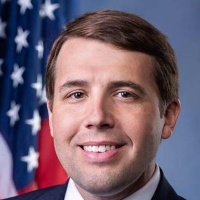
Chris Pappas
Representative
NH
Chris Pappas
Representative
NH
This bill amends the Infrastructure Investment and Jobs Act to reauthorize the transmission facilitation program. It extends the program's authorization period, shifting the funding window from 2022–2026 to 2026–2031.
This bill, the PROTECT Act, repeals Section 230 of the Communications Act of 1934, removing legal protections for online platforms regarding user-posted content.
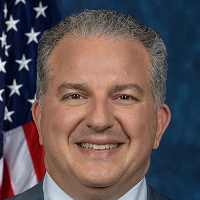
Jimmy Patronis
Representative
FL
Jimmy Patronis
Representative
FL
The Promoting Responsible Online Technology and Ensuring Consumer Trust Act (PROTECT Act) focuses on fundamentally changing online liability by repealing Section 230 of the Communications Act. This action removes the existing legal protections that shield online platforms from liability for content posted by their users. The bill also includes necessary technical amendments across various federal laws to reflect this significant change.
This resolution designates January 2026 as National Stalking Awareness Month to raise awareness and encourage the prevention of stalking.
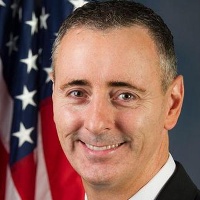
Brian Fitzpatrick
Representative
PA
Brian Fitzpatrick
Representative
PA
This resolution designates January 2026 as "National Stalking Awareness Month" to raise awareness and encourage the prevention of stalking. It commends the efforts of various groups working to combat stalking and support victims. Furthermore, the bill encourages policymakers and organizations to increase awareness and support services throughout the designated month.
This bill establishes the Heroes Home Energy Savings Act to provide dedicated funding and extend authority for enhancements to the Weatherization Assistance Program, specifically benefiting military households.
Chris Pappas
Representative
NH
Chris Pappas
Representative
NH
The Heroes Home Energy Savings Act establishes dedicated funding to enhance and innovate the existing Weatherization Assistance Program (WAP) through 2030. This legislation specifically sets aside resources to improve energy efficiency for all households served by WAP, with dedicated funds for active duty and reserve military families. The bill authorizes appropriations to support these critical energy-saving initiatives over the next several years.
This act prohibits naming federal property after a sitting President and mandates the reversion of any existing presidential namesake to its previous federal designation.
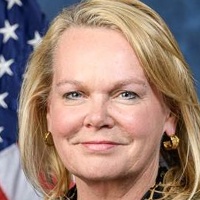
April McClain Delaney
Representative
MD
April McClain Delaney
Representative
MD
The SERVE Act of 2026 prohibits naming any federal property, land, or asset after a sitting President, preventing the use of federal funds for such purposes. Furthermore, any federal property currently named after the sitting President upon enactment will revert to its previously established federal name.
The SAFE KIDS Act voids surrogacy agreements between U.S. surrogates and prospective parents from designated foreign entities of concern, while penalizing brokers who facilitate such arrangements.
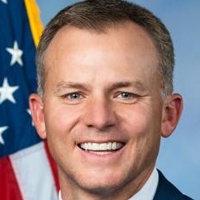
Blake Moore
Representative
UT
Blake Moore
Representative
UT
The SAFE KIDS Act addresses national security concerns by invalidating surrogacy agreements between U.S. surrogates and prospective parents from designated "foreign entities of concern." This legislation voids such contracts and imposes penalties on surrogacy brokers who facilitate these arrangements. The bill ensures that custody decisions for children born under these void agreements are based solely on the child's best interests under state law.
This act mandates that Small Business Development Centers assist small businesses in evaluating and implementing artificial intelligence for their operations.
Mark Alford
Representative
MO
Mark Alford
Representative
MO
The AI for Main Street Act directs Small Business Development Centers (SBDCs) to assist small businesses in evaluating and implementing artificial intelligence in their operations. This support includes providing guidance, training on best practices, and outreach regarding AI use for planning, security, and compliance. The bill also formally defines artificial intelligence within the Small Business Act.
This resolution honors President Trump for securing a historic agreement establishing permanent U.S. sovereignty and control over critical military installations in Greenland to strengthen Arctic security against Russian and Chinese influence.
Mark Alford
Representative
MO
Mark Alford
Representative
MO
This resolution honors President Donald J. Trump for securing a historic strategic agreement guaranteeing permanent U.S. sovereignty and control over critical military installations in Greenland. This achievement significantly strengthens Arctic security by countering malign Russian and Chinese influence. The agreement solidifies the U.S. military's position in a strategically vital region, enhancing hemispheric defense.
This Act establishes federal minimum salary and wage floors for school paraprofessionals and support staff, providing federal funding to help states meet these new pay standards within four years.
Jesús García
Representative
IL
Jesús García
Representative
IL
The Pay Paraprofessionals and Support Staff Act establishes minimum federal salary and wage floors for school support staff, requiring states to implement higher state-level standards. It authorizes significant federal funding through grants to help states and local districts meet these new pay requirements within four years. States must prioritize funding distribution to districts serving high numbers of low-income students to ensure compliance with the mandated pay increases.